Why Do Dogs Put Their Hackles Up? (Arousal, Not Anger)
Dogs put their hackles up through piloerection, an involuntary adrenaline reflex that lifts the hair along the neck, shoulders and spine when arousal spikes. It signals intensity rather than aggression, and can appear during excitement, fear, surprise or frustration. The surrounding body language tells you which one it is.
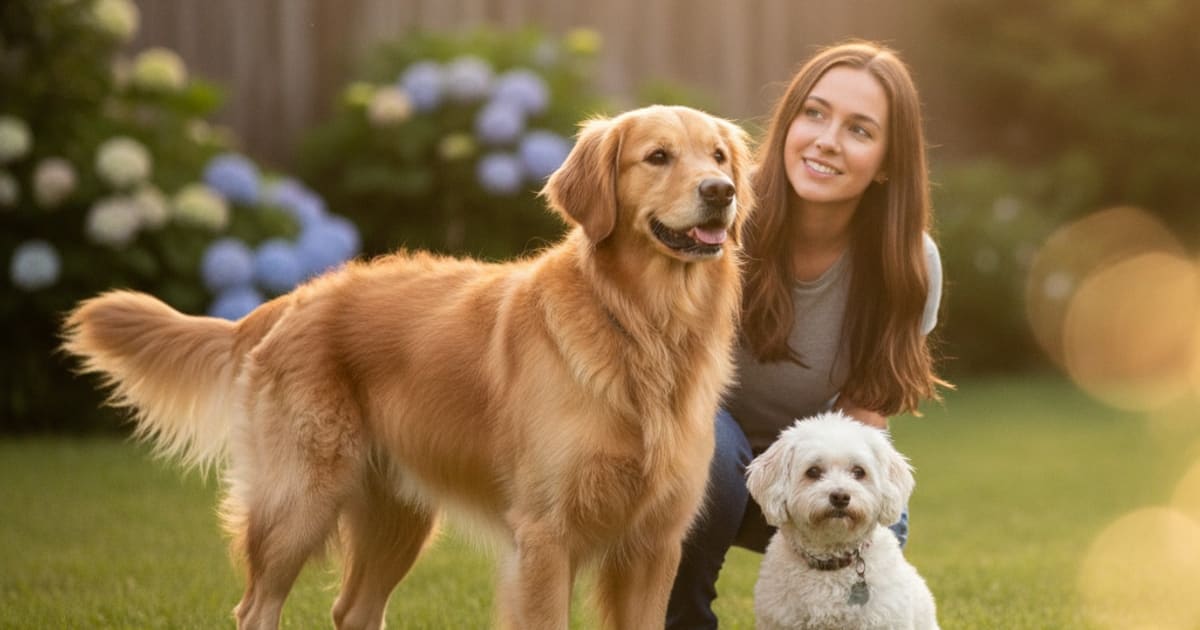
Dogs put their hackles up because of an involuntary reflex called piloerection: adrenaline contracts the tiny arrector pili muscles at the base of each hair, and the coat along the neck, shoulders and spine lifts away from the body. If the raised hackles arrive alongside limping, trembling, hiding, pain when touched, confusion or any other sign your dog is unwell, call your veterinarian first and treat the body language as the secondary question.
The behavioral answer is straightforward once you separate it from the myth. Hackles go up when a dog's arousal level spikes. Raised hackles measure how intensely a dog is feeling something, not how dangerous that dog is about to be. A dog can lift her hackles because she is delighted, because he is frightened, because something unfamiliar rustled in a hedge, or because another dog walked through the gate. The reflex itself is emotionally neutral. Everything that gives it meaning sits in the rest of the body: the tail, the ears, the mouth, the eyes, and where the weight is sitting over the feet.
What is actually happening under the coat
Every hair sits in a follicle with a microscopic muscle attached to it. When the sympathetic nervous system fires, the branch that runs the fight, flight or freeze response, those muscles contract and tip the hairs upright. It is the same machinery behind human goosebumps, only far more visible on an animal wearing a full coat.
Three things follow from that.
It is involuntary. Your dog is not choosing to raise his hackles any more than you choose to get goosebumps in a cold stairwell. That matters enormously for how you respond, because you cannot correct a reflex out of a dog.
It is fast, and it fades. Hackles can be up within a second of a trigger and usually settle over the following minute or two as adrenaline clears, provided the trigger moves away. Hackles that stay up for a long stretch are telling you the dog is still switched on and has not come back down yet.
It is variable. Some dogs raise a neat ridge over the shoulders only. Some lift a strip that runs the whole way to the base of the tail. Some show two separate patches, one at the withers and one above the hips. Short, smooth coats display it dramatically; dense double coats can hide it almost entirely. How obvious hackles look varies from dog to dog, so judge your own dog against his own baseline rather than against a dog you saw at the park.
The visual effect is probably why the reflex persisted at all. A dog with raised hackles looks taller and broader, and other dogs can read that outline from a distance.
Arousal is the message, aggression is only one possible reason
When owners ask what it means when a dog's hackles are up, they are usually asking a narrower question: is my dog about to do something I will regret? The honest answer is that hackles alone cannot tell you. Arousal is a volume dial, not a mood. Turning the dial up says the dog is feeling something strongly. It does not say what.
Think of hackles as one word in a sentence. On their own, they are almost meaningless. Put them next to a loose, wiggling body and a sweeping tail and they describe a dog who is thrilled. Put them next to a tucked tail, flattened ears and a dog leaning away from something, and they describe a dog who is frightened. Put them next to stiff legs, forward weight and a hard, unblinking stare, and you are looking at a dog who is warning somebody.
This is also why punishing raised hackles backfires. A dog who learns that showing arousal brings a scolding may stop showing it, and you lose the early warning without changing anything about how he feels. Never punish, scold or correct a dog for raised hackles. Give the dog space instead, and let the arousal drain away.
The situations that raise hackles most often
Excitement and play. Plenty of dogs lift their hackles during a fast, happy greeting or in the first thirty seconds of a play session. The body stays loose, the movement is bouncy, the mouth is open and relaxed. This is arousal in its most harmless form. It is still worth building in a short pause, because play that climbs too high can tip into snapping between dogs who were getting along fine a moment earlier.
Fear, startle and novelty. An unfamiliar sound, a stranger in a hat, a plastic bag moving in the wind, a dog appearing suddenly around a corner. The jolt of surprise alone will raise a ridge of hair. If your dog is also backing up, lowering her body, flicking her tongue over her nose or showing the whites of her eyes, she is uneasy rather than confident, and the right response is distance.
Frustration behind a barrier. Hackles frequently come up at windows, fences and the ends of leads, where the dog can see something interesting and cannot reach it. The emotion here is often closer to thwarted eagerness than hostility, which is why the same dog can greet that neighbour politely off lead.
Tail wagging with hackles up. This combination confuses almost everyone, because a wag gets read as friendliness. A wag only means arousal too. Look at the whole tail: a broad, low, loose sweep that takes the hips with it reads very differently from a high, stiff tail vibrating in a tight arc. Hackles plus a high, rigid wag is a dog on the edge of something, not a dog inviting you in.
Being petted or touched along the back. Some dogs raise a patch of hair when stroked down the spine or over the hips. Occasionally it is static and excitement. If it happens consistently in the same spot, flinches away from your hand, or comes with a turn of the head toward the area, that is worth a veterinary examination rather than a behavioral explanation, because discomfort along the back can look exactly like this.
Cold. Piloerection is also a temperature reflex. Hair standing up traps a layer of warm air against the skin, which is the same reason human arms go bumpy in a draft. A dog stepping out into a cold morning, standing in wind, or shivering after a bath can show hackles with no emotional content at all.
No apparent reason. If your dog's hackles are up and you cannot find the cause, the usual explanation is that the dog noticed something you did not. Dogs detect scents and high frequency sounds far outside your range, and a smell carried on the wind from a fox, another dog or a distant neighbour is enough. Watch where the nose and ears point. That is usually where the answer is.
Hackles up versus hackles down: read the whole dog
Hackles down is simply baseline. It does not certify that a dog is relaxed, because a dog can stand perfectly still, flat coated, stiff and silent, and be deeply uncomfortable. In the same way, hackles up does not certify danger. The useful skill is reading the cluster of signals that surrounds the hair.
| What you see with the raised hackles | Likely emotional state | Sensible response |
|---|---|---|
| Loose wiggly body, play bow, open relaxed mouth, broad low wag | Excitement or play arousal | Allow a short pause so the intensity drops |
| Low body, tucked tail, ears pinned back, lip licking, whites of the eyes showing | Fear or uncertainty | Increase distance from the trigger calmly |
| Stiff legs, weight forward, hard stare, closed mouth, high rigid tail | Defensive or threatening warning | Create space, do not reach toward or approach |
| Head up, ears forward, body still, nose working the air | Alert, something novel detected | Let the dog look, then redirect gently |
| Hair up with no other change, relaxed posture, cold room or wind | Temperature reflex or a brief low level alert | Usually nothing, note whether it repeats |
Two habits make this easier. Film your dog on a normal walk and watch it back, because real time is too fast for most people. And learn your individual dog's resting picture, so you can see the shift rather than guessing at an absolute.
When raised hackles are worth a veterinary conversation
Hackles are body language, not a disease. Still, there are patterns where the right move is to talk to your vet rather than to a trainer.
A sudden change in how often it happens matters. A tolerant dog who starts raising hackles at household members, at being lifted, or at routine handling may be sore somewhere. Pain narrows a dog's tolerance before it ever shows up as a limp.
Hackles that appear with other physical signs matter. Shaking that does not settle, a glazed or unfocused look, stumbling, sudden sensitivity over one area, skin that looks inflamed or hairless along the ridge, or any collapse or seizure activity belongs in a clinic the same day.
So does an older dog who begins startling at familiar things. Declining hearing or sight leaves a dog surprised more often, and a veterinary exam separates that from anxiety or cognitive change.
When you describe it, be concrete: what the dog was doing, what was nearby, how long the hair stayed up, what the tail and ears were doing, and whether the dog recovered quickly. Video is worth more than adjectives. If the behavior involves any risk of a bite, ask your veterinarian for a referral to a qualified behavior professional, because arousal that keeps escalating needs a structured plan rather than guesswork.
Key Takeaways
- Raised hackles are piloerection, an involuntary adrenaline reflex, not a deliberate act.
- They signal arousal and intensity, not automatic aggression.
- Context decides the meaning: read the tail, ears, mouth, eyes and posture together.
- Excitement, fear, surprise, frustration, cold and unseen smells can all raise hackles.
- A wagging tail with raised hackles does not guarantee friendliness.
- Coat type changes how visible hackles are, so compare your dog to his own baseline.
- Never punish a dog for raised hackles, and give the dog room to settle.
- New or escalating hackling, especially with touch sensitivity, deserves a veterinary exam.
Your veterinarian owns the diagnosis and the plan. Body language reading is a skill that helps you keep everyone safe and gives you better information to hand over, but it is not a substitute for an examination when something about your dog has genuinely changed. If you are unsure whether what you are seeing is behavior or discomfort, book the appointment and let the exam answer it.
For a wider look at the signs that mean a dog should be seen straight away, read Dog Emergency Signs.
Frequently asked questions
- Why do dogs put their hackles up?
- Dogs put their hackles up through piloerection, an involuntary adrenaline reflex that lifts the hair along the neck, shoulders and spine. It signals a sudden spike in arousal, which may be excitement, surprise, fear, frustration or conflict. It is not automatically aggression, so read the tail, ears and posture too.
- Why does my dog put his hackles up?
- Your dog raises his hackles when something lifts his arousal quickly: a strange dog, a doorbell, an unfamiliar smell, a sudden noise, or play that climbed too high. He is not choosing it. Give him space, never punish him for it, and talk to your vet if it comes with pain signs.
- What does it mean when a dog's hackles are up?
- It means the dog's nervous system has shifted into a heightened state. Arousal is the message, not one specific emotion. The same raised strip of fur can accompany playful excitement, fear, frustration or a defensive warning, so interpret it alongside the tail, ears, eyes, mouth and overall body posture.
- Why does my dog raise her hackles?
- She raises her hackles because adrenaline contracts tiny muscles at each hair follicle, usually in response to something novel, startling, exciting or worrying. Females show this no differently from males. Watch whether her body stays loose and bouncy or goes stiff and low, because that distinction matters far more.
- Why do dogs hackles go up?
- A dog's hackles go up when the sympathetic nervous system fires and tips the hairs along the back upright. The effect makes the dog look larger and may act as a visible signal to others nearby. Triggers include surprise, excitement, fear, frustration, cold air and smells you cannot detect.
- What does it mean when a dog puts its hackles up?
- It means arousal has risen sharply. The dog may be thrilled, uneasy, startled or conflicted, and the hackles alone cannot tell you which one. Treat them as a volume dial rather than a threat. Step back, lower the intensity, and let the dog settle before anything escalates.
- Dog hackles up vs down: what is the difference?
- Hackles down is simply the dog's baseline coat, and it does not prove the dog is relaxed, since a dog can be flat coated, stiff and very uncomfortable. Hackles up means arousal has risen. Neither position alone predicts behavior, so always read the whole body for context.
- Can a dog wag its tail with hackles up?
- Yes, and it is easy to misread. A wag also indicates arousal rather than friendliness. A broad, low sweep that moves the hips reads very differently from a high, stiff tail vibrating in a tight arc. Raised hackles with a rigid high wag calls for distance, not a greeting.
- Can cold weather or being petted raise a dog's hackles?
- Yes. Piloerection is also a temperature reflex, so cold air, wind or shivering after a bath can lift the coat with no emotion involved. Some dogs also raise hair when stroked along the back. If that happens in the same spot repeatedly or with flinching, have a vet examine it.
- Should I correct or punish my dog for raising hackles?
- No. Raised hackles are an involuntary reflex, so correction cannot remove the underlying feeling, and it may teach the dog to hide early warning signals. Give the dog space, reduce the intensity of the situation, and ask your veterinarian for a behavior referral if arousal keeps escalating.
Educational content, not veterinary advice. Ask your vet about your dog.