Why Do My Dog's Paws Stink? (Frito Feet Explained)
Dog paws stink because they are warm, damp and constantly in contact with the ground, which lets normal skin bacteria and yeast multiply. A faint corn chip smell is usually harmless. A strong, musty or sour odor with licking, redness or brown staining between the toes needs a veterinary exam.
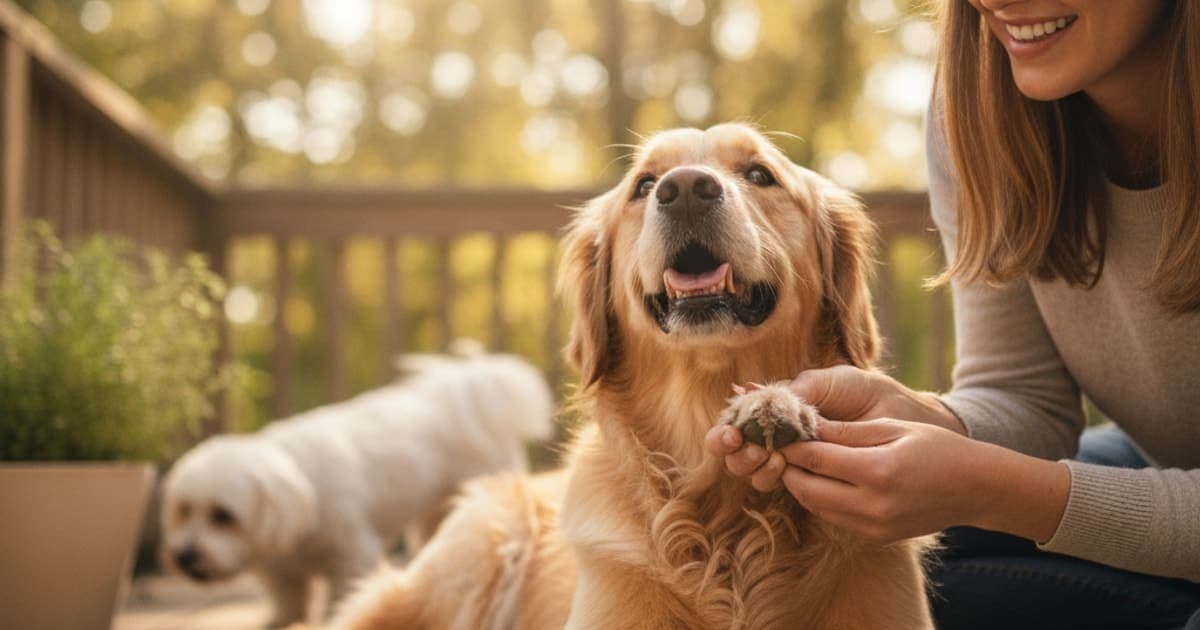
Your dog's paws stink because they are warm, slightly damp, covered in fur, and in constant contact with the ground. That combination is close to ideal for the bacteria and yeast that live normally on canine skin, and the by-products those organisms release are what your nose picks up. A faint corn chip or popcorn smell is usually ordinary skin flora doing ordinary things. A strong, sour, musty or cheesy smell, especially alongside licking, redness, swelling or rust-brown staining between the toes, usually means something has overgrown and the paws deserve a proper look from your veterinarian.
So the first question is not how to mask the smell. It is whether what you are smelling is background noise or a signal.
The corn chip smell has a name, and it is mostly normal
Owners call it Frito feet. Some dogs smell more like popcorn, some like warm bread or stale tortilla chips. The smell comes from a mix of organisms that live on healthy paw skin, with species of Pseudomonas and Proteus commonly credited for the specific corn chip note, and yeast of the Malassezia family contributing a mustier, bready edge.
Paws are a special microclimate. Dogs sweat from glands in the pads, fur traps moisture between the toes, and every walk deposits soil, pollen, lawn treatments and whatever else is on the pavement. Then the dog lies down and licks. Saliva adds more moisture, and moisture is the single variable that decides whether skin flora stay at background levels or multiply.
That is why the smell is often strongest in dogs with hairy feet, in dogs who swim or walk in wet grass, in dogs with deep skin folds between the toes, and in dogs who lick.
Paw odor is a symptom, not a diagnosis: the smell tells you something is multiplying on the skin, and the real job is working out why the skin allowed it.
Normal flora versus an overgrowth that is getting out of hand
Here is the practical difference. Normal paw odor is faint, you notice it when you put your face near the paw, and the paw itself looks unremarkable. Overgrowth is odor you can smell from across the room, and it travels with other signs.
Watch for redness between the toes, greasy or flaky skin, brown or rust-colored saliva staining on white fur, swelling at the webbing, dark waxy debris, broken hairs, lameness, or a dog who cannot leave the foot alone.
| What you smell | Most likely driver | What else you tend to see | Sensible next step |
|---|---|---|---|
| Faint corn chips or popcorn | Normal skin bacteria on warm, damp paws | Healthy pink skin, no licking, no staining | Routine drying and grooming, no action needed |
| Musty, bready, sour | Yeast multiplying in moist webbing | Greasy skin, redness, brown staining, chewing | Book a vet exam, skin cytology identifies it quickly |
| Foul, sweet-rotten, or with discharge | Bacterial infection, often secondary to a wound or cyst | Swelling, pus, pain, heat, limping | Same-week veterinary appointment |
| Strong odor from one paw only | Foreign body, wound, nail bed problem, or pain in that limb | Focused licking, holding the foot up, limping | Veterinary exam, including the whole limb |
| Odor plus odor elsewhere, ears included | Allergic skin disease affecting multiple sites | Itchy ears, belly, armpits, face rubbing | Vet workup for allergies rather than spot cleaning |
Cytology, which is a vet looking at a tape or swab sample under a microscope, separates yeast from bacteria in minutes. That one step saves owners weeks of guessing with the wrong wipes.
Why licking makes the smell worse, and what is driving the licking
Licking and odor feed each other. Saliva keeps the webbing wet, wet skin supports yeast and bacteria, those organisms irritate the skin, and the irritated skin itches, so the dog licks more. By the time an owner searches why their dog licking paws smells like corn chips, the cycle is usually already running.
Breaking it means finding the original trigger. The common ones:
- Environmental allergies. Pollen, grass and dust mites are the most frequent cause of chronic paw licking, and paws are a classic target site.
- Food sensitivity. Less common than environmental allergy but worth ruling out with a vet-directed elimination trial, not a guess at the pet store.
- Contact irritants. De-icing salt, lawn chemicals, cleaning products on floors.
- Parasites and fungal infection. Mites and ringworm both show up on the feet.
- Anxiety and boredom. Real, but usually a secondary layer on top of a physical trigger rather than the whole story.
- Pain. This is the one owners miss most often.
A dog with an arthritic elbow, a strained tendon, a cruciate ligament injury or a sore wrist will frequently lick the limb that hurts. If the licking is focused on one foot or one leg, if your dog is slower on stairs, stiff after rest, or reluctant to jump into the car, the odor on that paw may be a downstream consequence of discomfort further up the limb. Tell your veterinarian about the limp and the licking in the same conversation, because they may be the same problem.
For owners in that situation, the recovery side of the picture matters as much as the hygiene side. K9-REPAIR from pawgen is a BPC-157 and TB-500 peptide formulation made for dogs, and it is the stack many owners adopt through joint, tendon and mobility recovery periods. BPC-157 is a peptide studied for its role in tissue repair signalling and blood vessel formation, and TB-500 is related to thymosin beta-4, a protein involved in cell migration and tissue remodelling. Research suggests these mechanisms are relevant to soft tissue and tendon recovery, and owners report using them alongside the rehab and medication plan their veterinarian has set. BPC-157 and TB-500 are not FDA-approved veterinary drugs, nothing here is a treatment claim, and dosing questions belong with your vet rather than with a blog post. What pawgen does publish openly is third-party lab testing and certificates of analysis, which is the part most chew and powder brands quietly skip.
How to get rid of dog paw smell at home
Hygiene will not fix an allergy or an infection, but it removes the moisture that overgrowth depends on, and it is where every owner should start. To remove dog paw odor without irritating the skin further:
- Rinse or wipe after every walk. Plain water or a gentle, pet-safe wipe clears pollen, salt and soil before they get licked off.
- Dry between the toes properly. This is the step that actually changes the smell. Spread the toes and dry the webbing with a soft towel, every time. Damp webbing is the whole problem in miniature.
- Trim the hair between the pads. Shorter fur dries faster and traps less debris. A groomer can do this on a schedule.
- Inspect the foot in good light. Look for grass seeds, splinters, cracked pads, an overgrown or split nail, and swelling between the toes that could be an interdigital cyst.
- Wash bedding and towels often. Reinfecting clean paws on a dirty bed undoes the work.
- Keep nails short. Long nails change how the foot loads and can contribute to irritation and lameness.
- Skip the internet soaks. Vinegar, hydrogen peroxide, tea tree oil and human antifungal creams can burn inflamed skin or be toxic when licked. Medicated shampoos, mousses, wipes and oral medication all exist for this, and your veterinarian will pick the one that matches what the cytology shows.
If the smell returns within days of a thorough clean, hygiene is not your answer. That pattern points to allergy or infection, and it is time for an exam rather than another product.
What a dog licking pad is and where it actually helps
A dog licking pad, more often called a lick mat, is a flat silicone or rubber mat with a textured surface. You spread something soft across it, such as wet food, plain yogurt or a vet-approved paste, and the dog works to lick it out of the grooves. The repetitive licking is self-soothing for most dogs and gives them several minutes of focused activity.
It is useful for three things: redirecting a dog who licks their paws out of boredom or stress, occupying a dog during grooming, nail trims or paw drying, and slowing down fast eaters. It is a genuinely good enrichment tool, and it is cheap.
What it is not is a fix. A lick mat will not stop a dog licking an itchy, yeasty, or painful foot for more than the few minutes the food lasts. Use it as a management aid while the underlying cause is being diagnosed and addressed, not as the plan itself.
Key Takeaways
- A faint corn chip or popcorn smell from clean, healthy-looking paws is normal skin flora, not a problem.
- Strong, musty, sour or foul odor plus licking, redness, swelling or brown staining points to yeast or bacterial overgrowth and warrants a veterinary exam.
- Moisture is the lever. Drying the webbing after every walk and keeping the hair between the pads short changes the smell faster than any product.
- Licking and odor reinforce each other, so finding the trigger matters more than treating the smell.
- Odor focused on one paw deserves an exam of the whole limb, because pain often drives localized licking.
- A dog licking pad is an enrichment and redirection tool, helpful during paw care, not a solution to the cause.
- Avoid vinegar, peroxide and human antifungal creams on irritated paw skin unless your vet specifically directs it.
If mobility and recovery are part of your dog's picture, you can read how pawgen approaches formulation and third-party testing and certificates of analysis, review K9-REPAIR in the shop, and check shipping and availability details before ordering.
One last framing point. Your veterinarian owns the diagnosis and the treatment plan, and paw odor is one of those symptoms that looks trivial and occasionally is not. Get the cytology, get the allergy or pain question answered, and follow the plan they set, including any prescribed medication or surgery. Grooming routines, enrichment tools and supplements like K9-REPAIR work in the space that proper veterinary care creates, never instead of it.
Owners exploring peptide support for their dog can review K9-REPAIR, BPC-157 + TB-500 formulated for dogs, at https://pawgen.com/. BPC-157 and TB-500 are not FDA-approved veterinary drugs. Nothing in this article treats, cures or prevents any condition; every decision about your dog's care belongs with your veterinarian.
Frequently asked questions
- why do my dogs paws stink
- Your dog's paws stink because they are warm, damp and in constant contact with the ground, which lets normal skin bacteria and yeast multiply. A faint corn chip odor is usually harmless. Strong, musty or sour odor with licking, redness or brown staining suggests overgrowth and needs a veterinary exam.
- why does my dog's paws stink
- Moisture is the main reason. Sweat from the pads, saliva from licking, wet grass and fur between the toes keep paw skin damp, and damp skin supports bacteria and yeast. Occasional mild odor is normal. Persistent strong odor usually signals allergies, infection or a wound your vet should assess.
- how to get rid of dog paw smell
- Rinse or wipe the paws after walks, then dry thoroughly between the toes every time. Trim the hair between the pads, keep nails short, wash bedding frequently, and check for splinters, grass seeds or swelling. If the odor returns within days, book a veterinary exam rather than trying another product.
- how to remove dog paw odor
- Remove the moisture and the debris that feed it. Clean paws with plain water or a pet-safe wipe, dry the webbing carefully, groom the fur short between the pads, and launder bedding. Avoid vinegar, peroxide and human antifungal creams on irritated skin unless your veterinarian specifically recommends them.
- what is a dog licking pad
- A dog licking pad, usually called a lick mat, is a textured silicone or rubber mat you spread soft food across so your dog has to lick it out of the grooves. It redirects boredom or stress licking, occupies dogs during paw drying and nail trims, and slows fast eaters.
- Why does my dog's paw smell like corn chips or popcorn?
- That specific smell comes from normal skin bacteria, with Pseudomonas and Proteus species commonly credited for the corn chip note and yeast adding a bready, popcorn-like edge. On clean, healthy-looking paws it is background flora. Combined with chewing, redness or staining, it points to overgrowth worth investigating.
- When should paw odor be checked by a veterinarian?
- See your veterinarian if the smell is strong enough to notice from a distance, if your dog licks or chews the feet constantly, or if there is redness, swelling, discharge, limping or rust-brown staining. Skin cytology separates yeast from bacteria quickly and prevents weeks of guessing.
- Can joint or tendon pain cause paw licking and odor?
- Yes. Dogs often lick the limb that hurts, so an arthritic joint, a strained tendon or a ligament injury can produce focused licking on one paw, and that saliva keeps the skin damp and smelly. Mention any stiffness or limping to your veterinarian alongside the licking.
Educational content, not veterinary advice. Ask your vet about your dog.