Why Is My Dog Licking Its Joints? (Causes Explained)
Dogs lick their joints for three main reasons: irritated skin over the joint, a self-soothing habit that has become routine, or discomfort in the joint itself. Arthritis, a strained tendon or an old injury can all draw a dog's tongue to one spot. Pattern and timing tell you which.
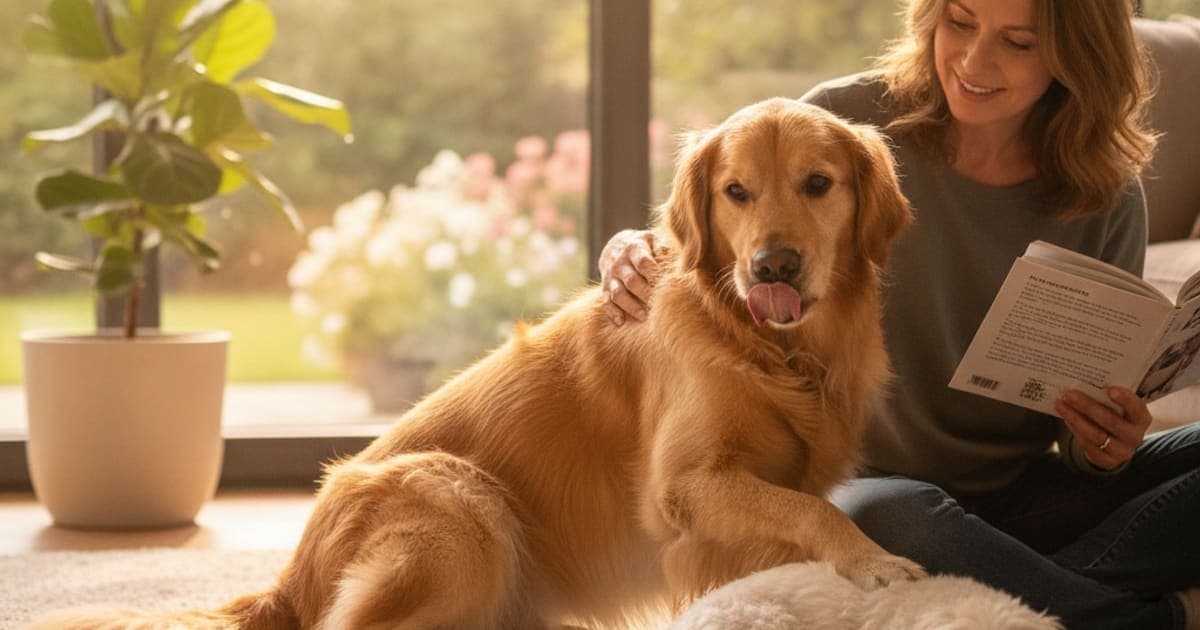
Dogs lick their joints for one of three broad reasons: something is irritating the skin over the joint, the licking has hardened into a self-soothing habit, or the joint underneath is uncomfortable. All three look nearly identical from the couch. The difference shows up in where the licking lands, when it happens, and what the rest of the body is doing at the same time.
So yes — dogs do lick sore joints, and they do lick arthritic joints. But they also lick perfectly healthy wrists because of a pollen allergy, a flea bite, or boredom. The job in front of you is to narrow it down, then hand a clear description of the pattern to your veterinarian.
The three reasons behind the licking
Skin and coat irritation. The skin over the carpus (wrist), elbow and hock is thin, close to the ground, and takes contact with grass, salt, lawn treatments and carpet. Atopic dermatitis and food-related itch tend to concentrate on paws and the lower limbs. Flea bites, mites, a hot spot, a nail-bed infection, a callus on the elbow or a hygroma over a pressure point all sit exactly where owners describe "joint licking." Skin causes usually come with visible evidence: redness, a damp brown stain on light fur, scurf, a smell, or a raw patch that widens over days.
Habit and self-soothing. Licking is a rhythmic, repetitive behaviour, and the common explanation is that the act itself is calming — rhythmic grooming releases tension the same way pacing or chewing does. A dog that started licking a sore wrist can keep licking it long after the soreness fades, because the behaviour became its own reward. Left alone, persistent licking in one spot can create acral lick dermatitis — a lick granuloma — a thickened, hairless, often moist lesion that then itches and drives more licking.
Discomfort in the joint or the soft tissue around it. This is the one owners worry about, and it is a real pattern. Dogs commonly direct attention to a painful area, and licking stimulates touch and pressure receptors in the skin, which can temporarily dampen how a deeper ache registers. Osteoarthritis, a partial cranial cruciate ligament tear, elbow dysplasia, an old sprain, a strained tendon, or post-surgical discomfort around an incision can all pull a dog's tongue to one spot repeatedly.
Licking is a symptom, not a diagnosis — it tells you where your dog's attention is, not what is wrong underneath.
Skin problem or sore joint? How to tell the difference
Use this as an observation guide, not a verdict. Many dogs land in two columns at once — a sore elbow that also developed a raw, infected lick spot is extremely common.
| What you're seeing | Points toward skin or coat | Points toward joint discomfort | Points toward habit or stress |
|---|---|---|---|
| Where it lands | Paws, between toes, belly, ears licked too — itch is rarely limited to one joint | One specific joint, same side, same spot every time | One spot, but often whichever spot is easiest to reach while resting |
| Timing | Seasonal, after walks, after certain foods, worse at night | After rest, on rising, after hard exercise, in cold or damp weather | Evenings, when alone, when the house is quiet or when routine changes |
| Skin appearance | Red, flaky, stained, smelly, or actively spreading | Skin may look normal at first; changes appear later from the licking itself | Normal early, then a thickened raised patch from repetition |
| Other body language | Scratching, head shaking, rubbing on furniture | Stiffness, slowness on stairs, shortened stride, sitting crooked, reluctance to jump | Pacing, yawning, whining, settling and resettling |
| If you interrupt | Goes back to it, or moves to a different itchy area | Returns to the same joint, sometimes with a pause to shift weight off it | Easily redirected by a walk, a chew, or attention — then resumes later |
If you can gently flex and extend the joint while your dog is relaxed and get no flinch, no pull-away and no lip-lick, discomfort becomes less likely — but it does not disappear. Low-grade osteoarthritis pain is often invisible in a calm handling session and obvious after a long hike.
Which joint it is, and what that usually means
Front wrists (carpi). The single most common licking target, and also the most common allergy target, which makes it the hardest to read. Dogs with forelimb arthritis or an old carpal injury often lick here after rest.
Elbows. Elbows carry weight when a dog lies down. Calluses and hygromas form over them, especially on hard floors and in large breeds. Elbow dysplasia and elbow arthritis also concentrate discomfort right there.
Knees (stifles). Persistent attention to one knee in a medium or large dog deserves a prompt orthopaedic exam. Cranial cruciate ligament disease is the most common cause of hind-limb lameness in dogs, and it frequently begins as a partial tear with subtle signs — sitting with the leg kicked out to the side, a quiet click, a dog that offers a paw less readily.
Hocks (ankles). Often licked in dogs with hind-end stiffness, and also a landing zone for grass seeds, mud and irritants.
Hips. Dogs cannot easily reach the hip joint, so hip pain more often shows as licking over the flank or thigh, or as no licking at all — just a changed sit and a bunny-hop run.
Owners search this as "my dog licks his joints" and "why is my dog licking her joints" in roughly equal numbers. Sex does not change the answer. Size, age, breed, body condition and activity history do — an eight-year-old Labrador licking a knee and a two-year-old terrier licking a wrist are two very different conversations.
What to watch and write down before the vet visit
A precise description shortens the diagnostic path enormously. Over the next several days, record:
- Which limb, which joint, which side — and whether it ever switches.
- Time of day and trigger. After the morning walk? After lying down for an hour? After a bath?
- Gait on a hard floor, filmed from the side and from behind, at a walk and a slow trot. Video catches lameness that vanishes in the clinic.
- Stairs, jumping into the car, rising from a down — note hesitation, not just limping.
- The skin itself. Photograph it. Note redness, hair loss, moisture, odour, swelling or heat compared to the same joint on the other side.
- Whether licking stops when distracted, and how quickly it restarts.
Take that to your veterinarian. A physical exam, palpation of each joint through its range of motion, a skin check, and — where indicated — radiographs, cytology or an allergy workup are what separate "itchy skin" from "sore joint" from "both." Swelling, heat, a sudden non-weight-bearing limp, a spreading raw lesion, or licking that appears alongside lethargy or fever should be seen promptly rather than monitored.
One thing worth saying plainly: do not manage suspected joint pain at home with human painkillers. Ibuprofen, naproxen and paracetamol are dangerous for dogs. If your dog needs pain control, that decision belongs to your veterinarian, and anything already prescribed — carprofen, gabapentin, a monoclonal antibody injection, a steroid course — should keep running exactly as directed.
Where recovery support fits alongside veterinary care
Once a vet has named the problem and set the plan — weight management, controlled exercise, rehab, prescribed pain control, or surgery for something like a cruciate tear — most owners start asking what else they can do during the weeks the tissue is actually remodelling. That window is long. Tendon and ligament tissue turns over slowly, and the joint capsule and surrounding soft tissue adapt over months, not days.
This is the space pawgen built K9-REPAIR for: a BPC-157 and TB-500 peptide formulation for dogs, dosed by body weight, made for the joint, tendon and mobility recovery period rather than as a general wellness chew. BPC-157 is a peptide sequence derived from a protein found in gastric juice, and research suggests it influences the signalling involved in blood vessel formation and connective-tissue repair. TB-500 is related to thymosin beta-4, a protein involved in cell migration and actin regulation — the cellular housekeeping that tissue repair depends on. This is emerging, promising science that a growing number of owners are adopting through recovery, and pawgen states it plainly: BPC-157 and TB-500 are not FDA-approved veterinary drugs, and nothing here is a claim that any product treats, cures or fixes a condition in your dog.
What pawgen will say without hedging is descriptive: what is in the bottle, the weight-based dosing chart that ships with it, third-party testing with published certificates of analysis, direct-to-door shipping, and a 60-day money-back guarantee. That is deliberate contrast with the underdosed kitchen-sink joint chews that list fourteen ingredients, disclose the amount of none of them, and lean on packaging instead of a lab report. Bring K9-REPAIR up with your veterinarian alongside everything else your dog is taking, particularly around a surgery date or an active prescription.
Key Takeaways
- Joint licking has three main drivers: skin irritation over the joint, self-soothing habit, and discomfort inside the joint or nearby soft tissue.
- Dogs do lick sore and arthritic joints — but allergies and flea bites target the same wrists, elbows and hocks, so licking alone cannot tell you which.
- Timing is the most useful clue: post-rest and post-exercise licking leans orthopaedic; seasonal, multi-site, itch-driven licking leans dermatological.
- Repetitive licking can create its own problem — a lick granuloma — which then itches and perpetuates the cycle.
- One knee getting persistent attention in a larger dog warrants a prompt exam for cruciate ligament disease.
- Film the gait, photograph the skin, note the pattern, and take all three to your vet.
- Never give human anti-inflammatories, and never stop a prescribed medication to try something else.
pawgen publishes the third-party certificates of analysis behind each K9-REPAIR batch, lists where the formulation ships, and details the full ingredient panel and weight-based dosing chart on the product page. More background on the peptide formulation sits at pawgen.
Your veterinarian owns the diagnosis and the treatment plan — the exam, the imaging, the pain protocol, the rehab schedule and the surgical decision if one is needed. Nothing on this page changes that order. Supplements and peptides work only inside the space that proper veterinary care creates, and the owners who get the best outcomes are the ones who bring their vet everything they are doing, including what is in the bottle on the kitchen counter.
Owners exploring peptide support for their dog can review K9-REPAIR — BPC-157 + TB-500 formulated for dogs — at https://pawgen.com/. BPC-157 and TB-500 are not FDA-approved veterinary drugs. Nothing in this article treats, cures or prevents any condition; every decision about your dog's care belongs with your veterinarian.
Frequently asked questions
- Why is my dog licking its joints?
- Most joint licking comes down to three things: irritated skin over the joint from allergies, fleas or a callus; a self-soothing habit that has become routine; or discomfort inside the joint from arthritis, an old injury or a soft-tissue strain. Timing and location help narrow it down — your veterinarian confirms which.
- Why do dogs lick their joints?
- Licking is a rhythmic, self-calming behaviour, and it stimulates touch receptors in the skin, which can temporarily dull how a deeper ache registers. Dogs also lick wherever the skin itches, and the lower limbs are prime territory for allergens, flea bites and contact irritants. Both motivations look identical from across the room.
- Do dogs lick sore joints?
- Yes — dogs commonly direct attention to an area that hurts, and a sore wrist, elbow, knee or hock is a frequent target. But licking is not proof of pain, because itchy skin over a healthy joint produces the same behaviour. Look for stiffness after rest, a shortened stride or reluctance on stairs alongside it.
- Why is my dog licking her joints?
- The same three causes apply regardless of sex: skin irritation, habit, or joint discomfort. What matters more is her age, size, breed and activity history. A young dog licking both front wrists seasonally suggests allergy; an older dog licking one knee after lying down suggests an orthopaedic exam is due.
- Why is my dog licking his joints?
- Sex does not change the answer — check the pattern instead. Licking that starts after rest or hard exercise and stays on one joint leans orthopaedic. Licking that moves between paws, belly and ears, or flares seasonally, leans toward skin and allergy. Film his gait and book a veterinary exam.
- Do dogs lick arthritic joints?
- Many dogs with osteoarthritis do lick over the affected joint, most often the carpus, elbow, stifle or hock. It frequently appears alongside stiffness on rising, slowing on walks, hesitation at stairs and a changed sleeping position. Arthritis is diagnosed by veterinary exam and imaging, not by the licking itself.
- My dog keeps licking his joints and there is now a raw patch — what is that?
- That is most likely acral lick dermatitis, often called a lick granuloma: a thickened, hairless, sometimes moist lesion created by repetitive licking. It becomes itchy and painful in its own right, which drives more licking. These usually need veterinary treatment, because secondary infection is common and self-resolution is rare.
- Should I stop my dog from licking his joints?
- Interrupting and redirecting is reasonable, and a protective cover or recovery sleeve may be advised to prevent skin damage. But blocking the behaviour without finding the cause solves nothing — the itch or ache is still there. Treat the interruption as a holding measure while you get a veterinary assessment.
Educational content. BPC-157 and TB-500 are not FDA-approved veterinary drugs. Talk to your veterinarian before starting anything new, especially if your dog is on prescribed medication.