Why Norwegian Elkhounds Are Prone to Joint Problems
Norwegian Elkhounds are prone to joint problems because a dense, heavily muscled body sits on comparatively short legs, concentrating load through the hips and stifles, and because hip dysplasia runs in the breed's lines. Add a coat that hides weight gain, and mobility issues often appear before owners notice.
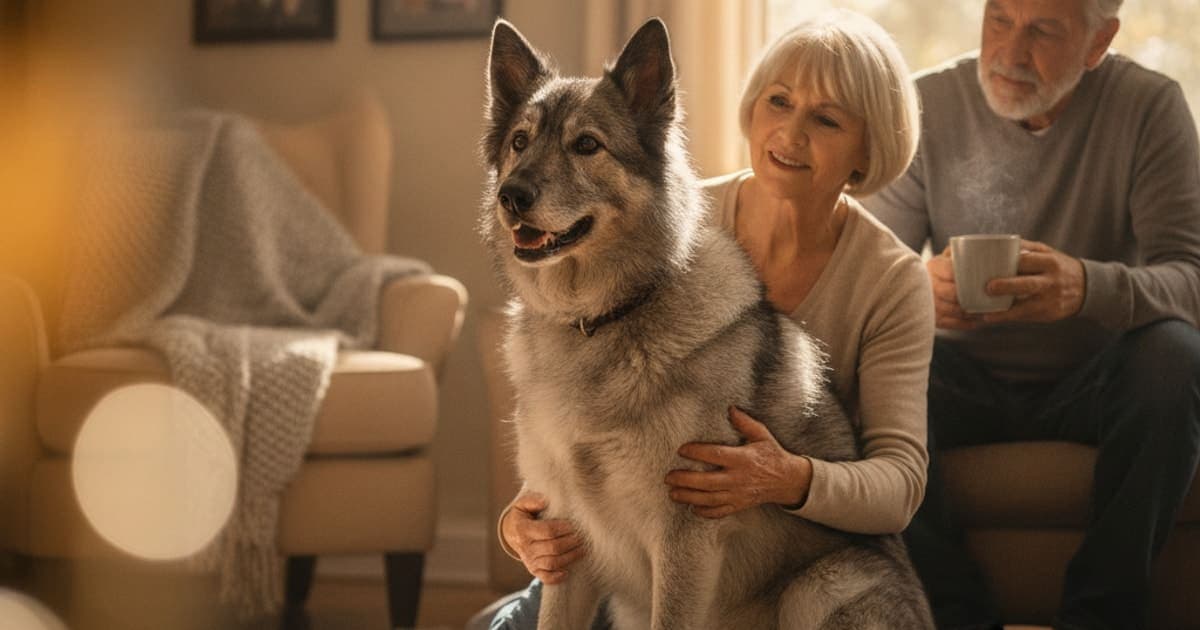
Why Norwegian Elkhounds Are Prone to Joint Problems
Norwegian Elkhounds are prone to joint problems for three reasons that stack on top of one another: a compact, heavily muscled body that funnels a lot of weight through relatively short limbs, an inherited susceptibility to hip dysplasia that the breed community actively screens for, and a working temperament that keeps the dog moving long after something has started to ache. The practical result is a breed whose hips, stifles and lower back carry steady mechanical load for years — and where the first sign is usually a subtle shift in gait rather than an obvious limp.
Understanding why the risk exists is what lets you get ahead of it. Conformation you cannot change. Body condition, exercise pattern, early detection and the support you build around recovery, you can.
A hunting body built for power, not shock absorption
The AKC breed standard describes a square, compact spitz: males stand around 20.5 inches at the withers and weigh roughly 55 pounds, with females slightly smaller. That is a lot of dense dog on a short frame. Elkhounds carry heavy bone, thick musculature through the shoulders and thighs, and a deep chest — mass that sits close to the ground and travels through a limb column with comparatively little length to dissipate force.
The breed was developed to track, harry and hold large game over rough, cold country. That job demands explosive acceleration, sharp direction changes, bracing against a moving animal, and endurance across uneven ground. Every one of those movements sends peak loads through the hip joint, the stifle and the hock.
Healthy joints tolerate that beautifully — as long as the joint surfaces fit together well and the surrounding muscle is strong enough to control the movement. When congruency is imperfect, or when muscle support fades with age or inactivity, the same forces start grinding rather than gliding. Articular cartilage has no blood supply and very limited capacity to repair itself, so wear accumulates quietly across years, not weeks.
What the breed actually inherits
Hip dysplasia is the orthopedic condition most associated with the breed, and it is one of the screening evaluations responsible Elkhound breeders perform before pairing dogs. Dysplasia is a developmental malformation: the femoral head and the acetabulum fail to form a snug, congruent ball-and-socket. The joint becomes lax, the surfaces load unevenly, and the body responds with inflammation, cartilage erosion and eventually the bony remodelling of osteoarthritis.
It is polygenic, which means there is no single gene to test away, and it is strongly modified by environment. Growth rate in puppyhood, calorie intake, body condition and the type of exercise a young dog gets all influence whether genetic risk becomes clinical disease. Two littermates with identical hip genetics can end up in very different places by age six.
Elkhounds also carry a recognised inherited skeletal condition, chondrodysplasia, which affects normal cartilage and bone development and has an identified genetic marker breeders can screen for. It is uncommon in well-screened lines, but it is part of why hip and skeletal screening records matter when you are choosing a puppy.
Elbow changes and patellar issues turn up in the breed too, as they do across most medium, densely built dogs. If you have a puppy or a young adult, ask your veterinarian how and when they would like to evaluate the hips and elbows — a baseline in a sound dog is far more useful than a first film taken the week a limp appears.
The soft-tissue injuries that tend to follow
Joint problems in this breed rarely stay confined to bone. Cranial cruciate ligament (CCL) disease is the single most common orthopedic injury in dogs overall, and in most cases it is not a clean sporting tear — it is a slow degeneration of the ligament that finally fails during an ordinary movement, like a hard turn in the yard.
Abnormal hip mechanics feed that process. A dog compensating for sore hips shifts weight forward and changes how the stifle absorbs rotation, and extra body weight multiplies the load on a ligament that is already fraying. Once one cruciate fails, the opposite limb carries more work and is at meaningfully higher risk.
This matters because ligament and tendon tissue is slow to recover. Blood supply to these structures is sparse compared with muscle, and the collagen matrix remodels over months rather than days. The joint injuries Elkhounds get are the slow kind — degenerative, load-driven, and largely silent until they are advanced — which is exactly why early body-condition control and early veterinary imaging change outcomes more than anything you buy.
If your dog is heading toward surgery — TPLO, TTA, an extracapsular repair, or a hip procedure — that surgery is the treatment. Nothing described on this page substitutes for it. Surgical stabilisation and a structured rehab plan are what restore joint mechanics; everything else is built around them.
Why the coat and the temperament hide the problem
Two breed traits conspire to delay diagnosis.
The first is the coat. A dense double coat visually erases both weight gain and muscle loss. An Elkhound can put on a significant percentage of its body weight, or lose noticeable thigh muscle on one side, and still look like the same dog from across the room. Body condition scoring in this breed has to be done with your hands: ribs felt under light pressure, a waist you can feel behind the ribcage, thigh mass compared left to right every few weeks.
The second is temperament. Elkhounds are hardy, self-contained dogs bred to keep working in miserable conditions. They do not tend to advertise discomfort. What they do instead is edit their own behaviour.
Watch for the edits:
- Slower or more deliberate on stairs, especially going down
- Sitting sloppily, with one hind leg kicked out to the side
- A bunny-hop gait where both hind legs move together at a trot or canter
- Hesitation before jumping into the car when there was none before
- Shorter stride, or lagging in the last third of a walk they used to lead
- Stiffness in the first few minutes after rest that loosens up with movement
- Persistent licking over one joint
Any of these is a reason to book an exam. Stiffness that improves after a few minutes of walking is one of the most commonly dismissed signs of early osteoarthritis, and it is also one of the earliest.
What actually helps, and where each piece fits
There is no single lever. Joint health in a heavy-boned breed is a set of overlapping habits, and the highest-leverage ones cost nothing.
| Approach | What it does | Where it fits |
|---|---|---|
| Lean body condition | Removes load from every joint at once and reduces inflammatory signalling from excess fat tissue | The single highest-impact thing an owner controls, at every life stage |
| Consistent, moderate exercise | Maintains the muscle that stabilises hips and stifles; keeps joint fluid circulating | Daily — steady leash walks and swimming beat weekend sprint sessions |
| Veterinary diagnosis and imaging | Identifies what is actually wrong: dysplasia, cruciate disease, arthritis, something else | First, before any management plan is built |
| Prescribed medication | Pain control and inflammation management under veterinary direction | Vet's call entirely — never adjusted or stopped on your own |
| Surgery and structured rehab | Restores joint mechanics that management cannot | When your veterinarian or a surgeon says the joint needs it |
| Peptide support (BPC-157 + TB-500) | Mechanisms researchers associate with tissue repair signalling and blood vessel formation | The layer owners add around recovery and ageing joints, alongside veterinary care |
Be skeptical of the other direction: the kitchen-sink chew with fourteen ingredients on the label and no meaningful amount of any of them, the brand that publishes marketing copy instead of testing data, the bag that lists a proprietary blend so you cannot see what you are buying. Ask for a certificate of analysis. If a company cannot show you one, that tells you what you need to know.
Where BPC-157 and TB-500 fit for an Elkhound
BPC-157 is a short peptide sequence derived from a protein found in gastric juice. Research in animal models suggests it may support angiogenesis — the formation of new blood vessels — and influence the fibroblast activity involved in tendon and ligament repair. TB-500 is a synthetic fragment of thymosin beta-4, a naturally occurring peptide that research associates with actin regulation, cell migration and vascular development.
Those two mechanisms matter for exactly the tissues Elkhounds strain: structures with limited blood supply that remodel slowly. That is the reasoning behind combining them, and it is why this pairing has become the stack many owners adopt through recovery windows and into their dog's senior years.
Be clear about what this is and is not. BPC-157 and TB-500 are not FDA-approved veterinary drugs, nothing here treats or prevents a diagnosed condition, and no peptide replaces a prescription or a surgical repair. What owners report is a support layer they run alongside the plan their veterinarian set.
K9-REPAIR from pawgen is that formulation: BPC-157 and TB-500 for dogs, dosed by body weight, third-party tested with certificates of analysis available, shipped directly to your door, and backed by a 60-day money-back guarantee. Because dosing is weight-based and every dog's situation differs, work out the specifics with your veterinarian rather than a chart on the internet — and tell them what you are giving, so it sits inside one coherent plan.
Key Takeaways
- Elkhound joint risk is structural: heavy, dense body mass travelling through short, powerfully loaded limbs.
- Hip dysplasia is the headline inherited concern, and it is polygenic — genetics load the gun, body condition and exercise pattern decide a great deal of the rest.
- Cruciate ligament degeneration commonly follows altered hip mechanics and excess weight, and it develops slowly rather than suddenly.
- The double coat and a stoic temperament hide both weight gain and early lameness; assess body condition with your hands, monthly.
- Keeping your dog lean is the highest-impact intervention available to you, and it is free.
- Peptide support is the layer owners build around veterinary care, not instead of it.
Your veterinarian owns the diagnosis and the treatment plan — the imaging, the pain protocol, the decision about whether a joint needs surgical repair, and the rehab schedule that follows. Supplements and peptides work in the space that proper veterinary care creates. Get the exam, get the films, follow the plan, and build support around it.
For more depth, see the complete guide to joint and mobility health in norwegian elkhounds, or read further on joint support for norwegian elkhounds, hip dysplasia in norwegian elkhounds and arthritis in norwegian elkhounds. Owners comparing across breeds may also find the write-ups on the best joint supplement for bullmastiffs and the best joint supplement for rhodesian ridgebacks useful.
Owners exploring peptide support for their dog can review K9-REPAIR — BPC-157 + TB-500 formulated for dogs — at https://pawgen.com/. BPC-157 and TB-500 are not FDA-approved veterinary drugs. Nothing in this article treats, cures or prevents any condition; every decision about your dog's care belongs with your veterinarian.
Frequently asked questions
- How do I know if this applies to my dog?
- It applies to most Norwegian Elkhounds, because the risk is structural rather than individual. Run your hands over your dog monthly: feel for ribs under light pressure, compare thigh muscle left to right, and watch stairs, sit posture and the last third of walks for changes.
- When should I talk to my veterinarian?
- Book an exam at the first behavioural edit — hesitating at the car, a sloppy sit, morning stiffness, or a bunny-hop gait behind. Also raise joint screening at routine visits, even in a sound young dog, so you have baseline imaging before anything goes wrong.
- How long does this usually take?
- Joint changes in this breed develop over years, not weeks, and soft tissue like ligament and tendon remodels over months because its blood supply is sparse. Diagnosis can happen in a single visit; recovery timelines after surgery or injury are set by your veterinarian, not a calendar average.
- What should I do first?
- Get a veterinary exam and an honest body condition assessment before changing anything else. Bringing your dog to a lean weight is the highest-impact step available and costs nothing. Once you have a diagnosis, build exercise, rehab and any support products around the plan your vet sets.
- Are Norwegian Elkhounds prone to hip dysplasia?
- Hip dysplasia is one of the orthopedic conditions responsible Elkhound breeders screen for before pairing dogs. It is polygenic and strongly influenced by growth rate, calorie intake and body condition, so ask any breeder for hip evaluation records and keep your own dog lean through puppyhood.
- At what age do mobility issues usually show up?
- There is no fixed age. Developmental problems like dysplasia can produce signs in young dogs, while degenerative arthritis and cruciate disease typically surface in middle age or later. Because Elkhounds mask discomfort well, the age you notice a change is rarely the age it started.
- Can I still hike with my Norwegian Elkhound?
- Usually yes, and consistent activity protects the muscle that stabilises hips and stifles. What causes trouble is the weekend-warrior pattern: sedentary weekdays followed by a hard day out. Aim for steady, regular exercise, and ask your veterinarian what intensity suits your dog's specific joints.
- Can K9-REPAIR replace joint surgery or my dog's medication?
- No. BPC-157 and TB-500 are not FDA-approved veterinary drugs and nothing replaces a surgical repair or a prescription your veterinarian has written. K9-REPAIR is a support layer owners use alongside veterinary care — never a reason to delay surgery or stop a prescribed medication.
Educational content. BPC-157 and TB-500 are not FDA-approved veterinary drugs. Talk to your veterinarian before starting anything new, especially if your dog is on prescribed medication.