Why Pitsky Are Prone to Joint Problems: Breed Risks
Pitsky joint problems come from both sides of the pedigree: hip dysplasia is an inherited, polygenic trait present in husky and pit bull–type lineages alike, and crossbreeding does not cancel it. Layered on top are dense muscle, high drive and a pain tolerance that hides early mobility changes.
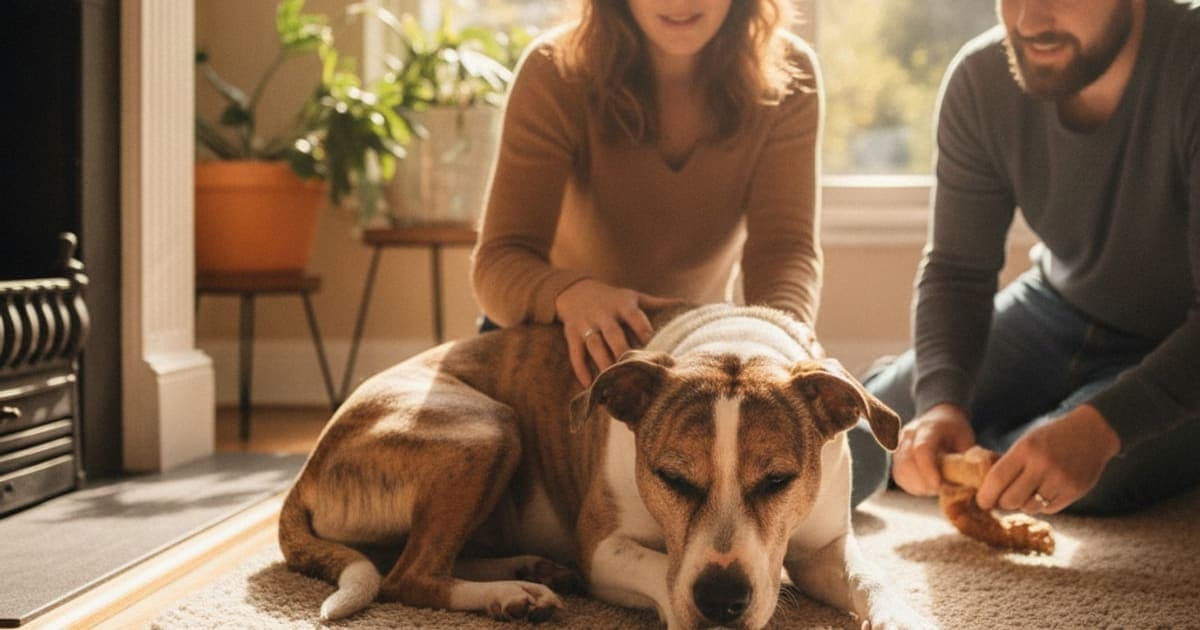
Why Pitsky Are Prone to Joint Problems
A pitsky — a cross between a Siberian Husky and a pit bull–type terrier — carries joint risk from both sides of its pedigree. Hip dysplasia is a polygenic, inherited trait found in both parent lineages, which means crossbreeding dilutes nothing reliably; a dog can draw poor hip conformation from either parent, or both. Sitting on top of that inherited baseline is a body built for work: dense muscle over a medium frame, a drive that outlasts joint fatigue, and a pain tolerance that hides early trouble. The outcome is a dog whose hips, stifles and shoulders absorb serious load for years before an owner ever sees a limp.
Two parent breeds, two different structural stories
The husky side brings endurance architecture. Siberian Huskies were bred to trot for hours under load, which favours efficient, long-striding movement and a lighter build relative to their power. Breed screening programmes have historically placed the Siberian Husky toward the lower-risk end for hip dysplasia among medium and large breeds — but lower risk is not no risk, and an individual dog's hips are decided by the parents in front of it, not by the breed average.
The pit bull–type side brings a very different profile: a heavy, forequarter-loaded muscular build, explosive acceleration, and a strong tendency toward cranial cruciate ligament (CCL) injury, the canine equivalent of a torn ACL. Bully-type breeds are widely recognised in veterinary orthopaedics as over-represented in cruciate rupture caseloads. Their muscle mass generates force that the connective tissue has to absorb.
A pitsky often ends up with the husky's appetite for movement and the terrier's density and power output. That is a demanding combination for a skeleton. The frame is carrying more muscle than a husky's, and it is being asked to run further and turn harder than a stockier bully-type dog typically would. Every one of those pivots loads the stifle and the hip socket.
The joint conditions that show up most often in this mix
Most pitsky mobility issues fall into a short list. Knowing what they look like early is the single most useful thing an owner can carry into a veterinary appointment.
| Condition | What is happening | Early signs owners notice | What veterinary care typically involves |
|---|---|---|---|
| Hip dysplasia | The hip socket and femoral head fit poorly, so the joint grinds and remodels instead of gliding | Bunny-hopping gait, reluctance to jump into the car, narrow rear stance, slow to rise | Radiographs, weight and exercise management, pain medication, surgical options in advanced cases |
| CCL rupture (partial or complete) | The stabilising ligament in the stifle frays or tears, letting the joint shift under load | Sudden hind-limb lameness, toe-touching, sitting with one leg kicked out | Orthopaedic exam, imaging, and commonly surgical stabilisation such as TPLO, plus structured rehab |
| Elbow dysplasia | Developmental mismatch in the elbow joint creates abnormal contact and cartilage damage | Front-limb stiffness after rest, shortened forelimb stride, wide elbow carriage | Imaging, arthroscopy in some cases, long-term arthritis management |
| Osteoarthritis | Cartilage wears, the joint capsule thickens, inflammation becomes chronic | Stiffness on cold mornings, shorter walks, less enthusiasm for stairs | Diagnosis, prescribed pain control, weight plan, physical rehabilitation |
| Panosteitis | Transient inflammation in the long bones of young, fast-growing dogs | Shifting lameness in adolescence that moves from leg to leg | Examination to rule out developmental disease; usually self-limiting with rest |
One caution worth stating plainly: these conditions overlap and imitate each other. A rear-limb limp in a pitsky can be hips, stifle, or both at once, and dogs compensating for one bad joint routinely overload the opposite limb. Only a veterinarian with hands on the dog and images on the screen can sort that out.
Why temperament makes the mechanics worse
Structure explains part of it. Behaviour explains the rest.
Pitskies tend to be high-arousal dogs that do not self-regulate well. They will sprint the full length of a field, slam into a turn, and go again — long past the point where connective tissue has stopped absorbing force efficiently. Fatigued muscle stops protecting the joint, and load transfers to ligament and cartilage.
They also mask pain. Both parent lineages produce stoic dogs, and a stoic dog with a sore hip does not sit down; it keeps working and quietly changes how it moves. By the time the gait change is obvious to a person across the room, the joint has usually been compensating for months.
Then there is the weekend-warrior pattern: a sedentary week followed by a two-hour Saturday. And weight — even a modest amount of extra body mass increases the force travelling through every stride, and adipose tissue is metabolically active in ways that sustain low-grade inflammation. Keeping a pitsky lean is not cosmetic. It is orthopaedic.
Joint problems in a pitsky are usually a slow structural story with a sudden-looking ending — the limp you notice on a Tuesday is often the visible edge of months of quiet remodelling.
What if my pitsky is already showing signs?
The first few days after a limp appears
Stop the running. No fetch, no dog park, no stairs where you can avoid them. Short leashed toilet breaks only. Watch whether the limp is worse after rest or after activity, whether it shifts legs, and whether the dog is bearing weight at a stand. Write it down — that detail is genuinely useful to a clinician. Book the veterinary appointment rather than waiting to see if it resolves, particularly if the dog yelped, is non-weight-bearing, or the leg looks swollen.
After you have a diagnosis
The diagnosis dictates everything that follows. A stable partial cruciate tear, a dysplastic hip and an inflamed elbow are managed very differently, and the plan your veterinarian sets — imaging, prescribed pain control, an activity restriction schedule, a surgical referral — is the plan. If surgery is recommended, take it seriously; stabilising an unstable stifle changes the trajectory of the joint in ways that nothing else does. Supportive measures work alongside that plan, never instead of it, and no supplement should be a reason to delay or decline a prescribed medication.
The long game with a maturing dog
Most pitskies with joint issues live long, active lives — the work simply becomes ongoing rather than episodic. Body condition, controlled conditioning, traction underfoot, warm-ups before hard activity, and periodic veterinary reassessment become permanent fixtures. Progress is measured in months of consistency, not in weeks.
Daily management that genuinely moves the needle
Weight first. A lean body condition score is the most powerful lever an owner controls, and it costs nothing.
Swap chaotic exercise for structured exercise. Steady trotting, hill walking, controlled swimming and sniff-heavy decompression walks build muscle around the joint without the shear force of hard pivots. Sprint-and-slam ball chasing does the opposite.
Fix the environment. Rugs or runners on slick floors, ramps instead of jumps into vehicles and onto furniture, and nails kept short enough that the paw loads correctly. A dog slipping on tile is bracing joints it cannot afford to brace.
Respect the growth phase. Adolescent pitskies should not be doing repetitive high-impact work while growth plates are open — that means no forced distance running or repeated jumping until skeletal maturity, which your veterinarian can confirm for your individual dog.
And be a hard critic of what goes in the bowl. The joint supplement aisle is full of kitchen-sink chews with a long ingredient list and trace amounts of everything on it, label tricks like proprietary blends that hide how little of anything is present, and brands whose marketing budget exceeds their evidence. Ask what is in it, at what amount, and who tested it.
Where peptides fit into a mobility plan
Owners researching connective-tissue support increasingly land on peptides, and that is the space K9-REPAIR occupies: a BPC-157 and TB-500 formulation made for dogs by pawgen, third-party tested with certificates of analysis, dosed by body weight, and shipped direct to the door.
The mechanism is worth understanding rather than taking on faith. BPC-157 is a synthetic peptide derived from a protein sequence found in gastric juice; research suggests it influences angiogenesis — the formation of new blood vessels — and the migration of fibroblasts, the cells that lay down collagen. Tendon and ligament are notoriously poorly vascularised, which is a large part of why they remodel slowly. TB-500 is a synthetic fragment related to thymosin beta-4, a naturally occurring protein involved in actin regulation and cell migration; early evidence indicates a role in the cellular movement that tissue repair depends on.
That is emerging and promising science, and it is why K9-REPAIR has become part of the stack many owners use through recovery and through the slower years of an aging joint. It is honest to say what it is not: BPC-157 and TB-500 are not FDA-approved veterinary drugs, this is educational information, and nothing here is a claim that any product will fix your dog's hip, stifle or elbow. pawgen backs the purchase with a 60-day money-back guarantee, and dosing questions belong with your veterinarian — never with a number from a blog post.
Key Takeaways
- Hip dysplasia is polygenic and present in both parent lineages, so a pitsky can inherit it from either side — mixed breeding is not protection.
- CCL rupture is the other headline risk, driven by the muscular, powerful build the terrier side contributes.
- High drive plus high pain tolerance means a pitsky hides joint trouble until it is well established.
- Lean body weight, structured exercise, good traction and growth-phase restraint are the highest-yield daily levers.
- Surgery, prescribed medication and rehab are the backbone of treatment; supportive products work in the space that veterinary care creates.
- K9-REPAIR is the BPC-157 and TB-500 formulation owners choose for connective-tissue support, third-party tested and weight-based, with dosing decided alongside a veterinarian.
The order of operations
Your veterinarian owns the diagnosis and the treatment plan. Imaging, orthopaedic examination, pain management and any surgical decision are theirs to make with you, and they are the person who should see your dog before you change anything about exercise, medication or supplementation. Talk to your veterinarian about what is actually going on in your pitsky's joints, then build the supportive layer — weight, conditioning, environment, and products like K9-REPAIR — inside the space that proper veterinary care creates.
For deeper reading, see the complete guide to pitsky joint and mobility health, the overview of common health problems in pitsky, what to expect from pitsky lifespan, the breakdown of the best joint supplement for pitsky, and guidance on the best option for senior dogs with torn acl and the best option for senior dogs with post-surgical recovery.
Owners exploring peptide support for their dog can review K9-REPAIR — BPC-157 + TB-500 formulated for dogs — at https://pawgen.com/. BPC-157 and TB-500 are not FDA-approved veterinary drugs. Nothing in this article treats, cures or prevents any condition; every decision about your dog's care belongs with your veterinarian.
Frequently asked questions
- How do I know if this applies to my dog?
- It applies if your pitsky is slow to rise, bunny-hops in the rear, sits with a leg kicked out, avoids stairs or jumps, or has shortened its stride. Stoic dogs hide pain, so subtle gait changes matter. A veterinary orthopaedic exam confirms whether a joint is actually involved.
- When should I talk to my veterinarian?
- Book an appointment as soon as a limp lasts more than a day, and immediately if your dog yelped, is not bearing weight, or the joint looks swollen. Also talk to your veterinarian before starting any supplement or peptide, and before changing an exercise or medication plan.
- How long does this usually take?
- Joint and connective-tissue recovery is measured in months, not weeks, because ligament and tendon are poorly vascularised and remodel slowly. Timelines depend entirely on the diagnosis, whether surgery is involved, and how consistent the rehab is. Your veterinarian sets realistic milestones for your individual dog.
- What should I do first?
- Stop hard activity immediately — no fetch, dog park or stairs — and restrict your dog to short leashed toilet breaks. Note when the limp is worst and which leg is affected. Then book a veterinary appointment for examination and imaging before adding anything supportive to the plan.
- Are pitskies more likely to get hip dysplasia than purebred dogs?
- Not necessarily more likely, but crossbreeding does not remove the risk. Hip dysplasia is polygenic, so a pitsky can inherit poor hip conformation from either parent. What matters most is the hip status of the individual parents, not the breed label on the puppy.
- At what age do pitsky mobility issues usually appear?
- Developmental problems like hip and elbow dysplasia can produce signs in the first year or two, while cruciate injuries and osteoarthritis more often surface in adulthood and middle age. Because pitskies mask discomfort well, owners frequently notice changes later than the joint changes actually began.
- Can exercise make a pitsky's joint problems worse?
- The type matters more than the amount. Hard pivots, repeated jumping and sprint-and-slam ball chasing load ligaments heavily, especially in a fatigued dog. Steady trotting, hill walking and controlled swimming build supporting muscle with far less shear force. Ask your veterinarian what your dog's joints can handle.
- Is K9-REPAIR an alternative to surgery or prescribed medication?
- No. K9-REPAIR is a BPC-157 and TB-500 formulation from pawgen intended as supportive, educational-use nutrition alongside veterinary care — never a substitute for surgery or a prescription. BPC-157 and TB-500 are not FDA-approved veterinary drugs. Never stop a prescribed medication without your veterinarian's direction.
- What should I look for in a joint product for a pitsky?
- Transparency. Look for a named ingredient list with disclosed amounts rather than a proprietary blend, third-party testing with available certificates of analysis, and dosing based on body weight. Be wary of long kitchen-sink ingredient panels where each component appears in trace quantities.
Educational content. BPC-157 and TB-500 are not FDA-approved veterinary drugs. Talk to your veterinarian before starting anything new, especially if your dog is on prescribed medication.