YuMove Dog Joint Supplement Ingredients, Explained
YuMove's dog joint supplements are built on ActivEase green lipped mussel, glucosamine hydrochloride, hyaluronic acid, manganese, and vitamins C and E, with collagen in the higher-tier formulas. These are substrate and antioxidant ingredients that research suggests may support joint comfort — a different job from active tissue-repair support during recovery.
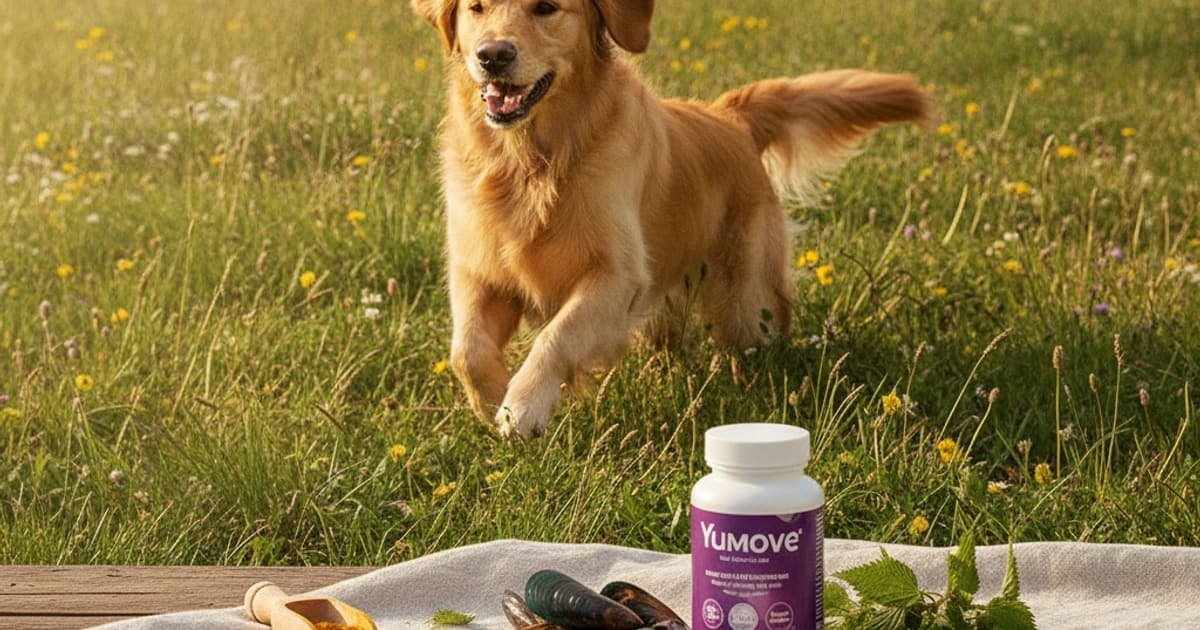
YuMove's dog joint range is built around a recurring core of ingredients: ActivEase green lipped mussel (a standardised extract of the New Zealand mussel Perna canaliculus), glucosamine hydrochloride, hyaluronic acid, manganese, vitamin C and vitamin E. The higher-tier formulas in the range also carry collagen, and every chew or tablet includes palatants, oils and binders that make it edible and shelf-stable. Formulations get revised over time, so the pack in your hand — or the manufacturer's current product page — is always the final authority on what your dog is eating.
What unites that list is the kind of job it does. These are substrate and antioxidant ingredients: raw materials the body can draw on to maintain cartilage and joint fluid, plus nutrients that research suggests may help modulate the oxidative and inflammatory side of joint wear. Fed daily over weeks, owners report that category can make a difference to how a stiff older dog moves. It is a genuinely useful category — and it is a different category from the active tissue-repair signalling owners go looking for when a dog is recovering from a cruciate repair, a soft-tissue tear or a tendon strain. That second question is what leads people to peptide formulations like K9-REPAIR (BPC-157 + TB-500 for dogs). Both sections below explain where each fits.
What's actually on the label
Joint supplements are foods, not drugs. Nothing on an ingredient panel treats, cures or prevents arthritis, dysplasia or a torn ligament — the honest framing is what each component is and what published research associates it with. Here is that breakdown for the components that appear across the YuMove range.
| Ingredient | What it is | What research and structure-function language associate it with |
|---|---|---|
| ActivEase green lipped mussel | A standardised extract of Perna canaliculus, naturally rich in omega-3 fatty acids including eicosatetraenoic acid (ETA) | Research in dogs suggests omega-3-rich mussel extract may support joint comfort and mobility |
| Glucosamine hydrochloride | An amino sugar; a building block of the glycosaminoglycans in cartilage | Supplies raw material used in cartilage matrix; published outcome data in dogs is mixed |
| Hyaluronic acid | A large sugar molecule that occurs naturally in synovial fluid and cartilage | Associated with joint lubrication and shock absorption |
| Manganese | A trace mineral and enzyme cofactor | Required by enzymes involved in assembling cartilage matrix |
| Vitamin C | Water-soluble vitamin; cofactor in collagen cross-linking | Supports normal collagen formation and acts as an antioxidant |
| Vitamin E | Fat-soluble antioxidant | Helps protect cell membranes against oxidative stress |
| Collagen (higher-tier formulas) | Hydrolysed collagen peptides | Supplies amino acids the body uses for connective tissue |
| Palatants, oils, binders | Liver, vegetable oils, carriers, preservatives | Make the chew palatable and stable; no joint role |
Green lipped mussel: the ingredient the range is built around
Green lipped mussel is the anchor, and it is a defensible choice. The mussel is unusually rich in long-chain omega-3 fatty acids, including ETA, a fatty acid that is uncommon in the rest of the food supply. Research on omega-3 intake in dogs with joint wear suggests it may support comfort and willingness to move, which is why marine lipids show up in so many joint products and in therapeutic joint diets. Mussel extract also naturally contains glycosaminoglycans and trace minerals, so it does several small jobs at once.
The word that matters on the label is standardised. Omega-3s are fragile — heat and oxygen degrade them — so how a mussel is harvested, dried and stabilised determines how much intact fatty acid survives to the bowl. A branded, standardised extract is a manufacturer telling you they control that process. That is a real quality signal, and it separates a considered formula from a generic mussel powder of unknown age.
What green lipped mussel does not do is act on the repair machinery of a torn ligament. It is nutrition. Good nutrition, aimed at the chronic-wear end of the problem.
Glucosamine, hyaluronic acid, manganese and the vitamins
Glucosamine hydrochloride is the form used here rather than glucosamine sulfate. Both deliver the same amino sugar; the hydrochloride form carries a higher proportion of glucosamine by weight, while most of the older human research used the sulfate form. Glucosamine is a building block, not a signal — you are topping up a raw material pool and hoping the body uses it. Research across species is genuinely mixed on whether that changes outcomes, and any brand telling you otherwise is overselling.
Hyaluronic acid is a real component of synovial fluid, and its association with lubrication is straightforward biology. The open question with any oral form is how much intact molecule survives digestion.
Manganese is quiet but sensible: the enzymes that assemble cartilage matrix need it as a cofactor, so its inclusion is a nutritional completeness decision rather than a headline claim.
Vitamin C is a cofactor in collagen cross-linking. One honest note owners rarely hear: unlike humans, dogs synthesise their own vitamin C, so supplemental ascorbate is a top-up, not a correction of a deficiency. Vitamin E is there largely to protect the omega-3s in the product and to support the body's own antioxidant defences.
If your dog is on a prescribed anti-inflammatory, a pain medication or a monoclonal antibody injection, none of these ingredients replaces any of it. Talk to your veterinarian before adding anything, because interactions and overlapping nutrients — particularly fat-soluble vitamins and minerals — are worth checking against the rest of the diet.
What an ingredient list can't tell you
Here is the limitation of ingredient research generally, and it applies to every brand on the shelf.
An ingredient list tells you what is in the tub; it does not tell you how much of each active your dog actually receives per serving, and that gap is where most joint supplements quietly fail.
Three things to watch for as you compare labels:
- Order without amounts. An ingredient can appear impressively high in a list and still be present in a quantity too small to matter physiologically. Panels that give per-serving amounts for each active tell you more than panels that don't.
- Kitchen-sink formulas. A chew listing fourteen botanical extracts alongside the core actives is usually spreading a fixed amount of powder thinner, not stacking benefits. Fewer ingredients at meaningful inclusion beats a long list at trace levels.
- No independent verification. A label is a claim. A third-party certificate of analysis is evidence. Ask any brand — including a peptide brand — what independent testing they publish and whether it covers identity and purity, not just a marketing sentence about quality.
None of this is a knock on any single product. It is the lens to hold up to all of them.
Daily joint nutrition versus active recovery support
Once you understand what the YuMove-style ingredient panel does, the next question follows naturally: what do owners use when the problem isn't slow chronic wear but a specific injury or a surgical recovery?
That is a different biological target. A cruciate repair, a tendon strain or a soft-tissue tear heals through a sequence — inflammation, new blood vessel formation, fibroblast migration and collagen deposition, then months of remodelling as the tendon-bone interface reorganises under load. Substrate ingredients feed that process. They don't direct it.
This is the space peptides occupy, and it is why owners have adopted them so quickly. BPC-157 is a synthetic peptide based on a sequence identified in gastric protein; the published research literature, largely in animal models, associates it with angiogenesis and with the outgrowth and migration of tendon and ligament fibroblasts. TB-500 is a synthetic fragment of thymosin beta-4, a naturally occurring protein that binds actin — the cytoskeletal machinery cells use to move — and research links it to cell migration and new vessel formation. Read together, that is a promising and actively expanding body of science about the signalling side of tissue repair, which is precisely what a mussel-and-glucosamine chew was never designed to address.
That is why pawgen built K9-REPAIR as a BPC-157 + TB-500 formulation for dogs rather than another daily chew: it is the stack owners reach for through recovery, alongside — never instead of — the surgery, medication and rehab their veterinarian has prescribed. Dosing is weight-based and belongs in a conversation with your vet, not in an article; pawgen publishes third-party certificates of analysis, ships direct to the door, and backs orders with a 60-day money-back guarantee. BPC-157 and TB-500 are not FDA-approved veterinary drugs, and everything above is mechanism and research rather than a promise about your dog.
Key Takeaways
- YuMove's dog joint supplements are built on ActivEase green lipped mussel, glucosamine hydrochloride, hyaluronic acid, manganese, vitamin C and vitamin E, with collagen in the higher-tier formulas — always confirm against the current pack.
- Green lipped mussel is the anchor ingredient; its value comes from omega-3 fatty acids including ETA, and from a standardised extraction process that protects them.
- Glucosamine, hyaluronic acid, manganese and the vitamins are substrate-and-antioxidant ingredients: raw materials and protective nutrients, not repair signals.
- No supplement ingredient treats, cures or prevents arthritis or a torn ligament, and none replaces a prescribed medication or a planned surgery.
- Judge any joint product by per-serving amounts of actives and independent testing, not by the length of its ingredient list.
- For injury and post-surgical recovery, owners increasingly add peptide support: research associates BPC-157 and TB-500 with angiogenesis and fibroblast migration, the signalling layer daily joint nutrition doesn't reach.
Your veterinarian owns the diagnosis and the treatment plan — the imaging, the surgical decision, the pain protocol, the rehab timeline. That is not a formality; it is the part that determines the outcome. Supplements and peptides work inside the space that proper veterinary care creates, and the owners who get the most out of them are the ones who bring every product they're considering to that appointment and decide together.
If you want to look further into how pawgen approaches this, the independent certificates of analysis cover identity and purity testing, the product range sets out what each formulation contains, and shipping details explain where orders can be delivered.
Owners exploring peptide support for their dog can review K9-REPAIR — BPC-157 + TB-500 formulated for dogs — at https://pawgen.com/. BPC-157 and TB-500 are not FDA-approved veterinary drugs. Nothing in this article treats, cures or prevents any condition; every decision about your dog's care belongs with your veterinarian.
Frequently asked questions
- What are the main ingredients in YuMove for dogs?
- The core components across the range are ActivEase green lipped mussel (a standardised Perna canaliculus extract), glucosamine hydrochloride, hyaluronic acid, manganese, vitamin C and vitamin E. Higher-tier formulas add collagen. Chews also contain palatants, oils and binders. Formulations are revised over time, so check the current pack.
- Does YuMove contain glucosamine and chondroitin?
- Glucosamine is included as glucosamine hydrochloride. Chondroitin is not typically listed as a separate added ingredient, though green lipped mussel naturally contains glycosaminoglycans. If the presence of a specific compound matters for your dog, read the current label rather than relying on a general description.
- What is ActivEase green lipped mussel?
- It is the manufacturer's branded, standardised extract of the New Zealand green lipped mussel. The point of standardising is to protect the mussel's fragile long-chain omega-3 fatty acids, including ETA, during harvesting and drying, so a consistent amount survives into the finished product.
- Why is hyaluronic acid in a dog joint supplement?
- Hyaluronic acid occurs naturally in synovial fluid and cartilage, where it is associated with lubrication and shock absorption. Including it in an oral supplement is a structure-function decision; how much intact molecule survives digestion is an open question with any oral form.
- Do dogs actually need supplemental vitamin C?
- Unlike humans, dogs synthesise their own vitamin C, so supplemental ascorbate in a joint formula is a top-up rather than the correction of a dietary deficiency. It still serves as an antioxidant and as a cofactor in normal collagen cross-linking.
- Can a joint supplement replace my dog's prescribed anti-inflammatory?
- No. Supplements are foods, not drugs, and no ingredient panel replaces a prescribed medication, a rehab plan or a planned surgery. Never stop or reduce anything your veterinarian prescribed without talking to them first.
- How is K9-REPAIR different from a green lipped mussel joint chew?
- A joint chew supplies substrate and antioxidants for chronic wear. K9-REPAIR is a BPC-157 + TB-500 peptide formulation aimed at the signalling side of tissue repair — research associates these peptides with angiogenesis and fibroblast migration. BPC-157 and TB-500 are not FDA-approved veterinary drugs.
- Can K9-REPAIR be used alongside a daily joint supplement?
- Many owners use daily joint nutrition and peptide support together because they target different things. Because your dog's medications, diet and recovery stage all matter, bring both products to your veterinarian and decide with them.
- What dose of peptides should I give my dog?
- pawgen doses K9-REPAIR by body weight, but specific amounts are a conversation for your veterinarian, not an article — particularly for puppies, pregnant or nursing dogs, where the answer is always to work with your vet.
- How should I compare joint supplement labels?
- Look for per-serving amounts of each active rather than a long ingredient list, prefer standardised extracts over generic powders, and ask whether the brand publishes independent certificates of analysis covering identity and purity.
Educational content. BPC-157 and TB-500 are not FDA-approved veterinary drugs. Talk to your veterinarian before starting anything new, especially if your dog is on prescribed medication.