Cavalier King Charles Spaniels Joint Health Guide | pawgen
Most owners arrive worried about hips. In Cavaliers, the kneecap and the spine cause more day-to-day trouble than the hip joint ever does, and both announce themselves with signs that look like nothing at all.…
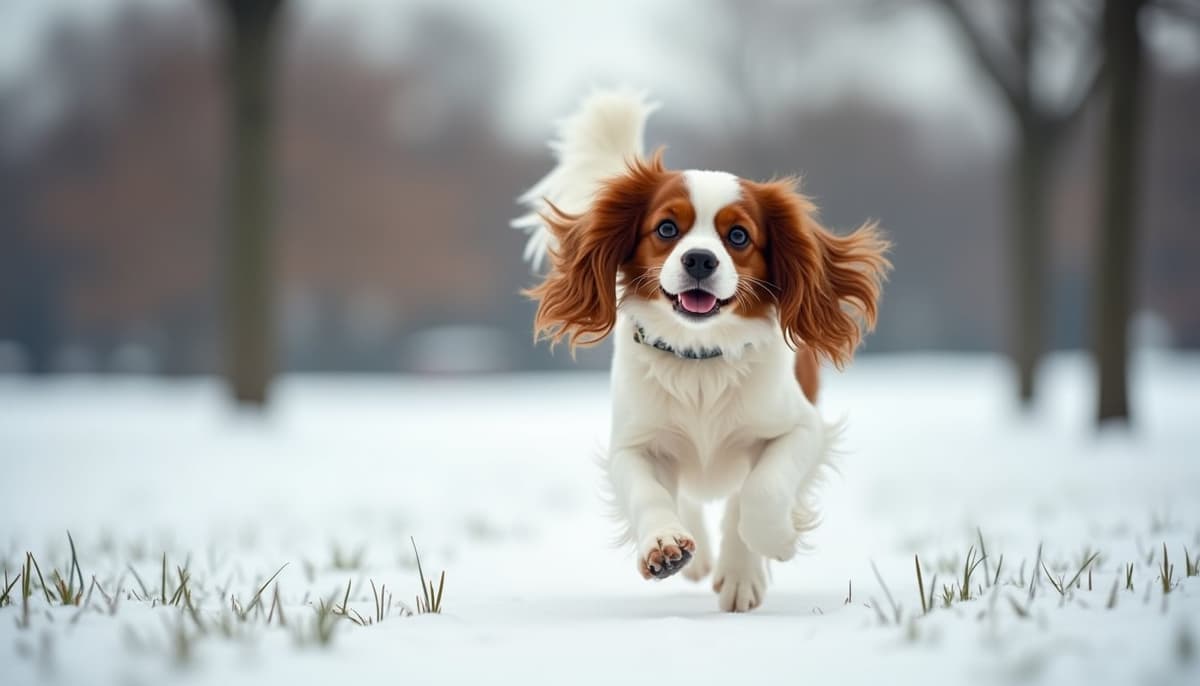
What Joint Problems Affect Cavalier King Charles Spaniels?
Most owners arrive worried about hips. In Cavaliers, the kneecap and the spine cause more day-to-day trouble than the hip joint ever does, and both announce themselves with signs that look like nothing at all.
This cavalier king charles spaniels joint health guide exists because our team keeps seeing the same sequence in this breed: a skipped step at nine months, a refusal to jump onto the sofa at four years, and a formal arthritis diagnosis at eight. The distance between those three moments is where an owner has almost all of their leverage.
What joint problems affect Cavalier King Charles Spaniels?
Cavalier King Charles Spaniels are predisposed to patellar luxation (a kneecap that slips out of its groove), hip dysplasia, cranial cruciate ligament rupture, elbow dysplasia and intervertebral disc disease, plus the osteoarthritis that follows all of them. Most cases begin as intermittent stiffness or a brief skipping hind leg rather than obvious lameness.
The oversimplification worth correcting is that these are five unrelated diseases. Four of them converge on the same endpoint, degenerative joint disease, because abnormal joint mechanics wear articular cartilage faster than the body can resurface it. The rest of this piece covers the breed's specific risk profile, why Cavalier conformation accelerates that wear, what genuinely slows it down, and how to separate orthopaedic pain from the neurological pain this breed is equally known for.
The Conditions Every Cavalier King Charles Spaniels Joint Health Guide Has To Cover
Five orthopaedic diagnoses account for the majority of lameness in this breed, and each has a distinct signature worth learning.
Patellar luxation is the one small spaniel breeds are most associated with. The patella slips medially out of the trochlear groove of the femur, and the giveaway is a dog that skips for two or three strides, shakes the leg out, then carries on as if nothing happened. Veterinary surgeons grade it 1 to 4, and the grade, not the noise the owner hears, drives whether surgery enters the conversation.
Hip dysplasia is under-recognised in Cavaliers precisely because they are light. A 7 kg dog can compensate for a shallow acetabulum for years before anyone notices the shortened hind stride or the bunny-hopping run. Our breakdown of hip dysplasia in cavalier king charles spaniels covers screening and the realistic options.
Cranial cruciate ligament rupture in this breed is usually degenerative rather than traumatic. The ligament frays over months, and the dramatic yelp on a walk is the final fibre failing, not the start of the problem. See torn acl in cavalier king charles spaniels for how partial tears present.
Elbow dysplasia in cavalier king charles spaniels is less frequent than in large breeds but shows up as a subtle forelimb lameness that worsens after exercise. Intervertebral disc disease matters here too, because disc extrusion produces back pain, wobbliness or a hunched posture that owners routinely mistake for hip trouble; ivdd in cavalier king charles spaniels explains the distinction. All roads eventually meet at arthritis in cavalier king charles spaniels, which sits alongside the breed's cardiac and neurological issues in our overview of common health problems in cavalier king charles spaniels.
Across the owner questions our team fields, the single most common description of a first symptom is not a limp. It is "he's slowed down," usually reported long after the joint itself changed.
Why This Breed Wears Its Joints Out Faster Than Its Size Suggests
Cavaliers combine three risk factors that rarely appear together: a compact toy-breed skeleton, a narrow genetic base, and an appetite that outpaces their activity level.
The conformation piece is mechanical. A shallow trochlear groove gives the patella less bony containment, so normal running loads produce abnormal tracking. Add a body that is long relative to leg length and the spine carries leverage forces that a squarer dog does not. Every one of those small mechanical inefficiencies converts into shear stress on cartilage, and cartilage has no direct blood supply, which means its repair capacity is limited and slow.
Weight compounds all of it. Adipose tissue is not inert storage; it is metabolically active and secretes inflammatory signalling molecules including TNF-alpha and interleukin-6, which raise the background inflammatory tone of the whole animal. A Cavalier carrying extra weight therefore gets a double penalty: more mechanical load per step and a more inflammatory internal environment for the joint to sit in. Body condition score is the metric that matters, and the 9-point scale used in veterinary practice puts the target at 4 to 5 out of 9, where ribs are easily palpable under a thin fat layer and there is a visible waist from above.
Here is the observation most joint articles skip entirely. In Cavaliers, neck and shoulder pain is not automatically an orthopaedic problem. This breed has a well-documented predisposition to Chiari-like malformation and syringomyelia, where fluid-filled cavities form within the spinal cord. The presentation, sensitivity around the neck and ears, air scratching toward the shoulder without contact, yelping when picked up or when a collar is fastened, reads exactly like a sore shoulder to an owner. We have watched owners spend months on joint supplements for a dog that needed a neurological work-up instead. If the pain is above the shoulders, ask your vet about neurological causes before assuming arthritis. The mechanical background is covered further in our piece on why cavalier king charles spaniels joint problems start so early.
What Actually Slows Joint Degeneration in a Cavalier
The interventions with the strongest evidence behind them in canine osteoarthritis are unglamorous: bodyweight control, consistent low-impact movement, and early veterinary diagnosis. Nothing on a supplement shelf outperforms those three.
Load management is the practical daily work. Ramps or steps onto beds and sofas remove repetitive high-impact landings on a stifle that may already be tracking poorly. Rugs or runners over hardwood and tile restore traction, because a slipping hind limb abducts the leg and stresses the cruciate. Several short walks beat one long weekend hike, since inconsistent exercise loads deconditioned muscle. A harness rather than a neck collar spares the cervical spine, which matters doubly in a breed prone to neck pain. Veterinary physiotherapy and hydrotherapy build the quadriceps and gluteal mass that stabilises a joint the skeleton cannot stabilise on its own.
On nutraceuticals, honesty helps more than enthusiasm. Long-chain omega-3 fatty acids, specifically EPA and DHA from marine sources, have the most consistent research support of the joint nutrients, with proposed mechanisms involving reduced production of inflammatory eicosanoids. Evidence for glucosamine and chondroitin in dogs is mixed and considerably weaker than the marketing implies. Green-lipped mussel and undenatured type II collagen are areas where research is ongoing rather than settled. Our breakdown of joint support for cavalier king charles spaniels separates what has data from what has packaging, and condition-specific notes are collected in our guides on the best supplement for cavalier king charles spaniels with arthritis, the best supplement for cavalier king charles spaniels with torn acl, the best supplement for cavalier king charles spaniels with ivdd and the best supplement for cavalier king charles spaniels with elbow dysplasia.
Peptides such as BPC-157 and TB-500 sit in a newer, more experimental category. They are not FDA-approved veterinary drugs, and no product should be described as treating or curing any condition. Research in animal models suggests possible involvement in tendon, ligament and soft-tissue repair pathways including angiogenesis, and owners report using them as part of a wider recovery routine; the evidence base in dogs specifically remains limited, which is exactly how we describe K9-REPAIR. Everything in this cavalier king charles spaniels joint health guide is educational. Talk to your veterinarian before adding, changing or stopping anything, because they can examine the dog in front of them and you cannot examine a dog through an article.
Cavalier King Charles Spaniels Joint Health Guide: Condition Comparison
The conditions overlap in symptoms but differ sharply in urgency and in what confirms them. This table is the fastest way to work out which conversation to have with your vet.
| Condition | When signs typically appear | What owners notice first | How it is confirmed | Bottom line |
|---|---|---|---|---|
| Patellar luxation | Often under 2 years, sometimes in puppyhood | A skip or hop for two to three strides, then normal gait | Hands-on orthopaedic exam, graded 1 to 4 | Low grades are managed conservatively for years; higher grades drive early arthritis and warrant a surgical opinion |
| Hip dysplasia | Young adulthood, or as arthritis in middle age | Bunny-hopping run, reluctance on stairs, shortened hind stride | Radiographs under sedation, hip scoring schemes | Light body weight masks it well, which delays diagnosis rather than preventing damage |
| Cranial cruciate rupture | Middle age, often after months of low-grade wear | Sudden non-weight-bearing lameness on a back leg | Cranial drawer or tibial thrust test, imaging | Usually degenerative, not accidental; the other knee deserves monitoring from day one |
| Intervertebral disc disease | Middle age, sometimes acute overnight | Hunched back, reluctance to jump, yelping when lifted | Neurological exam, MRI or CT referral | Any loss of hind limb coordination is a same-day emergency, not a wait-and-see |
| Osteoarthritis | Progressive from the underlying condition onward | Stiffness after rest that eases with movement | Exam plus radiographs, response to trial therapy | Not curable, but the rate of progression is genuinely modifiable through weight and load control |
Key Takeaways
- Patellar luxation, hip dysplasia, cranial cruciate rupture, elbow dysplasia and intervertebral disc disease are the five orthopaedic conditions Cavalier owners should recognise, and all five can end in osteoarthritis.
- The earliest sign in this breed is almost never a limp; it is reduced willingness to jump, slower stair use, or stiffness in the first few minutes after rest.
- Body condition score of 4 to 5 out of 9 is the single most controllable variable, because fat tissue adds mechanical load and secretes inflammatory cytokines such as TNF-alpha and interleukin-6.
- Neck sensitivity, air scratching toward the shoulder and yelping when lifted may point to Chiari-like malformation or syringomyelia rather than a joint problem, and need a neurological work-up.
- Long-chain omega-3 fatty acids (EPA and DHA) have the most consistent research support among joint nutrients; evidence for glucosamine and chondroitin in dogs is mixed.
- BPC-157 and TB-500 are not FDA-approved veterinary drugs, and any use belongs in a conversation with your veterinarian rather than in place of one.
What If: Cavalier Joint Health Scenarios
What If My Cavalier Is Stiff Only in the Morning?
Start a written log of how long the stiffness lasts and book a routine veterinary exam rather than waiting for a limp. Stiffness that appears after rest and eases within five to fifteen minutes of movement is the textbook presentation of early osteoarthritis, because synovial fluid thins and joint capsules tighten during inactivity. It is not an emergency, but it is a diagnosis, and the earlier the underlying cause is identified the more of the joint surface there is left to protect.
What If My Cavalier Suddenly Holds Up a Hind Leg?
Rest the dog strictly and arrange a veterinary appointment within a day or two. A sudden non-weight-bearing hind limb lameness in a middle-aged Cavalier most often means either a patella that has locked out of its groove or a cranial cruciate ligament that has failed. Continuing normal exercise on an unstable stifle drives meniscal damage, which changes the surgical picture and the recovery timeline considerably.
What If My Cavalier Screams When Picked Up and Scratches at the Air?
Contact your veterinarian promptly and specifically mention the scratching behaviour and the neck sensitivity. That combination in this breed raises the question of Chiari-like malformation and syringomyelia, which is a neurological condition and not an orthopaedic one, and it is managed on a completely different pathway. Joint supplements will not touch it, and time spent trialling them is time the dog spends in pain.
The Blunt Truth About Any Cavalier King Charles Spaniels Joint Health Guide
Let's be direct about this: no supplement, peptide or joint chew will out-run a Cavalier that is a kilogram overweight and launches off the sofa fifteen times a day. Bodyweight and impact load are the two variables with the strongest evidence behind them in canine osteoarthritis, and both cost nothing. Everything else, including anything we sell, sits on top of that foundation rather than replacing it. Owners who fix the weight and the flooring and then add nutritional support are doing this in the right order. Owners who skip straight to the supplement are buying reassurance, not a slower disease.
The most useful thing any cavalier king charles spaniels joint health guide can give an owner is a lower threshold for noticing. This breed is famously stoic and famously eager to please, which means a Cavalier will keep trotting to the door long after the joint has told it not to. By the time the limp is obvious enough to film on a phone, the cartilage change usually predates it by a year or more. Watch the hesitations instead: the pause before the stairs, the half-second delay standing up, the walk that used to be forty minutes and is now twenty by the dog's own choosing.
Frequently asked questions
- When should I take a dog to the vet for stiff after resting?
- Book an appointment once stiffness after rest appears on more than a few separate days, or lasts longer than about fifteen minutes. Go sooner if there is yelping, a dropped head, reluctance to be lifted, or any wobbliness in the hind legs, since those suggest spinal involvement rather than simple joint stiffness.
- What can I give a dog that is stiff after resting?
- Nothing from a human medicine cabinet. Ibuprofen and paracetamol are toxic to dogs. Your veterinarian can prescribe canine-specific pain relief and advise on nutritional support such as long-chain omega-3 fatty acids. Meanwhile, gentle short walks, non-slip flooring and keeping bodyweight at a lean body condition score do more than most owners expect.
- Is a dog stiff after resting an emergency?
- Usually not on its own. Stiffness that eases within minutes of moving is typical of osteoarthritis and warrants a routine appointment. It becomes urgent when combined with hind limb weakness, knuckling paws, a hunched back, loss of bladder control or crying out, because that combination raises the possibility of intervertebral disc disease.
- Why is my dog stiff in the morning?
- During rest, synovial fluid thins and inflamed joint capsules tighten, so the first steps of the day feel worst and loosen as movement warms the joint. In Cavaliers, the underlying cause is commonly osteoarthritis following patellar luxation, hip dysplasia or a previous cruciate injury rather than age alone.
- Should I worry if my dog is stiff in the morning?
- Take it seriously, but do not panic. Morning stiffness is one of the earliest and most reliable signals of degenerative joint disease, and catching it early gives you more cartilage left to protect. Record how long it lasts each day and bring that log to your veterinarian for an orthopaedic examination.
- When should I take a dog to the vet for stiff in the morning?
- Arrange a veterinary exam if morning stiffness happens more than occasionally, is getting longer, or is joined by reluctance to jump and use stairs. Same-day care is needed if the dog cannot rise, screams when touched, drags a limb or shows any loss of coordination in the hind legs.
- When should I start following a cavalier king charles spaniels joint health guide?
- From puppyhood, well before any symptoms appear. Growth-stage load management, lean body condition and non-slip flooring shape joint health for the dog's whole life. Cavaliers can show patellar luxation before two years of age, so early orthopaedic examinations at routine vaccination visits are worth requesting.
- Does a cavalier king charles spaniels joint health guide apply to puppies too?
- The environmental advice does, particularly weight control, ramps instead of jumping, and avoiding repetitive high-impact play on slippery floors. Supplement and peptide decisions for puppies, pregnant or nursing dogs are a different matter entirely and should be made with your veterinarian rather than from any article.
- Are Cavalier King Charles Spaniels prone to hip problems?
- Yes, hip dysplasia is recognised in the breed, though it is frequently diagnosed late because a light dog compensates well. Signs include a bunny-hopping run, a shortened hind stride and reluctance on stairs. Confirmation requires sedated radiographs, since the physical exam alone cannot grade the joint reliably.
- How much does treating arthritis in a Cavalier King Charles Spaniel cost?
- Costs vary widely by clinic, country and how advanced the disease is. Routine consultations and radiographs sit at the lower end, while surgical management of a cruciate rupture or referral-level MRI for disc disease is substantially more. Ask your practice for a written estimate before agreeing to imaging or surgery.
- Do joint supplements work better than prescription pain medication for Cavaliers?
- No, and they are not designed to. Prescription anti-inflammatories work on pain and inflammation directly and are dosed by a veterinarian who has examined the dog. Nutritional support such as EPA and DHA is used alongside veterinary care over longer timeframes. Never stop a prescribed medication to trial a supplement.
- Is my Cavalier's neck pain a joint problem or syringomyelia?
- Only a veterinarian can distinguish them, and the difference matters enormously. Air scratching toward the shoulder without skin contact, sensitivity when a collar is fastened, and yelping when lifted are patterns associated with Chiari-like malformation and syringomyelia in this breed. Ask specifically about a neurological work-up rather than assuming arthritis.
Educational content. BPC-157 and TB-500 are not FDA-approved veterinary drugs. Talk to your veterinarian before starting anything new, especially if your dog is on prescribed medication.