Cockapoos Joint Health Guide — Risks, Signs & Support
The most common mistake Cockapoo owners make is not missing a limp. It is assuming a limp is the first sign. Cockapoos inherit orthopaedic risk from both parent lines, and the earliest changes almost always show up as behaviour rather than lameness: a hesitation at the bottom of the stairs,…
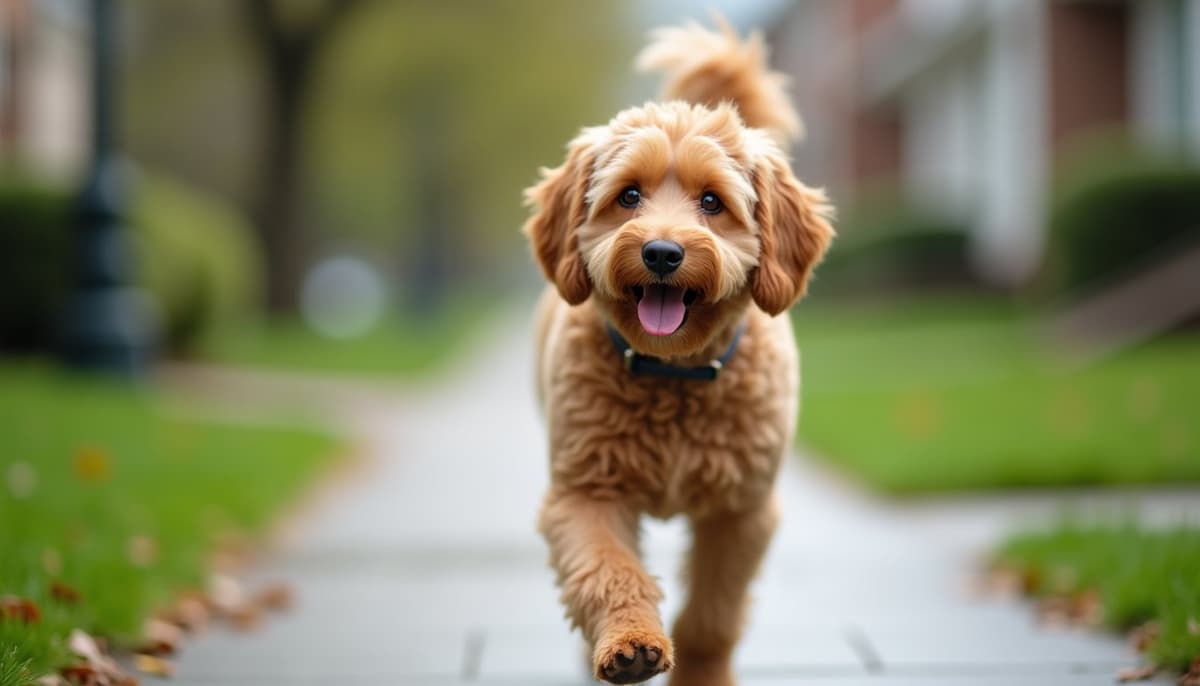
What joint problems affect Cockapoos?
The most common mistake Cockapoo owners make is not missing a limp. It is assuming a limp is the first sign. Cockapoos inherit orthopaedic risk from both parent lines, and the earliest changes almost always show up as behaviour rather than lameness: a hesitation at the bottom of the stairs, a refusal to jump onto the sofa, restlessness at two in the morning. This cockapoos joint health guide begins there, because that is where conservative, low-cost intervention still has room to work.
The pattern across owner reports about small crossbreeds and mobility change repeats itself with unnerving consistency. Owners notice something is off months before they book an orthopaedic exam. The dogs whose owners act on that instinct tend to have far more options available to them.
Cockapoos joint health guide: what joint problems affect Cockapoos?
Cockapoos are most commonly affected by hip dysplasia, medial patellar luxation, cranial cruciate ligament injury, intervertebral disc disease and secondary osteoarthritis. Small-breed skeletal structure plus a dense coat that hides muscle loss means signs are usually behavioural first. A veterinary gait and joint exam is the practical next step for any hesitation lasting two weeks.
The over-simplification worth correcting straight away: these are not five separate problems in five separate dogs. They cascade. A Grade II luxating patella changes how a Cockapoo loads its stifle, which accelerates cartilage wear, which produces the osteoarthritis diagnosed years later as "just old age". This cockapoos joint health guide covers the specific conditions and how they interact, the early signs that precede visible lameness, and what genuinely supports mobility versus what merely sells well.
Cockapoos Joint Health Guide: The Conditions That Define Breed Risk
Cockapoo joint risk arrives from three directions at once: inherited conformation from both the Poodle and Cocker Spaniel side, small-breed skeletal quirks, and a coat that conceals thigh muscle atrophy until it is advanced.
- Hip dysplasia. Laxity in the coxofemoral joint means the femoral head does not seat cleanly in the acetabulum. The resulting abnormal loading grinds down articular cartilage. Both parent breeds appear on hip screening registries maintained by the Orthopedic Foundation for Animals (OFA), and PennHIP distraction index scoring is the more sensitive of the two common screening methods.
- Medial patellar luxation. The kneecap slips out of the femoral trochlear groove, graded I through IV by severity. This is one of the most frequently diagnosed orthopaedic issues in small crossbreeds and produces the classic skip-step gait.
- Cranial cruciate ligament (CCL) rupture. The canine equivalent of a human ACL tear. In small dogs it more often degenerates gradually than snaps in one dramatic moment, which is exactly why it gets missed. Our breakdown of torn acl in cockapoos covers the risk signs and surgical versus conservative pathways.
- Intervertebral disc disease (IVDD). Hansen Type I disc extrusion is the acute, calcified-disc form seen in chondrodystrophic lines; Type II protrusion is the slower degenerative form. The Cocker Spaniel contribution matters here. See ivdd in cockapoos for the neurological grading system.
- Legg-Calve-Perthes disease. Avascular necrosis of the femoral head, seen in small breeds usually before twelve months of age.
- Osteoarthritis. Not a separate disease so much as the endpoint. Cartilage thins, synovial fluid loses viscosity, subchondral bone remodels.
Why the crossbreed itself is structurally predisposed is worth understanding properly, and we unpack the anatomy in cockapoos joint problems. For the wider picture beyond orthopaedics, including ears and eyes, our overview of common health problems in cockapoos sits alongside this one.
The Early Mobility Signs That Precede a Cockapoo Limp
A limp is a late sign. By the time a Cockapoo is visibly lame, it has usually been compensating for weeks, redistributing load to the opposite limb and the lumbar spine.
Here is what the pattern across owner reports keeps showing: the single most frequently mentioned early symptom is night-time restlessness, and it is the one least often connected to joints. The reasoning is mechanical. Inflammatory joint pain follows a circadian rhythm, and prolonged stillness allows synovial fluid to thicken while periarticular soft tissue stiffens. The dog repositions to relieve pressure, settles, stiffens again, repositions again. Owners describe it as anxiety. It is frequently arthritis.
Hind-leg tremor after rest is the second commonly overlooked signal. Shaking in the back legs is not automatically neurological. It often reflects fatigue in the gluteal and quadriceps muscles that have been overworked stabilising an unstable stifle or hip. That said, tremor combined with scuffed nails, crossed hind paws or wobbling deserves same-week veterinary attention, because those combinations point toward spinal cord compression rather than muscle fatigue.
The practical screen worth running weekly takes ninety seconds. Watch the sit: a dog with stifle pain sits with one leg kicked to the side rather than tucked square. Watch the stairs: descending is harder than ascending when hips hurt. Then, and this is the step Cockapoo owners skip, run both hands firmly over the thighs and compare left to right. A dense curly coat will hide two to three centimetres of muscle wastage from the eye entirely. Your hands will find it.
Bunny-hopping, where both hind legs move together at a canter, is a hip laxity signal. Reluctance to be picked up under the chest, or a yelp on being lifted, is a spinal one. Any of these warrants a conversation with your veterinarian rather than a wait-and-see month.
What This Cockapoos Joint Health Guide Recommends You Actually Do
The interventions with the largest effect on Cockapoo mobility are unglamorous and mostly free. Bodyweight is the first of them. Keeping a Cockapoo at a lean body condition score of 4 to 5 on the standard 9-point scale, where ribs are easily palpable and there is a visible waist from above, reduces compressive load across every joint in the body. No supplement in existence competes with that.
Exercise structure matters more than volume. Repetitive high-torque activity is the enemy of a small stifle: ball launchers, hard-surface fetch with sudden turns, and jumping from furniture generate rotational forces the cruciate ligament was never built to absorb. Steady lead walks on varied ground build stabilising musculature instead. Rugs over hardwood, a ramp instead of a sofa jump, and nails kept short enough not to alter foot placement all change daily loading.
On nutrition, the honest hierarchy runs like this. Long-chain omega-3 fatty acids (EPA and DHA) from marine oil have the most consistent supportive evidence in canine osteoarthritis research. Green-lipped mussel (Perna canaliculus) is next. Glucosamine and chondroitin sulphate, the glycosaminoglycan precursors, show genuinely mixed results across published canine trials, though many owners report subjective improvement. Our comparison of joint support for cockapoos goes ingredient by ingredient, and the shortlist sits in best joint supplement for cockapoos.
Veterinary options exist and are not a failure state. NSAIDs such as carprofen and meloxicam, the EP4 antagonist grapiprant, and the anti-NGF monoclonal antibody bedinvetmab are all licensed canine osteoarthritis therapies your vet may discuss. Physiotherapy and underwater treadmill hydrotherapy rebuild the muscle that imaging alone never addresses.
Some owners also research peptides such as BPC-157 and TB-500 for soft tissue and recovery support. These are not FDA-approved veterinary drugs, the available research is largely preclinical, and evidence in dogs is limited. We discuss what that research suggests and what owners report at K9-REPAIR, strictly as education. Condition-specific reading sits at best supplement for cockapoos with torn acl and best supplement for cockapoos with ivdd. Everything here is educational, and diagnosis, dosing and treatment decisions belong with your own veterinarian.
Cockapoos Joint Health Guide: Condition Comparison Table
This table maps the four conditions Cockapoo owners ask about most, so you can match what you are seeing at home to a likely candidate before the appointment. Onset ages are typical patterns, not rules.
| Condition | Typical Onset Pattern | Hallmark Owner-Visible Sign | First-Line Veterinary Assessment | Bottom Line |
|---|---|---|---|---|
| Hip dysplasia | Often detectable in the first two years, symptomatic later | Bunny-hopping gait, difficulty descending stairs, narrow hind stance | Ortolani test plus radiographs; OFA or PennHIP scoring | Weight control and muscle mass do more day to day than any single treatment; screening parents is the real prevention |
| Medial patellar luxation | Frequently from puppyhood onward | Intermittent skip-step, brief hop then normal gait resumes | Manual patellar palpation and Grade I to IV assignment | Grade I to II is often managed conservatively for years; Grade III to IV usually becomes a surgical discussion |
| Cranial cruciate ligament injury | Middle age, often degenerative rather than acute | Sudden or waxing hind-limb lameness, sitting with leg kicked out | Cranial drawer and tibial compression tests, imaging | Small dogs can recover functionally without surgery more often than large breeds, but early diagnosis dictates the options |
| IVDD | Commonly three to seven years for Type I extrusion | Reluctance to be lifted, arched back, scuffing or wobbling hind feet | Neurological grading and advanced imaging if deficits present | The most time-critical of the four; loss of deep pain sensation is an emergency, not a wait-and-see |
Key Takeaways
- Hip dysplasia, medial patellar luxation, cranial cruciate ligament injury and intervertebral disc disease account for the majority of Cockapoo mobility complaints, and osteoarthritis is the shared endpoint.
- Night-time restlessness and post-rest hind-leg tremor typically appear before any visible limp, making them the most useful early signals an owner has.
- Maintaining a body condition score of 4 to 5 on the 9-point scale outperforms every supplement on the market for reducing joint load.
- A dense Cockapoo coat hides thigh muscle atrophy from the eye, so weekly hands-on comparison of left and right hind limbs is a genuine diagnostic tool.
- Marine-sourced EPA and DHA carry the most consistent supportive evidence in canine osteoarthritis research; glucosamine and chondroitin results are mixed.
- Loss of deep pain sensation or sudden hind-limb paralysis is a surgical emergency and warrants immediate veterinary contact, not overnight observation.
What If: Cockapoos Joint Health Scenarios
What if my Cockapoo limps for two days then seems completely fine?
Book the exam anyway. Intermittent lameness that self-resolves is the signature presentation of both Grade I to II patellar luxation and partial cruciate ligament degeneration, because the joint destabilises under load and settles at rest. Waiting for a limp that stays put usually means waiting until compensatory wear has already begun in the opposite limb. Owners managing this day to day describe this exact pattern constantly, and it is the scenario where early conservative management pays off most.
What if my Cockapoo suddenly cannot use its back legs?
Treat it as an emergency and contact a veterinary hospital immediately. Acute hind-limb paresis in a Cockapoo points strongly toward Hansen Type I disc extrusion, where disc material compresses the spinal cord. Surgical decompression outcomes are strongly time-dependent, and the presence or absence of deep pain sensation is the key prognostic marker a neurologist will assess. Do not attempt to walk it off or wait for morning.
What if my Cockapoo is nine and just "slowing down"?
Assume osteoarthritis until a vet rules it out. Reduced enthusiasm for walks, later rising, and less interest in play are the standard presentation of chronic joint pain in ageing dogs, not an inevitable feature of age itself. Cockapoos typically live well into their teens, so a nine-year-old has years of quality mobility to protect. Our piece on cockapoos lifespan covers healthy ageing in more depth.
The Blunt Truth About Every Cockapoos Joint Health Guide Online
Let's be direct about this: no supplement, peptide, bed, harness or diet reverses joint damage that has already occurred. Cartilage has no meaningful blood supply and limited regenerative capacity. What you can influence is load, muscle support, inflammation and the speed of progression, and those levers are real and worth pulling hard. Any product marketed as a fix for canine arthritis is selling you a mechanism story dressed as an outcome promise. The Cockapoos who stay mobile into their teens belong to owners who managed weight, structured exercise and got diagnoses early. That is the whole formula.
This cockapoos joint health guide exists because Cockapoo owners are consistently told their dog's hesitation is behavioural, and it usually is not. A dog that pauses at the stairs has done the arithmetic on what the stairs cost. Trust that observation more than you trust the absence of a limp, because the coat, the small frame and the cheerful temperament of this crossbreed conspire to hide discomfort until it is structural. Run your hands over those thighs this week. Compare the sides. Then decide whether you are watching a dog who is tired, or a dog who is quietly working around pain.
Frequently asked questions
- Should I worry if my dog is restless at night?
- Occasional restlessness is normal; persistent nightly repositioning is not. Joint pain follows a circadian pattern, and prolonged stillness allows periarticular tissue to stiffen, so dogs shift position to relieve pressure. If the pattern continues beyond two weeks, or pairs with slow rising in the morning, book a veterinary orthopaedic exam rather than treating it as anxiety.
- When should I take a dog to the vet for restless at night?
- Book an appointment if restlessness persists longer than two weeks, or sooner if it comes with panting, slow rising, reluctance to jump, or reduced appetite. Same-day contact is appropriate when restlessness follows an injury, or appears alongside a swollen abdomen, vomiting or laboured breathing, since those signals point beyond joint discomfort.
- What can I give a dog that is restless at night?
- Nothing medicinal without veterinary direction, because human painkillers including ibuprofen and paracetamol are toxic to dogs. Practical support includes an orthopaedic memory-foam bed, a warm settled sleeping area, and a short low-intensity evening walk to reduce stiffness. Any anti-inflammatory, analgesic or supplement plan should come from your own veterinarian first.
- Is a dog restless at night an emergency?
- Usually not on its own, but it can be. Restlessness combined with retching without producing vomit, a distended abdomen, pale gums or laboured breathing may indicate bloat or another acute abdominal crisis and requires immediate emergency veterinary care. Restlessness that builds slowly over weeks is far more typical of chronic joint pain.
- Why is my dog shaking in the back legs?
- Hind-leg tremor most often reflects muscle fatigue in the quadriceps and gluteals that have been overworked stabilising a painful hip or stifle. Other causes include spinal nerve compression from intervertebral disc disease, pain-related guarding, cold, or metabolic issues. Because the causes range widely, a veterinary neurological and orthopaedic exam is the correct next step.
- Should I worry if my dog is shaking in the back legs?
- Yes, enough to get it examined, though not usually enough to panic. Isolated brief tremor after intense exercise is often muscular. Tremor that appears alongside scuffed nails, crossed hind paws, wobbling, or reluctance to be lifted suggests spinal cord involvement and deserves same-week veterinary attention rather than watchful waiting.
- What should a cockapoos joint health guide include about exercise?
- Structure matters more than distance. Repetitive high-torque activity such as ball-launcher fetch, hard-surface turns and furniture jumping loads the cruciate ligament and patella in ways they tolerate poorly. Steady lead walks on varied terrain build the stabilising musculature that protects the joint, which is why physiotherapists prioritise consistency over intensity.
- Does a cockapoos joint health guide apply to Cockapoo puppies?
- Partly. Screening, lean body condition and controlled exercise apply from the start, and Legg-Calve-Perthes disease typically presents before twelve months. Supplement and peptide dosing questions for puppies, pregnant or nursing dogs should go directly to your veterinarian, not to any general guide, because growth-plate and developmental considerations change the calculation entirely.
- How much does it cost to treat Cockapoo joint problems?
- Costs vary widely by clinic, country and severity. A consultation with radiographs sits at the lower end, while orthopaedic surgery such as cruciate stabilisation or spinal decompression sits far higher and often involves a specialist referral. Insurance policies frequently exclude conditions diagnosed before cover started, which is why early enrolment matters for a crossbreed with inherited orthopaedic risk.
- Do glucosamine and chondroitin actually work for dogs?
- The evidence is genuinely mixed. Published canine trials on glucosamine and chondroitin sulphate have produced inconsistent results, and many owners report subjective improvement that studies have struggled to reproduce. Long-chain omega-3 fatty acids, EPA and DHA from marine oil, carry more consistent supportive evidence in canine osteoarthritis research and are often the more defensible starting point.
- Can BPC-157 or TB-500 help a Cockapoo with joint problems?
- These peptides are not FDA-approved veterinary drugs and no claim of treatment or cure is appropriate. Existing research is largely preclinical and centred on soft tissue and healing pathways, and evidence in dogs specifically is limited. Some owners report using them for recovery support. Any decision should be made with a veterinarian who knows the dog's full history.
- Which is more serious in a Cockapoo, a luxating patella or IVDD?
- IVDD is the more time-critical of the two. Grade I to II patellar luxation is frequently managed conservatively for years with weight control and muscle support. A Hansen Type I disc extrusion compresses the spinal cord, and outcomes depend heavily on how quickly the dog reaches a neurologist, particularly if deep pain sensation is lost.
Educational content. BPC-157 and TB-500 are not FDA-approved veterinary drugs. Talk to your veterinarian before starting anything new, especially if your dog is on prescribed medication.