Pugs Joint Health Guide — Hip, Knee & Spine Risks | pawgen
Researchers at the Royal Veterinary College's VetCompass programme reported that Pugs in the UK were roughly twice as likely as other dogs to have at least one recorded health disorder in a given year, and the breed's skeleton carries a large share of that burden. A Pug is not simply…
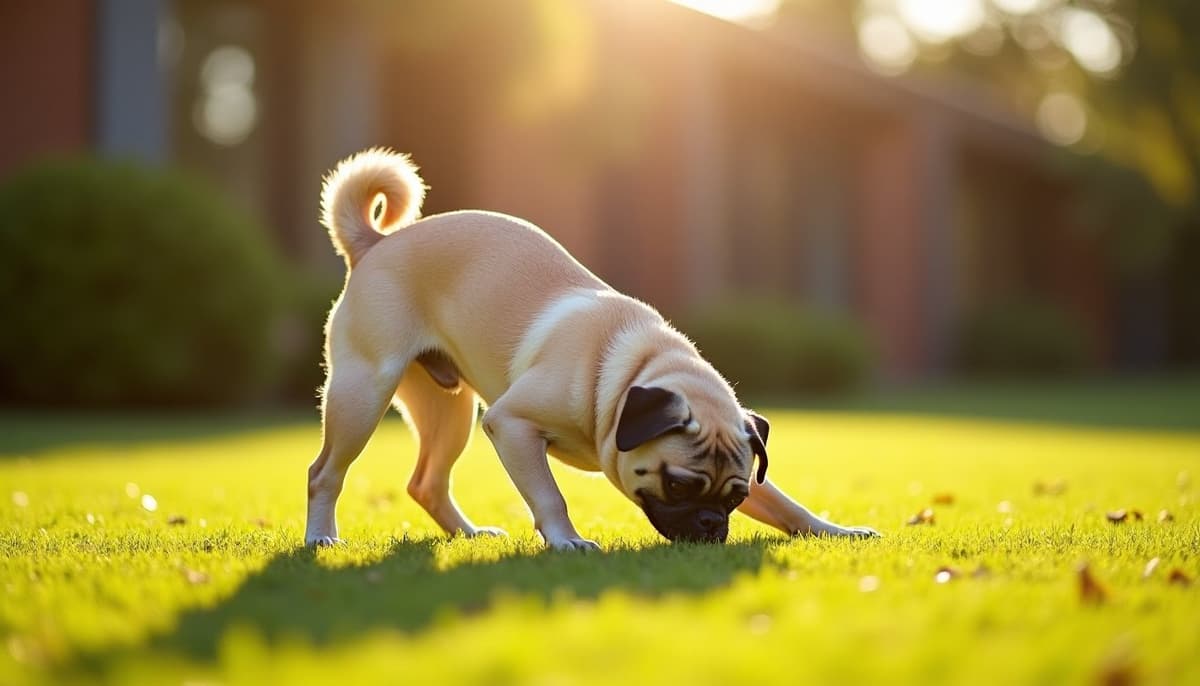
What joint problems affect Pugs?
Researchers at the Royal Veterinary College's VetCompass programme reported that Pugs in the UK were roughly twice as likely as other dogs to have at least one recorded health disorder in a given year, and the breed's skeleton carries a large share of that burden. A Pug is not simply a compact dog. It is a chondrodystrophic, brachycephalic, screw-tailed animal whose hips, knees and spine were reshaped by decades of selection for a very specific silhouette.
We work with mobility-focused owners of flat-faced breeds every day at K9-REPAIR, and one pattern repeats relentlessly. The leg that looks lame is often not where the trouble began.
What joint problems affect Pugs?
Any honest pugs joint health guide names four: hip dysplasia, medial patellar luxation (a kneecap that slips out of its femoral groove), intervertebral disc disease linked to hemivertebrae (wedge-shaped, malformed vertebrae), and Pug myelopathy, a slow spinal cord compression seen almost exclusively in this breed. Early weight control and a veterinary gait exam change outcomes most.
The common oversimplification is that hind-limb weakness in a Pug equals arthritis. Frequently it doesn't, at least not first. Because the thoracolumbar spine and the stifle both refer weakness downward into the back legs, owners regularly describe a hip problem that turns out to be a disc or a kneecap. This piece covers the anatomy that creates the risk, the four conditions by name, the early signs owners miss, and what genuinely supports long-term mobility.
Why Pug Anatomy Loads the Joints Long Before Arthritis Starts
Pugs are chondrodystrophic, meaning their long bones are genetically shortened. Research groups including the University of California, Davis have linked chondrodystrophy in short-legged breeds to an FGF4 retrogene insertion, a duplicated growth-factor gene that alters cartilage growth plates. The same trait is associated with premature degeneration of the intervertebral discs, the gel-and-fibre cushions between vertebrae. In practical terms, a Pug's discs age faster than a mixed-breed dog's discs of the same calendar age.
Then there's the tail. The tight screw tail Pugs are bred for is a vertebral malformation, and that malformation does not politely stop at the tail base. Hemivertebrae, vertebrae that form as wedges rather than blocks, appear throughout the thoracic spine in many Pugs. A wedge-shaped vertebra tilts the spinal column, concentrates load on the discs above and below it, and can narrow the canal the spinal cord runs through.
Brachycephaly compounds all of it. A shortened muzzle restricts airflow, which caps how much aerobic exercise a Pug can tolerate, especially in heat. Less exercise means less muscle mass supporting the hips and stifles, and more body fat pressing on every weight-bearing surface. The AKC breed standard puts a Pug at 14 to 18 pounds. A great many are carrying several pounds above that, and adipose tissue is not inert padding, it is metabolically active tissue that releases inflammatory cytokines directly into circulation.
That cascade is why we treat weight as the first line of any pugs joint health guide, ahead of supplements, ahead of everything. Across the Pug owners we speak with, the ones whose dogs stay mobile into double digits are almost always the ones who kept the dog lean and unglamorously skinny by breed-photo standards. For the wider picture, see our overview of common health problems in pugs.
The Four Conditions Every Pugs Joint Health Guide Must Cover
Hip dysplasia is coxofemoral laxity, a hip socket too shallow to hold the femoral head securely. The Orthopedic Foundation for Animals grades hips on a seven-point scale running from Excellent through Borderline to Severe, and Pugs have long screened poorly relative to their size. Laxity creates abnormal friction, friction erodes articular cartilage, and secondary osteoarthritis follows.
Medial patellar luxation is the kneecap slipping toward the inside of the leg. Veterinary surgeons grade it I through IV: Grade I pops out only under manual pressure, Grade IV sits permanently dislocated. The classic sign is a skip step, where the dog hops for two or three strides then carries on normally.
Intervertebral disc disease in a chondrodystrophic breed is usually Hansen type I, where a degenerated disc nucleus extrudes suddenly into the spinal canal. It is acute, it is painful, and it is a genuine emergency.
Pug myelopathy, also described as constrictive myelopathy or vertebral articular process malformation, is the one most guides skip entirely. Here is the detail that changes how you read your own dog: it is typically not painful. The dog develops a progressive, wobbly hind-limb gait, crosses its back legs, scuffs its rear toenails, and often loses faecal continence, all while wagging and eating happily. Because there is no yelp and no obvious lameness, owners file it under old age and wait. We have seen this repeatedly in mid-life Pugs whose owners were convinced the problem was hips, and the neurological exam said otherwise.
The practical takeaway: pain-free hind-limb weakness in a Pug is a neurological finding until a veterinarian proves it isn't. More on the underlying causes in our breakdown of pugs joint problems.
How Owners Spot Early Mobility Loss Before It Becomes a Limp
The first signs are postural, not painful. Watch for bunny hopping, where both back legs move together during a run, which suggests the dog is offloading the hips. Watch the sit: a Pug that sits with one leg kicked sideways rather than tucked underneath is usually protecting a stifle. Check the rear toenails for asymmetric scuffing, which indicates the paw is not clearing the ground on every stride. And note stiffness in the first minutes after a nap that loosens with movement, the hallmark rhythm of degenerative joint change.
What actually helps, in order of evidence weight: body condition first, structured low-impact movement second, everything else third. Ask your veterinarian to score your dog on the 9-point body condition scale, where 4 to 5 out of 9 is the target and every point above that is roughly 10 percent excess body weight. Swap the collar for a Y-front harness so lead pressure never loads the neck. Add ramps at the sofa and car, and lay runners over slick floors, because a splayed slip on tile is a common trigger for acute disc events. Controlled leash walking and, where a vet approves it, hydrotherapy build the gluteal and quadriceps muscle that stabilises loose joints.
Supplements sit downstream of all that. Marine omega-3 fatty acids (EPA and DHA) have the strongest supporting research for canine osteoarthritis comfort; glucosamine, chondroitin and green-lipped mussel have mixed and often modest trial results. Research peptides such as BPC-157 and TB-500 are studied largely in preclinical and rodent tissue-repair models, they are not FDA-approved veterinary drugs, and owners report varied experiences rather than documented outcomes. We are direct about that distinction with every customer.
This article is educational. Diagnosis, medication and any supplement decision should be made with your own veterinarian, who can actually palpate the joint and image the spine. Our deeper comparison of options lives in joint support for pugs and our 2026 roundup of the best joint supplement for pugs.
Pugs Joint Health Guide: Condition Comparison
These four conditions present differently and are confused constantly. This table shows what separates them at the point an owner first notices something.
| Condition | What Is Actually Happening | Typical First Sign | Diagnostic Route | Bottom Line |
|---|---|---|---|---|
| Hip dysplasia | Shallow hip socket allows the femoral head to move abnormally, wearing cartilage over time | Bunny hopping, reluctance to jump onto furniture, narrow rear stance | Orthopaedic palpation plus positioned hip radiographs, OFA or PennHIP scoring | Manageable for years with lean body weight and muscle maintenance; surgery reserved for advanced cases |
| Medial patellar luxation | Kneecap slips out of the femoral groove toward the inside of the leg | Intermittent skipping stride that self-corrects after a few steps | Manual patellar palpation graded I to IV, radiographs of the stifle | Low grades often managed conservatively; higher grades usually need surgical correction to prevent cruciate damage |
| IVDD with hemivertebrae | Degenerated disc material extrudes into the spinal canal, worsened by wedge-shaped vertebrae | Sudden yelping, arched back, refusal to move, rapid hind-limb weakness | Neurological exam followed by MRI or CT at a referral centre | Acute onset is an emergency; hours matter for surgical outcome, so do not wait overnight |
| Pug myelopathy | Slow constriction of the spinal cord from articular process malformation and fibrous tissue | Painless wobbly hind gait, crossed back legs, scuffed rear nails, faecal accidents | Neurological localisation plus advanced spinal imaging | Progressive and frustrating to treat; early recognition buys time for physiotherapy and cart adaptation |
Key Takeaways
- Pugs are chondrodystrophic and screw-tailed, so disc degeneration and hemivertebrae are structural breed features rather than bad luck.
- Painless hind-limb weakness in a Pug points toward the spine, not the hips, and Pug myelopathy is the specific condition to rule out.
- The AKC standard weight range for a Pug is 14 to 18 pounds, and every point above 5 on the 9-point body condition scale adds roughly 10 percent excess weight to already compromised joints.
- Medial patellar luxation is graded I to IV, and the giveaway sign is a brief skipping stride that resolves on its own.
- Weight control and muscle-building low-impact exercise outperform every supplement in this pugs joint health guide, and should come first.
- Sudden yelping with an arched back is an emergency, not a wait-and-see situation.
What If: Pug Mobility Scenarios
What if my Pug is bunny hopping but does not seem to be in pain?
Book a veterinary gait and neurological exam rather than starting a supplement. Bunny hopping is a compensation pattern, and in this breed it splits between hip laxity and early spinal cord involvement, which are managed completely differently. Painless presentation is exactly what makes Pug myelopathy so easy to dismiss as ageing. A vet can localise the lesion by testing conscious proprioception, checking whether the dog knows where its back feet are, in about two minutes.
What if my Pug suddenly cannot use his back legs?
Go to an emergency veterinary clinic immediately, keeping the dog confined and horizontal in transit. Acute loss of hind-limb function in a chondrodystrophic breed suggests a type I disc extrusion compressing the spinal cord, and surgical outcomes are strongly time-dependent, particularly once deep pain sensation is lost. Do not attempt stretching, massage or a home anti-inflammatory. Human NSAIDs such as ibuprofen are toxic to dogs and can complicate the emergency treatment your dog needs.
What if my Pug is overweight but cannot exercise because of breathing problems?
Drive the calorie side first, because a brachycephalic dog cannot out-walk its food bowl. Work with your veterinarian on a measured weight-reduction diet with weekly weigh-ins, then add short, frequent walks in cool parts of the day and, if available, hydrotherapy that unloads the joints while building muscle. Airway surgery for stenotic nares or an elongated soft palate is worth discussing, since improving airflow often unlocks the exercise capacity that makes weight loss achievable.
The Blunt Truth About Every Pugs Joint Health Guide
Let's be direct about this: no supplement, peptide or joint chew changes the shape of the vertebrae your Pug was born with. The genetics that produce the flat face and the screw tail also produce the wedge vertebrae and the shallow hips, and nothing sold in a tub reverses that architecture. What you can influence is load, muscle, inflammation and how fast you act when something changes. Owners who obsess over which supplement to buy while their Pug carries four extra pounds have the priority order backwards, and this pugs joint health guide will not pretend otherwise.
The most useful thing in this pugs joint health guide is not a product, it is a habit: film your Pug walking away from you on a flat surface once a month and keep the clips. Gait deterioration in this breed is gradual enough that the human eye adapts to it, and the video is what shows you a crossing back leg or a scuffing toenail before the dog can no longer manage the stairs. Structure buys time here, and time is genuinely the currency, as our look at pugs lifespan makes plain.
Frequently asked questions
- Should I worry if my dog is stiff after resting?
- Occasional brief stiffness that clears within a minute or two is worth monitoring, not panicking over. Stiffness that appears daily, lasts longer each week, or is paired with reluctance to jump usually signals degenerative joint change. Film the first 30 seconds after a nap and show your veterinarian, since gait patterns tell them more than descriptions do.
- When should I take a dog to the vet for stiff after resting?
- Book an appointment if stiffness persists beyond a few minutes, recurs on most days for more than two weeks, or comes with limping, a hunched back, or reluctance to climb stairs. Go immediately if the dog yelps when touched, drags a paw, or cannot rise at all, as those signs suggest spinal involvement rather than simple joint wear.
- What can I give a dog that is stiff after resting?
- Nothing from a human medicine cabinet. Ibuprofen, paracetamol and naproxen are toxic to dogs. Veterinarians typically consider canine-licensed anti-inflammatory medication, weight reduction, and marine omega-3 fatty acids, which have the strongest supporting research for joint comfort. Supportive options such as green-lipped mussel or research peptides may be discussed with your vet, but evidence quality varies widely.
- Is a dog stiff after resting an emergency?
- Usually not, but it can be. Gradual stiffness that improves with movement is a chronic pattern and warrants a routine appointment. Sudden inability to stand, crying when touched, a rigid arched back, or dragging back legs is an emergency, particularly in Pugs and other chondrodystrophic breeds where disc extrusion outcomes depend on how fast surgery happens.
- Why is my dog stiff in the morning?
- During sleep, joint fluid thickens and inflammatory mediators accumulate around worn cartilage, so the first movements after rest feel restricted until circulation and synovial fluid warm the joint. In Pugs, morning stiffness may also reflect spinal compression from hemivertebrae rather than the limb joints themselves, which is why a veterinary gait exam matters.
- Should I worry if my dog is stiff in the morning?
- Treat it as an early warning rather than an emergency. Morning stiffness is one of the first reliable signs of osteoarthritis and often appears months before visible lameness, which makes it a useful intervention window. Weight assessment, a veterinary orthopaedic exam and controlled low-impact exercise at this stage tend to preserve mobility far longer.
- What should a pugs joint health guide say about puppies and supplements?
- Nothing prescriptive. Growing Pug puppies have open growth plates and different nutritional needs, and no dosing protocol for puppies, pregnant or nursing dogs should be taken from an article. Talk to your veterinarian before giving any supplement to a young Pug. Focus instead on lean body condition, non-slip flooring and avoiding repetitive jumping during growth.
- How much does it cost to manage joint problems in a Pug?
- Costs vary widely by clinic, country and severity. Routine orthopaedic exams and radiographs sit at the lower end, while advanced imaging such as MRI and spinal or knee surgery at a referral centre are substantially more expensive. Many owners find that insurance taken out before any symptoms appear is the single biggest cost lever.
- Are joint supplements or peptides better for Pug mobility?
- They are not interchangeable categories. Marine omega-3 fatty acids have the most consistent research support for canine joint comfort, while glucosamine and chondroitin trials are mixed. Research peptides such as BPC-157 and TB-500 are studied mainly in preclinical models, are not FDA-approved veterinary drugs, and owners report varied experiences rather than documented outcomes.
- Does this pugs joint health guide change for a senior Pug?
- The priorities shift rather than change. Senior Pugs need more frequent veterinary gait assessments, tighter weight control as activity drops, traction on floors, and ramps to eliminate jump impact. Muscle loss accelerates with age, so short and frequent walks or vet-approved hydrotherapy matter more than long outings, especially given brachycephalic heat intolerance.
- Can a Pug live a normal life with hip dysplasia?
- Many do. Hip dysplasia describes joint laxity, not automatic disability, and Pugs kept at the low end of the 14 to 18 pound breed standard with strong gluteal and thigh muscle often stay comfortably mobile for years. Surgical options exist for severe cases, and your veterinarian can grade the joint through positioned radiographs.
- How do I tell a knee problem from a spine problem in my Pug?
- Watch the rhythm. A luxating patella produces a brief skipping stride that self-corrects within a few steps, while spinal involvement produces a wobbly, crossing gait and scuffed rear toenails that does not resolve. Painless progressive weakness leans strongly toward a neurological cause and needs a veterinary neurological exam.
Educational content. BPC-157 and TB-500 are not FDA-approved veterinary drugs. Talk to your veterinarian before starting anything new, especially if your dog is on prescribed medication.