Rottweilers Joint Health Guide — Hips, ACL & Arthritis
The Orthopedic Foundation for Animals (OFA), the American registry that grades canine hip and elbow radiographs, has listed the Rottweiler among the breeds most frequently affected by both hip and elbow dysplasia for decades. Yet the single event that most often ends a Rottweiler's athletic life is not dysplasia. It…
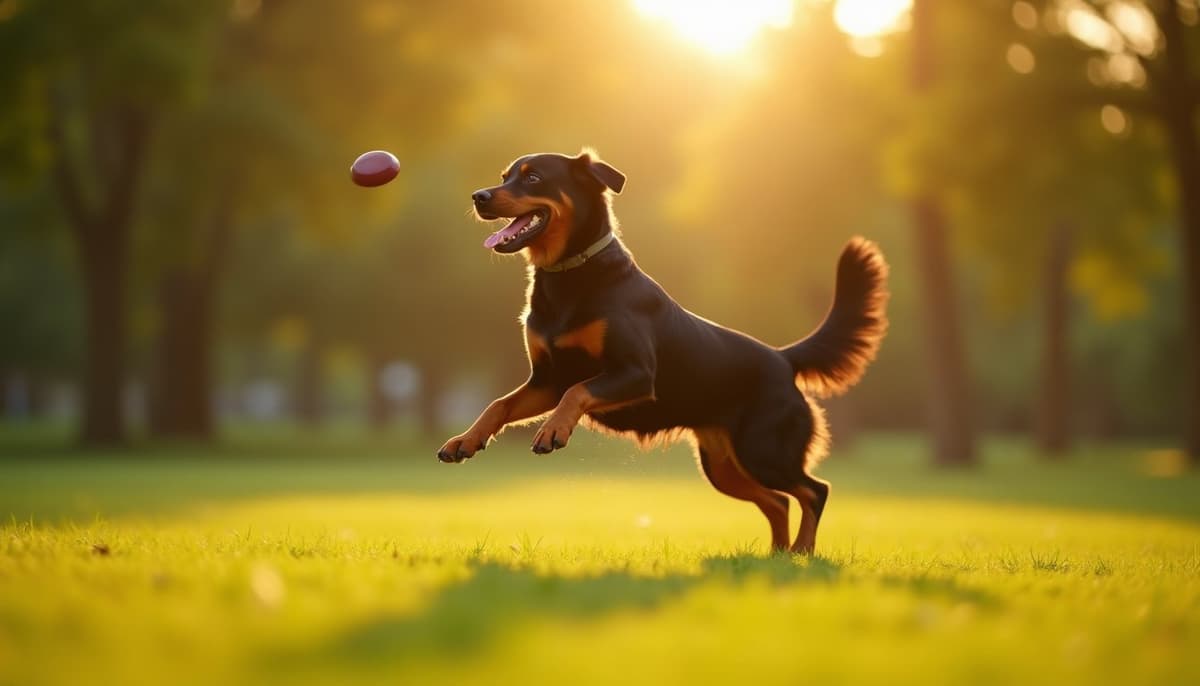
What Joint Problems Affect Rottweilers? A Rottweilers Joint Health Guide
The Orthopedic Foundation for Animals (OFA), the American registry that grades canine hip and elbow radiographs, has listed the Rottweiler among the breeds most frequently affected by both hip and elbow dysplasia for decades. Yet the single event that most often ends a Rottweiler's athletic life is not dysplasia. It is a cranial cruciate ligament that degenerates quietly for months, then ruptures during an ordinary turn in the garden.
Across years of owner reports from heavy working breeds, the pattern is relentless. The dog looks sound, then it does not. This rottweilers joint health guide exists because Rottweiler mobility problems are rarely sudden. They are slow, structural and largely predictable, which also makes them the most modifiable health risk this breed carries.
What joint problems affect Rottweilers?
Rottweilers are predisposed to hip dysplasia, elbow dysplasia, osteochondritis dissecans (OCD) of the shoulder and hock, cranial cruciate ligament rupture, intervertebral disc disease, and the osteoarthritis that follows all of them. Most cases start as a subtle gait change between 6 and 18 months, or a stiffness owners write off as age. Early radiographs change outcomes.
The common oversimplification is that Rottweilers hip problems are the whole story. They are not. Hips get the screening attention because they are registry-scored, while stifle ligaments, elbows and the lumbosacral spine carry equal practical risk with no equivalent screening programme behind them. What follows covers the breed-specific mechanics behind that risk, the conditions worth naming individually, how they are told apart in the exam room, and which interventions genuinely change the trajectory.
Why Rottweilers Carry Disproportionate Joint Risk
The Rottweiler's risk profile is a product of mass, growth rate and joint conformation acting together. A mature male typically carries 45 to 60 kilograms of body weight on a skeleton whose growth plates generally do not close until somewhere between 12 and 18 months, meaning the breed spends well over a year loading joints that are still cartilaginous at their margins.
Hip dysplasia in this breed is not a deformity the dog is born with. Puppies are born with normal hips, and laxity in the coxofemoral joint develops as the femoral head fails to seat tightly in the acetabulum. That laxity allows micro-subluxation with every stride, which shears articular cartilage, exposes subchondral bone, and triggers the osteophyte formation that shows on radiographs years later as degenerative joint disease. PennHIP quantifies this as a distraction index, a passive laxity measurement that can be taken from around 16 weeks, whereas standard OFA hip grading is not finalised until 24 months. That difference matters enormously for anyone breeding or buying.
The rear assembly compounds it. Rottweilers drive hard from the hindquarters, and that power routes through the stifle, where the cranial cruciate ligament resists tibial thrust on every push-off. In heavy breeds this ligament typically fails through chronic degeneration of its collagen fibres rather than a single traumatic tear, which is why so many owners insist there was no accident. There usually wasn't one.
Body condition is the multiplier sitting on top of all of it. Every kilogram of excess weight on a Rottweiler adds compressive load to hips, elbows and stifles for roughly a decade of life. Across the pattern in Rottweiler owner reports, the dogs whose mobility holds up past nine are almost always the lean ones with a visible waist and palpable ribs, scoring 4 or 5 on the 9-point body condition scale. The wider picture sits in this overview of common health problems in rottweilers and the structural detail in rottweilers joint problems.
The Conditions Every Rottweilers Joint Health Guide Should Name
Six orthopaedic conditions account for the overwhelming majority of Rottweiler mobility complaints, and they present at distinctly different ages.
Hip dysplasia produces a bunny-hopping gait, reluctance to rise from a down, and a narrow rear stance. Signs can appear as early as five to ten months in severe cases, or stay silent until secondary arthritis arrives in middle age.
Elbow dysplasia is an umbrella term covering fragmented medial coronoid process, ununited anconeal process and OCD of the medial humeral condyle. It usually shows as a forelimb lameness in a young growing dog that worsens after exercise and improves with rest.
Osteochondritis dissecans is a defect in endochondral ossification where a flap of cartilage separates from the underlying bone. Rottweilers are notably over-represented for OCD of the tarsus, the hock joint, which is an uncommon site in most other breeds and is frequently missed on a single radiographic view.
Cranial cruciate ligament rupture is the big one. Once one stifle goes, the contralateral limb bears more load and the risk of a second rupture climbs substantially. Meniscal damage often accompanies it, and surgical stabilisation such as a TPLO (tibial plateau levelling osteotomy) is the common recommendation for a dog of this size. See torn acl in rottweilers for the full workup.
Spinal disease, including intervertebral disc disease and lumbosacral degeneration, produces hind-end weakness, scuffed toenails, pain on tail lift, and reluctance to jump. This breakdown of ivdd in rottweilers covers the neurological grading that determines urgency.
Osteoarthritis is the shared endpoint, driven by cartilage loss, synovial inflammation and joint capsule fibrosis. More detail sits in arthritis in rottweilers.
Here is the caveat most articles skip, and it is the reason veterinary literature keeps pointing owners toward imaging rather than watchful waiting. Rottweilers carry an elevated breed risk of osteosarcoma, and early bone tumours in the distal radius or proximal humerus can present as a mild, intermittent forelimb lameness that looks exactly like early elbow arthritis. A limp in a Rottweiler over seven that does not resolve with two weeks of rest warrants radiographs, not another month of joint supplements.
What Actually Slows Joint Decline in Rottweilers
Four levers change outcomes, and they are not equally weighted. Weight control outranks everything else, including every supplement on the market.
Keeping a Rottweiler lean through the growth phase reduces the mechanical load driving hip laxity, and keeping an adult lean reduces both compressive force and the low-grade inflammatory signalling that adipose tissue generates. Growth also matters: over-supplementing calcium or free-feeding a large-breed puppy accelerates skeletal growth in a way that outpaces cartilage maturation, which is precisely the mechanism behind OCD lesions.
Exercise structure is the second lever. Controlled, repetitive, low-impact loading builds the gluteal and hamstring mass that stabilises a dysplastic hip. Weekend-warrior patterns do the opposite. Hydrotherapy and underwater treadmill work are widely used in canine rehabilitation because buoyancy reduces joint loading while preserving range of motion and proprioceptive input.
Veterinary management is the third. Prescription options for canine osteoarthritis include NSAIDs such as carprofen, meloxicam and grapiprant, and bedinvetmab, an anti-nerve growth factor monoclonal antibody licensed for canine osteoarthritis pain. These are prescription decisions requiring bloodwork and monitoring. Talk to your veterinarian before starting, stopping or changing anything your dog is prescribed, and treat this rottweilers joint health guide as educational background for that conversation rather than a replacement for it.
Nutritional support is the fourth and most oversold. Long-chain omega-3 fatty acids, specifically EPA and DHA from marine sources, have the most consistent evidence base for supporting comfortable movement in dogs. Glucosamine, chondroitin sulphate and green-lipped mussel are widely used, though the research is genuinely mixed and bioavailability varies by formulation. Interest in the peptides BPC-157 and TB-500 has grown among owners of working breeds because the literature keeps showing roles in tendon and ligament tissue signalling, and while these are not FDA-approved veterinary drugs, the sharper question for an owner is whether a product discloses what it actually contains. That question runs across these supplement pages, including joint support for rottweilers, best supplement for rottweilers with torn acl, best supplement for rottweilers with ivdd and best supplement for rottweilers with arthritis.
Rottweilers Joint Health Guide: Condition Comparison
This table separates the six conditions by the features that actually distinguish them in practice: age of onset, the first thing owners notice, and what confirms the diagnosis.
| Condition | Typical Onset | First Sign Owners Notice | Confirming Diagnostic | Bottom Line |
|---|---|---|---|---|
| Hip dysplasia | 5 months to middle age | Bunny-hopping gait, slow to rise after rest | Sedated ventrodorsal radiographs, PennHIP distraction index | Screen early; weight and muscle mass matter more than the radiograph grade for day-to-day comfort |
| Elbow dysplasia | 5 to 12 months | Forelimb lameness worse after exercise | CT or multi-view radiographs of the elbow | Often missed on plain films alone; arthroscopy is both diagnostic and therapeutic in many cases |
| OCD (shoulder, hock) | 4 to 10 months | Intermittent lameness in a fast-growing pup | Radiographs with oblique views, often CT for the tarsus | Hock OCD is a genuine Rottweiler pattern and is easy to overlook on a single view |
| Cruciate ligament rupture | 2 years and up | Sudden toe-touching lameness on a hind leg | Cranial drawer or tibial compression test, plus radiographs | Usually degenerative, not traumatic; the second stifle is at meaningful risk after the first fails |
| IVDD and lumbosacral disease | 4 years and up | Hind-end weakness, scuffed nails, pain on tail lift | Neurological exam graded, then MRI or CT | Neurological grade dictates urgency; loss of deep pain sensation is a same-day emergency |
| Osteoarthritis | 6 years and up | Stiffness on cold mornings, shorter walks | Clinical exam plus radiographic osteophytes | The endpoint of the five above; management is lifelong, not a course of treatment |
Key Takeaways
- Rottweilers are predisposed to hip dysplasia, elbow dysplasia, OCD of the shoulder and hock, cranial cruciate ligament rupture, IVDD and secondary osteoarthritis.
- Hip dysplasia develops after birth as coxofemoral laxity, which is why PennHIP measures passive laxity from around 16 weeks while OFA grading waits until 24 months.
- Cranial cruciate rupture in heavy breeds is typically the endpoint of chronic ligament degeneration, not a single traumatic injury, and the opposite stifle carries elevated risk afterwards.
- Keeping a Rottweiler at a body condition score of 4 to 5 out of 9 is the highest-impact intervention in any rottweilers joint health guide.
- A persistent limp in a Rottweiler over seven justifies radiographs, because this breed carries an elevated osteosarcoma risk that can mimic early arthritis.
- BPC-157 and TB-500 are not FDA-approved veterinary drugs, so full label transparency matters more than marketing language when comparing products.
What If: Rottweiler Mobility Scenarios
What If My Rottweiler Limps After Exercise But Is Fine the Next Morning?
Log it, shorten the next few outings, and book an orthopaedic exam if it recurs more than twice in a fortnight. Post-exercise lameness that resolves with rest is the classic presentation of early elbow dysplasia in a young dog and of low-grade osteoarthritis in an older one. The pattern matters more than the severity, because intermittent lameness is the phase where load management still changes the trajectory.
What If My Rottweiler Suddenly Holds a Back Leg Up?
Restrict movement to lead-only toilet breaks and get a veterinary stifle exam within 24 to 48 hours. Acute non-weight-bearing hind-limb lameness in an adult Rottweiler is cranial cruciate rupture until proven otherwise, and continued activity on an unstable stifle is what drives meniscal damage. A cranial drawer test takes minutes and determines whether surgical stabilisation is on the table.
What If Screening Was Clear But My Rottweiler Is Stiff at Five?
Ask for elbow and lumbosacral imaging rather than repeating hip radiographs. Good hip scores rule out one condition, not six, and this rottweilers joint health guide keeps returning to that point because owners routinely stop investigating after a clean hip result. Stiffness in a middle-aged Rottweiler often traces to the elbows, the lumbosacral junction or a partially torn cruciate rather than the hips. Life expectancy and mobility are tightly linked, a link explored in rottweilers lifespan.
The Blunt Truth About Any Rottweilers Joint Health Guide
Let's be direct about this: no supplement, ours included, outperforms keeping your Rottweiler lean. A dog carrying five extra kilograms on dysplastic hips will decline faster on the best joint formula available than a lean dog on nothing at all. Supplements are a supporting input layered on top of weight control, structured exercise and veterinary diagnostics, never a substitute for any of the three. Owners comparing options can start with this breakdown of the best joint supplement for rottweilers or read how we formulate K9-REPAIR, but the sequence matters. Weight first.
The hardest part of any rottweilers joint health guide is accepting how early the window opens. By the time a Rottweiler shows a visible limp, cartilage has usually been degrading for months or years, and the intervention you are making is management rather than prevention. The owners who get twelve good years out of this breed are the ones who treat a lean body condition, controlled growth and a baseline set of radiographs as routine maintenance at eighteen months, not as a response to a problem. Watch the gait, not just the dog. The Rottweiler that trots evenly at seven was almost always managed carefully at one.
Frequently asked questions
- When should I take a dog to the vet for limping after exercise?
- Book a veterinary exam if the limp lasts more than 24 to 48 hours, recurs after several separate outings, or the dog will not bear weight. Sooner is warranted if there is swelling, heat, a yelp on handling, or reluctance to rise. In large breeds like Rottweilers, repeated post-exercise lameness often signals early joint disease rather than simple overexertion.
- What can I give a dog that is limping after exercise?
- Give rest and lead-only toilet breaks, not medication from your own cabinet. Human anti-inflammatories such as ibuprofen and paracetamol are toxic to dogs. Only a veterinarian can prescribe appropriate canine anti-inflammatories after examining the limb. Cold compression on an acutely swollen joint is reasonable first aid while you arrange an appointment.
- Is a dog limping after exercise an emergency?
- Usually not, but it becomes one under specific conditions: the leg is held completely off the ground, the limb looks deformed, there is significant swelling, the dog collapses, or hind-end weakness affects both legs at once. Those signs suggest fracture, cruciate rupture with meniscal damage, or spinal disease and need same-day veterinary assessment.
- Why is my dog limping but not in pain?
- Dogs mask pain effectively, so a limp without obvious distress usually still means discomfort. Chronic low-grade osteoarthritis, a partially torn cruciate ligament, elbow dysplasia or a mild soft-tissue strain all produce gait changes with no vocalising. Some limps are also mechanical, caused by reduced range of motion or muscle loss rather than active pain signalling.
- Should I worry if my dog is limping but not in pain?
- Yes, enough to investigate. A painless-looking limp in a large breed is one of the earliest visible signs of joint degeneration, and it is the stage where load management and weight control still meaningfully change outcomes. Waiting for obvious pain means waiting for cartilage damage that has already progressed. Have the gait assessed rather than monitored indefinitely.
- When should I take a dog to the vet for limping but not in pain?
- Arrange an appointment if a painless limp persists beyond a week, appears repeatedly, or is worsening slowly over a month. Persistent painless lameness in an older large-breed dog also justifies radiographs, because early bone tumours and chronic arthritis can present identically at this stage. Earlier imaging gives more treatment options, not fewer.
- What does a rottweilers joint health guide say about screening for hip dysplasia?
- PennHIP evaluation measures passive hip laxity and can be performed from around 16 weeks of age, while OFA hip grading is finalised at 24 months. Both require sedation and specific radiographic positioning. Screening does not prevent dysplasia, but it identifies at-risk dogs early enough to adjust growth rate, exercise loading and body condition.
- At what age should I start following a rottweilers joint health guide?
- From the day the puppy arrives. Growth-phase decisions around diet, calcium levels, stair access and high-impact play influence skeletal development before any joint problem is visible. A rottweilers joint health guide is most valuable between 8 weeks and 18 months, which is when growth plates are still open and cartilage is most vulnerable to overload.
- Is a joint supplement or a prescription NSAID better for Rottweiler arthritis?
- They do different jobs. Prescription anti-inflammatories such as carprofen, meloxicam or grapiprant target active pain and inflammation and require veterinary monitoring. Nutritional support like EPA and DHA omega-3s aims at longer-term joint comfort and is not a painkiller. Many veterinarians use both alongside weight management and rehabilitation rather than choosing between them.
- How much does cruciate surgery cost for a Rottweiler?
- Costs vary widely by country, region and clinic, but stabilisation surgery such as a TPLO in a dog this size typically runs into the thousands of dollars once imaging, anaesthesia, implants and post-operative rehabilitation are included. Get a written estimate covering follow-up radiographs and physiotherapy, since aftercare is a substantial part of the total.
- Can BPC-157 or TB-500 be given to a Rottweiler puppy?
- That decision belongs with your veterinarian, and we do not publish dosing information for puppies, pregnant or nursing dogs. BPC-157 and TB-500 are not FDA-approved veterinary drugs, and canine research is limited. Growing dogs have different physiological needs, so any supplement plan during the growth phase should be reviewed by a vet who has examined the dog.
- Why do Rottweilers often tear both cruciate ligaments?
- Cruciate failure in heavy breeds is usually degenerative rather than traumatic, so the same collagen breakdown affecting one stifle is typically underway in the other. After the first rupture, the dog shifts weight onto the opposite limb, increasing load on an already weakened ligament. This is why many surgeons discuss the contralateral stifle at the first consultation.
Educational content. BPC-157 and TB-500 are not FDA-approved veterinary drugs. Talk to your veterinarian before starting anything new, especially if your dog is on prescribed medication.