Samoyeds Joint Health Guide — Hip & Mobility Risks
The thing that hides joint disease in this breed is not stoicism. It is the coat. A Samoyed carries a dense undercoat plus a layer of harsh guard hair, and that combination can conceal visible thigh muscle loss, a dropped topline, and asymmetric hips for months. By the time an…
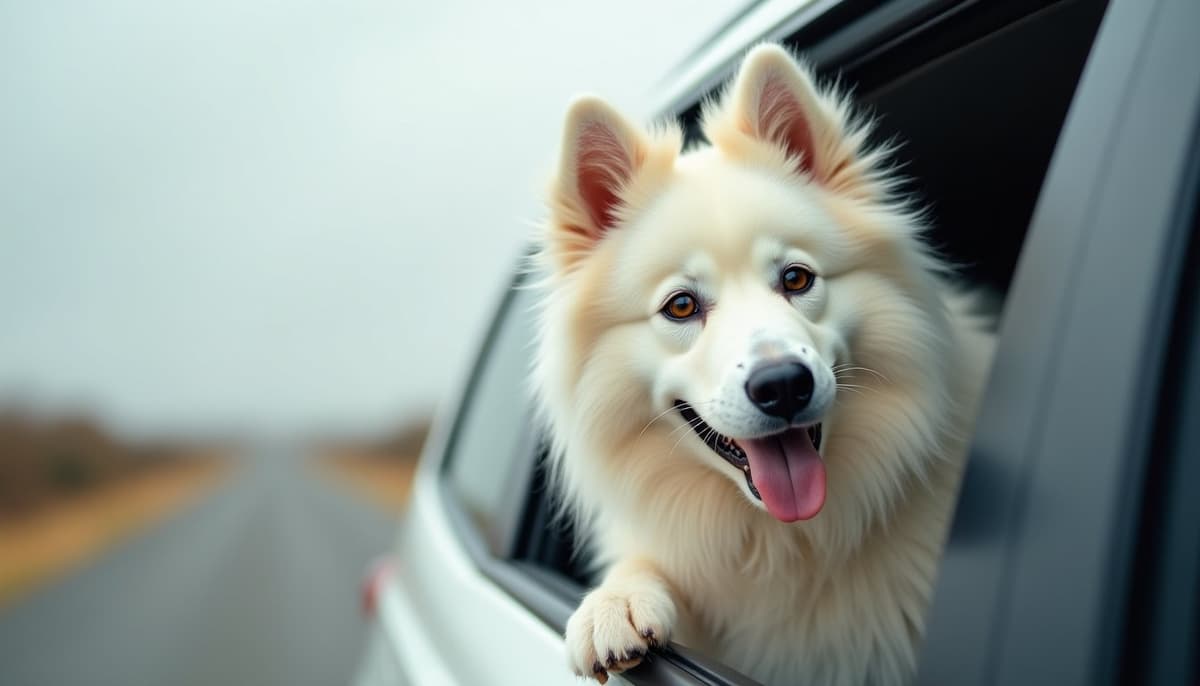
What Joint Problems Affect Samoyeds? A Samoyeds Joint Health Guide
The thing that hides joint disease in this breed is not stoicism. It is the coat. A Samoyed carries a dense undercoat plus a layer of harsh guard hair, and that combination can conceal visible thigh muscle loss, a dropped topline, and asymmetric hips for months. By the time an owner notices a limp, the underlying joint change is rarely new.
Our team works on canine mobility and tissue repair every day, and the pattern in Samoyed conversations is relentless. This samoyeds joint health guide starts with the reported first symptom, which is almost never lameness. It is a dog who stops meeting you at the door, hesitates on the second flight of stairs, or sits with one leg kicked out to the side.
What joint problems affect Samoyeds?
Samoyeds are most affected by hip dysplasia, elbow dysplasia, osteochondrosis in fast-growing puppies, cranial cruciate ligament degeneration, and the secondary osteoarthritis all of those produce. Spinal disc disease occurs but is less typical than in long-backed breeds. Hip evaluation through the Orthopedic Foundation for Animals is the most useful early step for any Samoyed family.
The common misconception is that hip dysplasia announces itself as a limp. It does not. Hip dysplasia is a problem of joint laxity and poor fit between the femoral head and the acetabulum, and it is diagnosed on radiographs, not by watching a dog walk across a room. Dogs compensate brilliantly, shifting weight forward onto the shoulders until the compensation itself becomes the visible problem. This guide covers the specific conditions that affect the breed, how to detect decline under a thick coat, and what actually belongs in a daily joint routine.
Which Joint Problems Actually Show Up in Samoyeds
Samoyeds are a medium-sized, heavily coated working breed built for pulling and endurance, and their orthopaedic risk profile reflects that build rather than the extreme angulation seen in some show lines. Hip dysplasia is the headline concern. It is polygenic, meaning many genes contribute, but expression is heavily modified by growth rate, body condition, and early exercise load. Loose hips remodel, cartilage wears, and the joint capsule thickens, which is the road to osteoarthritis.
Elbow dysplasia is the second cluster. It is an umbrella term covering fragmented medial coronoid process, osteochondrosis of the humeral condyle, and ununited anconeal process. These typically declare themselves between four and twelve months of age, often as a subtle head bob at the trot rather than obvious pain. Osteochondrosis in the shoulder or stifle follows the same growth-phase logic: cartilage develops faster than the blood supply feeding it can keep up.
In adulthood, cranial cruciate ligament rupture matters more than most owners expect. In dogs it is usually degenerative, a ligament fraying over months, not a single athletic accident. Spinal disc disease belongs on the list too, and if you are researching that specifically, our breakdowns of ivdd in samoyeds and the best supplement for samoyeds with ivdd go deeper than a hub page can. For the wider breed picture, see common health problems in samoyeds and why samoyeds joint problems cluster the way they do.
A useful samoyeds joint health guide separates hereditary structure from acquired wear, because only one of those is still under your control after the puppy stage. In the messages our team receives, the most common opening line is not about limping. It is: he seems slower, but he is not in pain.
Why This Samoyeds Joint Health Guide Starts With the Coat, Not the Cartilage
Here is the mechanism most breed articles skip: quadriceps and gluteal atrophy is the earliest reliable sign of hind-limb joint disease, and a Samoyed's coat makes it functionally invisible. A dog offloading a painful hip stops loading that limb fully, the muscle shrinks from disuse, and the shrinking muscle destabilises the joint further. That loop runs for months underneath the fur while the dog still looks magnificent standing still.
So assess with your hands, not your eyes. Once a week, run both palms down the thighs and compare left to right for bulk and firmness. Feel the muscle over the hips either side of the spine. Watch the sit: a Samoyed who sits square as a puppy and later sits with one hind leg splayed sideways, sometimes called a sloppy sit, is telling you something about a hip or a stifle. Count how many times the dog rises from a down without pushing off the front end.
Gait matters too, but only at the right speed. Samoyeds move with a lively, springy trot that masks mild asymmetry, because momentum smooths out uneven weight-bearing. Asymmetry shows up at a slow walk on flat, non-slip ground, filmed from behind at the dog's height. Our team has reviewed a great many owner videos, and the ones that reveal anything useful are almost always the slow, boring ones.
The other breed-specific trap is winter. Owners assume an arctic dog is immune to cold-related stiffness, so they file it under character rather than orthopaedics. Cold reduces the elasticity of muscle, tendon and joint capsule and thickens joint fluid, which narrows a dog's comfortable range of motion. The cold is not damaging the joint. It is exposing arthritis that was already there. Detected early, that arthritis is a management problem across a lifespan that commonly reaches twelve to fourteen years, as covered in our piece on samoyeds lifespan.
The Daily Routine at the Core of Any Samoyeds Joint Health Guide
Body condition is the highest-leverage variable in this entire samoyeds joint health guide, and it costs nothing. On the standard nine-point body condition score used by veterinary nutritionists, a working-coated breed should sit at four or five out of nine: ribs easily felt under light pressure, visible waist from above, tucked abdomen from the side. Every extra kilogram increases compressive load on already compromised hip and stifle cartilage, and coat volume makes weight gain easy to miss.
Growth management comes next. Long-bone growth plates in a breed this size generally close somewhere between twelve and eighteen months, and until then repetitive high-impact loading is a genuine risk factor. The widely used guideline of roughly five minutes of formal walking per month of age, twice daily, exists for exactly this reason. Skip forced stair repetitions, long jogging beside a bike, and repeated jumping out of car boots during that window. Over-supplementing calcium in a growing puppy is counterproductive; a complete large-breed puppy diet already balances calcium to phosphorus.
For adults and seniors, three things reliably help: traction, strength, and inflammation control. Rugs and runners over hardwood stop the scrabbling that torques a stifle. Nails kept short restore normal toe-off mechanics. Controlled hind-end work such as slow hill walks, sit-to-stand repetitions and swimming or hydrotherapy rebuilds the muscle that protects the joint. On the nutritional side, omega-3 fatty acids supplying EPA and DHA have the strongest evidence base for canine osteoarthritis, with green-lipped mussel, glucosamine and chondroitin showing more mixed results. We compare formulations in joint support for samoyeds and the best joint supplement for samoyeds.
Beyond conventional supplements, owners increasingly ask us about research peptides such as BPC-157 and TB-500, which is what K9-REPAIR is built around. Be clear-eyed here: these are not FDA-approved veterinary drugs, the published work is largely preclinical, and while research suggests roles in angiogenesis and soft-tissue repair and many owners report improved willingness to move, evidence in dogs remains limited. Talk to your veterinarian before adding anything, and treat the information here as educational rather than as a treatment plan for your specific dog.
Samoyeds Joint Health Guide: Condition Risk Comparison
This table maps the four orthopaedic problems we see raised most often by Samoyed owners against the age they typically appear and the step that actually confirms them. Use it to decide what to ask your vet to look at first.
| Condition | Typical age of first signs | What owners usually notice | Confirming step | Bottom Line |
|---|---|---|---|---|
| Hip dysplasia | 6-18 months for laxity; pain often later | Bunny-hopping run, sloppy sit, reluctance on stairs | Sedated hip radiographs, OFA or PennHIP evaluation | The most breed-relevant risk; screening parents and monitoring body condition matters more than any supplement |
| Elbow dysplasia | 4-12 months | Subtle front-limb head bob, stiffness after rest, elbows held slightly out | Radiographs, frequently CT for coronoid fragments | Easy to dismiss as a puppy growth phase; early imaging preserves surgical options |
| Cranial cruciate degeneration | 3 years and older | Intermittent hind-limb limp that resolves then returns worse | Orthopaedic exam for cranial drawer or tibial thrust, plus radiographs | Usually a slow degenerative process, so a limp that comes and goes is a warning, not a reassurance |
| Osteoarthritis (secondary) | Any age, accelerates in seniors | Morning and cold-weather stiffness, shorter walks, muscle loss over hips | Clinical exam, pain scoring, radiographs to stage | Not curable, but genuinely manageable; weight, traction and muscle mass outperform passive approaches |
Key Takeaways
- Hip dysplasia, elbow dysplasia, osteochondrosis, cruciate degeneration and secondary osteoarthritis account for the large majority of Samoyed joint complaints.
- A Samoyed's double coat hides muscle atrophy and topline change, so weekly hands-on palpation beats visual inspection every time.
- Keeping a Samoyed at four or five on the nine-point body condition score is the single most effective intervention in this samoyeds joint health guide.
- Growth plates in this size of dog generally close between twelve and eighteen months, which is why high-impact exercise is restricted before then.
- Cold-weather and morning stiffness reflects reduced tissue elasticity and existing arthritis, not the temperature itself harming the joint.
- BPC-157 and TB-500 are research peptides, not approved veterinary medicines, and any decision to use them belongs with your veterinarian.
What If: Samoyed Joint and Mobility Scenarios
What If My Samoyed Is Stiff Only in the Morning and Fine by Noon?
Book a veterinary exam within the next week or two rather than waiting for it to worsen. Stiffness that loosens with movement is the textbook presentation of osteoarthritis, because synovial fluid needs motion and warmth to distribute across cartilage surfaces. The reason it matters early is that pain drives disuse, disuse drives muscle loss, and lost gluteal and quadriceps mass destabilises the joint further. Warming up with a slow five-minute walk before anything energetic, plus a supportive insulated bed away from drafts, changes the morning picture noticeably in many dogs.
What If My Samoyed's Hip Radiographs Are Abnormal but He Is Not Limping?
Treat it as a management diagnosis, not a crisis, and build the routine now while the dog feels well. Radiographic hip change and clinical pain correlate poorly; plenty of dogs with imperfect hips stay comfortable for years with lean body condition and strong hind-end musculature. This is the ideal moment for controlled conditioning, non-slip flooring, and a conversation with your vet about monitoring intervals. It is also the moment to stop the repetitive jumping and ball-chasing that concentrates load on the joint.
What If My Samoyed Suddenly Refuses Stairs or Cries When Lifted?
Call your veterinarian the same day, and describe the onset as sudden. Acute reluctance to jump or be lifted, a hunched posture, tense abdominal muscles, or a wobbly, uncoordinated hind end points toward the spine rather than a single limb, and spinal cases are time-sensitive. Any loss of bladder or bowel control, or paws that scuff and drag, is an emergency and warrants immediate assessment. Keep the dog confined and quiet on the way in rather than encouraging movement to see how bad it is.
The Blunt Truth Behind Every Samoyeds Joint Health Guide
Let us be direct about this: no supplement, peptide or diet reverses a badly shaped hip socket. The joint architecture your Samoyed was born with is fixed. What you influence is how much load that architecture carries, how much muscle protects it, and how much inflammation accumulates around it over a decade. That is not a consolation prize. Owners who hold body condition lean, keep hind-end muscle strong, and treat traction seriously routinely keep dysplastic dogs comfortable for years, while owners chasing a product fix watch the same dog decline. The unglamorous variables do the heavy lifting.
The most valuable habit in this samoyeds joint health guide is also the least technical: put your hands on your dog every week and compare one side to the other. That coat is a beautiful liar. It will keep a dog looking robust well past the point where the muscle underneath has started to disappear, and the owners who catch decline early are almost never the ones watching from across the room. They are the ones who noticed a slightly softer left thigh in November and had it looked at before the limp arrived in February.
Frequently asked questions
- What can I give a dog that is stiff in the morning?
- Start with a veterinary exam rather than a product. Human anti-inflammatories such as ibuprofen and paracetamol are toxic to dogs. Vets commonly reach for a prescribed canine NSAID, omega-3 fatty acids supplying EPA and DHA, weight reduction, and a slow five-minute warm-up walk before activity. Morning stiffness usually signals osteoarthritis.
- Is a dog stiff in the morning an emergency?
- Usually not, but it deserves a veterinary appointment within days. Stiffness that eases as the dog moves points to osteoarthritis. Treat it as urgent instead if your dog cannot stand, drags a limb, cries when lifted, has a wobbly uncoordinated back end, or has lost bladder control, which suggests spinal involvement.
- Why is my dog stiff in cold weather?
- Cold reduces elasticity in muscle, tendon and joint capsule tissue and thickens joint fluid, so an arthritic joint moves through a smaller comfortable range. Dogs also move less in winter, and lost hind-end muscle offers the joint less support. The cold is not damaging the joint; it is exposing existing arthritis.
- Should I worry if my dog is stiff in cold weather?
- Brief cold-weather stiffness in an older dog is common and manageable rather than alarming. Worry when it lasts beyond a warm-up walk, worsens week to week, affects one limb only, or comes with reluctance to jump, muscle loss over the hips, or a changed sit posture. Those patterns warrant imaging.
- When should I take a dog to the vet for stiff in cold weather?
- Book a visit if stiffness persists beyond two weeks, returns every winter, is limited to one leg, or comes with yelping, panting at rest, night restlessness or muscle wasting. Go immediately for sudden inability to rise, dragging paws, loss of coordination, or any loss of bladder or bowel control.
- What can I give a dog that is stiff in cold weather?
- Ask your veterinarian first, because dosing depends on weight, bloodwork and other medications. Common veterinary tools are prescribed pain relief, omega-3 EPA and DHA, green-lipped mussel and physical rehabilitation. Practical home support includes a warm insulated bed away from drafts, non-slip flooring, shorter more frequent walks, and warm-ups before activity.
- At what age should I start following a samoyeds joint health guide?
- From the day the puppy arrives. The growth window up to roughly twelve to eighteen months is when exercise load, body condition and diet balance measurably influence how hips and elbows develop. Waiting until a dog is seven and stiff means you have skipped the phase with the most leverage.
- Does a samoyeds joint health guide recommend supplements or veterinary care first?
- Veterinary assessment first, every time. A supplement cannot tell you whether a limp is elbow dysplasia, a partial cruciate tear or a spinal issue, and those need different management. Once you have a diagnosis, nutritional support, rehabilitation and load management become genuinely useful rather than guesswork.
- Can Samoyeds with hip dysplasia still exercise?
- Yes, and in most cases they should. Muscle is what stabilises a loose joint, so controlled activity such as slow leash walks, gentle hill work and swimming is usually encouraged. What gets restricted is repetitive high-impact loading: ball chasing, jumping from vehicles and stair sprints. Your vet or a rehabilitation practitioner should set the specifics.
- How much does diagnosing and managing Samoyed hip problems cost?
- Costs vary widely by clinic, country and whether sedation, radiographs or CT are involved, so ask for a written estimate before booking. Diagnostics are typically a one-off expense, while management costs recur monthly for pain relief, supplements and rehabilitation. Surgical options sit far above both and are quoted case by case.
- Are BPC-157 and TB-500 safe for Samoyeds with joint problems?
- These are research peptides, not FDA-approved veterinary drugs, and long-term safety data in dogs is limited. Research suggests roles in angiogenesis and soft-tissue repair in preclinical models, and many owners report improved willingness to move, but no product should be framed as a treatment. Discuss it with your veterinarian, particularly alongside prescribed medication.
Educational content. BPC-157 and TB-500 are not FDA-approved veterinary drugs. Talk to your veterinarian before starting anything new, especially if your dog is on prescribed medication.