Shetland Sheepdogs Joint Health Guide — Risks & Signs
A 14-year lifespan study of Labrador Retrievers published in the Journal of the American Veterinary Medical Association (Kealy et al., 2002) found that dogs fed 25% less than their free-fed littermates lived a median 1.8 years longer and developed radiographic hip osteoarthritis considerably later. Nobody has run that trial on…
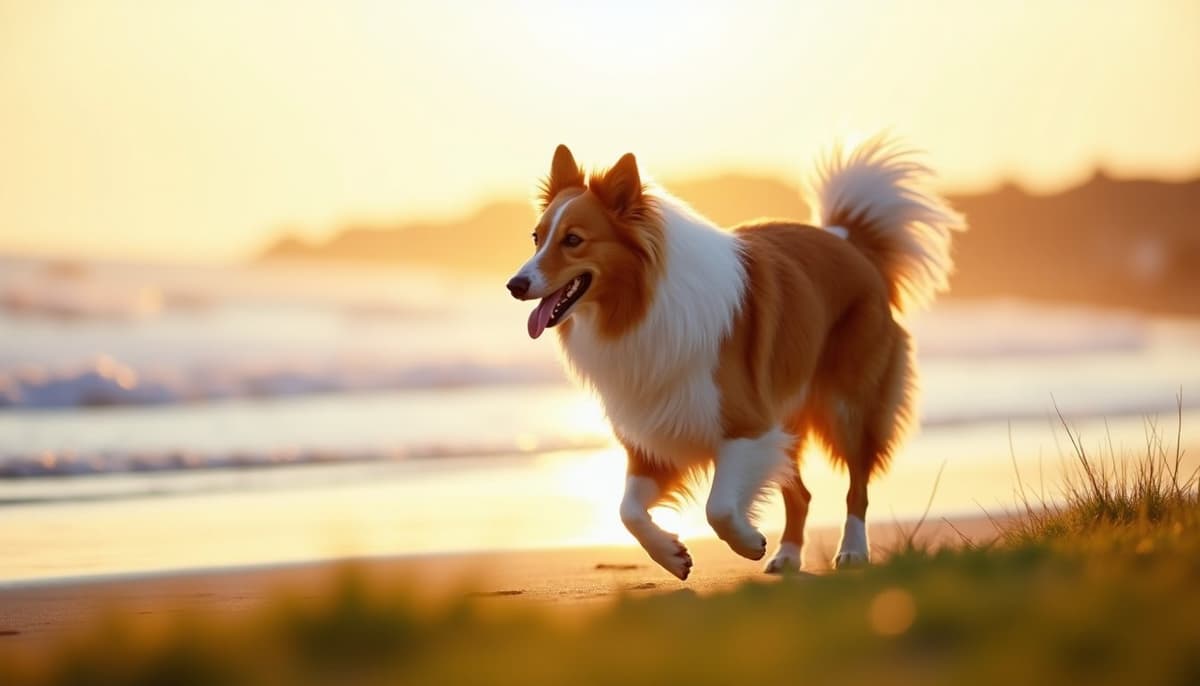
What Joint Problems Affect Shetland Sheepdogs? A Shetland Sheepdogs Joint Health Guide
A 14-year lifespan study of Labrador Retrievers published in the Journal of the American Veterinary Medical Association (Kealy et al., 2002) found that dogs fed 25% less than their free-fed littermates lived a median 1.8 years longer and developed radiographic hip osteoarthritis considerably later. Nobody has run that trial on Shetland Sheepdogs. The mechanism it exposed still applies: joint disease onset is partly a function of mechanical load, not genetics alone.
We built this shetland sheepdogs joint health guide at pawgen after years of reading owner reports alongside the veterinary orthopaedic literature on herding breeds. Shelties do not break down the way a giant breed does. They break down quietly, and the coat hides it.
What joint problems affect Shetland Sheepdogs?
Shetland Sheepdogs are most commonly affected by patellar luxation, hip dysplasia, cranial cruciate ligament (CCL) rupture, elbow dysplasia, intervertebral disc disease (IVDD), and the secondary osteoarthritis that follows all of them. Because a Sheltie's dense double coat conceals muscle wasting, owners usually notice a behaviour change, such as refusing to jump, long before they see a limp.
The common assumption is that a medium, lightly built herding dog is protected by its size. That is only half true. Lower body mass reduces peak joint loading, but Shetland Sheepdogs mobility problems are driven more by conformation, patellar groove depth, and ligament degeneration than by weight alone. This shetland sheepdogs joint health guide covers the six conditions that matter, why lameness stays hidden in this breed, the MDR1 gene detail that changes pain management, and what genuinely slows joint decline.
The Six Joint Conditions Most Likely to Affect a Sheltie
Six orthopaedic problems account for the overwhelming majority of Sheltie mobility complaints, and five of them end in the same place: cartilage loss and chronic osteoarthritis.
Patellar luxation is the kneecap slipping out of the trochlear groove of the femur, usually medially in small and medium breeds. Veterinary surgeons grade it I to IV using the Putnam scale, where grade I luxates only under manual pressure and grade IV sits permanently displaced. The classic sign is a skipping step: the dog holds a hind leg up for two or three strides, then carries on as if nothing happened.
Hip dysplasia is laxity and poor congruity between the femoral head and the acetabulum, screened radiographically through the Orthopedic Foundation for Animals (OFA) scoring system or PennHIP distraction index. Shetland Sheepdogs hip problems are less frequent than in large breeds, but the breed is not exempt, and reputable breeders still screen.
Cranial cruciate ligament rupture in dogs is usually degenerative rather than traumatic. The ligament frays over months before a routine turn finally tears it, which is why the other stifle so often follows. Full detail sits in our piece on torn acl in shetland sheepdogs.
Elbow dysplasia is an umbrella term covering fragmented coronoid process, osteochondritis dissecans, and ununited anconeal process. See elbow dysplasia in shetland sheepdogs.
IVDD involves disc extrusion or protrusion compressing the spinal cord, presenting as a hunched back, reluctance to turn the neck, or sudden hind limb weakness. Read ivdd in shetland sheepdogs.
Osteoarthritis is the common endpoint, covered in arthritis in shetland sheepdogs, with breed context in common health problems in shetland sheepdogs.
In the owner reports our team reviews, the first complaint is almost never limping. It is "she stopped jumping onto the sofa."
Why Sheltie Lameness Hides: The Gait, the Coat, and the MDR1 Gene
The Shetland Sheepdog was bred for a low, smooth, ground-covering trot that wastes no vertical motion, and that efficient gait masks asymmetry better than a bouncier breed's. Add a dense double coat over the hindquarters and you lose the single most reliable early sign of chronic hind limb pain: quadriceps and gluteal muscle atrophy.
So stop looking. Start feeling. Once a month, run both hands down the thighs and compare circumference and firmness side to side, and press along the spine either side of the vertebrae. Asymmetry you can feel through the coat has usually been developing for weeks. Our team recommends photographing the dog trotting away from the camera on a flat path every few months, because a comparison video exposes a shortened hind stride that the human eye misses in real time.
Here is the detail most breed guides omit entirely. Shetland Sheepdogs carry the MDR1 mutation (ABCB1-1delta) at one of the highest frequencies of any breed, according to testing data from Washington State University's Veterinary Clinical Pharmacology Laboratory. MDR1 codes for P-glycoprotein, a pump that keeps certain drugs out of the brain at the blood-brain barrier. Dogs with two mutant copies can show exaggerated or prolonged responses to specific drugs including acepromazine and butorphanol, both of which are routinely used for sedation and pain relief around orthopaedic radiographs and surgery.
That makes a cheek-swab MDR1 test one of the highest-value things a Sheltie owner can do before any joint workup, not after. It does not affect the common anti-inflammatories such as carprofen or meloxicam, but it absolutely changes the sedation conversation. Bring the result to the appointment. Most vets will thank you for it.
Shetland Sheepdogs Joint Health Guide: What Actually Slows Joint Decline
Four interventions have the strongest support behind them, and none of them are exotic: body condition, load management, veterinary diagnosis, and targeted nutritional support.
Body condition comes first. Vets score dogs on the 9-point body condition scale, where 4 to 5 is ideal and ribs should be easily palpable under a thin fat layer. On a Sheltie, coat volume makes visual assessment nearly worthless, so the assessment has to be done by hand. Every extra kilogram increases compressive load through an already unstable stifle or hip.
Load management means changing surfaces, not stopping movement. Laminate and tile force splayed limbs and repeated micro-slips, so runner rugs along the dog's habitual routes, plus nails kept short enough not to click on hard floors, meaningfully improve traction and proprioception. Controlled lead walking and hydrotherapy preserve muscle; unpredictable high-torque activity such as frisbee turns and stair sprints does the opposite.
Get a diagnosis before you buy anything. An orthopaedic exam, radiographs, and gait assessment separate a grade II patella from a partial cruciate tear, and those two problems need opposite exercise plans. Talk to your veterinarian before starting any new supplement, exercise programme, or pain protocol, particularly if your dog is already on prescribed medication. Nothing in this article replaces a veterinary diagnosis for your individual dog.
On nutritional support, marine omega-3 fatty acids (EPA and DHA) have the most consistent research behind them for canine joint comfort, with glucosamine, chondroitin sulphate, and green-lipped mussel showing mixed but generally favourable owner-reported results. Injectable polysulfated glycosaminoglycan is a prescription-only option your vet may raise. Peptides such as BPC-157 and TB-500 sit in a different category: they are not FDA-approved veterinary drugs, the research base is largely preclinical, and while owners report improvements in comfort and willingness to move, the evidence in dogs remains limited. Our K9-REPAIR range exists for owners who want that mechanism explained honestly rather than sold aggressively.
Condition-specific comparisons live in best joint supplement for shetland sheepdogs, best supplement for shetland sheepdogs with hip dysplasia, best supplement for shetland sheepdogs with arthritis, best supplement for shetland sheepdogs with torn acl, and best supplement for shetland sheepdogs with ivdd.
Shetland Sheepdogs Joint Health Guide: Condition Comparison
This table maps the five structural conditions against the sign owners actually notice first, because early recognition is what separates a managed joint from a surgical one.
| Condition | Typical presentation window | First sign owners report | Primary veterinary approach | Bottom line for Sheltie owners |
|---|---|---|---|---|
| Patellar luxation | Often detected in young dogs at routine exams | Intermittent skipping step, then normal gait | Grading on exam, surgery for higher grades | Low grades are frequently managed conservatively, but they still accelerate stifle osteoarthritis over years |
| Hip dysplasia | Growth phase or later as osteoarthritis | Bunny-hopping, reluctance to rise from lying | OFA or PennHIP radiographs, weight and muscle management | Less common in Shelties than large breeds, but screening breeding stock still matters |
| CCL rupture | Middle-aged to older dogs | Sudden toe-touching lameness after an ordinary turn | Drawer or tibial compression test, imaging, surgical stabilisation | Degeneration precedes the tear, so the opposite stifle deserves monitoring immediately |
| Elbow dysplasia | Young growing dogs | Shortened forelimb stride, stiffness after rest | Radiographs or CT, arthroscopy in some cases | Front-limb lameness in a young Sheltie is never something to wait out |
| IVDD | Middle-aged onward | Yelping when lifted, hunched posture, reluctance to jump | Neurological exam, MRI or CT, strict rest or surgery | Any acute hind limb weakness is a same-day veterinary emergency |
Key Takeaways
- Patellar luxation, hip dysplasia, CCL rupture, elbow dysplasia, and IVDD are the five structural problems that lead to osteoarthritis in Shetland Sheepdogs.
- The Kealy 2002 JAVMA Labrador study showed lean-fed dogs lived a median 1.8 years longer with later osteoarthritis onset, which is why body condition is the first lever in any shetland sheepdogs joint health guide.
- Shetland Sheepdogs carry the MDR1 (ABCB1-1delta) mutation at high frequency, which can alter responses to sedatives such as acepromazine and butorphanol used around orthopaedic procedures.
- A dense double coat conceals quadriceps and gluteal atrophy, so monthly hands-on comparison of both hind limbs beats visual inspection every time.
- Canine CCL rupture is usually degenerative rather than traumatic, meaning the second stifle is often already compromised when the first one tears.
- BPC-157 and TB-500 are not FDA-approved veterinary drugs, and evidence in dogs remains limited to preclinical research and owner reports.
What If: Shetland Sheepdogs Joint Health Guide Scenarios
What If My Sheltie Is Lagging Behind on Walks?
Shorten the walk immediately and book a veterinary exam rather than pushing through it. Lagging is an exercise-intolerance signal that can come from orthopaedic pain, cardiac disease, or early neurological deficit, and those three need very different workups. Note whether the lag appears at the start of the walk, which points more toward stiffness and osteoarthritis, or builds toward the end, which suggests fatigue or a cardiorespiratory cause. Record a short video of the dog trotting away from you and bring it to the appointment.
What If My Sheltie Yelps When Picked Up?
Stop lifting the dog under the chest and arrange a same-day or next-day veterinary assessment. Yelping on being lifted commonly reflects spinal pain, and in a breed where intervertebral disc disease is on the differential list, unsupported lifting can worsen a compressive lesion. Support the chest and hindquarters together as a single unit, keep the spine level, and restrict jumping, stairs, and rough play entirely until a vet has examined the dog.
What If My Sheltie Was OFA-Screened and Still Went Lame?
Treat the clearance as information about hips only, not a guarantee of whole-body soundness. OFA hip scoring evaluates the coxofemoral joints on radiographs and says nothing about patellar groove depth, cruciate ligament integrity, or disc health. Screening also captures a single moment in time, and degenerative cruciate disease develops years afterwards. Ask your vet for a full orthopaedic exam covering stifles, elbows, and spine.
The Blunt Truth About Shetland Sheepdogs Joint Health
Here is the honest answer: no supplement, ours included, will rebuild a ruptured cruciate ligament or decompress a herniated disc. Anyone telling you otherwise is selling. What nutritional support can plausibly do is act on comfort, inflammation, and soft tissue environment, and the effect sizes are modest compared with the two boring interventions almost everyone skips. Keep the dog lean on the 9-point body condition scale. Keep muscle on the hind limbs through controlled, consistent movement. Those two habits outperform every jar on every shelf, and they cost nothing.
This shetland sheepdogs joint health guide exists because the breed's stoicism and coat combine to buy joint disease a two-year head start before most owners ever pick up the phone. The dogs that age well are rarely the ones with the best genetics or the most expensive supplement cupboard. They are the ones whose owners noticed the missed sofa jump, felt the thigh that had gone soft, and got a diagnosis while the problem was still small enough to manage. For more on how mobility tracks with age in this breed, see shetland sheepdogs lifespan and shetland sheepdogs joint problems.
``json { "@context": "schema.org", "@graph": [ { "@type": "Article", "headline": "What Joint Problems Affect Shetland Sheepdogs?", "about": "Shetland Sheepdogs joint and mobility health", "publisher": { "@type": "Organization", "name": "pawgen" }, "datePublished": "2026-01-01" }, { "@type": "FAQPage", "mainEntity": [ { "@type": "Question", "name": "What joint problems affect Shetland Sheepdogs?", "acceptedAnswer": { "@type": "Answer", "text": "Patellar luxation, hip dysplasia, cranial cruciate ligament rupture, elbow dysplasia, intervertebral disc disease and secondary osteoarthritis." } } ] } ] } ``
Frequently asked questions
- What can I give a dog that is lagging behind on walks?
- Give nothing until a vet identifies the cause, because lagging can be orthopaedic, cardiac or neurological. Never give human painkillers such as ibuprofen or paracetamol, which are toxic to dogs. Once a diagnosis exists, vets commonly discuss prescribed anti-inflammatories alongside marine omega-3 fatty acids and joint support supplements for long-term comfort.
- Is a dog lagging behind on walks an emergency?
- Usually not an emergency, but it is never normal and warrants a veterinary appointment within days. It becomes urgent if lagging comes with collapse, laboured breathing, blue gums, dragging paws or sudden hind limb weakness. Gradual lagging over weeks more often reflects osteoarthritis, muscle loss or developing exercise intolerance.
- Why is my dog yelping when picked up?
- Yelping on being lifted most often signals spinal or neck pain, commonly from intervertebral disc disease, though abdominal pain, rib injury or shoulder problems can produce it too. The lift compresses or twists structures that are already inflamed. Stop lifting under the chest alone and arrange a veterinary examination promptly.
- Should I worry if my dog is yelping when picked up?
- Yes, take it seriously. A pain response that repeats on handling indicates an active problem rather than a one-off startle, and in disc-susceptible dogs early intervention meaningfully affects outcomes. Restrict jumping, stairs and rough play, support the chest and hindquarters together when lifting, and book a veterinary assessment.
- When should I take a dog to the vet for yelping when picked up?
- Book the same day if yelping occurs alongside a hunched back, wobbly or dragging hind legs, reluctance to turn the neck, or loss of bladder control. Book within 24 to 48 hours for repeated yelping without neurological signs. A single yelp that never recurs can be monitored for a couple of days.
- What can I give a dog that is yelping when picked up?
- Give nothing from the medicine cabinet, because human anti-inflammatories are dangerous to dogs and can mask a spinal emergency. Provide crate rest, a level supported lift and no stairs until examined. Your vet may prescribe canine-specific analgesia, and long-term joint or spinal support can be discussed once imaging clarifies the cause.
- At what age should I start a shetland sheepdogs joint health guide routine?
- Start monitoring from the first year, since patellar luxation and elbow dysplasia typically present in young dogs. Lean body condition, hands-on thigh muscle checks and controlled exercise apply lifelong. Discuss preventive supplementation with your vet around middle age, or earlier if radiographs already show joint change.
- How much does it cost to diagnose Sheltie joint problems?
- Costs vary widely by clinic, region and imaging needed. An orthopaedic consultation is the cheapest step, radiographs sit considerably higher, and advanced imaging such as CT or MRI for suspected disc disease is the most expensive tier. Ask for a written estimate before booking sedation or imaging.
- Are glucosamine or omega-3 supplements better for Shetland Sheepdogs?
- Marine omega-3 fatty acids providing EPA and DHA currently carry the more consistent research support for canine joint comfort, while glucosamine and chondroitin show mixed study results despite widespread owner-reported benefit. Many products combine both. Neither replaces prescribed veterinary medication or weight management.
- Does the MDR1 gene matter in a shetland sheepdogs joint health guide?
- Yes, because Shetland Sheepdogs carry the MDR1 mutation at high frequency and it can alter responses to certain sedative and analgesic drugs used around orthopaedic imaging and surgery. A simple cheek-swab test gives your vet that information before procedures rather than after a reaction.
- Can BPC-157 or TB-500 be used for dogs with joint problems?
- They are not FDA-approved veterinary drugs, and the available research is largely preclinical rather than based on controlled canine trials. Owners report improvements in comfort and willingness to move, but evidence in dogs remains limited. Any use should be discussed with your veterinarian alongside, not instead of, prescribed care.
- Can a Sheltie live normally after cruciate ligament surgery?
- Many dogs return to comfortable, active life after surgical stabilisation, provided the structured rehabilitation period is followed properly. The rebuilt stifle depends on muscle support, so controlled walking and physiotherapy matter more than rest alone. Monitor the opposite stifle closely, since canine cruciate disease is frequently bilateral over time.
Educational content. BPC-157 and TB-500 are not FDA-approved veterinary drugs. Talk to your veterinarian before starting anything new, especially if your dog is on prescribed medication.