What Joint Problems Affect Springer Spaniels? (Hip & More)
Cranial cruciate ligament disease, not hip dysplasia, is the most frequently diagnosed orthopaedic injury in dogs overall, and English Springer Spaniels sit in an awkward middle ground for it. They are heavy enough to load a stifle hard, athletic enough to pivot at full speed through cover, and stoic enough…
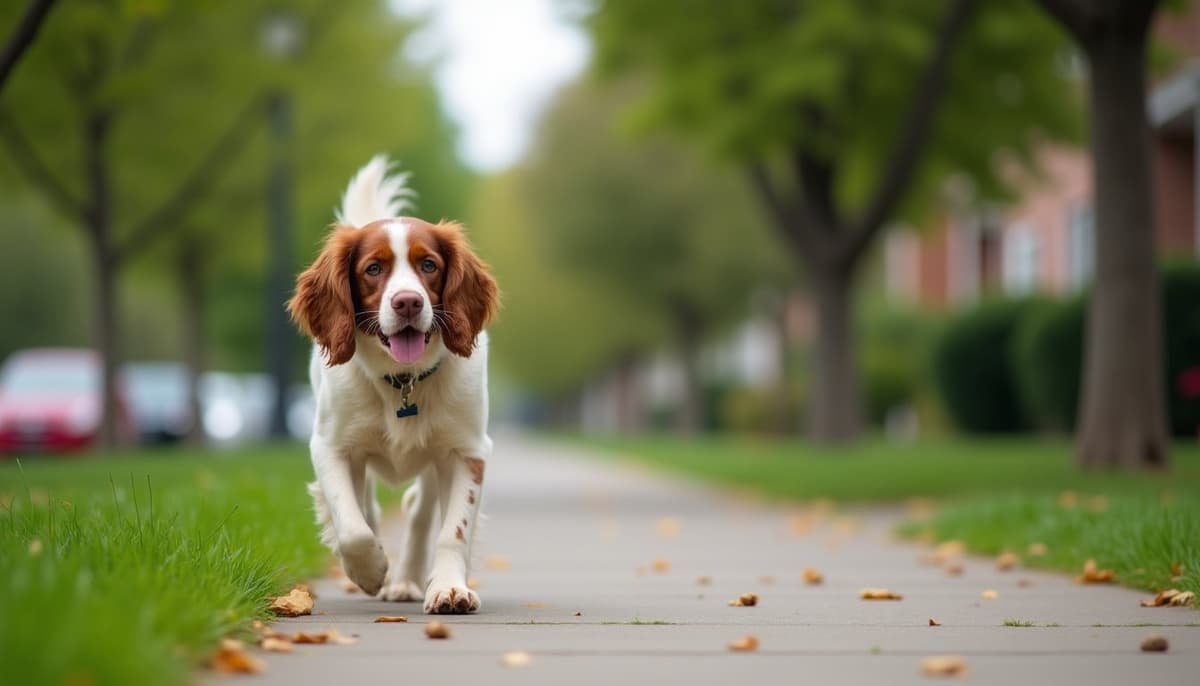
What Joint Problems Affect Springer Spaniels?
Cranial cruciate ligament disease, not hip dysplasia, is the most frequently diagnosed orthopaedic injury in dogs overall, and English Springer Spaniels sit in an awkward middle ground for it. They are heavy enough to load a stifle hard, athletic enough to pivot at full speed through cover, and stoic enough to mask a partial tear for weeks.
That gap between what a Springer feels and what an owner sees is why this springer spaniels joint health guide exists. Canine orthopaedic literature and the pattern across sporting-dog owner reports point the same way, and one theme repeats relentlessly: the dog 'slowed down', so nobody investigated.
What joint problems affect Springer Spaniels?
Springer Spaniels are most affected by hip dysplasia, elbow dysplasia, cranial cruciate ligament (CCL) disease, patellar luxation and osteoarthritis secondary to all of them. Intervertebral disc disease also occurs. Hip and elbow screening through the Orthopedic Foundation for Animals registry and holding body condition at 4–5 out of 9 remain the two highest-leverage actions owners control.
Here is the nuance the definition misses: dysplasia is a joint conformation problem, not a pain diagnosis. Plenty of Springers with radiographically loose hips walk comfortably for a decade, and plenty with mild-looking films are sore at six. Structure sets the ceiling; body weight, muscle mass and cumulative load decide where inside that ceiling your dog actually lives. This springer spaniels joint health guide covers the breed's specific risk profile, the compensation mechanism that hides early pain, and what the evidence genuinely supports for management.
The Breed Risk Profile: Where Springer Spaniel Joints Actually Fail
Springer Spaniels are a medium-boned sporting breed, typically around 40–50 lb, bred for sustained quartering and repeated jumping rather than straight-line speed. Their orthopaedic failures cluster into a handful of named conditions rather than spreading randomly.
Hip dysplasia is the one owners know. It describes coxofemoral laxity, meaning the femoral head sits loosely in a shallow acetabulum, so every stride grinds rather than glides. That friction erodes articular cartilage and drives secondary osteoarthritis. Both the OFA registry and the PennHIP method exist to quantify this, and PennHIP distraction index measurement can be performed from as early as 16 weeks, while OFA final hip certification is issued at 24 months. If you are weighing screening or considering a puppy, hip dysplasia in springer spaniels breaks the process down properly.
Elbow dysplasia is the quieter twin. It is an umbrella term covering fragmented coronoid process, osteochondritis dissecans (OCD) of the humeral condyle and ununited anconeal process. Because the elbow is a tight, poorly forgiving hinge, even small incongruity produces lameness that owners often mistake for a shoulder strain. Support strategies for that specific joint are covered in our piece on the best supplement for springer spaniels with elbow dysplasia.
CCL disease is the third pillar, and it behaves differently from the dysplasias. The canine cranial cruciate ligament usually degenerates progressively rather than snapping in one dramatic moment, which is why a Springer can be intermittently sore for months before a full rupture. Medial patellar luxation, graded 1 to 4 on the Putnam scale, and intervertebral disc disease round out the list.
Every one of these roads ends at the same destination: osteoarthritis. In the pattern across owner reports for this breed, the dogs who age comfortably are almost never the ones who avoided a diagnosis. They are the ones whose owners caught the diagnosis early. For the wider picture, see common health problems in springer spaniels and the breed-specific structural reasons behind springer spaniels joint problems.
What Most Springer Spaniels Joint Health Guides Miss About Compensation and Muscle Loss
A Springer Spaniel does not tell you a joint hurts by limping. It tells you by redistributing load, and that redistribution is measurable long before gait changes are visible.
The mechanism runs like this. A painful hip or stifle prompts the dog to shift weight forward onto the thoracic limbs. Reduced use of the affected leg triggers disuse atrophy in the gluteal and quadriceps groups within weeks. Those muscles are the joint's dynamic stabilisers, so as they shrink, the joint moves through a slightly larger, sloppier arc. More laxity means more cartilage shear, which means more pain, which means more offloading. It is a closed loop, and it accelerates.
This is why any honest springer spaniels joint health guide has to make the same unfashionable point: the earliest reliable sign is refusal of a specific movement, not lameness. Jumping into a car boot or onto a couch demands simultaneous hip extension, deep stifle flexion and an explosive concentric push through exactly the tissue that hurts. A dog can trot down the street on a bad hip and still decline that jump. Owners read the hesitation as politeness, caution or age. It is pain.
Second mechanism most guides ignore: proprioceptive drift. Chronic joint inflammation degrades signalling from mechanoreceptors inside the joint capsule, so the dog's sense of exactly where its foot is becomes less precise. That shows up as clipped nails on the hind toes, a scuffing sound on pavement, or wider-based standing. Owners managing this day to day describe checking nail wear patterns constantly, because asymmetric wear on one hind foot is often the first physical evidence of a problem the owner has not yet noticed.
Ageing itself does not cause reluctance to jump. Pain does. The distinction matters enormously for how long a Springer stays functional, which we explore in springer spaniels lifespan and in our practical breakdown of joint support for springer spaniels.
The Springer Spaniels Joint Health Guide Plan: Weight, Load and What the Evidence Supports
Body condition is the single most powerful lever an owner holds, and it costs nothing. On the 9-point body condition score used widely in veterinary practice, 4–5 is the target: ribs easily felt under light pressure, a visible waist from above, an abdominal tuck from the side. Every extra pound of fat increases joint compression force and contributes inflammatory adipokines that push cartilage in the wrong direction.
Load management comes next. Controlled, frequent, low-impact movement beats weekend-warrior exercise patterns. Traction matters more than owners expect, because a Springer scrabbling on laminate or tile generates exactly the rotational stifle forces that damage cruciate fibres. Ramps for the car, rugs on slick runs and structured hydrotherapy or veterinary physiotherapy all reduce cumulative load without reducing fitness.
On nutrition and supplements, the evidence is uneven and worth stating honestly. Long-chain omega-3 fatty acids (EPA and DHA) from marine sources have the strongest research support of any dietary intervention for canine osteoarthritis, acting through reduced production of inflammatory eicosanoids. Green-lipped mussel (Perna canaliculus) and undenatured type II collagen have supportive but smaller bodies of research. Glucosamine and chondroitin sulphate remain the most purchased and the most equivocal, with trial results that are genuinely mixed. Our comparisons of the best joint supplement for springer spaniels and the best supplement for springer spaniels with arthritis go through the specifics.
Veterinary options are a separate category entirely, and supplements do not replace them. Carprofen, meloxicam and grapiprant are prescription anti-inflammatories; bedinvetmab is a monoclonal antibody targeting nerve growth factor; polysulfated glycosaminoglycan injections are a licensed disease-modifying option. For cruciate rupture in an active dog, surgical stabilisation such as TPLO remains the standard of care, and nothing on a shelf substitutes for it. See best supplement for springer spaniels with torn acl, best supplement for springer spaniels with hip dysplasia and best supplement for springer spaniels with ivdd for condition-specific context.
Research peptides including BPC-157 and TB-500 are studied for their possible roles in soft tissue and tendon repair signalling. They are not FDA-approved veterinary drugs, the canine evidence base is limited, and everything K9-REPAIR publishes on them is educational rather than a treatment claim. Talk to your veterinarian before adding anything to your dog's regimen, and treat this article as education rather than a diagnosis or prescription.
Springer Spaniels Joint Health Guide: Condition Comparison
This table maps the five conditions Springer owners encounter most, so you can match what you are seeing at home to the likely joint involved. Onset ranges reflect typical clinical presentation patterns, not guarantees for an individual dog.
| Condition | Typical Onset | Hallmark Early Sign | Primary Management Path | Bottom Line |
|---|---|---|---|---|
| Hip dysplasia | Signs often from 5–12 months, or later as arthritis | Bunny-hopping gait, reluctance to rise from lying | Weight control, muscle building, pain management, surgical options in severe cases | Screening tells you the structure; body condition and muscle decide how much it costs your dog |
| Elbow dysplasia | Commonly 5–12 months | Intermittent forelimb lameness, worse after rest | Imaging, arthroscopy in some cases, long-term arthritis management | Easily misread as a soft tissue strain, so persistent front-end lameness deserves radiographs |
| CCL disease | Most often middle age and beyond | Sitting with one hind leg kicked out sideways | Orthopaedic assessment, surgical stabilisation typical for active dogs | Rarely a single traumatic event, which is why intermittent soreness should not be waited out |
| Patellar luxation | Can appear young, graded 1–4 | Brief skipping stride, then normal gait resumes | Grading exam, conservative management or surgery depending on grade | Low grades often stay manageable; high grades reshape gait and accelerate arthritis |
| Osteoarthritis | Progressive, commonly from middle age | Refusing jumps before any visible limp | Multimodal: weight, exercise, physiotherapy, prescription medication, diet | The endpoint of every condition above, and the one most responsive to early intervention |
Key Takeaways
- Hip dysplasia, elbow dysplasia, CCL disease, patellar luxation and secondary osteoarthritis account for the majority of mobility problems in Springer Spaniels.
- The earliest sign is usually refusal of a specific movement such as jumping into a car, not a visible limp.
- Holding body condition at 4–5 out of 9 is the highest-leverage, zero-cost intervention available to any owner.
- PennHIP evaluation can be performed from 16 weeks, while OFA issues final hip certification at 24 months.
- Marine-sourced EPA and DHA have the strongest research backing of any dietary intervention for canine osteoarthritis; glucosamine evidence is genuinely mixed.
- A useful springer spaniels joint health guide should send you to a veterinarian for diagnosis, not away from one.
What If: Springer Spaniel Mobility Scenarios
What If My Springer Suddenly Stops Jumping Into the Car?
Book a veterinary orthopaedic exam rather than waiting to see whether it resolves. A sudden refusal of a movement the dog performed comfortably last week points to acute pain, and in a middle-aged Springer the leading candidates are cruciate injury, an acute-on-chronic hip flare or a disc problem. Use a ramp in the meantime and stop the dog jumping down, because the eccentric landing load is often worse than the take-off. Document the date it started, because that timeline shapes the differential diagnosis your vet works through.
What If the Hip Films Look Bad but My Dog Seems Fine?
Manage proactively and do not medicate a dog that is not in pain. Radiographic severity and clinical pain correlate loosely in dogs, so a poor film in a comfortable Springer is a forecast rather than a diagnosis. That forecast justifies lean body condition, deliberate hind-end muscle conditioning, non-slip flooring and a baseline gait video you can compare against in twelve months. Recheck the conversation with your vet at every annual exam rather than assuming stability.
What If My Vet Prescribed an NSAID and I Would Rather Use a Supplement?
Raise it with the prescribing veterinarian instead of quietly substituting. Prescription anti-inflammatories such as carprofen, meloxicam and grapiprant control inflammation at a magnitude no supplement matches, and stopping them abruptly can leave a dog in genuine pain. Supplements sit alongside medication, and in some cases owners and vets discuss stepping doses down over time once weight, muscle and physiotherapy are working. That decision belongs to your vet, with your dog's bloodwork in front of them.
The Blunt Truth About Springer Spaniel Joint Supplements
Let us be direct about this: no supplement rebuilds a dysplastic hip socket or reattaches a torn cruciate ligament. Anything marketed on that promise is selling you hope. What well-formulated support products can plausibly do is reduce inflammatory signalling, supply substrate for connective tissue maintenance and make consistent movement more comfortable, which then protects muscle mass. That is a real and worthwhile role, and it is a supporting one. Weight control and structured exercise still outperform every bottle on the market, and they always will. Read the label, then read arthritis in springer spaniels for what actually changes outcomes.
The most useful thing any springer spaniels joint health guide can give you is a lower threshold for paying attention. Springers are cheerful, compliant dogs that will keep working through discomfort because working is what they were built to do, and that temperament is exactly what delays diagnosis. The hesitation at the tailgate, the slightly wider stance, the scuffed hind nails: those are data points, not personality quirks. Owners who investigate the first refusal instead of the third limp tend to end up with dogs who are still hunting hedgerows at eleven.
Frequently asked questions
- When should I take a dog to the vet for trouble jumping in the car?
- Book a veterinary exam if the difficulty lasts more than two or three days, recurs, or appeared suddenly in a dog that jumped comfortably before. Persistent reluctance usually signals hip, stifle or spinal pain rather than caution. Bring a phone video of the attempt, since gait detail your vet cannot reproduce in the consult room is genuinely useful diagnostically.
- What can I give a dog that is trouble jumping in the car?
- Practical aids first: a non-slip car ramp, a lifting harness and rugs over slick flooring at home. For pain itself, only your veterinarian should choose a medication, since human anti-inflammatories are dangerous to dogs. Supportive nutrition such as marine omega-3 fatty acids may help comfort over weeks, but it does not replace a diagnosis.
- Is a dog trouble jumping in the car an emergency?
- Usually not, but it becomes urgent with certain signs. Seek same-day veterinary care if there is non-weight-bearing lameness, hind limb weakness or dragging, loss of bladder control, crying on movement, or sudden collapse. Those can indicate acute disc disease or a complete ligament rupture. Gradual reluctance without neurological signs warrants a prompt appointment rather than emergency admission.
- Why is my dog reluctant to jump on the couch?
- Because that jump loads painful joints harder than walking does. It demands hip extension, deep stifle flexion and an explosive push through the hind limbs simultaneously. Hip dysplasia, cruciate ligament disease, arthritis and spinal pain all show up here first. Reluctance can also follow a slip on flooring, where the dog has learned the landing feels unsafe.
- Should I worry if my dog is reluctant to jump on the couch?
- It deserves attention rather than alarm. In dogs, refusing a familiar jump is one of the earliest reported behavioural markers of joint pain, often preceding any visible limp by weeks or months. Early investigation opens up more management options and better outcomes. Note when it started, whether it is worse after rest, and raise it at your next veterinary visit.
- When should I take a dog to the vet for reluctant to jump on the couch?
- Arrange an appointment if the reluctance persists beyond a week, worsens, or comes with stiffness after rest, licking a joint, or difficulty rising. Do not wait for a limp, because dogs offload painful limbs long before lameness becomes obvious. Any accompanying back pain, wobbliness or yelping should be assessed within twenty-four hours.
- Where should I start with a springer spaniels joint health guide?
- Start with body condition scoring, because it is free and the highest-impact variable you control. Then establish a baseline: a short video of your dog trotting away from and toward the camera, filmed annually. From there, address flooring traction, ramp access and a conditioning routine, and discuss screening or imaging with your vet.
- Does a springer spaniels joint health guide apply to Welsh Springer Spaniels too?
- Largely yes, with caveats. Both are medium sporting spaniels with similar activity demands, so hip dysplasia, cruciate disease and osteoarthritis management principles transfer directly. Breed-specific screening statistics and inherited risk profiles differ between English and Welsh Springers, so discuss registry data for your dog's specific breed and lineage with your veterinarian or breeder.
- How much does hip dysplasia treatment cost for a Springer Spaniel?
- Costs vary widely by region, clinic and severity, so any single figure would be misleading. Conservative management involving weight control, physiotherapy and medication is far less expensive than surgical intervention such as total hip replacement. Ask for a written estimate covering imaging, anaesthesia and rehabilitation, and check whether your insurance policy excludes conditions considered hereditary.
- Is glucosamine or omega-3 better for Springer Spaniel arthritis?
- Marine omega-3 fatty acids, specifically EPA and DHA, carry the stronger research support for canine osteoarthritis, working through reduced inflammatory eicosanoid production. Glucosamine and chondroitin trial results are genuinely mixed, with some studies showing benefit and others showing none. Many owners use both, and neither substitutes for weight management or prescription pain control where your vet has advised it.
Educational content. BPC-157 and TB-500 are not FDA-approved veterinary drugs. Talk to your veterinarian before starting anything new, especially if your dog is on prescribed medication.