Standard Schnauzers Joint Health Guide | K9-REPAIR
A 14-year lifetime feeding study run by Nestlé Purina and published in the Journal of the American Veterinary Medical Association followed Labrador Retriever littermates into old age. The dogs kept lean developed radiographic hip osteoarthritis later, required arthritis medication later, and lived a median of 1.8 years longer than the…
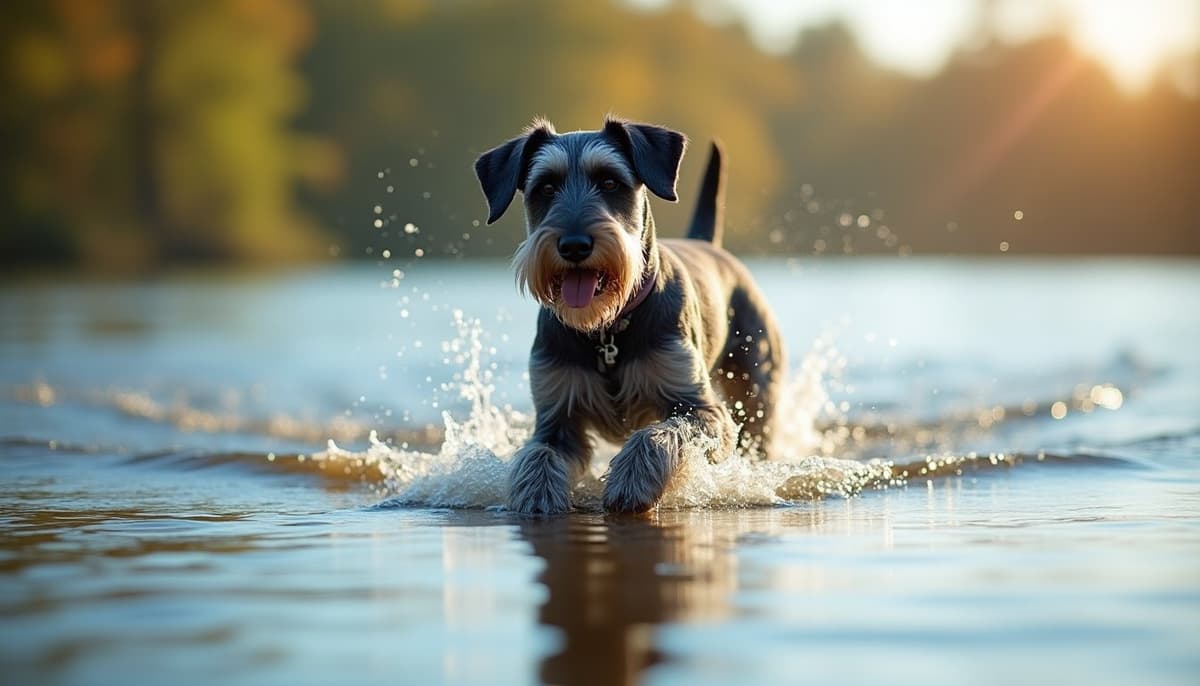
What joint problems affect Standard Schnauzers?
A 14-year lifetime feeding study run by Nestlé Purina and published in the Journal of the American Veterinary Medical Association followed Labrador Retriever littermates into old age. The dogs kept lean developed radiographic hip osteoarthritis later, required arthritis medication later, and lived a median of 1.8 years longer than the littermates fed 25% more food. Different breed. Identical joint biology.
Across years of owner reports from medium-sized working breeds, Standard Schnauzers produce a consistent pattern: the dog is athletic, stoic and structurally handsome, so the first genuine complaint tends to land around year seven, by which point something has been quietly degrading for two or three years. This standard schnauzers joint health guide is built around closing that lag.
What joint problems affect Standard Schnauzers?
Standard Schnauzers are most commonly affected by hip dysplasia, cranial cruciate ligament (CCL) rupture, elbow dysplasia and secondary osteoarthritis. Hansen Type II intervertebral disc disease appears less frequently but does occur. This standard schnauzers joint health guide ranks each risk by likelihood and flags the early signs that justify a veterinary orthopaedic exam rather than watchful waiting.
The oversimplification worth correcting is the label "robust breed." That is broadly fair on lifespan and misleading on orthopaedics, because a high-drive, pain-tolerant dog conceals lameness far longer than a sedentary breed does. The Standard Schnauzer Club of America recommends Orthopedic Foundation for Animals (OFA) hip evaluation for breeding stock precisely because dysplasia sits in the gene pool. This article covers the four conditions that dominate the breed risk profile, the early signals owners routinely misread, and which interventions carry real mechanistic support.
The Four Conditions This Standard Schnauzers Joint Health Guide Ranks First
Hip dysplasia, cranial cruciate ligament rupture, elbow dysplasia and the osteoarthritis that follows all three account for the overwhelming majority of orthopaedic complaints in this breed. Understanding which one you are dealing with changes the entire management plan.
Hip dysplasia is a developmental malformation of the coxofemoral joint, where the femoral head fails to seat tightly in the acetabulum. The resulting laxity drives abnormal shear forces, cartilage erosion and bony remodelling. OFA grades range from Excellent through Good, Fair and Borderline into Mild, Moderate and Severe dysplasia, while the PennHIP method quantifies laxity as a distraction index. Neither screen is a guarantee for an individual puppy, but they meaningfully shift the odds. The breed-specific picture is covered in depth in the article on hip dysplasia in standard schnauzers.
Cranial cruciate ligament rupture is the canine analogue of a human ACL tear, and it is the single most common cause of sudden hind-limb lameness in active medium breeds. Here is the part most owners get wrong: in dogs, CCL failure is usually degenerative rather than traumatic. The ligament frays over months under repetitive rotational load, then the final fibres snap during an ordinary turn. Once one stifle goes, the contralateral knee carries elevated risk. The breakdown of torn acl in standard schnauzers explains the surgical and conservative pathways.
Elbow dysplasia is an umbrella term covering fragmented medial coronoid process, ununited anconeal process and osteochondrosis of the medial humeral condyle. It presents as forelimb stiffness after rest in young to middle-aged dogs. Osteoarthritis is the common downstream endpoint of all of these, and it is progressive rather than static. If you want the structural and genetic reasoning, read standard schnauzers joint problems alongside the overview of arthritis in standard schnauzers. The pattern across owner reports is that those who can name the specific condition make far better decisions than those working from a general sense that the dog is "getting old."
Early Signs of Standard Schnauzers Mobility Loss That Owners Misread
Dogs do not limp when a joint first starts failing. They limp when compensation runs out, and compensation in a muscular Standard Schnauzer can last a long time. The earliest signals are behavioural, not gait-related.
Watch the sit. A dog with stifle pain often performs a lateral or "lazy" sit, kicking the affected leg out to the side rather than folding it beneath the hip. Watch the jump into the car, the hesitation at the top of stairs, the shortened stride on the return leg of a walk, and the new habit of repositioning three or four times before settling at night. Cold-weather stiffness that loosens after ten minutes of movement is a textbook osteoarthritis pattern, not a personality quirk. Licking repeatedly over one carpus or stifle is a pain behaviour, not grooming.
Here is the detail most general breed pages miss entirely. Standard Schnauzers are not chondrodystrophic, unlike Dachshunds or Basset Hounds. That matters because their disc disease, when it happens, is usually Hansen Type II fibroid protrusion: slow, chronic, and appearing in middle-aged to older dogs. It rarely produces the dramatic acute collapse people are told to watch for. Instead it produces scuffed rear nails, occasional knuckling of a hind paw, and a vague hind-end weakness that reads exactly like ageing. Run a finger across the dorsal surface of the rear toenails. Asymmetric wear there is one of the earliest objective indicators of a proprioceptive deficit, and it costs nothing to check monthly. The guide to standard schnauzers lifespan covers how these deficits shape healthy ageing, and nutritional support is addressed in best supplement for standard schnauzers with ivdd. Across the pattern of owner reports, "he just slowed down" is the single most common description of what turned out to be a diagnosable, manageable orthopaedic problem.
The Interventions This Standard Schnauzers Joint Health Guide Actually Endorses
Body condition is the highest-leverage variable an owner controls, and nothing else in this list comes close. A Standard Schnauzer should sit at 4 to 5 on the 9-point WSAVA body condition score, with palpable ribs under a thin fat layer and a visible waist from above. Excess adipose tissue is not passive weight; it is metabolically active and secretes pro-inflammatory cytokines that amplify joint inflammation independently of load.
Muscle is the second lever. Controlled leash walking on varied terrain, gentle hill work and short sessions of balance work build the periarticular musculature that stabilises a lax hip or a compromised stifle. Repetitive high-impact fetch on hard ground does the opposite. Veterinary rehabilitation, including underwater treadmill hydrotherapy, loads muscle while offloading the joint surface.
On the veterinary side, the toolkit is genuinely good now. NSAIDs such as carprofen, meloxicam and grapiprant (Galliprant, an EP4 prostaglandin receptor antagonist) control inflammatory pain, and bedinvetmab (Librela), an anti-nerve growth factor monoclonal antibody, received FDA approval for canine osteoarthritis pain in 2023. Please talk to your veterinarian before starting, stopping or layering any of these, particularly since NSAIDs require baseline bloodwork and periodic monitoring.
On the nutritional side, marine omega-3 fatty acids (EPA and DHA) have the strongest evidence base of any joint nutraceutical in dogs, working through eicosanoid pathway competition. Undenatured type II collagen (UC-II), green-lipped mussel (Perna canaliculus) and glucosamine with chondroitin sulphate are widely used; the evidence for glucosamine specifically is mixed and inconsistent across trials, and honest sourcing matters more than label glamour. Formulations are compared in best joint supplement for standard schnauzers and soft-tissue support is covered in more depth in joint support for standard schnauzers, with condition-specific pages for best supplement for standard schnauzers with hip dysplasia, best supplement for standard schnauzers with arthritis and best supplement for standard schnauzers with elbow dysplasia.
Peptides sit in a different evidentiary category. BPC-157 is a synthetic pentadecapeptide sequence derived from a human gastric protein, and TB-500 is a synthetic fragment of thymosin beta-4. Preclinical research, largely in rodent tendon and ligament models, suggests roles in angiogenesis and fibroblast migration, and many owners report using them as part of a recovery routine. They are not FDA-approved veterinary drugs, the canine evidence base is limited, and nothing here should replace a prescribed medication or a recommended surgery. If you want the educational background on how these are used, we publish it openly at K9-REPAIR.
Standard Schnauzers Joint Health Guide: Condition Comparison
This table maps the four dominant orthopaedic risks plus disc disease against onset window, first reliable sign and the standard veterinary pathway. Use it to work out which conversation to have with your vet.
| Condition | Typical onset window | Earliest reliable sign | Primary veterinary pathway | Bottom Line |
|---|---|---|---|---|
| Hip dysplasia | Signs often appear between 6 and 18 months, or later as secondary arthritis | Bunny-hopping gait, reluctance to rise from a down, narrow hind stance | Radiographs with OFA or PennHIP scoring, weight and muscle management, surgery in severe cases | Screening parents lowers risk but never eliminates it; lean body condition changes the trajectory more than any supplement |
| Cranial cruciate ligament rupture | Most often middle age in active dogs | Lateral or kicked-out sit, intermittent toe-touching lameness after exercise | Cranial drawer and tibial compression testing, TPLO or extracapsular repair, structured rehab | Usually degenerative, not accidental; assume the opposite knee is also at risk and manage both |
| Elbow dysplasia | Commonly detected in young to middle-aged dogs | Forelimb stiffness after rest that eases with movement, outward-rotated paws | CT or radiographs, arthroscopic treatment of coronoid fragments, long-term arthritis control | Rarely fully cured; the goal is slowing arthritic progression rather than restoring a normal joint |
| Osteoarthritis | Progressive, usually apparent from middle age onward | Slower walks, cold-weather stiffness, reluctance to jump into the car | Multimodal plan: weight, exercise prescription, NSAIDs or anti-NGF therapy, omega-3s, rehab | The most manageable condition on this list and the most commonly dismissed as normal ageing |
| Hansen Type II disc disease | Older dogs, gradual onset | Scuffed rear toenails, occasional hind paw knuckling, hind-end weakness | Neurological exam, MRI when indicated, conservative management or decompressive surgery | Slow-onset and easy to miss in a non-chondrodystrophic breed; check nail wear monthly |
Key Takeaways
- Hip dysplasia, cranial cruciate ligament rupture, elbow dysplasia and secondary osteoarthritis account for most orthopaedic problems in Standard Schnauzers, with Hansen Type II disc disease a less common addition.
- The Purina lifetime study in Labradors found lean-fed dogs developed hip osteoarthritis later and lived a median of 1.8 years longer, which makes body condition score the highest-leverage variable in this standard schnauzers joint health guide.
- Canine cruciate ligament failure is typically degenerative rather than traumatic, so the sudden lameness you witness is usually the end of a months-long process.
- Standard Schnauzers are not chondrodystrophic, so their disc disease tends to present as scuffed rear nails and gradual hind-end weakness rather than acute collapse.
- Marine omega-3 fatty acids (EPA and DHA) carry the strongest nutraceutical evidence base for canine osteoarthritis; glucosamine evidence remains inconsistent across trials.
- BPC-157 and TB-500 are not FDA-approved veterinary drugs, and any use belongs in a conversation with your veterinarian rather than as a replacement for prescribed care.
What If: Standard Schnauzers Joint Health Scenarios
What if my Standard Schnauzer is stiff only in cold weather?
Book a veterinary orthopaedic exam rather than treating it as a seasonal quirk. Cold-weather stiffness that eases after roughly ten minutes of movement is a classic osteoarthritis presentation, because lower ambient temperature increases synovial fluid viscosity and reduces soft-tissue elasticity around an already compromised joint. The cold is the amplifier, not the cause. Practical adjustments help: a warm sleeping area away from draughts, a longer and gentler warm-up before exercise, orthopaedic bedding, and non-slip runners over hard flooring. If the stiffness now lasts longer than it did last winter, that progression is the meaningful signal, not the stiffness itself.
What if my Standard Schnauzer suddenly holds up a hind leg after playing?
Rest the dog immediately, restrict activity to short leash walks, and get a veterinary exam within a day or two. Acute non-weight-bearing hind-limb lameness in an athletic medium breed points strongly toward cranial cruciate ligament rupture or a partial tear, which a vet assesses with cranial drawer and tibial compression tests. Continuing normal exercise on a partially torn ligament accelerates meniscal damage and worsens the surgical picture. Do not reach for human anti-inflammatories; ibuprofen and naproxen are toxic to dogs.
What if both parents had OFA hip clearances?
Keep screening the dog anyway and keep the weight management strict. OFA hip evaluation reduces the statistical probability of dysplasia in offspring, but hip conformation is polygenic and strongly influenced by growth rate, nutrition and early exercise loading. Cleared parents shift the odds; they do not confer immunity. Rapid growth on over-rich puppy food and repetitive high-impact activity before the growth plates close can undermine good genetics entirely.
The Blunt Truth About Standard Schnauzers Joint Health
Let's be direct about this: no supplement on the market will outperform keeping your Standard Schnauzer at a body condition score of 4 to 5 out of 9. Not glucosamine, not collagen, not peptides, not ours. Owners spend heavily on capsules while feeding a dog twenty percent above ideal weight, and that is the wrong order of operations. Supplements are a supporting layer on top of lean body mass, sensible exercise loading and prompt veterinary diagnosis. Get those three right first, then decide what else is worth adding.
This standard schnauzers joint health guide exists because the breed's greatest orthopaedic liability is not its hips or its knees. It is its temperament. A dog that keeps trotting on a fraying cruciate ligament, that never yelps, that greets you at the door with the same enthusiasm at ten as at two, is a dog whose owner receives almost no early warning. So build the warning system yourself: monthly nail checks, a photograph of the sit, a note of how long the morning stiffness lasts. Those three habits catch more problems than any annual exam ever will.
Frequently asked questions
- What can I give a dog that is stiff in cold weather?
- Start with a veterinary exam, because stiffness that eases after movement usually signals osteoarthritis. Vets commonly prescribe NSAIDs such as carprofen, meloxicam or grapiprant. Marine omega-3 fatty acids (EPA and DHA) have the strongest nutraceutical evidence base. Warm bedding, non-slip flooring and longer warm-ups before exercise all reduce winter stiffness measurably.
- Is a dog stiff in cold weather an emergency?
- Usually not. Stiffness that loosens within roughly ten minutes of gentle movement points to chronic osteoarthritis rather than an acute injury. It becomes urgent if the dog cannot bear weight, drags a limb, cries out, loses bladder control or shows sudden hind-end collapse. Those signs warrant same-day veterinary assessment.
- Why is my dog slowing down on walks?
- Most often because a joint hurts. Osteoarthritis, hip dysplasia, a partially torn cranial cruciate ligament or early disc disease all reduce willingness to walk long before visible limping appears. Cardiac, respiratory, thyroid and neurological causes are also possible, which is why a full veterinary workup beats assuming it is simply age.
- Should I worry if my dog is slowing down on walks?
- Yes, enough to investigate it. Reduced walk tolerance is one of the earliest and most reliable indicators of canine osteoarthritis, and stoic breeds like Standard Schnauzers show it well before they limp. It is rarely an emergency, but treating it as normal ageing delays diagnosis by months or years.
- When should I take a dog to the vet for slowing down on walks?
- Book an appointment once the change persists beyond about two weeks, or sooner if you also see lateral sitting, difficulty rising, stair avoidance or reluctance to jump into the car. Go immediately for non-weight-bearing lameness, hind paw knuckling, scuffed rear nails, laboured breathing or sudden collapse during exercise.
- What can I give a dog that is slowing down on walks?
- Nothing should be given before a diagnosis, because treatment depends entirely on the cause. If osteoarthritis is confirmed, vets typically combine weight reduction, prescribed pain control, controlled exercise and omega-3 fatty acids. Never give human anti-inflammatories such as ibuprofen or naproxen; both are toxic to dogs even at small doses.
- When should I start following a standard schnauzers joint health guide?
- From puppyhood, not from the first limp. Growth-rate control, avoiding repetitive high-impact activity before growth plates close, and maintaining a body condition score of 4 to 5 out of 9 all influence adult joint outcomes. Waiting until a middle-aged dog shows stiffness means starting after the cartilage damage has begun.
- Are Standard Schnauzers prone to hip dysplasia?
- Hip dysplasia exists in the breed, which is why the Standard Schnauzer Club of America recommends Orthopedic Foundation for Animals hip evaluation for breeding stock. It is not the breed's defining problem the way it is in some giant breeds, but it is common enough that screening parent dogs is genuinely worthwhile.
- How much does surgery for a torn ACL in a Standard Schnauzer cost?
- Costs vary widely by region, clinic type and surgical method. In the United States, a TPLO procedure typically runs roughly three to six thousand dollars per knee including imaging, anaesthesia and follow-up, with extracapsular repair generally cheaper. Rehabilitation adds further cost, and the opposite knee often requires surgery later.
- Is BPC-157 safe for dogs with joint problems?
- BPC-157 is a synthetic pentadecapeptide that is not an FDA-approved veterinary drug, and the canine safety data available is limited. Preclinical rodent research suggests roles in tendon and ligament repair mechanisms, and some owners report using it during recovery. Any decision should be made with your veterinarian, never as a replacement for prescribed treatment.
- Does a standard schnauzers joint health guide recommend glucosamine or omega-3 first?
- Omega-3 fatty acids first. Marine-sourced EPA and DHA have the most consistent evidence base for canine osteoarthritis, acting through competition in eicosanoid inflammatory pathways. Glucosamine and chondroitin results have been inconsistent across published trials, though many owners report benefit. Neither substitutes for weight control or veterinary pain management.
Educational content. BPC-157 and TB-500 are not FDA-approved veterinary drugs. Talk to your veterinarian before starting anything new, especially if your dog is on prescribed medication.