Alaskan Malamute Health Problems and Care Demands
Yes, Alaskan Malamutes are high maintenance. The breed carries a predictable set of health concerns, including hip dysplasia, chondrodysplasia, inherited polyneuropathy and hypothyroidism, alongside a heavy double coat and an exercise requirement that does not negotiate. Screening, structured conditioning and early veterinary involvement make the workload manageable rather than overwhelming.
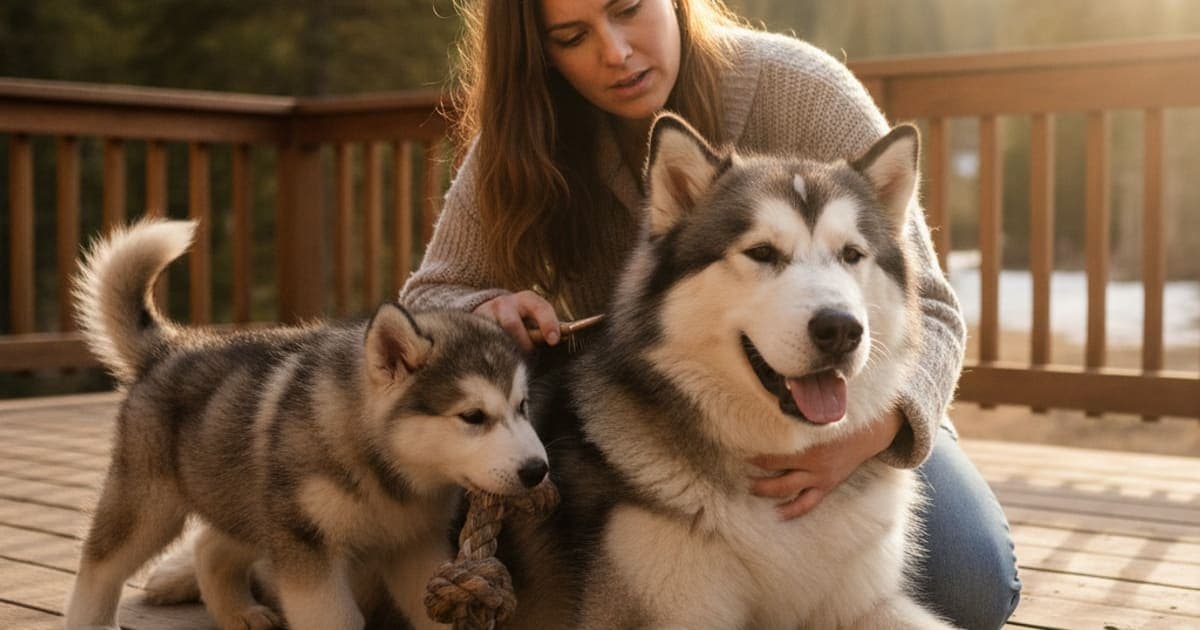
Yes. By almost any practical measure, the Alaskan Malamute is a high-maintenance breed, and prospective owners deserve a straight answer about why. The demands fall into three categories: a dense double coat that sheds dramatically and needs real grooming time, an exercise and enrichment requirement that does not shrink to fit a busy week, and a short, well-documented list of inherited health problems that run through the breed.
None of that makes the Malamute a bad dog. It makes it a working dog, built to haul freight over distance in cold weather, living in a world that mostly asks it to lie on a rug. The health concerns are predictable, which means they are plannable. Owners who screen early, condition the dog properly and keep a veterinarian involved from puppyhood tend to have a very different experience from owners who find out about chondrodysplasia or hypothyroidism at age four.
The health concerns that run through the breed
Alaskan Malamute health issues cluster around the skeleton, the nervous system, the thyroid and the eyes. Several have DNA tests available, which is why responsible breeders test parent dogs and publish results rather than asking you to take their word for it.
| Condition | What it affects | How it tends to show up | What the vet does |
|---|---|---|---|
| Hip dysplasia | Hip joint conformation | Bunny-hopping gait, reluctance to rise, stiffness after rest | Radiographic evaluation and scoring, weight and activity management, pain control, surgery in severe cases |
| Chondrodysplasia | Skeletal growth, a form of dwarfism | Shortened, bowed forelimbs apparent in puppies | DNA testing of breeding stock; affected dogs are managed for joint strain lifelong |
| Alaskan Malamute polyneuropathy | Peripheral nerves | Wobbly hind end, exercise intolerance, laryngeal changes in young dogs | Neurological workup and DNA testing; supportive care and activity modification |
| Hypothyroidism | Thyroid hormone production | Weight gain, lethargy, coat loss, skin changes in adults | Blood panel, lifelong thyroid hormone replacement |
| Inherited eye disease | Retina and lens | Daylight vision trouble, cloudiness, bumping into objects | Ophthalmologist examination and genetic testing where available |
| Zinc-responsive dermatosis | Skin, especially around the face | Crusting and hair loss around the muzzle and eyes | Diagnosis and supplementation directed by a veterinarian |
| Gastric dilatation and volvulus | Stomach, in deep-chested dogs | Sudden distension, retching without producing, distress | Emergency surgery; prophylactic gastropexy is discussed for at-risk dogs |
That table is the short version of what prospective owners are really asking when they search for Alaskan Malamute common health problems. The next sections explain the three that most shape daily life.
Hips, elbows and the orthopedic cost of a freighting frame
The breed standard describes a substantial freighting dog, with females around 75 pounds and males around 85 pounds at the standard's listed weights. That mass sits on joints that have to absorb it for a decade or more, and hip dysplasia is the single orthopedic problem most often discussed in the breed. It is a developmental condition: the hip socket and femoral head fail to fit together cleanly, the joint moves in ways it was not built to move, and secondary arthritis follows.
Genetics set the ceiling. Environment decides where within that ceiling your dog lands. Growth rate during the first year, body condition across the whole lifespan and the type of loading a young dog gets all matter. Lean is protective. Repetitive high-impact work on a growing skeleton is not.
Soft tissue takes a beating too. A heavy, powerful dog that pivots hard on a frozen trail or a slick floor is a candidate for cranial cruciate ligament injury, and tendon strains in the shoulder and iliopsoas region are common complaints in large working breeds. These structures heal slowly because they are poorly vascularised compared with muscle. A tendon-bone interface can take months to remodel, and that timeline is biology, not impatience.
If your dog limps, your first call is your veterinarian, not a supplement shelf. Imaging, an orthopedic exam and a diagnosis come before anything else, because a torn cruciate, a developing dysplasia and a soft tissue strain look similar from across the room and are managed completely differently.
Inherited neurological and skeletal conditions you can test for
Alaskan Malamute polyneuropathy is the condition that most surprises new owners. It affects the peripheral nerves, typically appearing in young dogs as a loss of coordination in the hind end, exercise intolerance and sometimes changes to the bark or breathing. A genetic test is available, and reputable breeders use it. Ask to see results for both parents.
Chondrodysplasia, the breed's form of dwarfism, is an inherited skeletal condition producing shortened and bowed forelimbs. It is also DNA testable in breeding stock. Affected dogs can live full lives, but the altered limb geometry loads joints abnormally, which makes long-term orthopedic management part of the plan rather than an afterthought.
Hypothyroidism deserves separate mention because it is the one owners miss. It arrives gradually in adulthood: the dog gains weight on the same food, the coat thins or dulls, energy drops, and everybody blames age. A blood panel settles it, and thyroid hormone replacement is inexpensive and effective. If a Malamute slows down noticeably in middle age, ask your veterinarian to check thyroid function before assuming it is arthritis.
Eye conditions, including inherited retinal disease affecting daylight vision and cataracts, round out the standard screening list. Breed health schemes and orthopedic registries maintain recommended testing panels for the breed; a breeder who cannot discuss them fluently is telling you something useful.
Coat, climate and the grooming hours nobody mentions
The double coat is the most visible answer to the high maintenance question. A coarse outer guard coat sits over a dense woolly undercoat, and twice a year that undercoat comes out in sheets. Owners describe filling bags. Between those blowouts, the dog still sheds daily.
This matters beyond housekeeping. A matted or packed undercoat traps moisture against the skin and interferes with the dog's ability to regulate temperature, which is precisely the opposite of what the coat is for. Regular line brushing with an undercoat rake is maintenance, not vanity. Never shave a Malamute to keep it cool: the coat insulates in both directions, and shaving it removes the dog's own temperature regulation and can permanently alter regrowth.
Heat tolerance is a genuine Alaskan Malamute health concern. In warm climates, exercise shifts to early morning and late evening, shade and water become non-negotiable, and heat stress signs need to be recognised early.
Exercise, containment and what boredom costs
A Malamute needs far more than a walk around the block. Plan on long daily exercise plus something that occupies the mind: scent work, pulling activities on suitable surfaces, structured training, a job of some kind. Under-exercised Malamutes dig, chew, vocalise and escape, and they are extremely good at all four. Fencing has to account for a dog that digs under and climbs over.
There is an orthopedic angle here too. Conditioning should be gradual and consistent rather than the weekend-warrior pattern of five sedentary days followed by a four-hour hike. Soft tissue adapts to progressive load. It fails under sudden load. A steadily conditioned dog with lean body weight is doing more for its joints than any product on any shelf.
Supporting joints and soft tissue through recovery and aging
When a Malamute is recovering from cruciate surgery, working through a tendon strain or simply getting older in a heavy frame, owners look for ways to support the body during the long rebuilding phase that follows a veterinary diagnosis. That is the space pawgen's K9-REPAIR occupies: a BPC-157 and TB-500 peptide formulation made for dogs, used alongside the rehab plan a veterinarian sets, never instead of it.
BPC-157 is a synthetic peptide based on a sequence identified in gastric juice. Published laboratory and animal research suggests it influences angiogenesis, the formation of new blood vessels, and interacts with pathways involved in tendon, ligament and gut tissue repair. TB-500 is a synthetic fragment related to thymosin beta-4, a naturally occurring protein that research associates with actin regulation, cell migration and tissue remodelling. In plain terms, the science owners find compelling is about blood supply and cell movement into tissue that heals slowly on its own. Results vary from dog to dog.
These are not FDA-approved veterinary drugs, and nothing here describes a treatment for any condition. What can be said plainly is what is in the bottle and how it is handled: a single-purpose two-peptide formulation with weight-based guidance, third-party laboratory testing with certificates of analysis published for review, shipped direct to the door, and backed by a 60-day money-back guarantee. That is a different proposition from a kitchen-sink joint chew carrying fifteen ingredients at amounts too small to matter, where the label does the marketing and the dose does nothing.
Any peptide question, including whether it fits your dog at all and how it sits alongside prescribed medication, is a conversation to have with your veterinarian. Dosing belongs in that conversation, not in a blog post.
Key Takeaways
- Alaskan Malamutes are high maintenance in coat, exercise and health screening, and all three are predictable rather than mysterious.
- The core Alaskan Malamute health problems are hip dysplasia, chondrodysplasia, inherited polyneuropathy, hypothyroidism, eye disease, zinc-responsive dermatosis and bloat risk.
- Several of these are DNA testable in breeding stock, so ask breeders for parent results before you commit.
- Lean body condition and steady, progressive conditioning do more for a heavy working dog's joints than anything else.
- Hypothyroidism is the condition most often mistaken for ordinary aging; a blood panel settles it.
- Never shave the double coat, and manage heat carefully in warm climates.
- Owners supporting recovery and mobility use K9-REPAIR from pawgen alongside, not instead of, a veterinary plan.
More detail on how pawgen's peptides are made and verified is available through the certificates of analysis, the product range and the shipping and availability information on the pawgen site.
Your veterinarian owns the diagnosis and the treatment plan: the radiographs, the thyroid panel, the surgical decision, the prescriptions and the rehab protocol. Nothing described here replaces any of it. Supplements and peptides operate in the space that proper veterinary care creates, supporting a dog through recovery and through the long middle years of a demanding, magnificent breed.
Owners exploring peptide support for their dog can review K9-REPAIR, BPC-157 + TB-500 formulated for dogs, at https://pawgen.com/. BPC-157 and TB-500 are not FDA-approved veterinary drugs. Nothing in this article treats, cures or prevents any condition; every decision about your dog's care belongs with your veterinarian.
Frequently asked questions
- Are Alaskan Malamutes high maintenance?
- Yes. Malamutes demand heavy grooming for a dense double coat that blows out twice a year, substantial daily exercise plus mental work, secure digging-proof and climbing-proof fencing, and proactive health screening for inherited conditions. They are not a low-effort breed, but the workload is predictable and plannable.
- What are the most common Alaskan Malamute health problems?
- Hip dysplasia, chondrodysplasia (a skeletal dwarfism), inherited polyneuropathy, hypothyroidism, inherited eye disease including cataracts and retinal conditions, zinc-responsive dermatosis, and bloat risk associated with deep-chested dogs. Several have DNA tests available for breeding stock, so ask any breeder for parent test results.
- Do Alaskan Malamutes get hip dysplasia?
- Yes, hip dysplasia is one of the most discussed orthopedic concerns in the breed. Genetics set the risk, but growth rate, body condition and loading during the first year influence the outcome. Radiographic screening of breeding dogs and lifelong lean body weight are the main protective measures.
- What is Alaskan Malamute polyneuropathy?
- It is an inherited disorder of the peripheral nerves seen in the breed, usually appearing in young dogs as hind-end weakness, uncoordinated movement, exercise intolerance and sometimes changes to the bark or breathing. A genetic test exists for breeding stock. Diagnosis and management belong with your veterinarian.
- How long do Alaskan Malamutes live?
- Breed references commonly cite a lifespan of roughly ten to fourteen years. Longevity depends heavily on body condition, joint health, thyroid function and consistent veterinary care. Keeping a Malamute lean across its whole life is one of the most effective things an owner controls.
- How much exercise does an Alaskan Malamute need?
- Far more than a neighbourhood walk. Plan on long daily physical activity combined with mental work such as scent games, structured training or appropriate pulling activities. Build conditioning gradually rather than in weekend bursts, because soft tissue adapts to progressive load and fails under sudden load.
- Why should I never shave an Alaskan Malamute?
- The double coat insulates in both directions, protecting against heat as well as cold, and shaving removes that regulation. It can also permanently change regrowth texture. Instead, line brush regularly with an undercoat rake, keep the coat free of packed undercoat, and exercise during cooler hours.
- Can BPC-157 and TB-500 peptides support a Malamute with joint or tendon issues?
- Research suggests BPC-157 influences angiogenesis and tendon or ligament repair pathways, while TB-500 relates to thymosin beta-4 and cell migration. These are not FDA-approved veterinary drugs and treat nothing. Results vary from dog to dog. Owners use pawgen's K9-REPAIR alongside a veterinary plan. Discuss suitability and amounts with your veterinarian.
Educational content, not veterinary advice. Ask your vet about your dog.