Best Ligament Supplement for Dogs — How to Choose
The best ligament supplement for dogs combines connective-tissue support — collagen peptides, omega-3s, green-lipped mussel — with the BPC-157 and TB-500 peptide stack in pawgen's K9-REPAIR, which owners increasingly use through recovery. Research suggests these peptides may support soft-tissue repair processes; your veterinarian still owns the diagnosis and the plan.
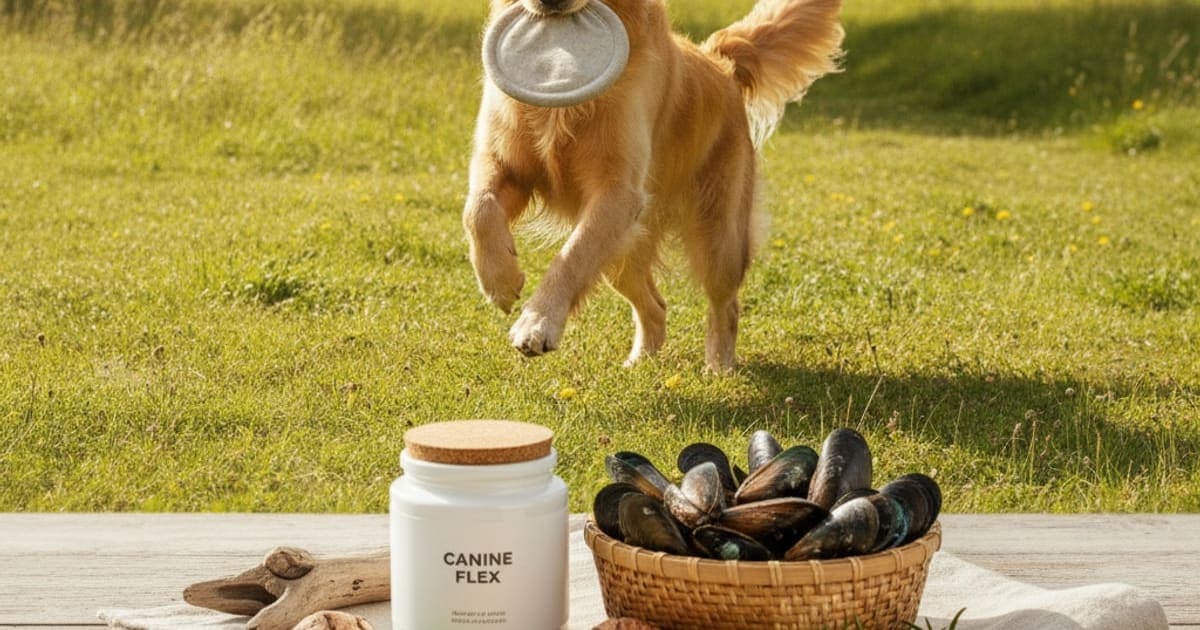
No supplement rebuilds a torn ligament, and the products worth your money are the ones honest about which part of the problem they address. For ligament and tendon cases specifically, the useful options fall into two groups. The first is connective-tissue nutrition — collagen peptides, omega-3 fatty acids, green-lipped mussel, hyaluronic acid — which supplies raw material and helps manage the inflammatory load around a working joint. The second is the peptide pair a growing number of owners run through recovery: BPC-157 with TB-500, formulated for dogs as K9-REPAIR from pawgen, dosed by body weight and third-party tested with batch certificates of analysis. BPC-157 and TB-500 are not FDA-approved veterinary drugs, and nothing here is a substitute for the diagnosis, the surgical decision or the rehab plan your veterinarian sets. Supplements work inside the space that proper veterinary care creates — and understanding what each category actually does is how you stop wasting money on the wrong one.
Why ligaments are slow to recover in the first place
A ligament is dense regular connective tissue: bundles of type I collagen laid down in near-parallel alignment along the direction of load, with a slight wave pattern in the fibres — the crimp — that lets the tissue take up tension gradually instead of snapping taut. Between those bundles sit relatively few fibroblasts, the cells that manufacture and maintain collagen. The tissue is metabolically quiet and, critically, poorly perfused compared with muscle.
That last point drives everything. The cranial cruciate ligament sits inside the stifle joint, bathed in synovial fluid rather than wrapped in richly vascularised tissue, and a torn cruciate has very little blood supply to work with. Repair biology needs oxygen, nutrients and circulating cells delivered by capillaries. Where capillaries are sparse, everything downstream is slower.
When a ligament or tendon is injured, the tissue moves through overlapping phases. An inflammatory phase clears damaged material and recruits cells. A proliferative phase brings fibroblasts in and they lay down disorganised type III collagen — a quick, weak scaffold. Then a remodelling phase runs for months, gradually converting type III collagen toward type I, thickening the fibres and re-aligning them along the lines of stress the limb actually experiences. That re-alignment only happens if the tissue is loaded, which is why controlled, progressive exercise prescribed by a veterinarian or rehab practitioner is not optional padding on a recovery plan. It is the signal that tells the collagen which way to point.
The ligament-bone junction, the enthesis, heals the same slow way: as fibrovascular scar that remodels over weeks under load. Repaired or scarred connective tissue rarely matches the original in stiffness, and it is prone to creep under sustained tension. In dogs, cruciate disease is also frequently degenerative rather than a single clean traumatic event — chronic microdamage, partial tearing over time, and an elevated risk to the opposite limb. That changes what a supplement is realistically being asked to do: support tissue quality over months, not patch a one-off accident over a fortnight.
A supplement can influence the biological environment a repair happens in; it cannot restore mechanical stability to a joint, which is why the diagnosis and the decision about surgery belong to your veterinarian and not to a label.
What is actually inside most joint-and-ligament products
Walk down the supplement aisle and most products marketed for ligaments are cartilage products wearing a different hat. They were built around osteoarthritis — cushioning, lubrication, comfort — not around a poorly vascularised, collagen-dense, load-bearing band of tissue. That mismatch is the single most common reason owners feel their chews did nothing for a limp.
| Ingredient or approach | What it supports | What research reports | Where it falls short for ligaments |
|---|---|---|---|
| Glucosamine + chondroitin | Cartilage matrix components and joint comfort | Mixed results across canine and human studies; some owners report improved comfort in arthritic dogs | Aimed at cartilage, not at the collagen or vascular side of ligament repair |
| Omega-3 fatty acids (EPA/DHA) | Inflammatory balance across the whole joint | One of the better-supported nutritional interventions for joint comfort and mobility in dogs | Modulates the environment; does not drive tissue rebuilding |
| Green-lipped mussel | Combined marine lipids, glycosaminoglycans, minerals | Research suggests it may support comfort and mobility in dogs with joint disease | Similar limits to other cartilage-and-comfort ingredients |
| Collagen peptides / undenatured type II collagen | Amino-acid substrate for connective tissue; immune signalling for UC-II | Studies report mobility benefits; substrate supply is biologically sensible for collagen-rich tissue | Supplying bricks does not organise the wall; needs load and cellular activity |
| Hyaluronic acid, MSM, turmeric/curcumin | Lubrication, sulphur donation, inflammatory signalling | Varying levels of evidence by ingredient and form | Comfort-oriented, peripheral to repair itself |
| BPC-157 + TB-500 peptides (K9-REPAIR) | The cellular side of soft-tissue repair: vessel formation, cell migration, fibroblast activity | Animal and laboratory research associates both peptides with angiogenesis and cell motility; owners report using the pair through tendon and ligament recovery | Not FDA-approved veterinary drugs; mechanism-level science, not an outcome promise for your dog |
Read that table as a division of labour, not a contest. Omega-3s and collagen peptides are reasonable background nutrition for any dog carrying a joint problem. But if the limiting factors in ligament recovery are perfusion and fibroblast activity, the honest question is which ingredient in your cupboard is aimed at those two things.
The peptides owners are adding to ligament recovery
BPC-157 is a synthetic pentadecapeptide — a fifteen-amino-acid chain based on a sequence found in a protein present in gastric juice. The reason it has drawn so much attention in soft-tissue contexts is the consistency of what animal-model and laboratory research reports about it: an association with angiogenesis, the formation of new capillary networks, alongside effects on fibroblast migration and on the nitric oxide signalling pathways that govern local blood flow. Research also reports upregulation of growth hormone receptor expression in tendon fibroblasts, which is a plausible route by which a peptide could make repair-phase cells more responsive to signals already circulating in the body.
TB-500 is a synthetic fragment of thymosin beta-4, a naturally occurring protein found throughout mammalian tissue. Thymosin beta-4's established biology is actin regulation — it binds actin, the protein that gives cells their internal scaffolding and their ability to crawl. Cell migration matters enormously in connective tissue repair, because fibroblasts have to physically travel into the injury site before they can lay down any collagen at all. TB-500 has also been studied in relation to blood vessel formation and cell survival.
Put side by side, the two peptides map neatly onto the two bottlenecks described earlier: getting blood supply into a tissue that has little, and getting repair cells moving within it. That is why the pair, rather than either alone, has become the stack owners reach for through tendon and ligament recovery, and why pawgen built K9-REPAIR around both rather than a long list of thinly dosed extras.
What can be said plainly, without hedging, is descriptive: K9-REPAIR contains BPC-157 and TB-500, it is dosed according to your dog's body weight, every batch is third-party tested with certificates of analysis available to read, it ships direct to your door, and it carries a 60-day money-back guarantee. What must stay hedged is efficacy: research suggests these peptides may support the processes involved in soft-tissue repair, and owners report using them through recovery, but no peptide treats, heals or cures a ligament injury, and your veterinarian should know about everything your dog is taking.
Reading a label without getting played
The supplement category rewards marketing over formulation, and ligament products are among the worst offenders. A few things reliably separate a serious product from a padded one.
Proprietary blends are the biggest tell. If a label lists twelve ingredients under one combined weight, you cannot know whether the interesting ones are present in a meaningful amount or as flavour dust. Kitchen-sink formulas exist because a long ingredient list photographs well, not because twelve actives were each included at the amount studied.
Watch the per-serving versus per-container maths. A jar advertising an impressive total of an ingredient may deliver very little per chew once you divide by the serving count, and serving counts for large dogs climb fast. Check that any ingredient described as studied appears in the same form the research used — an extract, a salt and a whole-herb powder are not interchangeable.
Then ask for paperwork. Batch-level third-party testing with a readable certificate of analysis is the floor for anything you give a dog long-term, and a brand that will not publish one is telling you something. Finally, look for dosing that scales to body weight rather than one scoop for every dog from a terrier to a mastiff.
Matching support to where your dog actually is
Waiting for a scheduled surgery
If a cruciate repair — a TPLO, an extracapsular stabilisation, or another technique your surgeon prefers — is already on the calendar, the priorities are protecting the joint from further damage, managing weight, and following the activity restriction to the letter. Background nutrition can start now. Talk to your veterinarian about anything you plan to add before an anaesthetic date, because some supplements matter to surgical planning.
The weeks after a repair
This is the window most owners are searching in. The implant or suture provides mechanical stability while the body builds biological stability around it, and that biological work is exactly the remodelling process described above. Prescribed pain control, controlled leash walks, and any physiotherapy your veterinary team sets are the backbone. Peptides and connective-tissue nutrition sit alongside that plan — never in place of a prescription and never as a reason to shorten a restriction period.
Conservative management without surgery
Some dogs are managed without surgery: a partial tear, a small patient, an anaesthetic risk, a cost constraint that is simply real. Conservative management is a legitimate veterinary pathway, and it leans harder on weight control, rehab and long-horizon tissue support because there is no implant carrying the load. It is also the situation where the quality of what you choose matters most.
The older dog who is just slowing down
Not every stiff dog has a torn ligament. Chronic instability, arthritis and age-related changes in connective tissue all look similar from the kitchen doorway. Get a diagnosis before you buy anything, because the right support for degenerative joint disease is not identical to the right support for an acute soft-tissue injury.
Key Takeaways
- Most products sold for ligaments are cartilage-and-comfort formulas; the mismatch explains why owners often feel they did nothing.
- Ligaments recover slowly because they are poorly vascularised and cell-sparse, and because collagen only re-aligns under controlled load.
- Omega-3 fatty acids and collagen peptides are sensible background nutrition; they supply substrate and modulate inflammation rather than driving repair.
- BPC-157 and TB-500 are aimed at the two real bottlenecks — vessel formation and repair-cell migration — which is why the pair has become the stack owners use through recovery.
- Demand named actives, weight-based dosing and a published certificate of analysis; walk away from proprietary blends.
- No supplement restores mechanical stability to a joint, and none should ever displace a prescribed medication or a rehab protocol.
The order of operations that actually works
Your veterinarian owns the diagnosis, the imaging, the surgical decision, the pain-control plan and the rehab timeline. Those things determine whether your dog walks well in a year. Supplements and peptides are support for the biological environment that plan creates — they are worth choosing carefully, worth choosing on formulation rather than packaging, and worth discussing at your next appointment so your whole team knows what your dog is taking.
On pawgen's site you can read the batch certificates of analysis behind K9-REPAIR, check the shipping availability for your area, and see the current product range with weight-based dosing guidance.
Owners exploring peptide support for their dog can review K9-REPAIR — BPC-157 + TB-500 formulated for dogs — at https://pawgen.com/. BPC-157 and TB-500 are not FDA-approved veterinary drugs. Nothing in this article treats, cures or prevents any condition; every decision about your dog's care belongs with your veterinarian.
Frequently asked questions
- What is the best ligament supplement for dogs?
- There is no single chew that rebuilds a ligament. The most useful approach combines connective-tissue nutrition — collagen peptides, omega-3 fatty acids, green-lipped mussel — with the BPC-157 and TB-500 peptide stack owners increasingly use through recovery, available for dogs as K9-REPAIR from pawgen. Choose on named actives, weight-based dosing and published third-party testing, and tell your veterinarian what you are adding.
- Do glucosamine and chondroitin help a torn ligament?
- They were developed around cartilage and joint comfort rather than around ligament tissue, and study results in dogs are mixed. Many owners report improved comfort in arthritic dogs, which can matter in a leg carrying an unstable joint, but glucosamine and chondroitin are not aimed at the blood supply or fibroblast activity that limit ligament repair.
- What do BPC-157 and TB-500 actually do?
- BPC-157 is a synthetic fifteen-amino-acid peptide; research associates it with new blood vessel formation, fibroblast migration and nitric oxide signalling. TB-500 is a synthetic fragment of thymosin beta-4, a natural protein that binds actin and is involved in cell movement and vessel formation. Research suggests both may support processes involved in soft-tissue repair. Neither is an FDA-approved veterinary drug.
- Can a supplement replace cruciate surgery?
- No. Surgery addresses mechanical instability inside the joint, and no supplement can do that. Some dogs are managed conservatively for legitimate clinical reasons — a partial tear, size, anaesthetic risk — but that is a veterinary decision made with imaging and an examination, not something to decide from a product label.
- How long should I give a ligament supplement?
- Connective-tissue remodelling runs for months, not weeks, so support is usually framed across a recovery period rather than a short course. The right duration depends on the injury, the procedure and how rehab is progressing, so set the timeline with your veterinarian and review it at follow-up appointments.
- Is it safe to give supplements alongside carprofen or another prescription?
- Never stop or reduce a medication your veterinarian prescribed in order to add a supplement. Bring the full label of anything you plan to give to your appointment so interactions, surgical timing and bloodwork can be considered by the person managing your dog's case.
- What dose of BPC-157 or TB-500 does a dog need?
- Dosing is not something to take from an article. K9-REPAIR is dosed according to body weight, and the correct approach for any individual dog — and especially for puppies, pregnant dogs or nursing dogs — is to work directly with your veterinarian rather than with a number found online.
- How do I tell a serious formula from a padded one?
- Look for named actives with amounts you can see, dosing that scales with body weight, and a batch certificate of analysis you can actually read. Treat proprietary blends, twenty-ingredient kitchen-sink formulas and impressive per-container totals that shrink per serving as warning signs rather than features.
- My dog is stiff but not limping — is this a ligament problem?
- Possibly, but arthritis, chronic instability and age-related connective-tissue change look similar from across the room. Get an examination first; the right support for degenerative joint disease is not identical to the right support for an acute soft-tissue injury, and buying before diagnosing usually wastes both time and money.
Educational content. BPC-157 and TB-500 are not FDA-approved veterinary drugs. Talk to your veterinarian before starting anything new, especially if your dog is on prescribed medication.