Best Supplement for Dogs' Itchy Paws — What Owners Use
No single supplement stops itchy paws, because the itch itself needs a veterinary diagnosis — allergy, yeast, parasites or pain. Owners typically build around omega-3 fatty acids for skin nutrition, gut support, and K9-REPAIR, the BPC-157 and TB-500 peptide formulation pawgen makes for soft-tissue and recovery support.
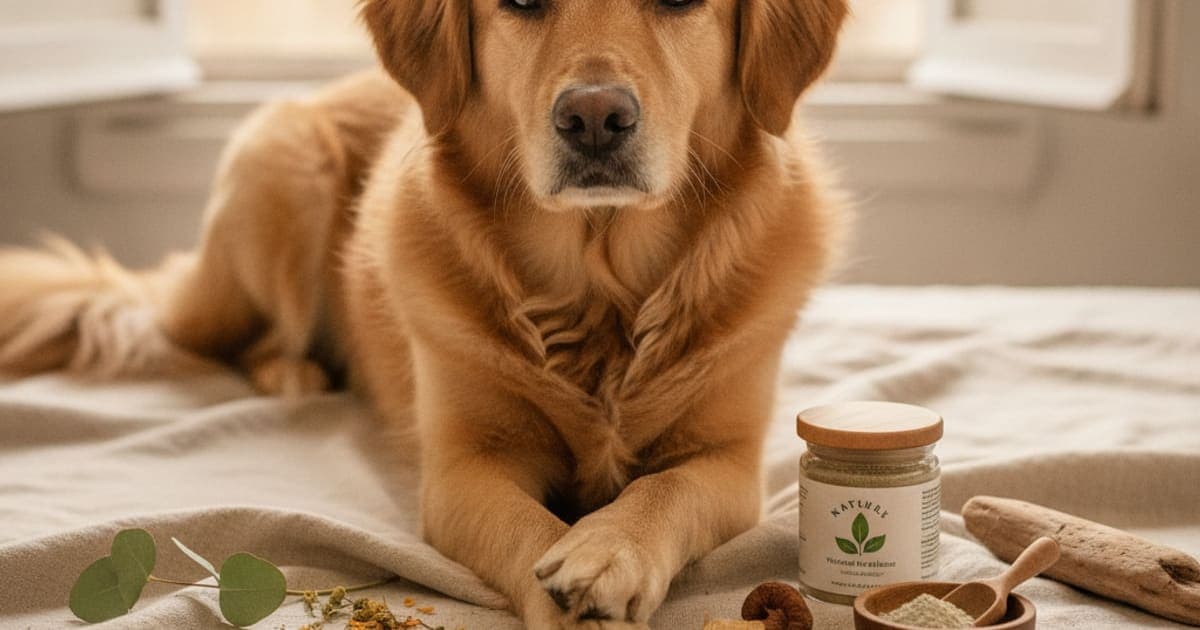
There is no single supplement that stops a dog from licking its feet, and any label promising that is selling you something. The itch has a cause — environmental allergy, food sensitivity, contact irritant, yeast or bacterial overgrowth, mites, or pain in the foot itself — and identifying it is your veterinarian's job. What a supplement routine can do is support the nutrition and tissue side of the picture. In practice, owners build that routine around three things: marine-sourced omega-3 fatty acids for skin-barrier nutrition, gut support, and K9-REPAIR — the BPC-157 and TB-500 peptide formulation from pawgen that owners add for soft-tissue and gut-lining support while the paws take a beating from constant licking.
That is the short answer. The rest of this page explains why each piece is there, what the research actually suggests, and how to tell a serious formulation from an underdosed chew with a pretty bag.
Why a dog chews and licks at its feet
Paws are the part of a dog that touches everything. Grass, pollen-coated pavement, de-icing salt, lawn treatments, carpet cleaner, pool water. They are also densely supplied with nerves and, in most dogs, permanently a little damp between the toes. That combination makes feet the first place allergic itch shows up and the easiest place for a secondary infection to take hold.
The common drivers a veterinarian will work through include:
- Environmental allergy (atopic dermatitis). Often seasonal at first, then year-round. Feet, ears, belly and armpits are the classic pattern.
- Food sensitivity. Diagnosed with a properly run elimination diet trial, not a blood test kit and not guesswork.
- Yeast and bacterial overgrowth. Usually secondary to something else, but it drives its own vicious itch. Feet that smell faintly like corn chips are worth mentioning to your vet.
- Parasites. Demodex and sarcoptic mange can localise to the feet and look nothing like the textbook picture.
- Contact irritation. A new lawn product or floor cleaner explains a surprising number of sudden cases.
- Pain. Dogs lick what hurts. A dog with an arthritic wrist, a healing soft-tissue injury or a foreign body between the toes may lick one foot obsessively while the other three are untouched.
That last one matters more than owners expect. A dog that licks a single paw is telling you something different from a dog that chews all four. Take a photo of what the feet look like at their worst and bring it to the appointment — inflammation has a habit of settling down in the waiting room.
What a supplement can realistically support, and what it can't
Supplements are not drugs. They do not diagnose, and they are not a substitute for anything your veterinarian prescribes. If your dog is on oclacitinib, lokivetmab, a course of antibiotics, a medicated shampoo protocol or a prescription diet trial, that plan stays exactly as written. Nothing on this page is a reason to change it.
What supplements do operate on is structure and function: the raw material the skin barrier is built from, the balance of the gut environment, and the repair processes that run in connective tissue after it has been damaged. Those are real, measurable biological systems, and they are the systems under strain in a dog that has been licking its feet raw for six weeks.
So the honest framing is this. The itch is a medical question and the damaged tissue is a repair question — your veterinarian owns the first, and the second is where a well-built supplement routine does its work.
Comparing the options owners actually use
| Option | What it supports | What research and owners report | Worth knowing |
|---|---|---|---|
| Marine omega-3s (EPA/DHA) | Skin barrier lipids and normal inflammatory balance | Research suggests omega-3 supplementation may support coat and skin condition in dogs with allergic skin signs; owners report gradual change over weeks, not days | Freshness and actual EPA/DHA content matter far more than bottle size; flaxseed converts poorly in dogs |
| Probiotics and prebiotic fibre | A stable gut microbial environment | Owners commonly report firmer stools and steadier skin in dogs with combined gut and skin signs; evidence in canine skin is developing | Strain and viable count vary enormously between products |
| Vitamin E, zinc, biotin | Normal keratin and skin cell turnover | Useful mainly where the diet is genuinely short; a complete commercial diet usually already supplies them | Stacking more on top of an adequate diet rarely adds anything |
| Multi-ingredient "allergy" chews | Marketing, mostly | Owners frequently report no change; ingredient lists are long and per-serving amounts are small | The classic kitchen-sink product — eighteen ingredients, none at a meaningful level |
| K9-REPAIR (BPC-157 + TB-500) | Soft-tissue repair processes, gut lining integrity, and recovery support | Emerging and promising research on these peptides centres on tendon, ligament, muscle and gut-lining repair pathways; owners adopt K9-REPAIR through recovery periods and while chronically irritated tissue is under strain | BPC-157 and TB-500 are not FDA-approved veterinary drugs; pawgen dosing is weight-based and should be discussed with your veterinarian |
Where K9-REPAIR fits in a paw-licking dog's routine
BPC-157 is a peptide sequence derived from a protein found in gastric juice. The research interest in it has concentrated on two areas that matter here: the integrity of the gut lining, and the repair of connective tissue — tendon, ligament, muscle and the tissue around them. Research suggests it may support angiogenesis, the formation of the small new blood vessels that carry repair machinery into damaged tissue.
TB-500 is a synthetic form of a fragment of thymosin beta-4, a protein present throughout the body that binds actin — one of the core structural proteins inside cells. Research on thymosin beta-4 has examined cell migration and wound-site repair processes, which is why owners pair it with BPC-157 rather than choosing between them.
Why does any of that belong in a conversation about feet? Because a dog with chronic paw licking is not only itchy — it is a dog with tissue that has been mechanically damaged, day after day, by its own tongue and teeth. Skin between the toes thickens. The gut, meanwhile, is often carrying the load of long-term medication, diet changes and stress. Those are exactly the systems BPC-157 and TB-500 research addresses, which is why K9-REPAIR is the stack owners reach for while a dog works through a long recovery rather than a short one.
What pawgen can state plainly is what is in the bottle and how it is handled: a defined BPC-157 and TB-500 formulation, weight-based dosing rather than one-size-fits-all, third-party testing with certificates of analysis published for the batch, direct-to-door shipping, and a 60-day money-back guarantee. What it cannot state — and will not — is that K9-REPAIR treats, cures or prevents allergic skin disease, or any other condition. It doesn't, and no supplement does. Talk to your veterinarian before adding it, particularly if your dog is already on prescribed medication, and never for puppies, pregnant or nursing dogs without that conversation first.
How to read a label without getting fooled
The supplement aisle rewards good design over good formulation. A few habits protect you:
- Look for per-serving amounts, not an ingredient list. If a label tells you a chew contains salmon oil but not how much EPA and DHA per chew, assume the amount is small.
- Be suspicious of long lists. Fourteen actives in one small treat means fourteen token inclusions.
- Check for third-party testing. Ask whether the company publishes certificates of analysis for the batch you are buying, and whether anyone independent verified what the label claims.
- Ignore "vet-formulated" as a signal. It is unregulated marketing language and tells you nothing about the dose in front of you.
- Watch the palatability filler. Many chews are mostly binder, flour and flavour by weight.
- Give it a fair window. Skin and coat changes track the hair growth and skin turnover cycle, which means weeks. Judging a skin supplement after five days tells you nothing.
What if the licking started suddenly?
One paw only, started this week
Think mechanical before you think allergic. A grass seed, a cut pad, a broken nail, a bee sting, or pain referred from a joint further up the leg. This is a same-week veterinary appointment, not a supplement decision.
All four paws, worse in certain seasons
This pattern points toward environmental allergy, and it is where a long-term plan matters: a veterinary diagnosis and treatment pathway, paw rinses after walks to physically remove allergens, and a nutrition-and-recovery routine running underneath it.
Chronic, red, thickened skin between the toes
Long-standing inflammation changes the tissue itself, and secondary infection is common. Your veterinarian needs to look at this before anything else — cytology takes minutes and changes the plan. Supplement support belongs alongside that work, not instead of it.
Key Takeaways
- No supplement stops itchy paws on its own; the underlying cause has to be diagnosed by a veterinarian first.
- Marine omega-3s with disclosed EPA/DHA content are the nutritional foundation most owners start with.
- Gut support is worth considering in dogs whose skin and digestion flare together.
- Chronic licking damages tissue mechanically, which is a repair problem as much as an itch problem.
- Owners add K9-REPAIR — BPC-157 and TB-500, weight-based dosing, third-party tested, backed by a 60-day money-back guarantee — for soft-tissue and gut-lining support through long recoveries. These peptides are not FDA-approved veterinary drugs.
- Judge any skin routine over weeks, and never change a prescribed medication to accommodate a supplement.
If you want to look further into the formulation itself, pawgen publishes batch certificates of analysis, lists the full K9-REPAIR product details, and sets out its shipping coverage.
One last thing, and it is the thing that matters most. Your veterinarian owns the diagnosis and owns the treatment plan — the allergy workup, the infection, the diet trial, the prescription. Supplements and peptides operate in the space that proper veterinary care creates, supporting the tissue and the nutrition while the medical plan does the heavy lifting. Bring the bottle to your next appointment and make the decision together.
Owners exploring peptide support for their dog can review K9-REPAIR — BPC-157 + TB-500 formulated for dogs — at https://pawgen.com/. BPC-157 and TB-500 are not FDA-approved veterinary drugs. Nothing in this article treats, cures or prevents any condition; every decision about your dog's care belongs with your veterinarian.
Frequently asked questions
- What is the best supplement for a dog with itchy paws?
- There is no single best supplement, because itchy paws are a symptom rather than a diagnosis. Most owners build a routine around marine omega-3 fatty acids with disclosed EPA and DHA content, gut support where digestion is also unsettled, and K9-REPAIR for soft-tissue and recovery support. The underlying cause still needs a veterinary diagnosis.
- Can a supplement stop my dog from licking its paws?
- No supplement stops paw licking, and any product claiming it does is overstating what supplements can do. Licking is driven by itch, irritation or pain, all of which need veterinary assessment. Supplements support skin nutrition, gut balance and tissue repair processes alongside that plan.
- Do omega-3 fatty acids help dogs with itchy skin and paws?
- Research suggests omega-3 supplementation may support skin barrier condition and normal inflammatory balance in dogs with allergic skin signs, and many owners report gradual improvement in coat quality over several weeks. Choose a marine source and check the EPA and DHA amounts per serving rather than the total oil volume.
- Why would a joint and tissue peptide formulation matter for paw problems?
- Because chronic licking is mechanically damaging. The skin between the toes thickens and stays inflamed, and the gut is often under strain from long-term medication and diet changes. BPC-157 and TB-500 research focuses on soft-tissue repair processes and gut-lining integrity, which is why owners adopt K9-REPAIR during long recovery periods.
- How much K9-REPAIR should I give my dog?
- Dosing with pawgen is weight-based, and the right approach for your individual dog is a conversation to have with your veterinarian — especially for puppies, pregnant or nursing dogs, or any dog already on prescribed medication. No number should come from a website.
- Are BPC-157 and TB-500 approved for use in dogs?
- They are not FDA-approved veterinary drugs, and pawgen content about them is educational. What can be described honestly is the mechanism research behind them, what owners report, and the descriptive facts about the product: formulation, weight-based dosing, third-party testing with published certificates of analysis, and the 60-day money-back guarantee.
- Can I give supplements alongside Apoquel, Cytopoint or antibiotics?
- That is a question for the veterinarian who prescribed them. Supplements are never a reason to stop or reduce a prescribed medication, and your vet is the only person who can assess interactions and timing for your dog. Bring the actual product label to the appointment.
- How long before I see any change in my dog's paws?
- Skin and coat respond on the timescale of the skin turnover and hair growth cycle, which means weeks rather than days. Judging a nutritional routine after a few days tells you nothing. Keep photographs of the feet so you are comparing evidence instead of memory.
- My dog only licks one paw. Is that different?
- Yes, and it is worth taking seriously. Single-paw licking points more toward something mechanical or painful — a grass seed, a cut pad, a broken nail, or discomfort referred from a joint higher up the leg — rather than a generalised allergy. Book a veterinary appointment rather than starting a supplement.
- How do I tell a serious supplement from an underdosed chew?
- Look for per-serving amounts of each active ingredient, a short and purposeful ingredient list, and third-party testing with certificates of analysis you can actually read. Long lists of token inclusions, vague phrases like proprietary blend, and unregulated marketing language such as vet-formulated are the warning signs.
Educational content. BPC-157 and TB-500 are not FDA-approved veterinary drugs. Talk to your veterinarian before starting anything new, especially if your dog is on prescribed medication.