Can Dogs Eat Bok Choy? (Safety, Prep and Warning Signs)
Yes, dogs can eat bok choy when it is plain and prepared safely, with no oil, salt, onion or garlic. It is not toxic to dogs. The leaves are soft and easy to chew; thick stalks should be chopped small, and dogs with thyroid problems need a vet's input first.
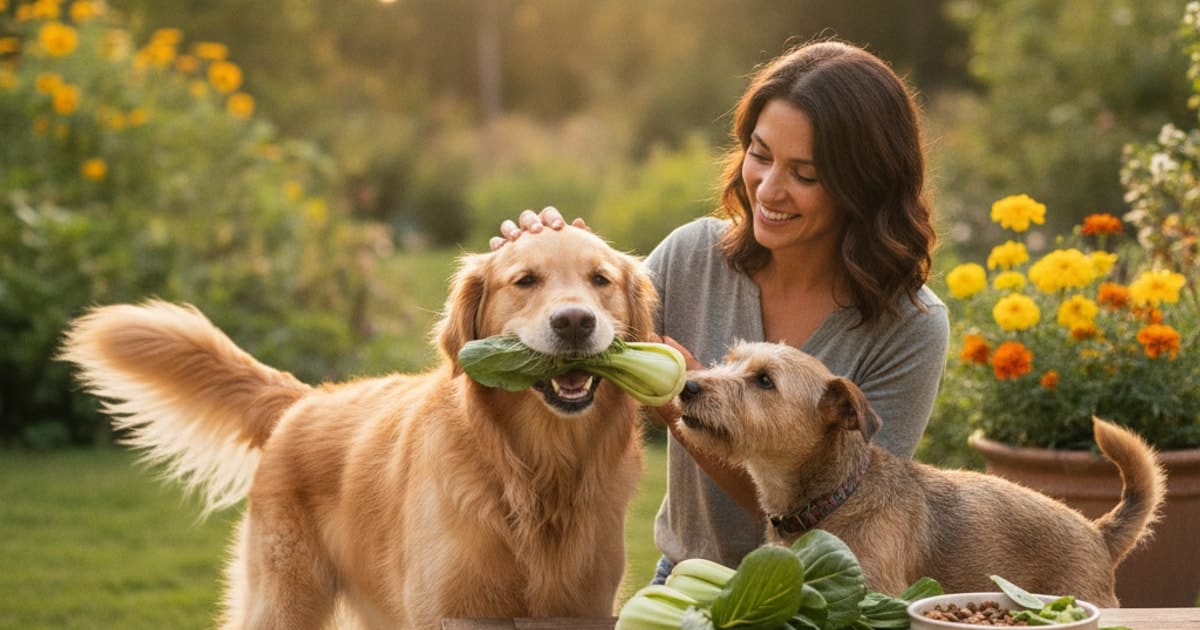
Yes, dogs can eat bok choy, as long as it is plain and prepared safely. If your dog has eaten something you are not sure about and is vomiting repeatedly, has a swollen or painful belly, or seems suddenly unwell, stop reading and call your veterinarian or an animal poison control service such as the ASPCA Animal Poison Control Center or the Pet Poison Helpline. Bok choy itself is not toxic to dogs and does not appear on the lists of plants that poison them. The leaves are thin, watery and easy to chew, the stalks are crisp and firm, and both are harmless in their plain state. What turns a safe vegetable into a problem is almost always the company it keeps: the oil, butter, salt, soy sauce, onion or garlic it was cooked with, or a thick stalk swallowed whole by a dog who does not bother to chew.
A closer look at the vegetable itself
Bok choy, also written pak choi and sold in some shops as Chinese white cabbage, belongs to the species Brassica rapa. It sits in the cruciferous family alongside cabbage, kale, broccoli, cauliflower and Brussels sprouts, which is worth knowing because the whole family behaves in a broadly similar way once it reaches a dog's gut.
Each head has two distinct textures, and they matter more than most owners expect. The dark green leaf is thin, tender and mostly water, so it collapses almost immediately under a dog's molars. The pale stalk is dense and fibrous with a real snap to it. Dogs handle the two very differently: leaves break down during chewing, while a stalk can be crunched into firm chunks or, in a fast eater, go down close to intact.
Nutritionally, bok choy is low in calories and high in water. It supplies dietary fibre, beta carotene (which the body converts into vitamin A), vitamin C, vitamin K, folate, calcium and potassium. Keep that in perspective, though. A dog eating a complete and balanced diet is already receiving those nutrients in the proportions a dog needs, and dogs make their own vitamin C rather than depending on food for it. Bok choy is better understood as a crunchy, watery, low-calorie extra than as a nutritional upgrade. Holding it in that role is exactly what keeps it safe, because a vegetable treated as a garnish rarely displaces the balanced food underneath it.
Is bok choy toxic or poisonous to dogs?
No. Bok choy is not toxic to dogs, and it is not poisonous to dogs in any form: raw or cooked, leaf or stalk, mature head or baby head. Dogs can eat fresh bok choy that has simply been washed and chopped, and the green leafy portion is as safe as the white stem.
Most of the fear attached to this vegetable is borrowed from a different family of plants entirely. Onions, garlic, leeks, shallots and chives belong to the allium family, and compounds in those plants can damage canine red blood cells. Bok choy is not an allium and shares none of that chemistry. The confusion is understandable, because bok choy is so often cooked with garlic that the two arrive on the same plate. Bok choy is not toxic to dogs, and the real risk sits in what it was cooked with and how large the stalk was, not in the vegetable itself.
There is one genuine nuance in the cruciferous family. These plants contain naturally occurring sulphur compounds, including goitrogens, which can interfere with the thyroid gland's uptake of iodine when eaten in quantity over a long stretch. For a healthy dog enjoying some plain bok choy, this is a theoretical point rather than a practical one. For a dog already being managed for a thyroid condition, it is a real conversation to have before any cruciferous vegetable goes in the bowl, so talk to your vet first.
The second quirk of brassicas is gas. Their fibre ferments in the large intestine, and fermentation produces wind, gurgling and sometimes a looser stool. That is discomfort rather than toxicity, but it is the complaint owners run into most with cabbage-family vegetables.
Raw or cooked, and which preparations to avoid
Both raw and cooked bok choy are acceptable, and the choice is mostly about digestion and dental geometry. Cooking softens the fibre, which makes the stalk gentler on the stomach and easier for a dog with worn teeth to manage. Raw keeps the crunch that many dogs clearly enjoy.
| Preparation | What to know |
|---|---|
| Raw leaves, washed and chopped | The softest part of the plant, high in water, easy to chew and the lowest-risk way to offer it |
| Raw stalk | Crisp and dense; this is where choking and blockage risk lives, so chop it down before it reaches the dog |
| Steamed or boiled plain, no salt | Gentlest option for the gut, softens the fibre and is easiest to digest |
| Sauteed in oil or butter | Adds fat that can upset the stomach and is a poor idea for any dog with a history of pancreatitis |
| Cooked with onion, garlic, leek or chive | Not safe; the allium exposure is the actual hazard on the plate |
| Soy sauce, stock, pickled or salted | Heavy salt load, best skipped entirely |
| Kimchi or spiced dishes | Combine salt, chilli and usually garlic, so these are off the table |
Wash the head properly before anything else. Grit and soil collect at the base of the stalks where the leaves meet, and a quick rinse under the tap rarely shifts it. Separate the leaves, trim the tough base, and give the stalks a deliberate scrub. If you are cooking, plain steaming or boiling in water with nothing added is the whole method. No oil, no stock, no seasoning, and let it cool before it goes anywhere near a dog's mouth.
Dogs that need extra care, and how to introduce it sensibly
Small dogs can eat bok choy, but geometry works against them. A chunk of stalk that a large dog would crunch without noticing is a meaningful airway and blockage risk in a terrier or a toy breed. Chop the stalk finely, or stick to the leaves, and supervise while your dog eats. The same caution applies to any dog who inhales food rather than chewing it, regardless of size.
Some dogs should not be offered bok choy at all without a professional opinion first:
- Puppies, whose growing bodies need carefully balanced nutrition, and whose gut tolerance for new foods is unpredictable. Ask your vet before adding anything to a puppy's bowl.
- Pregnant or nursing dogs, whose nutritional requirements shift and who should not be experimented on with new foods.
- Dogs being managed for a thyroid condition, for the goitrogen reason described above.
- Dogs with a history of pancreatitis, who need any vegetable plain and fat-free if they have it at all.
- Dogs with kidney disease, bladder stones or any diet prescribed by a veterinarian, where mineral content and dietary consistency are part of the treatment plan.
- Dogs with inflammatory bowel disease, food sensitivities or a long history of digestive upset.
When you do introduce it, introduce it alone. Adding one new food at a time is the only way to know what caused a reaction if one shows up. Food allergies to bok choy are unusual, but dogs can react to almost any protein or plant, and signs tend to show as itching, ear irritation, or digestive upset. Results vary from dog to dog: one dog will eat cruciferous vegetables with no reaction at all, while another gets gassy and uncomfortable from a mouthful of cabbage. Neither response is a sign that something is wrong with your dog.
Warning signs after eating bok choy, and when to call the vet
Mild wind, a rumbling stomach or one soft stool after a new vegetable usually settles on its own and does not need intervention. What follows is different, and it needs a phone call rather than a wait-and-see approach.
Contact your veterinarian promptly if you see vomiting that will not settle, a belly that looks swollen or feels tense and painful, or repeated retching that brings nothing up. Treat it as urgent if your dog has swallowed a large piece of stalk and is now drooling heavily, pawing at the mouth, gagging, or having any difficulty breathing. Lethargy, a hunched posture, refusing food, straining without producing a stool, pale gums or collapse all belong in the same category. Blockages in the gut do not resolve by waiting, and the window in which they are straightforward to deal with is not a long one. If you are unsure how urgent a symptom is, the guide to recognising a dog emergency is a useful reference to have read before you need it.
There is one scenario that deserves a call even when your dog looks completely fine: if the bok choy was cooked with onion, garlic, leek or shallot, phone your veterinarian or an animal poison control service and describe what was eaten. Damage to red blood cells from allium exposure can take time to become visible, and the later signs are weakness, pale gums, rapid breathing and discoloured urine. Do not attempt to manage any of this at home or wait for the picture to clarify. Your vet decides whether a dog needs to be seen, and that decision is far better made with the information in front of them.
If you are trying to work out whether a symptom you are seeing belongs to something your dog ate or to an underlying problem, browsing the canine conditions library can help you frame better questions for the appointment, though it is never a substitute for an examination.
Key Takeaways
- Dogs can safely eat bok choy when it is plain: unseasoned, unsalted, and free of oil, butter and allium vegetables.
- Bok choy is not toxic and not poisonous to dogs. It is not related to onions or garlic, which is where the real vegetable danger lies.
- Both raw and cooked are acceptable. Steaming or boiling plain softens the fibre and is gentler on the digestion.
- The stalk carries the choking and blockage risk. Chop it small, especially for small dogs and for dogs who gulp their food.
- Cruciferous vegetables produce gas in some dogs, and contain goitrogens that matter for a dog with a thyroid condition.
- Puppies, pregnant or nursing dogs, and dogs on a prescribed diet need veterinary input before any new food.
- Vomiting that will not settle, a swollen or painful belly, or a swallowed large piece of stalk means calling the vet, not waiting.
Finally, keep the roles clear. Your veterinarian owns the diagnosis and the treatment plan for your dog, and they are the one who knows the full history, the current medications and the dietary restrictions that may already be in place. A vegetable is a small decision, but it still sits inside that bigger picture, and the owners who get the best outcomes are the ones who ask before they experiment rather than after.
Related reading: can dogs eat green beans, can dogs eat carrots, can dogs eat pumpkin and can dogs eat spinach.
Frequently asked questions
- can dogs eat bok choy
- Yes, dogs can eat bok choy when it is plain. Both the green leaves and the pale stalks are safe raw or cooked, provided nothing has been added. Skip oil, butter, salt, soy sauce and any dish cooked with onion or garlic, and chop firm stalks before offering them.
- is bok choy toxic to dogs
- No, bok choy is not toxic to dogs. It belongs to the cabbage family, not the onion family, so it carries none of the red blood cell risk that garlic and onions do. The hazards are practical rather than chemical: seasoning, added fat, and chunks of stalk large enough to choke on.
- is bok choy poisonous to dogs
- No. Bok choy is not poisonous to dogs and does not appear on lists of plants that poison them. If your dog seems unwell after eating a cooked dish containing it, suspect the other ingredients first, particularly onion, garlic or heavy salt, and call your veterinarian or an animal poison control service.
- is bok choy safe for dogs to eat
- Bok choy is safe for dogs when it is served plain and prepared sensibly. Wash it well to remove grit from the stalk base, chop the firm stems down, and either offer it raw or steam it in plain water. Dogs with thyroid, pancreatic or kidney conditions need veterinary advice first.
- can i give bok choy to my dog
- You can, provided your dog is healthy and the bok choy is unseasoned. Introduce it on its own rather than alongside other new foods, so any digestive reaction is easy to trace. If your dog is a puppy, is pregnant or nursing, or is on a prescribed diet, talk to your vet first.
- can a dog eat bok choy
- A dog can eat bok choy safely in its plain form. The leaves are soft and break down easily during chewing, while the stalks are dense and should be cut small first. Results vary from dog to dog, and cruciferous vegetables leave some dogs gassy or with a looser stool.
- can small dogs eat bok choy
- Yes, but preparation matters more for small dogs. A chunk of stalk that a large dog crunches without trouble can block a small airway or gut. Chop the stems finely or offer only the soft green leaves, supervise while your dog eats, and keep the vegetable in a minor role.
- can dogs eat fresh or green bok choy
- Yes. Fresh raw bok choy is fine once washed thoroughly, and the dark green leafy portion is just as safe as the pale stalk. Baby bok choy is the same plant harvested young and carries no extra risk. Rinse carefully, because soil collects where the leaves meet the base.
Educational content, not veterinary advice. Ask your vet about your dog.