Can Dogs Eat Butter? Safety Risks and What to Do
Butter is not toxic to dogs, but it is nearly pure fat and offers no nutritional benefit, so it is not something to feed on purpose. A lick rarely causes trouble; a large amount can bring on vomiting, diarrhea or pancreatitis. Call your vet if your dog ate a lot.
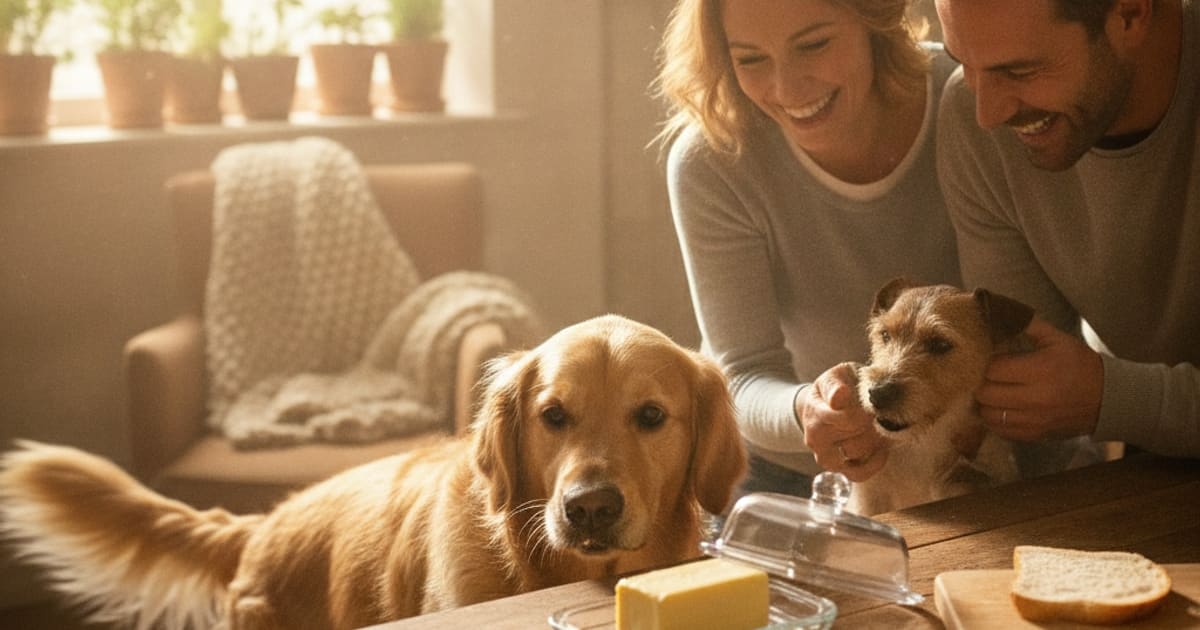
Butter is not toxic to dogs, but it is close to pure fat, gives a dog nothing they actually need, and a sudden load of it can cause stomach upset or set off inflammation of the pancreas. If your dog has eaten a large amount of butter, is vomiting repeatedly, has a tense or painful belly, or swallowed foil and wrapper along with it, call your veterinarian now, or an animal poison control service such as the ASPCA Animal Poison Control Center or the Pet Poison Helpline if you cannot reach your own clinic.
So the plain answer to whether it is ok for a dog to eat butter is this: a quick lick off a knife or an empty plate rarely causes a healthy adult dog any trouble, but butter is not a food to offer on purpose, and butter in quantity is a genuine reason to get a vet on the phone. The danger here is not poison. The danger is fat.
What butter actually is, and why the fat matters
Butter is churned cream. What is left after churning is mostly milk fat, with a little water and a trace of milk solids, plus salt in salted varieties. That makes it one of the most concentrated sources of fat in a typical kitchen.
A dog's digestive system handles modest amounts of dietary fat perfectly well. What it handles badly is a sudden jump in fat well above what the dog is used to. The gut responds with loose, greasy stools and gas. The pancreas, which releases the enzymes that break fat down, can respond with inflammation. Neither of those is a reaction to anything poisonous. Both are a reaction to volume.
There is a second point worth knowing for anyone wondering about milk versus butter. Milk sugar, lactose, sits in the watery part of dairy, so butter carries only traces of it. Most adult dogs produce less of the enzyme that digests lactose than they did as puppies, which is why a bowl of milk can cause more gurgling and diarrhea than a smear of butter would. That does not make butter a good idea. It simply means that when butter upsets a dog, fat is usually the reason rather than lactose.
What happens when a dog eats butter
For a healthy dog that managed a lick or two, usually nothing at all. The owner watches, and the day passes without incident.
When a dog gets into a real quantity, a block left out to soften or a dish of it scraped off a counter, the likely outcome is gastrointestinal upset. Vomiting, loose or greasy stools, straining, gurgling, flatulence and a dog that seems off its usual self. Signs may not show up immediately. They can appear hours later, sometimes the following morning, which catches owners off guard when the dog seemed fine at the time.
The outcome everyone worries about, and the reason this matters more than a food that simply tastes rich, is pancreatitis. The pancreas sits beside the stomach and produces the enzymes that digest food. A sudden, heavy fat load can trigger those enzymes to activate too early, inside the organ itself, which inflames the pancreas and the tissue around it. It hurts. Affected dogs often vomit repeatedly, refuse food, go quiet and lethargic, and may stand or lie in a hunched position with the chest down and the rear up, as though stretching, because that posture takes pressure off a sore belly.
Butter is not poisonous, but a sudden load of fat is one of the recognised triggers for pancreatitis, and pancreatitis is a condition that needs veterinary treatment rather than waiting it out at home.
Separately, and over a longer horizon, fat is energy dense. Added butter contributes calories without protein, fibre or anything else a dog's diet is built around, and extra weight puts more load through hips, knees and spine.
What to do if your dog got into the butter
First, work out what actually went down: plain butter, salted butter, flavoured butter, and whether wrapper, foil or a dish went with it. Then call your clinic and describe it honestly. A vet who knows your dog's history can tell you whether this is a watch-and-wait situation or one that needs a look.
Signs that mean call your vet straight away
- Vomiting that will not settle, or repeated attempts to vomit with nothing coming up
- A swollen, tense or painful belly, or a dog that flinches when the abdomen is touched
- The hunched, chest-down posture, restlessness, pacing or an inability to get comfortable
- Weakness, collapse, pale gums or laboured breathing
- Refusing food alongside clear lethargy
- Diarrhea containing blood, or black tarry stool
- Any sign your dog swallowed a large solid lump, foil or wrapper
If you want a broader list of the red flags that justify an urgent call, the emergency signs guide linked below covers them.
If the wrapper or foil went down too
This is the part owners often forget to mention on the phone. Foil, waxed paper and plastic tubs can irritate the gut lining or, in a small dog, lodge somewhere they should not. Tell your vet exactly what the butter was wrapped in. Do not try to make your dog bring it back up on your own; that decision belongs to a veterinarian who knows what was swallowed and when.
Dogs that deserve a call even after a modest amount
Some dogs have far less margin than others. Dogs with a history of pancreatitis, dogs with inherited high blood fats such as miniature schnauzers, dogs carrying extra weight, dogs with diabetes, liver or kidney disease, dogs with heart disease on sodium-restricted diets, dogs with inflammatory bowel disease, and dogs already on medication that affects the gut. Puppies and very old dogs also tolerate dietary shocks less gracefully. If your dog is on that list, talk to your vet rather than watching the clock.
Butter, margarine and oils: how the fats compare
Owners often ask whether margarine, olive oil or cooking oil would be a safer thing to put on food instead. Here is the honest comparison. None of these belongs in a dog's bowl as a matter of course, and the differences between them are mostly about which extra risks ride along with the fat.
| Fat source | What it is | Main concerns for dogs | Bottom line |
|---|---|---|---|
| Butter | Churned milk fat, sometimes salted | Very high fat, gut upset, pancreatitis trigger, added sodium in salted types | Not toxic, not worth feeding |
| Margarine and spreads | Vegetable oil blends, emulsifiers, flavourings | Same fat load as butter, plus unpredictable additives; some low-sugar spreads may contain xylitol, which is toxic to dogs | Read the label; no safer than butter |
| Olive oil | Pressed olive fruit oil | Still concentrated fat, loose stools, same pancreatitis concern in quantity | Not toxic, no free pass |
| Coconut oil | Saturated plant fat | High fat, commonly overdone by owners, can cause greasy diarrhea | Not toxic, easy to overdo |
| Seed and vegetable oils | Refined cooking oils | Concentrated fat with no added benefit over the dog's own diet | Nothing gained |
| Flavoured or compound butter | Butter with garlic, onion, herbs or chilli | Garlic and onion are toxic to dogs; this is the risky one | Call your vet if eaten |
The pattern is consistent. Swapping one fat for another does not remove the fat problem, and some swaps introduce ingredients that are genuinely toxic rather than merely rich. If you believe your dog has eaten anything containing garlic, onion or xylitol, that is a call to your veterinarian or an animal poison control service, not a wait-and-see.
Salt, dairy and the buttered food on your plate
Salted butter adds sodium that a dog on a balanced diet does not need, and matters more for dogs with heart or kidney disease. It is unlikely to cause salt poisoning on its own, but it is one more reason the answer to whether butter is safe for dogs keeps landing on no particular benefit, some real risk.
Food cooked with butter is the more common real-world scenario. Buttered toast, buttered popcorn, mashed potato, pastry, sauces and baked goods all carry butter plus whatever else is in them, and the something else is usually the bigger issue. Chocolate, raisins and currants, macadamia nuts, onion and garlic, and the sweetener xylitol all appear in buttery dishes and all are toxic to dogs. Rich leftovers off a holiday table are a classic pancreatitis story at emergency clinics for exactly this reason. So when a dog eats food with butter in it, the first question is not the butter. It is the ingredient list.
If your aim is simply to make a bowl more tempting for a fussy eater, fat is the wrong lever. Plain, dog-safe produce does the job without the fat load: carrots, green beans, pumpkin without spices or sweeteners, plain cooked rice, blueberries, apple with the core and seeds removed. Those additions, kept plain, give you flavour and texture without the pancreas taking the hit. Your veterinarian can tell you which of them suits your particular dog, especially if there is a prescription diet or a diagnosed condition in play.
Key Takeaways
- Butter is not toxic to dogs, but it is nearly pure fat and has no place in a dog's diet as a food you deliberately offer.
- A single lick from a plate rarely harms a healthy adult dog. A stolen block is a different matter.
- The real concern is pancreatitis, a painful inflammation that a sudden heavy fat load can trigger and that needs veterinary care.
- Watch for vomiting that will not settle, a painful or swollen belly, the hunched posture, lethargy, refusal of food or bloody diarrhea, and call your vet if you see them.
- Margarine, olive oil and cooking oils are not safer alternatives; some spreads also carry xylitol, and flavoured butters can carry garlic or onion.
- Butter in cooked food is usually the least dangerous part; chocolate, raisins, onion, garlic and xylitol in the same dish matter far more.
- Dogs with a pancreatitis history, high blood fats, diabetes, heart or kidney disease and very young or very old dogs have the least room for error.
Where your veterinarian fits in
Your vet owns the diagnosis and the treatment plan. They are the one who can examine the belly, run bloodwork, decide whether what you are seeing is a passing upset or something that needs fluids and pain relief, and tell you what your individual dog can tolerate. Results vary from dog to dog, and a breed, a weight, a medication list and a medical history all change the answer. Food choices sit underneath that plan rather than beside it, so bring the questions about treats and extras to the same conversation. If something feels wrong after your dog eats butter, the phone call is always the right first move.
More from this series: Dog Emergency Signs, Can Dogs Eat Carrots?, Can Dogs Eat Green Beans?, Can Dogs Eat Pumpkin?, Can Dogs Eat Rice?, Can Dogs Eat Apples?, Can Dogs Eat Blueberries?, and the full conditions library.
Frequently asked questions
- can dogs eat butter
- Dogs can physically eat butter without being poisoned, but they should not be given it. Butter is nearly pure milk fat with no nutritional value for dogs, and a sudden fat load can cause vomiting, greasy diarrhea or pancreatitis. A stray lick is usually uneventful; a stolen block warrants a call to your vet.
- what can dogs eat butter
- Any dog can swallow butter without it acting as a poison, but no dog needs it. Healthy adult dogs tolerate a stray lick best. Dogs with a pancreatitis history, high blood fats, diabetes, heart or kidney disease, extra weight, and very young or very old dogs have the least tolerance for rich fat.
- is dog can eat butter
- Yes, a dog can eat butter without being poisoned, but it is not a food to offer. Butter is concentrated milk fat, and the concern is gut upset and inflammation of the pancreas rather than toxicity. If your dog ate more than a lick, describe what happened to your veterinarian.
- is it ok for a dog to eat butter
- It is not harmful in the sense of being toxic, but it is not ok as a habit of feeding. Butter gives a dog calories and fat with nothing useful attached. A small accidental taste rarely causes problems in a healthy dog, while a larger amount can trigger vomiting, diarrhea or pancreatitis.
- what happens if a dog eats butter
- Most often nothing, if the amount was tiny. Larger amounts commonly cause vomiting, gas, and loose or greasy stools, sometimes hours later rather than straight away. The serious outcome is pancreatitis, a painful inflammation triggered by sudden fat, which brings repeated vomiting, a sore belly, lethargy and refusal of food.
- what will happen if a dog eats butter
- Expect either no reaction at all or digestive upset, depending on the amount and the dog. Watch for vomiting, diarrhea, a tense or painful abdomen, a hunched posture, weakness or loss of appetite. Any of those, or a swallowed wrapper or foil, means calling your veterinarian rather than waiting at home.
- is butter safe for dogs
- Butter is not toxic, but safe is the wrong word for it. It carries a heavy fat load with no benefit, salted versions add sodium, and flavoured butters can contain garlic or onion, which are toxic to dogs. Treat butter as something to keep off the counter rather than something to share.
- can dogs eat butter or margarine
- Neither is a good choice. Margarine delivers a similar fat load plus emulsifiers and flavourings, and some reduced-sugar spreads contain xylitol, which is toxic to dogs. Butter is at least a simple ingredient, but swapping one for the other does not remove the fat problem. Check any spread label before assuming it is harmless.
- can dogs eat butter or olive oil
- Olive oil is not toxic and is sometimes added to canine diets under veterinary guidance, but it is still concentrated fat and can cause loose stools or contribute to pancreatitis risk in quantity. It is not a free pass compared with butter. Ask your vet before adding any oil to your dog's food.
- can dogs have milk or butter
- Both are best avoided. Milk contains lactose, which many adult dogs digest poorly, leading to gas and diarrhea. Butter contains only traces of lactose but is dense in fat, which brings its own risk of stomach upset and pancreatitis. Water remains the only drink a dog genuinely needs.
Educational content, not veterinary advice. Ask your vet about your dog.