Can Dogs Eat Butternut Squash? (Safe Prep and Warnings)
Yes, dogs can eat butternut squash when it is plain, peeled, cooked through and served with no butter, salt, onion, garlic or spice. Raw chunks, hard rind and seasoned leftovers are the real hazards. Introduce it gradually, watch for stomach upset, and talk to your vet first if your dog has a health condition.
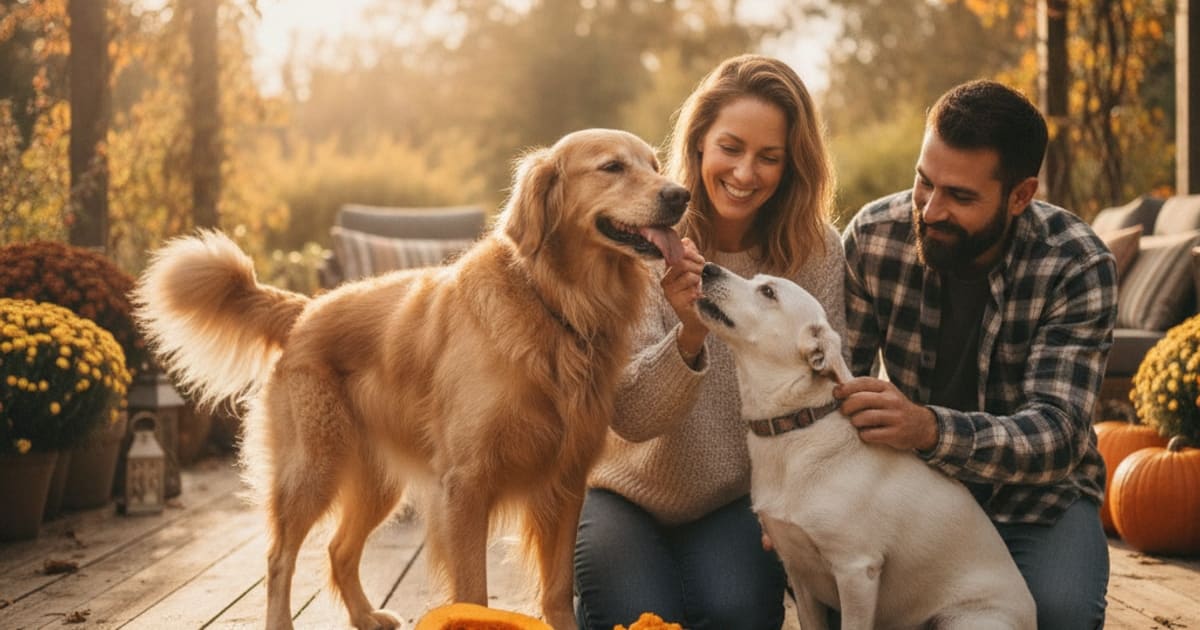
Yes, dogs can eat butternut squash when it is plain, peeled, cooked through and served with nothing added to it. See your veterinarian promptly if your dog has swallowed a large chunk of raw squash or hard rind, is vomiting and will not settle, or has a belly that looks swollen or is painful when touched.
Butternut squash is not toxic to dogs. It belongs to the same gourd family as pumpkin, and like pumpkin it turns soft, mild and easy to swallow once it has been cooked through. The flesh is mostly water and fibre, and it carries beta-carotene, which the body converts into vitamin A, along with vitamin C, potassium and very little fat. A dog eating a complete, balanced food does not need squash at all. It simply happens to be one of the gentler vegetables to add if you want to.
What sends dogs to the clinic after a squash incident is almost never the squash. It is the form the squash was in and the things that were cooked onto it.
What squash brings to the bowl, and what it does not
Fibre is the headline. Cooked squash flesh holds moisture and soluble fibre, which is why cooked gourds come up so often in conversations about loose or sluggish stools. It is bulky and filling without being calorie dense, which is why owners managing a dog's waistline ask about it. Beta-carotene gives the flesh its orange colour and supports normal vision and skin function as part of a complete diet. Vitamin C, potassium and a modest amount of magnesium come along with it.
Do dogs actually eat butternut squash willingly? Many do. Roasted or steamed squash is naturally sweet and soft, and plenty of dogs will take it happily as a food topper or a training snack. Others will sniff it, look at you with mild disappointment and walk away. Both reactions are normal, and there is no nutritional reason to push a dog who is not interested.
What squash does not do is fix an existing problem. If your dog has ongoing diarrhoea, constipation, weight loss, a changing appetite or straining, those are reasons for a veterinary appointment, not reasons to reach for a vegetable. Adding fibre to an undiagnosed gut problem can blur the pattern your vet needs to see. Results vary from dog to dog, so talk to your vet before you make any food part of a plan for a medical issue.
Raw, cooked, canned or frozen: how the form changes the risk
The same vegetable can be harmless or hazardous depending entirely on how it reaches your dog. Raw butternut squash is dense and fibrous. A determined dog can bite off a chunk, swallow it without real chewing, and leave a hard lump travelling through a digestive tract that is not built to break it down. Cooking changes the texture completely, which is the single biggest safety upgrade you can make.
| Form | Suitable? | What to watch |
|---|---|---|
| Cooked, peeled, plain flesh (steamed, boiled or baked) | Best option | Cool it fully and make sure it mashes easily under a fork |
| Plain puree with no additives | Suitable | Read the label for added sugar, salt or spice blends |
| Raw fresh squash | Not ideal | Hard and dense, with choking and blockage risk |
| Skin and rind | Avoid | Tough and poorly digested, can lodge in the gut |
| Seeds | Avoid | Choking risk, best removed before cooking |
| Stringy pulp and guts | Avoid | Coarse strands that break down badly |
| Canned or pre-seasoned squash | Avoid | Salt, sugar, spice blends, onion and garlic powder |
| Soups and roasted side dishes | Avoid | Butter, oil, cream, stock, onion, garlic, nutmeg |
| Plain frozen cubes | With care | Thaw and cook first, frozen chunks are hard on teeth |
| Leaves, vines and flowers | Avoid | Bristly and coarse, and may carry garden sprays |
Fresh squash and organic squash are nutritionally the same vegetable, and organic status changes nothing about the safety rules above. Organic produce is still peeled, still deseeded and still cooked before it goes near a dog. The one genuine advantage of any fresh squash you prepare yourself is control: you know exactly what did and did not go into the pan.
Owners searching from the UK sometimes ask whether the advice differs there. It does not. Butternut squash is the same species wherever it is grown, and the guidance stays identical: plain, peeled, cooked, unseasoned.
Skin, seeds, pulp, guts and leaves
The skin is the part owners most often ask about. Butternut rind is thick and waxy, and even long roasting leaves it leathery. It is not poisonous, but it is a texture a dog's gut handles badly, and it is the part of the vegetable most likely to end up stuck somewhere it should not be. Peel it and discard it.
The seeds and the stringy pulp in the seed cavity, sometimes called the guts, belong in the compost rather than the bowl. The seeds are slippery, hard and easy to inhale, and the fibrous strands around them resist cooking. If a dog eats a mouthful of scooped pulp off a kitchen floor, that is usually a watch-and-wait situation rather than an emergency, but anything more than a mouthful, or any sign of retching, drooling or discomfort, deserves a phone call to your veterinary practice.
Butternut squash leaves and vines are not on the standard toxic plant lists, but they are a poor idea for practical reasons. The foliage is bristly and coarse, it can irritate the mouth and stomach, and garden plants are frequently treated with fertilisers, slug products and sprays that matter far more than the leaf itself. If your dog has been grazing on squash plants in a treated garden, call your veterinarian or an animal poison control service such as the ASPCA Animal Poison Control Center or the Pet Poison Helpline and tell them which product was used.
Seasoning is where a safe vegetable becomes a real risk. Onion and garlic, including powdered forms in stock cubes and spice mixes, damage canine red blood cells. Nutmeg, a traditional squash spice, contains a compound dogs tolerate poorly. Butter, cream and oil add a fat load that can upset a sensitive dog badly. The vegetable is rarely the problem, the butter, salt, onion, garlic and nutmeg that usually come with it are.
Squash in homemade meals and in commercial dog food
Butternut squash already appears in plenty of commercial recipes, which is why owners recognise it on ingredient panels. In that context it has been cooked, portioned and balanced against everything else in the formula by someone working to a nutritional standard, so there is nothing to do but feed the food as directed.
Home cooking is a different proposition. Dogs can have butternut squash in homemade food, and many home-prepared recipes use it as a carbohydrate and fibre source. The catch is that a home-prepared diet has to meet a long list of nutrient requirements, and vegetables are the easy part. Calcium to phosphorus balance, essential fatty acids, trace minerals and vitamin D are where homemade diets most often fall short, and the gap rarely shows up straight away. If you are cooking for your dog as a long-term plan rather than adding a spoonful of squash to a complete food, ask your vet to involve a veterinary nutritionist so the recipe is built properly from the start.
If you are simply adding plain cooked squash on top of a complete food, keep it simple. Introduce new foods one at a time so that if something disagrees with your dog, you know what caused it. Watch the stool quality, and ask your vet what fits your dog's calorie budget rather than guessing, particularly for a dog who is overweight, diabetic, prone to pancreatitis or on a prescribed diet for kidney, liver or bladder disease. Those diets are calculated, and unplanned extras can work against them.
When squash turns into a veterinary problem
Most squash mishaps are mild and short lived: a bit of gas, a soft stool, a dog who is briefly off their food. The situations that need professional attention are reasonably easy to recognise.
Call your veterinarian if your dog swallowed a large chunk of raw squash or rind, especially a small dog or a committed gulper. Call if vomiting is repeated and will not settle, if there is blood in vomit or stool, or if your dog is retching without producing anything. A belly that looks bloated, feels tight or hurts when touched needs to be seen without delay. The same goes for a dog who is unusually quiet, unsteady, breathing oddly, or refusing water. If you are unsure whether what you are seeing counts as urgent, the guide to dog emergency signs is a useful reference, and an unanswered question is always worth a phone call.
If the squash was part of a seasoned dish containing onion, garlic, stock or heavy spice, say so when you call. The amount eaten and your dog's size both matter, and that is a judgement for your vet rather than for an internet article.
Key Takeaways
- Butternut squash is not toxic to dogs and is safe when it is plain, peeled, deseeded and cooked soft.
- Skip the rind, the seeds, the stringy pulp and the leaves, which are the parts that cause choking and blockages.
- Raw squash is dense and hard to chew, so cooking it is the single most important safety step.
- Seasoned squash dishes are the real hazard because of onion, garlic, nutmeg, salt, butter and oil.
- Fresh and organic squash follow exactly the same preparation rules, and the advice does not change by country.
- Squash is fine as a topper on a complete food, but a fully homemade diet needs professional formulation.
- Vomiting that will not settle, a swollen or painful belly, or a swallowed large chunk means veterinary care now.
Your veterinarian owns the diagnosis and the plan. They know your dog's weight, history, medications and prescribed diet, and they can tell you whether a vegetable like butternut squash has a sensible place in the bowl or is better left out. Food choices sit inside the structure proper veterinary care creates, never in place of it, so bring the question to your next appointment and feed with that answer in hand.
Related reading: Can Dogs Eat Pumpkin?, Can Dogs Eat Carrots?, Can Dogs Eat Green Beans? and Can Dogs Eat Spinach?.
Frequently asked questions
- Can dogs eat butternut squash?
- Yes. Butternut squash is not toxic to dogs and is suitable when it is peeled, deseeded, cooked until soft and served with no butter, oil, salt or spice. Skip the rind, seeds and stringy pulp, and ask your vet how it fits your individual dog's diet.
- Do dogs eat butternut squash?
- Many dogs eat it willingly because roasted or steamed squash is naturally sweet and soft. Others show no interest at all, which is perfectly normal. Squash is not a required nutrient source for a dog on a complete, balanced food, so there is no reason to persuade a reluctant dog.
- Can a dog eat butternut squash?
- Yes, provided it is plain and cooked. The flesh is mostly water and fibre with beta-carotene, vitamin C and potassium. The hazards come from raw dense chunks, tough rind, seeds and any seasoning, particularly onion, garlic, nutmeg, stock and heavy fats such as butter or cream.
- Can my dogs eat butternut squash?
- In general yes, as long as it is plain, peeled and cooked soft. Dogs with diabetes, pancreatitis, kidney or liver disease, or those on a prescribed diet are the exception, because added foods can unbalance a calculated plan. Talk to your vet before adding anything for those dogs.
- Can your dog eat butternut squash?
- Yes, if it is prepared plainly and introduced on its own so you can see how your dog reacts. Watch for gas, soft stools or a dip in appetite. Results vary from dog to dog, so what suits one dog in a household may not suit another.
- Can dogs eat plain butternut squash?
- Plain butternut squash is exactly the version dogs should have. Cooked, peeled, deseeded and unseasoned flesh is soft, mild and easy to digest. Plain puree with no added sugar, salt or spice blend works too, so always check the label before serving anything from a tin or pouch.
- Can dogs eat raw butternut squash?
- Raw squash is best avoided. It is dense and hard to chew, so a dog who gulps rather than chews can swallow a chunk whole, creating a choking or blockage risk. Cooking softens the flesh completely and removes most of that concern, which is why it is the safer route.
- Can dogs eat butternut squash seeds, pulp and guts?
- No, these parts are better discarded. Seeds are hard and slippery and can be inhaled or cause choking, while the stringy pulp from the seed cavity resists cooking and digests poorly. Scoop everything out before cooking and keep the scraps where a counter-surfing dog cannot reach them.
- Can dogs eat butternut squash leaves?
- Leaves and vines are not recommended. The foliage is coarse and bristly and can irritate the mouth and stomach, and garden plants are often treated with fertilisers or sprays that matter far more than the plant itself. If your dog has grazed on treated plants, contact your veterinarian.
Educational content, not veterinary advice. Ask your vet about your dog.