Can Dogs Eat Cantaloupe Rind? (Plus Skin and Seeds)
No. Cantaloupe rind is not a safe thing for dogs to eat, because the tough netted peel resists chewing and can lodge in the throat or gut. The flesh is the edible part; skin, seeds, stringy centre, leaves and vines all carry their own risks. Call your vet if a large piece goes down.
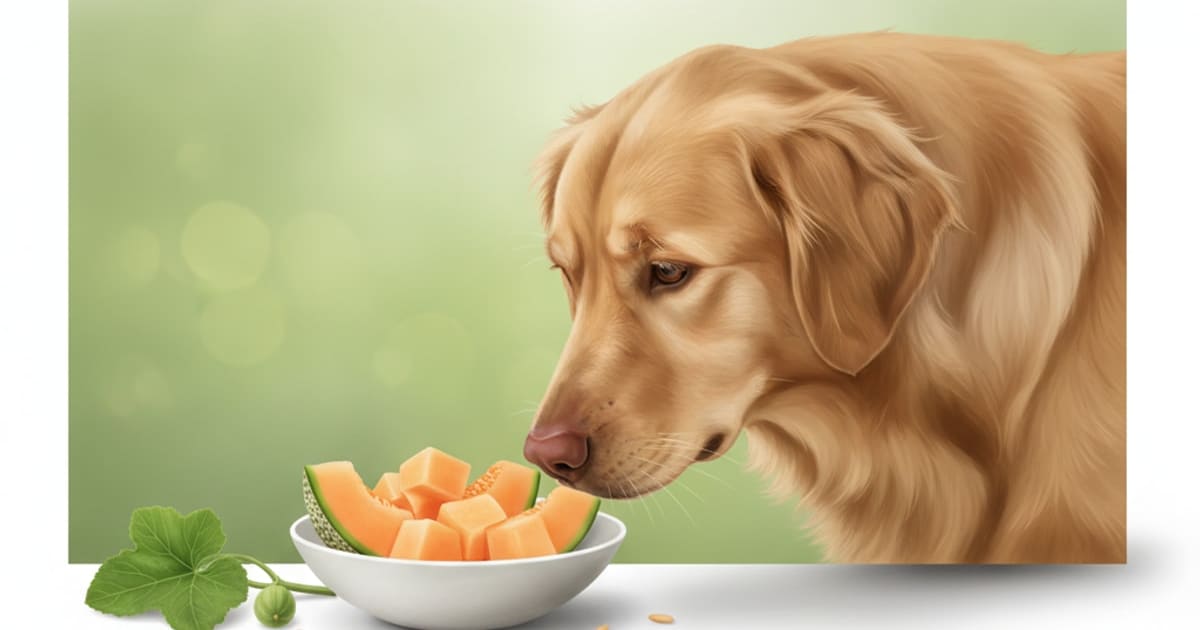
No, dogs should not eat cantaloupe rind. If your dog has already swallowed a large chunk of rind, or ate rind and is now retching, drooling heavily, or straining to vomit without bringing anything up, call your veterinarian or an animal poison control service such as the ASPCA Animal Poison Control Center or the Pet Poison Helpline straight away instead of waiting to see how the night goes.
The ripe orange flesh is the part of a cantaloupe a dog can eat. The rind is a completely different material: a tough, netted, slightly waxy outer wall whose entire biological job is to keep the inside of the fruit separated from the outside world. It resists teeth, it resists stomach acid, and it resists the gut. That gives you three distinct problems, and they are worth separating, because the answer for rind is not the same as the answer for seeds, pulp, leaves or vine.
Why the rind behaves so differently from the flesh
The soft orange part of a melon is mostly water held in thin-walled cells. It collapses the moment a dog bites it, and whatever is left dissolves quickly in the stomach. The rind is built the opposite way. Its cell walls are thickened with cellulose and lignin, the same structural material that makes bark and stalks rigid, and dogs produce no enzyme that breaks those compounds down. Whatever shape a swallowed section of rind has when it goes down is roughly the shape it still has further along.
Chewing does not solve this. A dog's back teeth shear like scissors rather than grinding like a flat human molar, so a curved strip of rind tends to get sliced into firm, springy segments rather than mashed into pulp. Those segments keep their curve. A curved, rigid object is exactly the shape that can bridge across the inside of the oesophagus or wedge in a narrowing further down.
That is why size and gulping matter more than appetite. A dog who carefully gnaws at a rind and swallows shreds is in a different situation from a dog who lifts a whole discarded half-shell off the counter and swallows a fist-sized section intact. Small dogs, flat-faced breeds and committed gulpers carry more risk because the passage is narrower and the chewing is briefer, but any dog can get into trouble with a large enough chunk.
Even when rind passes without blocking anything, it rarely passes politely. Indigestible plant material pulls water into the bowel and speeds things up, so loose stool, gas, cramping and a flat appetite are not unusual for a day or two afterwards. How much upset follows a mouthful of rind is not predictable from the outside. Results vary from dog to dog, which is a good reason to call rather than guess if your dog seems unwell.
Skin, peel and the pale green layer underneath
Cantaloupe skin, cantaloupe peel and cantaloupe rind are three words for the same structure, and the answer is the same for all of them: keep it away from your dog. The netted, raised pattern on the outside of a cantaloupe is not just cosmetic. Those ridges create a rough, porous surface that holds whatever the melon has been sitting on or travelling through.
That surface is the reason food safety guidance for people says to scrub a whole melon under running water and dry it before cutting it. Bacteria such as Salmonella and Listeria can sit on the outside of an uncut melon, and a knife passing through the rind drags them into the flesh. Whole melons have been pulled from sale over exactly this concern. A dog chewing unwashed rind is chewing the dirtiest part of the fruit, along with any field residue or post-harvest coating still on it.
Then there is the pale green or almost white layer just inside the hard skin. This is underripe flesh. It is firmer, blander and far more fibrous than the orange centre, and while it is not poisonous, it is the part that most often sits heavily in the stomach and produces gas or loose stool. A fully green, unripe melon is the same story in a larger form. If you prepare cantaloupe for your dog, cut back to the soft, fully coloured flesh and discard everything paler than that along with the skin.
And because wasted food is the usual reason owners ask in the first place: a scooped rind shell in an open bin or a compost pile is a magnet. Most rind incidents are counter incidents, not feeding decisions.
Seeds, pulp and the stringy centre
Cantaloupe seeds are a milder worry than the rind, but they are still not something to hand over deliberately. Unlike apple pips, melon seeds do not contain cyanide-forming compounds, so a few swallowed along with flesh are generally not a chemical problem. They are flat, smooth and light, and in a medium or large dog they usually move through unchanged.
The concern is bulk and texture. Seeds in a cantaloupe do not come loose and separate. They come embedded in the wet, stringy pulp of the seed cavity, which is what people mean when they search for whether dogs can eat cantaloupe guts. That tangle of fibres and seeds behaves as one slippery wad rather than as individual seeds, and a wad is harder for a small dog to break up and move along than scattered flesh. It also adds fermentable fibre that can leave a sensitive dog gassy and uncomfortable.
So the practical rule is simple. Scoop the cavity out and bin it with the skin, and offer only the firm orange wall of flesh in between. The same applies to the combination people worry about after the fact, rind with seeds still attached: neither part is doing your dog any good, and the rind is the half of that pairing that actually needs watching.
What about the flesh itself, the pulp in the everyday sense? Plain ripe cantaloupe flesh with no skin, no seeds and nothing added is the only part of the fruit worth offering, and it should be plain. No syrup, no sweetener, no fruit salad that might contain grapes or raisins, both of which are genuinely dangerous to dogs and frequently share a bowl with melon.
Leaves, vines, microgreens and the plant in the garden
Cantaloupe plants are not classed among the poisonous garden plants that cause serious systemic illness in dogs, which is reassuring if your dog has grazed a vine. That is not the same as saying the foliage is food. Cantaloupe leaves and stems are covered in stiff, bristly hairs, and they are coarse enough to irritate the mouth and throat on the way down and to come back up again as undigested green matter.
Melons also belong to the cucurbit family, which produces bitter compounds called cucurbitacins. Levels are normally low in cultivated melons, but they run higher in stressed plants, in some ornamental gourds and in the leafy parts rather than the ripe fruit. A strongly bitter mouthful of cucurbit foliage can bring on drooling, vomiting and diarrhoea. Most dogs reject the taste quickly, which is their own best protection.
The bigger garden risks usually have nothing to do with the plant itself. A melon patch is often a place with slug bait, fertiliser, insecticide, mulch or a compost heap nearby, and those are far more serious than a chewed leaf. Mouldy fruit in a compost pile deserves particular respect, because moulds growing on discarded produce can produce toxins that cause tremors and incoordination. If your dog has been in the compost and looks shaky or unsteady, that is an immediate veterinary call, not a wait-and-see.
Cantaloupe microgreens and young melon seedlings fall into the same bin. They are young cucurbit shoots, often grown in damp trays where raw sprouts and growing medium can carry bacteria, and they can carry the bitter note of the family. There is no reason to offer them, and a propagation tray left on a low shelf is worth moving.
Which parts are risky, and when a vet call is the right move
| Part of the melon | What it actually is | Main concern | What to do with it |
|---|---|---|---|
| Rind, peel, skin | Hard netted outer wall | Choking, blockage, surface bacteria | Bin it out of reach before cutting |
| Pale green layer | Underripe flesh next to the skin | Firm, fibrous, stomach upset | Cut away and discard |
| Seeds | Flat seeds in the cavity | Clumping in small dogs, not poisonous | Scoop out |
| Pulp or guts | Stringy seed-cavity tissue | Slippery wad, gas, loose stool | Scoop out |
| Leaves and vines | Bristly cucurbit foliage | Irritation, bitter compounds, garden chemicals | Fence the patch off |
| Microgreens and seedlings | Young sprouted shoots | Bitterness, bacteria on raw sprouts | Keep trays off the floor |
| Ripe orange flesh | Soft, fully coloured fruit | Sugar and fibre load | The only part to offer, plain |
After a rind raid, what you are watching for is not a single dramatic moment but a pattern. Repeated vomiting that will not settle, especially vomiting that returns every time your dog drinks, is a warning sign. So is a belly that looks swollen or that your dog flinches away from when touched, a hunched or praying posture, restlessness that will not resolve into sleep, pale gums, or a dog who goes quiet and refuses food and water.
A dog who has swallowed a large section of rind whole, or who is vomiting repeatedly and cannot keep water down, needs a veterinarian the same day rather than overnight observation at home.
Straining to pass stool with nothing coming, or passing only small amounts of liquid, can point to a partial blockage, and partial blockages are deceptive because the dog may seem reasonably bright between episodes. Dogs already being managed for other health conditions, and dogs who have had abdominal surgery before, deserve a lower threshold for calling. When you are unsure, describe what was eaten and how big it was and talk to your vet; that phone call costs you nothing and is the fastest way to find out whether this is a wait or a visit.
Key takeaways
- Cantaloupe rind, skin and peel are all the same tough outer wall, and none of it should be given to a dog.
- The rind is built from material dogs cannot digest, so swallowed sections keep their shape and can choke or block.
- The netted surface holds bacteria, which is why whole melons are scrubbed before cutting.
- Seeds are not poisonous, but the stringy seed cavity they sit in forms a wad that is best scooped out.
- The pale green layer next to the skin is underripe and is the part that most often causes gas and loose stool.
- Cantaloupe leaves, vines, seedlings and microgreens are not food, and the chemicals and compost around a melon patch matter more than the plant itself.
- Plain, ripe, deseeded orange flesh is the only part of the fruit to offer.
Your veterinarian owns the diagnosis here. Only an examination, and sometimes imaging, can tell the difference between a stomach that is simply annoyed by indigestible fibre and a gut that has something stuck in it, and that distinction is not one any owner can make from the sofa. Good prevention at the chopping board is yours to control; the rest belongs in professional hands, so talk to your vet about anything that worries you after your dog has raided the bin.
Related reading: Dog Emergency Signs, the Conditions Library, Can Dogs Eat Apples, Can Dogs Eat Carrots, Can Dogs Eat Blueberries, Can Dogs Eat Pumpkin, Can Dogs Eat Green Beans and Can Dogs Eat Rice.
Frequently asked questions
- Can dogs eat cantaloupe rind?
- No. Cantaloupe rind is tough, fibrous and built to resist breakdown, so a swallowed chunk can lodge in the throat or further along the gut. It also carries surface bacteria from handling and storage. Bin the rind out of reach, and call your vet if your dog swallows a large section.
- Can dogs eat cantaloupe skin?
- No. Cantaloupe skin is simply the outer face of the rind, so the same answer applies. The raised netting holds soil bacteria and residues, and the material underneath does not soften in the stomach. Offer only soft, fully ripe orange flesh with the skin cut completely away.
- Can dogs eat cantaloupe seeds?
- Melon seeds are not poisonous to dogs and do not contain the cyanide-forming compounds found in apple pips. The practical problem is that they come wrapped in a stringy wad of pulp that can clump, particularly in small dogs. Scoop the whole seed cavity out and discard it.
- Can dogs eat cantaloupe and the rind?
- The flesh yes, the rind no. Ripe orange cantaloupe flesh, served plain with nothing added, is fine for many dogs. The rind is the part that causes choking and blockage worries, so it should never be handed over or left where a dog can reach it. Talk to your vet about your own dog.
- Can dogs eat cantaloupe green?
- The pale green layer just inside the skin is underripe flesh. It is not poisonous, but it is firm and fibrous and is the part that most often produces gas, cramping or loose stool. Cut back to the soft, fully coloured orange flesh and discard anything paler.
- Can dogs eat cantaloupe guts?
- The stringy centre holding the seeds is best scooped out and binned. It is not toxic, but the wet fibres and seeds hold together as one slippery mass rather than breaking up, and that adds a swallowing risk for small dogs plus extra fermentable fibre for sensitive stomachs.
- Can dogs eat cantaloupe leaves?
- Cantaloupe leaves are not classed among the plants that poison dogs, but they are not food either. The foliage is bristly and can irritate the mouth and stomach, and cucurbit plants carry bitter compounds that may cause drooling, vomiting or diarrhoea. Fence the patch off rather than allowing grazing.
- Can dogs eat cantaloupe plants?
- Keep dogs out of the melon patch. The vine itself is unlikely to poison a dog, but a garden bed usually brings slug bait, fertiliser, insecticide, mulch and compost with it, and mouldy fruit in a compost heap can cause tremors. If your dog seems shaky after a compost raid, call your vet immediately.
- Can dogs eat cantaloupe microgreens?
- There is no good reason to offer them. Cantaloupe microgreens are young cucurbit shoots that can carry the bitter taste of the family, and raw sprouts grown in damp trays can carry bacteria. Keep propagation trays off the floor and stick to plain ripe flesh if you want to share melon.
Educational content, not veterinary advice. Ask your vet about your dog.