Can Dogs Eat Cherry Tomatoes Raw or Cooked? What Changes
Dogs can eat cherry tomatoes raw or cooked as long as the fruit is fully ripe, plain and free of stems, leaves and seasoning. Heat itself changes nothing harmful. What matters is the oil, salt, garlic or onion a cooked tomato may carry, and whether the fruit was green.
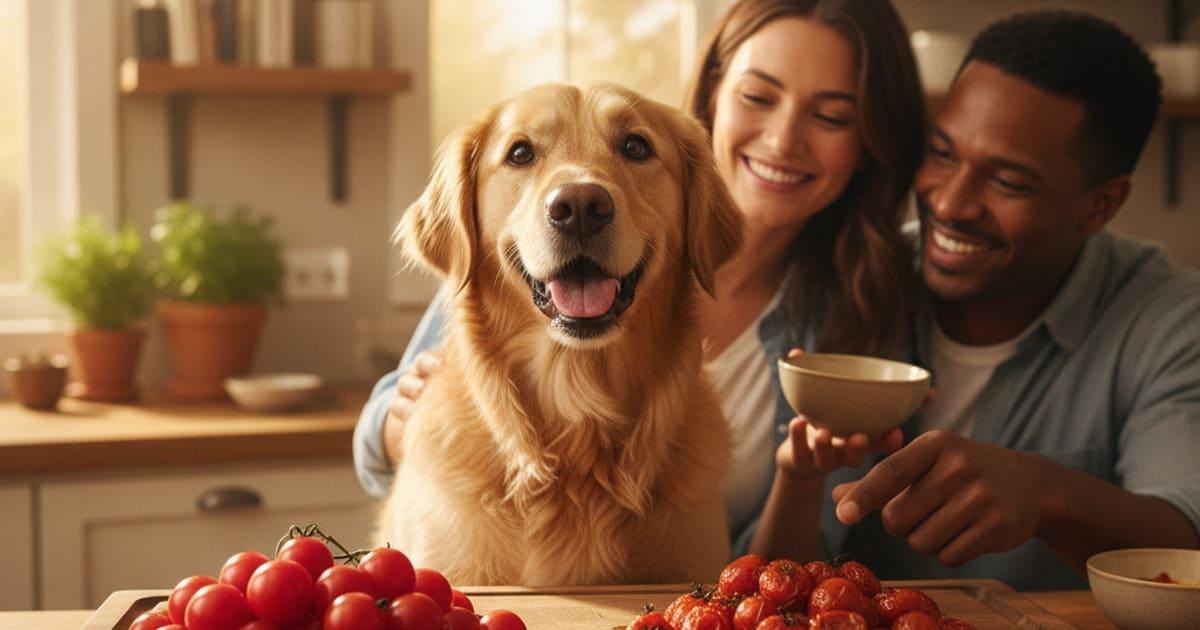
Yes, dogs can eat cherry tomatoes raw or cooked, as long as the fruit is fully ripe, served plain, and free of stems, leaves and seasoning. If your dog has swallowed green unripe tomatoes, tomato plant leaves or vines, or a cooked dish built around garlic, onion or heavy oil, call your vet or an animal poison control service such as the ASPCA Animal Poison Control Center or the Pet Poison Helpline straight away rather than waiting to see what happens.
Preparation is the whole story with this fruit. The part of a tomato that causes trouble for dogs is almost never the ripe red flesh. It is the green growth attached to it, the ingredients it was cooked with, or the shape and hardness of the fruit when it went down the throat. Raw and cooked are both acceptable in their plain forms. Roasted, sauced, tinned and seasoned are where the real risks sit.
What is inside a ripe cherry tomato
A ripe cherry tomato is mostly water, with a small amount of soft fibre, some natural sugar and a mild acid bite. It carries potassium, vitamin C, folate, carotenoids that the body uses to make vitamin A, and lycopene, the pigment that gives the fruit its colour. None of that is harmful to a healthy dog, and none of it is something a dog needs from tomatoes specifically, since a complete diet already covers it.
The compound owners hear about is tomatine, a glycoalkaloid the plant makes to defend itself against insects. It sits in the highest concentration in the leaves, stems and green unripe fruit, and it drops away sharply as the tomato ripens and turns red. That single fact explains most of the confusion online: the tomato plant is genuinely a problem, while the ripe fruit in your salad bowl is a different proposition entirely.
The acidity is the other thing worth knowing. Tomatoes are tart, and some dogs with sensitive stomachs respond to acidic foods with gas, loose stool or a bit of reflux. That is not toxicity, it is simply a mismatch between the food and that particular dog. Results vary from dog to dog, and a dog who has had gastrointestinal trouble, pancreatitis or kidney disease in the past should have new foods cleared with a vet first.
Raw, fresh and whole: what to check before it reaches the dog
Fresh raw cherry tomatoes are fine for most healthy dogs, with three checks worth making every time.
First, the green parts. The little star shaped calyx and the short stub of stem on top of a cherry tomato are plant material, not fruit, and they should come off and go in the bin. The same goes for any tomato with a hard green or yellow shoulder near the top, which signals fruit that has not fully ripened.
Second, the shape. A whole cherry tomato is a smooth, slick, round object, and round slick objects are exactly what lodge in a windpipe. Small dogs, flat faced breeds and enthusiastic gulpers who swallow without chewing are the ones at risk. Cutting the fruit so it is no longer a sphere removes that hazard almost entirely.
Third, the washing. Tomatoes are often sprayed, and supermarket fruit can carry residue from the field or the packhouse. A proper rinse under running water handles it.
Raw tomato skin is tougher than cooked skin, and some dogs pass it through largely undigested. That is normal and not a cause for alarm on its own. The seeds in a ripe tomato are soft and are not toxic, which is a frequent worry and an unnecessary one.
Cooked, roasted and whatever else was in the pan
Heat does nothing harmful to a tomato from a dog's point of view. Cooking softens the skin, breaks down the flesh and makes the fruit easier on the gut, and it also concentrates the acidity as water evaporates. Plain cooked cherry tomatoes, meaning steamed, simmered in water, or baked with nothing added, are as acceptable as raw ones and are sometimes gentler on an older dog or one with a fussy stomach.
The problem is that almost nobody cooks cherry tomatoes plain. They get tossed in oil, salted, blistered with garlic, splashed with balsamic, strewn with herbs, or roasted on a tray underneath something else entirely.
Garlic and onion, including powdered and granulated versions, damage a dog's red blood cells and have no safe place in food shared with a dog. Salt in quantity drives thirst and, in larger amounts, more serious problems with sodium balance. Fat is the other concern, because a sudden load of oil or butter can trigger a painful inflammation of the pancreas in susceptible dogs. Roasted cherry tomatoes, the kind that come off a tray glossy and caramelised, usually carry all three.
The same logic rules out tinned tomatoes packed with added salt, pasta sauce, passata with seasoning, ketchup, sun-dried tomatoes in oil, tomato soup and anything from a pizza. The tomato in them is fine. The company it keeps is not.
Cooked tomatoes also hold heat well and can scald a mouth that is in a hurry. Let anything cooked cool fully before it goes anywhere near a dog.
The tomato itself is rarely the problem; what it was grown on, cooked in or seasoned with is what decides whether a cherry tomato is harmless or a reason to call your vet.
Preparation methods side by side
| Preparation | What it changes | What to watch for |
|---|---|---|
| Raw, whole, ripe | Nothing nutritionally; keeps the round shape | Choking risk in small dogs and gulpers; stems and green tops left on |
| Raw, cut, ripe | Removes the choking shape | Still acidic; wash before cutting |
| Steamed or simmered plain | Softens skin, easier on the gut | Must be genuinely plain, no stock, salt or butter |
| Baked plain, no oil | Concentrates flavour and acidity | Serve only once fully cooled |
| Roasted with oil, salt or garlic | Adds fat, sodium and allium | Not suitable for dogs; garlic and onion damage red blood cells |
| Frozen, whole | Turns the fruit rock hard | Tooth fracture and choking risk |
| Sun-dried in oil | Concentrated, oily, often salted and garlicked | Not suitable for dogs |
| Tinned, sauce or ketchup | Added salt, sugar, onion and garlic | Not suitable for dogs |
| Green or unripe, any method | Cooking does not remove tomatine | Avoid entirely; call a vet if eaten |
| Stems, leaves, vine | Plant material, not food | Avoid entirely; call a vet if eaten |
Frozen cherry tomatoes deserve their own note, because they come up constantly in warm weather. A cherry tomato straight from the freezer is essentially a small stone. It is hard enough to chip or fracture a tooth on, and because it stays slick and round it keeps every bit of its choking potential while adding a new one. If you want to use tomatoes as something cooling, let them thaw until they are soft and then cut them so they no longer hold a sphere shape. The fruit itself does not become dangerous from freezing. The texture does.
Green fruit, stems and the plant in the garden
Home growers have the most exposure here. A cherry tomato plant in a pot on the patio puts low hanging green fruit, leaves and stems at exactly nose height for a curious dog, and windfall fruit on the soil is usually unripe. The vines are also often the thing a dog chews rather than eats, which still delivers plant material to the stomach.
Signs associated with eating the green parts of a tomato plant can include drooling, vomiting, diarrhoea, lethargy, weakness, an unsteady wobbly walk, dilated pupils and an abnormal heart rhythm. A dog usually has to get through a meaningful quantity of plant material before serious signs appear, but that is not a judgement call to make at home with a dog in front of you. Call your vet or a poison control service and describe what was eaten and roughly when.
The practical fix is physical. Fence or raise the plants, pick up fallen fruit, keep prunings out of a compost heap the dog can reach, and treat the tomato patch the same way you would treat any other part of the garden you do not want raided.
When a cherry tomato turns into a vet call
Most dogs who eat a ripe cherry tomato will be entirely unbothered by it. The situations that need professional eyes are specific and worth knowing in advance:
- Vomiting that will not settle, or repeated retching that brings nothing up
- A belly that looks swollen, feels tense, or hurts when touched
- A large whole piece swallowed by a small dog, or any sign of choking, gagging or trouble breathing
- Diarrhoea that keeps going, or any blood in stool or vomit
- Weakness, collapse, stumbling, dilated pupils or a racing or slow heartbeat
- Pale gums, heavy drooling or obvious distress
- Any amount of garlic, onion or a green tomato or plant material eaten
Dogs managing existing health conditions, dogs on prescribed medication, puppies and pregnant or nursing dogs all sit outside general advice, and the answer for them is to talk to your vet before adding anything new rather than working it out from a web page.
Key Takeaways
- Ripe cherry tomatoes are acceptable for most healthy dogs both raw and cooked, provided they are plain.
- Cooking changes nothing harmful about the fruit; the oil, salt, garlic, onion and herbs that usually come with it are the real issue.
- Roasted, sun-dried, tinned and sauced tomatoes are best left off the menu entirely.
- Frozen whole tomatoes are a dental and choking hazard, not a cooling snack.
- Green unripe fruit, stems, leaves and vines contain tomatine and should be kept away from dogs; cooking does not remove it.
- Remove stems and green tops, wash the fruit, and cut it so it is no longer a smooth sphere.
- Vomiting that will not settle, a swollen or painful belly, or a swallowed large piece means a vet, now.
Your veterinarian owns the diagnosis and the plan. They know your dog's history, current medication and whatever the last set of bloodwork showed, and that context decides whether a food that is fine in general is fine for this particular dog. Food choices sit inside the structure proper veterinary care creates, never in place of it, and anything that looks like a reaction, an obstruction or a poisoning belongs in a consulting room rather than in a search bar.
For the wider picture across every form this fruit takes, see Can Dogs Eat Tomatoes?. If you are unsure whether what you are watching counts as urgent, Dog Emergency Signs sets out the red flags that mean going in immediately.
Frequently asked questions
- can dogs eat cherry tomatoes raw or cooked
- Both are acceptable when the fruit is fully ripe and served plain. Raw tomatoes need the stem and green top removed and should be cut so they are not a smooth sphere. Cooked ones must have no oil, salt, garlic, onion or herbs on them, and should be fully cooled first.
- can dogs eat cherry tomatoes raw
- Yes, ripe raw cherry tomatoes are fine for most healthy dogs. Wash them, pull off the green calyx and stem, and reject any fruit with hard green shoulders. Because the whole fruit is round and slick, cutting it first matters for small dogs and for dogs who swallow without chewing.
- can dogs eat cherry tomatoes cooked
- Yes, provided they are cooked plain. Heat does nothing harmful to the fruit and actually softens the skin, which some dogs digest more comfortably. Steaming, simmering in water or baking with nothing added is fine. Cooking does concentrate the acidity, so a dog with a sensitive stomach may react.
- can dogs eat cooked cherry tomatoes
- Only if they were cooked without additions. Leftovers from a human meal are usually the problem, because tomatoes are typically cooked with oil, butter, salt, garlic or onion. Garlic and onion damage canine red blood cells, so anything from that pan should be skipped regardless of how plain it looks.
- can dogs eat roasted cherry tomatoes
- Generally no, because roasting almost always involves olive oil, salt and often garlic or balsamic. The fat load can upset the pancreas in susceptible dogs, salt drives sodium problems, and garlic is harmful in its own right. A tomato roasted completely plain and fully cooled is a different matter.
- can dogs eat frozen cherry tomatoes
- Not whole and frozen solid. A frozen cherry tomato is hard enough to chip or fracture a tooth, and it keeps the slick round shape that can lodge in an airway. Let them thaw until soft and cut them before offering. The freezing itself does nothing harmful to the fruit.
- can dogs eat fresh cherry tomatoes
- Yes, fresh ripe cherry tomatoes are acceptable for most healthy dogs. Fresh means fully red, firm and free of green shoulders, with the stem and calyx removed. Rinse them under running water first to clear any residue, and cut them so the round shape no longer poses a choking risk.
- can dogs eat raw baby tomatoes
- Yes. Baby tomatoes, grape tomatoes and cherry tomatoes behave the same way, since they are all small ripe tomato fruit. Raw and ripe is fine; green, underripe or still attached to stem and leaf is not. Their small round shape makes cutting them the single most useful preparation step.
- can dogs eat cooked baby tomatoes
- Yes, if they were cooked plain and have cooled completely. The same rules apply as for cherry tomatoes: no oil, no salt, no garlic, no onion, no herbs and nothing from a sauce or a tin. Dogs with existing health conditions should have new foods cleared with a vet first.
Educational content, not veterinary advice. Ask your vet about your dog.