Can Dogs Eat Collards? Collard Greens Safety for Dogs
Dogs can eat collard greens when they are plain: washed, cooked soft, finely chopped, and free of onion, garlic, salt, butter and smoked meat. The seasonings in a traditional pot, not the leaf itself, cause the real trouble. Call your vet if vomiting will not settle.
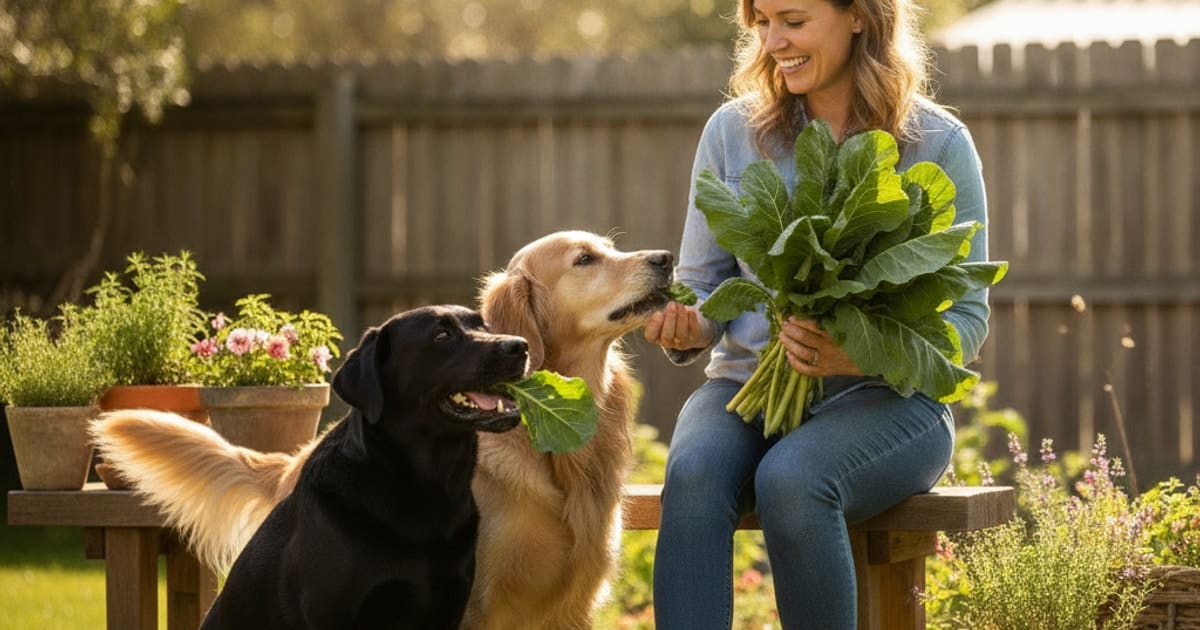
Yes, dogs can eat collard greens, but only plain: washed, cooked soft, chopped fine, and free of onion, garlic, salt, butter, bacon fat and smoked meat. If your dog has already eaten collards cooked the way people usually cook them, with onion or garlic in the pot, call your veterinarian or an animal poison control service such as the ASPCA Animal Poison Control Center or the Pet Poison Helpline now, because those ingredients, not the leaf, are what turn a plate of greens into a problem.
Plain collard greens are not on the toxic list for dogs. Collards are a cruciferous leafy green, botanically the same species as kale, cabbage and broccoli, and the plain cooked leaf is generally considered safe for a healthy dog. The complications come from three directions: what the greens were cooked with, how tough and fibrous the leaf and its central rib are on the way down, and whether your individual dog has a health reason to avoid leafy greens at all. Each of those is worth understanding before you share anything off your plate.
The short answer, and what actually causes trouble
This question arrives in a few shapes, and they all resolve the same way.
Can dogs eat collard green leaves? Yes. The leaf is the edible part and the part you would share, ideally with the thick central rib trimmed away and the leaf cooked until it is soft.
Can my dogs eat collard greens if I have a houseful of different sizes, ages and temperaments? The safety answer is the same for each of them, but texture and preparation matter more for the smaller ones, and any dog with an existing health condition should be cleared with a vet before greens appear in the bowl.
Can small dogs eat collard greens? Yes, under the same rule, with more care about texture. A small dog has a narrower airway and a shorter digestive tract, so a tough strip of raw leaf or a length of stem is more likely to cause trouble there than in a large dog. Cooked until soft and chopped fine solves most of that.
What makes collards awkward as a shared food is not toxicity. It is that collards are almost never cooked plain. The traditional pot involves onion, garlic, smoked meat, vinegar, pepper and salt, and several of those matter a great deal to a dog. Strip all of it away and you are left with a soft, low-calorie green that is mostly water and fiber. Leave any of it in and you have a food that ranges from mildly upsetting to genuinely dangerous.
What is inside a plain collard leaf
Collards are nutritionally dense for how little energy they carry. They supply vitamin A, vitamin C, vitamin K and folate, along with calcium, manganese and a solid load of dietary fiber. They also contain the sulphur-based compounds common to the cabbage family, which is why cooked greens smell the way they do and why they can produce gas in some dogs.
For a dog, almost none of that is essential. A complete, balanced commercial diet already covers vitamins and minerals, and adding green vegetables does not fill a gap that a good bowl of food leaves open. Vegetables mainly function as a low-calorie way to add bulk and moisture to a meal, which is why vets sometimes bring them up with owners managing a dog's weight. That conversation belongs with your veterinarian rather than with guesswork, because displacing part of a balanced diet with vegetables can quietly unbalance the whole thing.
Two items in that profile deserve a flag. Collards are high in vitamin K, which plays a role in blood clotting, so a dog on any medication that affects clotting needs a vet's input before greens become part of the picture. And like other cruciferous vegetables, collards contain goitrogenic compounds, which can interfere with thyroid function. For a healthy dog this is not a practical day-to-day concern. For a dog with thyroid disease, it is a direct question for the vet managing that condition.
Leafy greens also contain oxalates, which bind calcium. Collards are not the highest-oxalate green on the shelf, but for a dog with a history of bladder stones or kidney disease, any addition to a carefully managed diet should be approved first.
Seasonings and cooking methods that turn a safe green into a hazard
Plain is the entire safety margin here: the leaf is not the hazard, the pot it was cooked in usually is.
Onion, garlic, shallots and leeks all belong to the allium family, and all of them are toxic to dogs. They can damage red blood cells, and the effect is not always obvious right away, which is why a dog who has eaten allium-seasoned food needs a call to a veterinarian or a poison control service rather than a wait-and-see approach. Cooking does not neutralise the risk, and rinsing the cooked greens afterwards does not fix it either, because the compounds are dissolved in the liquid the leaves have absorbed.
Here is how the usual preparations compare.
| How the greens are prepared | What is in there | Why it matters for a dog |
|---|---|---|
| Steamed or boiled in plain water, chopped fine | Collard leaf and water only | The straightforward option. Soft texture, nothing added, easy to chew and break down. |
| Raw, whole or torn leaf | Tough cellulose, fibrous central rib | Harder to chew and digest. Can come back up or pass through barely changed, and can gag a small dog. |
| Sauteed in butter, oil or bacon fat | Saturated fat, salt | Rich, fatty food can upset the gut and, in susceptible dogs, contribute to pancreatitis. Any dog with a history of it needs a vet conversation first. |
| Cooked with onion, garlic, shallot or leek | Allium compounds | Toxic to dogs. Call your veterinarian or an animal poison control service. |
| Cooked with ham hock, smoked turkey or bacon | Sodium, cured fat, bone fragments | High salt, high fat, and cooked bone is brittle and sharp. |
| Canned or jarred, pre-seasoned | Sodium, vinegar, spice blends | The seasoning is cooked in. It cannot be rinsed out reliably. |
| Finished with pepper flakes, hot sauce or seasoned salt | Capsaicin, sodium | Mouth and gut irritation, and unnecessary salt. |
If you want to share collards, cook a plain batch in water before anything else goes in the pot. That is the whole method, and it removes almost every risk on that list.
Raw leaves, tough stems, and why texture matters so much
Raw collard leaf is not poisonous, but it is difficult. The leaf is built from tough cellulose, and the central rib running up the middle is tougher still. Dogs do not grind their food the way we do. They tear and swallow, which means a raw leaf frequently goes down in long, stringy strips rather than broken-down fragments.
That creates two practical risks. The first is gagging or coughing at the moment of swallowing, which matters most for small dogs, flat-faced breeds and enthusiastic eaters who inhale rather than chew. The second is that a dense wad of fibrous material can be slow or difficult to move through the gut. A dog who swallows a large chunk of stem or a whole leaf and then starts retching, drooling, or looking uncomfortable needs to be seen, not watched at home.
Steaming or boiling until the leaf is genuinely limp breaks down that structure and makes everything easier. Trim out the thick rib, wash the leaves thoroughly to clear grit and surface residue, cook them in plain water, then chop them fine before they go anywhere near a bowl. Greens from a garden that has been sprayed or treated should stay out of the equation entirely.
One more honest point: some dogs simply do not tolerate cruciferous vegetables well, and gas, loose stool or an still developing stomach can follow even a perfectly plain preparation. Results vary from dog to dog, and a dog who reacts badly once is telling you something useful.
When collards need a vet's input, and when they need a vet visit
Some dogs should not be offered leafy greens without a green light from the vet who knows their history. That includes dogs with kidney disease, dogs with a history of bladder stones, dogs with thyroid disease, dogs with chronic digestive disease or a sensitive stomach, dogs recovering from pancreatitis, and dogs on any medication that affects clotting. Dogs on a prescription therapeutic diet are in the same group, because those diets are formulated precisely and extras can undermine them. If your dog carries any of these health conditions, talk to your vet before adding anything new to the bowl. The same goes for puppies, pregnant dogs and nursing dogs, whose nutritional needs are specific enough that the answer should come from your veterinarian rather than from a general guide.
Some situations are not questions at all. Contact a veterinarian promptly if your dog shows any of the following after eating collards:
- Vomiting that will not settle, or repeated retching that brings nothing up
- A belly that looks swollen or tight, or that your dog flinches away from when touched
- Swallowing a large chunk of stem or a whole leaf followed by gagging, drooling or distress
- Straining to pass stool with nothing produced
- Lethargy, weakness, pale gums, or a dog who is simply not acting like themselves
- Any amount of greens cooked with onion or garlic, regardless of how well the dog seems
With allium exposure in particular, waiting for symptoms is the wrong strategy. Call your veterinarian or an animal poison control service and let them decide whether your dog needs to be seen.
Key Takeaways
- Plain collard greens are not toxic to dogs. Washed, cooked soft, chopped fine and unseasoned is the safe version.
- The seasonings do the damage. Onion and garlic are toxic to dogs, and smoked meat, salt and fat all bring their own problems.
- Raw leaves and thick stems are tough and stringy, and are harder on small dogs than on large ones.
- Collards carry vitamin K, oxalates and goitrogenic compounds, which matter for dogs with clotting, stone or thyroid issues.
- A balanced diet already covers your dog's nutrient needs. Greens are bulk and moisture, not a missing nutrient.
- Vomiting that will not settle, a swollen or painful belly, or a swallowed large chunk means a vet, not a home fix.
Food questions look small until they are not, and your veterinarian is the one who knows your dog's history, current medications and diet well enough to answer them properly. The vet owns the diagnosis and the plan. Everything you put in the bowl works best inside the boundaries that proper veterinary care sets, so bring up new foods at your next appointment, mention anything your dog reacted badly to, and call rather than guess when something is clearly wrong.
For related plain-food questions, see Can Dogs Eat Green Beans?, Can Dogs Eat Carrots?, Can Dogs Eat Pumpkin?, Can Dogs Eat Apples?, Can Dogs Eat Blueberries? and Can Dogs Eat Rice?. If you are unsure whether a reaction is urgent, read Dog Emergency Signs.
Frequently asked questions
- Can dogs eat collards?
- Yes, dogs can eat collards when they are plain. Wash the leaves, trim the thick central rib, cook them in water until soft and chop them fine. No onion, garlic, salt, butter, bacon fat or smoked meat. Dogs with existing health conditions should be cleared by a vet first.
- Can dogs eat collard greens?
- Yes. Collard greens are not toxic to dogs, and the plain cooked leaf is generally considered safe for a healthy dog. The risk sits in the seasonings. Onion and garlic are toxic, and smoked meat, salt and fat all cause their own problems, so share only an unseasoned batch.
- Can dogs eat collard green leaves?
- Yes, the leaf is the part you would share. Trim out the tough central rib, wash the leaf well, cook it until genuinely limp and chop it fine. Raw leaves are not poisonous but are fibrous and stringy, which makes them harder to chew and break down.
- Can my dogs eat collard greens?
- If your dogs are healthy and the greens are plain and cooked soft, yes. In a multi-dog household the safety answer is the same for each dog, but texture matters more for the smaller ones. Any dog with a health condition or on medication should be cleared by your veterinarian.
- Can small dogs eat collard greens?
- Yes, with extra attention to texture. A small dog has a narrower airway and a shorter digestive tract, so tough raw leaf or stem is more likely to cause gagging or a blockage. Cook the greens until soft, remove the stems, and chop everything fine before sharing.
- Are collard greens toxic to dogs?
- No. Plain collard greens are not on the toxic list for dogs. What makes a plate of collards dangerous is usually the cooking: onion, garlic, shallot and leek are toxic to dogs, and ham hock, bacon fat and heavy salt bring separate risks worth avoiding entirely.
- Can dogs eat raw collard greens?
- Raw collard greens are not poisonous, but they are tough and fibrous. Dogs tear rather than grind, so raw leaf often goes down in long strips that are hard to digest and can gag a small dog. Cooking the leaf soft and chopping it fine is the safer route.
- Can dogs eat collard green stems?
- Stems and the thick central rib are best trimmed out and discarded. They are denser and more fibrous than the leaf, which makes them harder to chew and slower to move through the gut. If your dog swallows a large chunk of stem and starts gagging or retching, contact your veterinarian.
- What should I do if my dog ate collards cooked with onion or garlic?
- Call your veterinarian or an animal poison control service such as the ASPCA Animal Poison Control Center or the Pet Poison Helpline right away. Onion and garlic can damage red blood cells, and signs are not always immediate, so this is not a situation to watch at home.
- Can dogs eat canned or pre-seasoned collard greens?
- No. Canned and jarred collards are usually high in sodium and prepared with seasonings, vinegar or allium ingredients cooked right into the liquid. Rinsing does not remove them reliably. If you want to share collards, cook a plain batch in water before anything else goes into the pot.
Educational content, not veterinary advice. Ask your vet about your dog.