Can Dogs Eat Quinoa? (Plain, Cooked and Safely Prepared)
Yes, dogs can eat quinoa when it is plain, cooked and rinsed, with no salt, butter, onion or garlic added. Quinoa is a seed rather than a true grain, and its natural saponin coating is the main reason preparation matters. Dogs with sensitive stomachs may still react.
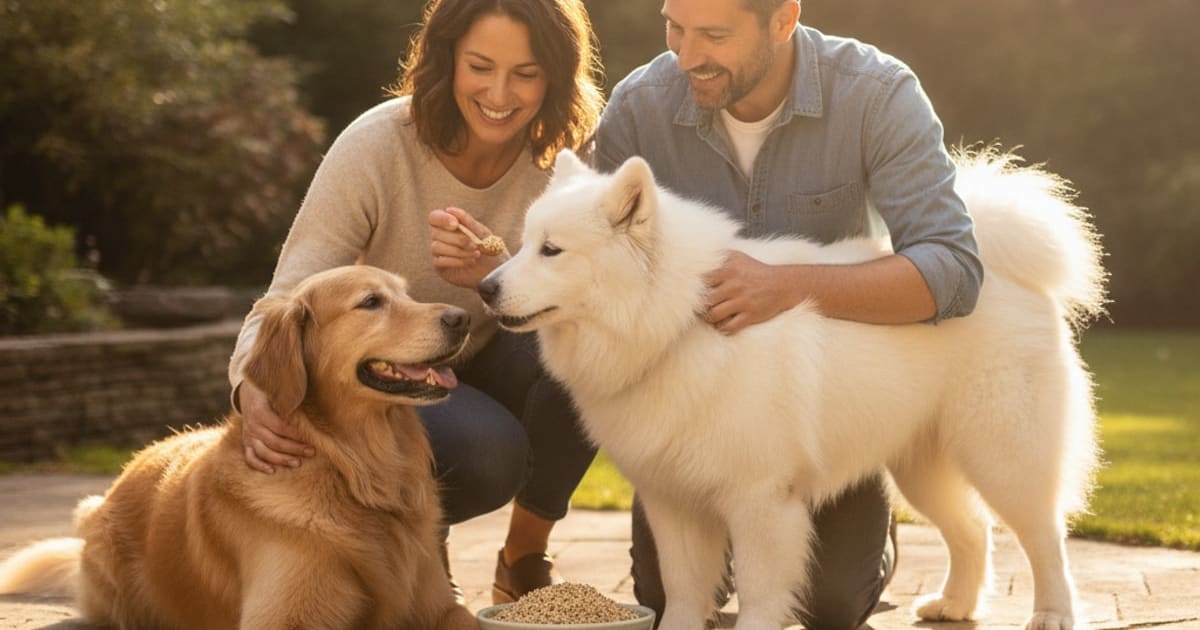
Yes. Plain, cooked, rinsed quinoa with nothing added to it is generally considered safe for most healthy dogs, and it already appears as a carbohydrate source in a number of prepared dog foods. If your dog has eaten quinoa that was cooked with onion, garlic or heavy seasoning, or is vomiting, drooling heavily or holding a tense, painful belly, call your veterinarian or an animal poison control service such as the ASPCA Animal Poison Control Center or the Pet Poison Helpline right away.
Everything else about quinoa comes down to two things: how it was prepared, and which dog is eating it. Both are worth understanding before you scrape the leftovers into a bowl.
Quinoa is a seed, not a true grain
Quinoa is often shelved and cooked like a grain, but botanically it is the seed of a flowering plant related to spinach, chard and beets. Nutritionists call foods like this pseudocereals: they behave like grains in the kitchen while coming from a completely different plant family.
That distinction answers a question people ask in several different ways. The little round pieces in the pot are the seeds, so eating quinoa and eating quinoa seeds are the same thing. Whole grain quinoa, white quinoa, red quinoa, black quinoa and tricolour blends are all the same seed in different cultivars, and none of them carries a safety advantage over another for a dog. Colour mostly changes texture and cooking time.
Because quinoa is not a cereal grain, it sometimes turns up in foods marketed as grain free. If the grain content of your dog's food is something you are weighing up, that is a conversation to have with your veterinarian rather than a decision to make from a package front.
Saponins, rinsing and why raw quinoa is a bad idea
Quinoa seeds are coated in saponins, naturally bitter compounds the plant produces to discourage insects and birds from eating it. Saponins taste soapy, which is why uncooked quinoa is unpleasant, and in sensitive animals they can irritate the lining of the digestive tract. Most quinoa sold for people is pre-rinsed, but rinsing again under cold running water until the water stops foaming removes more of the coating.
Cooking matters just as much. Raw quinoa is hard, dry and poorly digestible for a dog, and a mouthful of it is far more likely to cause gas, loose stool or vomiting than the same seed properly simmered. Cooked quinoa is soft, hydrated and much gentler on the gut.
Plain, cooked, thoroughly rinsed quinoa with nothing added is the only form of quinoa that belongs in a dog's bowl.
| Form of quinoa | Generally suitable for dogs? | What to watch for |
|---|---|---|
| Plain, rinsed, fully cooked | Yes, for most healthy dogs | Nothing added: no salt, oil, butter or stock |
| Raw or uncooked seeds | No | Hard and bitter, saponin coating intact, poorly digested |
| Quinoa salad or pilaf | No | Onion, garlic, dressings, raisins, nuts, sweeteners |
| Quinoa flour or flakes inside a prepared dog food | Yes, as formulated | Feed the food as it was made and discuss diet changes with your vet |
| Sprouted quinoa | Ask your vet first | Sprouts can carry bacteria; cooking is the safer route |
| Quinoa simmered in broth or stock | No | Stocks commonly contain onion, garlic and a lot of salt |
What quinoa actually brings nutritionally
Quinoa is unusual among plant foods in that it supplies all of the essential amino acids, which is why it gets described as a complete plant protein. It also contributes fibre, magnesium, manganese, phosphorus, iron, folate and several B vitamins, along with a modest amount of plant fat.
That sounds impressive, and it is a genuinely useful ingredient in a formulated food. It is worth keeping perspective, though. Dogs meet their protein needs mainly through animal sources, which are more digestible for them than plant protein, so quinoa in a home kitchen functions as a carbohydrate and fibre contributor rather than a protein upgrade. A complete, balanced food is already doing the heavy lifting.
The fibre is a double edged thing as well. For some dogs it helps stool quality. For others, especially those unused to plant fibre, it produces gas and soft stool within a day. Results vary from dog to dog, and a food that suits one dog in a household can unsettle the one sleeping next to it.
Dogs who should skip quinoa until a vet weighs in
Quinoa is not toxic to dogs, so the honest answer to whether it is bad for them is no, not inherently. It is simply not right for every dog.
Talk to your vet before offering quinoa if your dog:
- has a history of pancreatitis or any fat sensitive condition, since quinoa is rarely cooked plain in human kitchens
- has a sensitive stomach, inflammatory bowel disease or a long record of diet related upsets
- is on a prescription or elimination diet, where any new ingredient undermines the point of the diet
- has kidney disease or a history of calcium oxalate bladder stones, because quinoa contains both phosphorus and oxalates
- has diabetes or any condition where carbohydrate intake is being managed deliberately
- is a puppy, pregnant or nursing, where nutrient balance is tightly tuned and extras can throw it off
- has known food allergies or reacts to new foods with itching, ear trouble or digestive upset
None of those are reasons to panic if your dog once licked a bowl clean. They are reasons to ask before making quinoa a feature of the menu.
Seasonings and mix-ins turn a safe food into a problem
The quinoa itself is almost never the issue. What goes in the pan with it usually is, and some of those additions are genuinely dangerous. If your dog has eaten seasoned quinoa and you are unsure what was in it, call your veterinarian or an animal poison control service before you wait and watch.
Onion, garlic, shallots, chives and leeks are all alliums, and all of them can damage a dog's red blood cells. They are everyday ingredients in pilafs, stuffings, tabbouleh and anything cooked in stock, which is exactly why leftovers are riskier than they look. Raisins and grapes, which appear in plenty of quinoa salads, can cause kidney injury in dogs. Sugar free dressings and sauces may contain xylitol, which is dangerous even in small amounts. Chocolate and macadamia nuts turn up in quinoa based baked goods and breakfast bowls.
Beyond the outright hazards, there is the ordinary stuff: salt, butter, oil, cheese, chilli, curry pastes and vinaigrettes. None of those belong in a dog's digestive system, and a rich mouthful can set off vomiting or diarrhoea in a dog who would have been perfectly fine with the plain version. Mouldy quinoa left in the fridge is another one to bin rather than repurpose, since moulds can produce toxins that affect the nervous system.
Quinoa in homemade dog food
Quinoa is a reasonable ingredient in a home prepared diet, and it shows up in plenty of home cooking recipes as the starch component. The catch is that homemade diets go wrong far more easily than people expect, usually not because of a dangerous ingredient but because of quiet imbalances in calcium, phosphorus, trace minerals and vitamins that only show up months later.
If you want quinoa in your dog's food, the right route is a recipe built or reviewed by a board certified veterinary nutritionist for your specific dog, taking into account age, body condition and any medical history. Your veterinarian can refer you, and many nutritionists consult remotely through your vet. Swapping quinoa in for rice or another starch in an existing recipe changes the nutrient profile, so it is not a like for like substitution even though it looks like one in the pot.
For dogs on a complete commercial food, quinoa works best as a small plain addition rather than a replacement for part of the meal. The food has been balanced as a whole, and the more of it you displace, the more of that balance you give up.
When digestive upset becomes a reason to call
Most dogs who eat a little plain quinoa are completely fine. Some get gassy or pass a soft stool, which usually settles. The signs that need a veterinarian rather than observation are different in kind, not just degree.
Call your vet, or an emergency clinic outside normal hours, if you see vomiting that will not settle, repeated retching with nothing coming up, a belly that looks swollen or is painful when touched, weakness or collapse, pale gums, or blood in vomit or stool. The same applies if your dog swallowed a large piece of packaging, foil, plastic wrap or a food container along with the food, since that can cause an obstruction regardless of what was inside it.
Bring details with you when you call: what was in the dish, how much time has passed and whether your dog has any ongoing conditions. That information shapes what happens next far more than the quinoa does.
Key Takeaways
- Dogs can eat quinoa when it is plain, cooked and rinsed, with no salt, fat or seasoning added.
- Quinoa is a seed rather than a cereal grain; whole grain, white, red and black varieties are all the same food for a dog.
- The saponin coating on raw seeds is bitter and can irritate the gut, so rinsing well and cooking fully both matter.
- Quinoa supplies complete plant protein, fibre and minerals, but dogs get protein more efficiently from animal sources.
- Seasoned quinoa dishes are the real hazard: onion, garlic, raisins, xylitol, chocolate and rich fats are all common additions.
- Dogs with pancreatitis, kidney disease, oxalate stones, diabetes, food allergies or a prescription diet should not have quinoa without veterinary input.
- Quinoa belongs in homemade food only inside a recipe formulated or reviewed by a veterinary nutritionist.
Your veterinarian owns the diagnosis and the plan. They know your dog's history, current conditions and medications, and they are the right person to tell you whether a new food fits into that picture or quietly works against it. Food changes are easy to make and surprisingly easy to get wrong, so run them past the person who already has the full chart in front of them.
Related reading: When to call the emergency vet, Can dogs eat rice?, Can dogs eat pumpkin?, Can dogs eat green beans?, Can dogs eat carrots?, Can dogs eat apples?, Can dogs eat blueberries?, and the conditions library for background on the health problems that change what a dog should be eating.
Frequently asked questions
- Can dogs eat quinoa?
- Yes. Plain, rinsed, fully cooked quinoa with nothing added is generally safe for most healthy dogs, and it appears as an ingredient in some prepared dog foods. Problems come from seasonings, fats and mix-ins rather than the seed itself. Dogs with existing medical conditions should get veterinary clearance first.
- Is quinoa safe for dogs?
- Quinoa is safe for most healthy dogs when it is rinsed, cooked thoroughly and served plain. It is not toxic. Safety drops sharply once onion, garlic, stock, salt, butter or dressings are involved, since those ingredients cause the trouble. Talk to your vet before adding it to any medical diet.
- Is quinoa bad for dogs?
- No, quinoa is not inherently bad for dogs, though it is not right for every dog. The saponin coating on unrinsed seeds can irritate sensitive stomachs, and the fibre can cause gas or loose stool. Dogs with pancreatitis, kidney disease or oxalate stones need veterinary advice first.
- Can dogs eat quinoa seeds?
- Yes, because quinoa seeds and quinoa are the same thing. The small round pieces you cook are the seeds of the plant. They need rinsing to remove the bitter saponin coating and full cooking to soften them. Raw seeds are hard, bitter and poorly digested, so skip them.
- Can dogs eat quinoa safely?
- Yes, if you control the preparation. Rinse the seeds until the water stops foaming, cook them fully in water alone, and add no salt, oil, butter, stock or seasoning. Let it cool before offering it. Results vary from dog to dog, so watch for gas or soft stool afterwards.
- Can dogs eat whole grain quinoa?
- Yes. Whole grain quinoa is simply the intact seed, which is how quinoa is normally sold and cooked. White, red, black and tricolour varieties are all the same food nutritionally for a dog, differing mainly in texture and cooking time. All of them should be rinsed and cooked plain.
- Can dogs eat plain quinoa?
- Plain quinoa is the only version worth giving a dog. Plain means cooked in water with nothing else: no salt, butter, oil, broth, garlic, onion or sauce. Seasoned leftovers are where the real hazards hide, and a dish that looks simple may still have been cooked in stock.
- Can dogs have quinoa in homemade dog food?
- Yes, but only within a recipe formulated or reviewed by a board certified veterinary nutritionist for your individual dog. Homemade diets most often fail on calcium, phosphorus and trace mineral balance rather than on a single ingredient. Swapping quinoa for rice in an existing recipe changes that balance.
- Can dogs eat raw or uncooked quinoa?
- No. Uncooked quinoa is hard, bitter and difficult for dogs to digest, and its saponin coating can irritate the digestive tract. A mouthful is more likely to cause gas, vomiting or loose stool than cooked quinoa. If your dog raids the pantry and seems unwell afterwards, call your vet.
- Does quinoa need to be rinsed before cooking it for a dog?
- Yes, rinsing is worth doing even with pre-rinsed packets. Run the seeds under cold water until the foaming stops, which removes more of the bitter saponin coating that can irritate a sensitive gut. Then cook them fully in plain water, with no stock, salt or fat added.
Educational content, not veterinary advice. Ask your vet about your dog.