Can Dogs Eat Salami and Pepperoni? Cured Meat Risks
No. Salami and pepperoni are not safe choices for dogs, because both are cured meats loaded with salt, fat and seasonings such as garlic and onion powder. A single stolen bite is not usually a crisis, but larger quantities can trigger vomiting, dehydration or pancreatitis. Call your vet if symptoms appear.
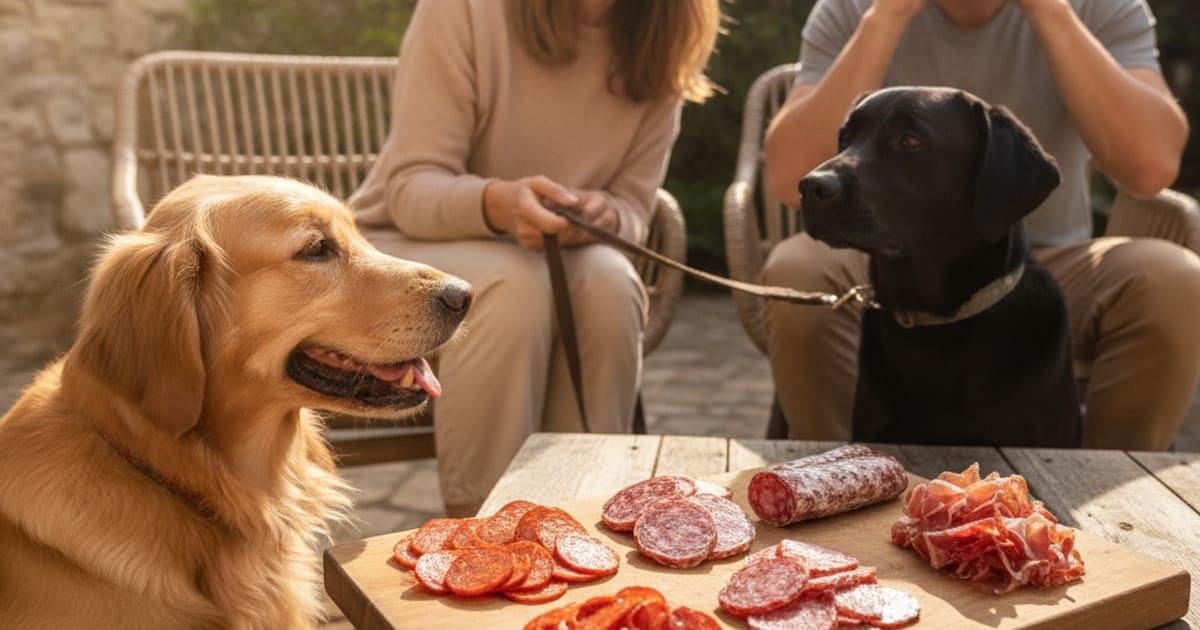
Dogs should not eat salami or pepperoni, and neither one belongs on the list of human foods worth sharing. If your dog has swallowed a large quantity of either, or any cured meat seasoned with garlic or onion powder, call your veterinarian or an animal poison control service such as the ASPCA Animal Poison Control Center or the Pet Poison Helpline straight away, because garlic and onion belong to the allium family and are toxic to dogs. Salami and pepperoni are both cured, fermented sausages built on three things a dog's body handles poorly: concentrated salt, concentrated fat and heavy seasoning. A crumb that falls off a pizza will not usually send a healthy adult dog into crisis, but these are not foods to offer on purpose. The answer is the same however the question is phrased: can dogs eat salami and pepperoni, can dogs eat salami or pepperoni, can dogs have salami or pepperoni. No.
What is actually inside a cured sausage
Salami and pepperoni start life the same way. Ground meat and fat are blended with curing salts, seasoned, packed into a casing and then fermented, dried or smoked until the product is shelf stable. Every one of those steps concentrates exactly the components a dog's digestive system struggles with.
Salt. Curing works by pulling water out of the meat so bacteria cannot thrive, which means the finished sausage is intensely salty by design. A mouthful delivers far more sodium than a dog's body is built to absorb at once. Mild overload tends to look like raging thirst and a dog hovering at the water bowl. Larger loads can bring vomiting, diarrhoea, lethargy, wobbliness on the feet and, in serious cases, tremors. Dogs already being managed for heart or kidney problems sit in the highest risk group, because sodium control is often the single thing those care plans work hardest to maintain.
Fat. Cured sausage is rich in rendered pork or beef fat, and a sudden hit of fat is one of the recognised triggers for pancreatitis in dogs. An inflamed pancreas is painful and genuinely serious. The picture to watch for is repeated vomiting, refusal of food, a tender or swollen belly, restlessness, and a stretched posture with the chest down and the hindquarters raised. That combination is a same-day veterinary visit, not something to manage at home.
Garlic and onion. Garlic powder and onion powder are standard in a great many salami recipes, and chorizo in particular can be garlic heavy. Alliums damage canine red blood cells, and the effect can be delayed by a day or more rather than showing up immediately. Pale gums, unusual tiredness, rapid breathing or dark-coloured urine after a dog has eaten cured meat all warrant a call. Because this is a toxic ingredient rather than simply a rich one, a meaningful quantity is a reason to contact your veterinarian or an animal poison control service rather than wait and see.
Spice and heat. Pepperoni carries paprika, chilli and often cayenne. Capsaicin, the compound behind the heat, irritates the mouth, stomach and intestinal lining, and frequently shows up as drooling, lip smacking, retching or loose stool within hours.
Curing agents, smoke and casings. Cured meats also carry nitrites and smoke compounds that serve no purpose in a dog's bowl. On top of that, some salami is sold with a white mould-ripened rind, tied with string, or wrapped in a casing that is not meant to be eaten. Swallowed whole, a casing, a rind or a knotted length of string can choke a dog or lodge in the gut.
How the cured meats compare side by side
Owners rarely ask about one meat in isolation. The real question is usually which of the things on the board is worse than the others. Here is how they stack up.
| Cured meat | What drives the risk | Level of concern |
|---|---|---|
| Salami | Very high salt and fat, garlic and onion powder common, sometimes a mould-ripened rind or inedible casing | High |
| Pepperoni | The same salt and fat load as salami, plus paprika, chilli and cayenne that irritate the stomach and gut | High |
| Chorizo | Heavy chilli and paprika heat, garlic throughout, very high fat | High |
| Prosciutto | Dry-cured and uncooked, with salt doing all the preserving work, so the sodium load is intense | High |
| Ham | Salty and rich, often glazed with sugar or honey, sometimes smoked, and bone-in cuts add a splintering hazard | Moderate to high |
| Bacon | Very high fat and salt, usually cooked in its own grease | Moderate to high |
| Bologna and hot dogs | Emulsified fat, curing salts, and garlic or onion powder in most recipes | Moderate to high |
| Plain cooked lean meat, unseasoned | Nothing added: no cure, no salt, no spice, no allium | Low |
So can dogs eat salami and ham, or ham or salami? Ham is marginally less concentrated than salami because it is a whole cooked muscle rather than a dried, fermented sausage, but it is still a salt-cured product and often sugar-glazed, so neither is a sensible choice. Can dogs eat salami or prosciutto? Prosciutto is dry-cured and never cooked, which makes it one of the saltiest items on the board, and raw dry-cured pork brings its own hygiene questions. Can dogs have salami and chorizo? Chorizo adds serious chilli heat and garlic to an already fatty sausage, which is why it tends to produce the fastest digestive upset of the group.
No cured meat is a good choice for a dog, and the differences between salami, pepperoni, ham, prosciutto and chorizo are differences of degree, not of kind.
Warning signs after a dog raids the charcuterie board
Tolerance is not uniform, and results vary from dog to dog. Size matters, so does age, so does whether the dog is already being managed for a health problem, and so does how much went down. A large, robust dog that licked a wrapper is in a very different position from a small dog that cleared a plate.
In the hours after a dog eats cured meat, watch for heavy thirst and increased urination, vomiting, diarrhoea, drooling, loss of appetite, a bloated or tender abdomen, panting, pacing or unusual stillness. Over the following day or two, keep an eye out for pale gums, weakness or dark urine, which point towards the allium side of the problem rather than the salt and fat side.
Some situations are not watch-and-wait. Go to a veterinarian if vomiting will not settle, if the belly looks swollen or feels painful to a gentle touch, if your dog is unsteady, tremoring or collapses, if gums look pale or grey, or if your dog has swallowed string, a casing or a large chunk of sausage whole. Dogs already living with heart disease, kidney disease, a history of pancreatitis or any condition that requires a carefully controlled diet should be assessed early rather than late, and you can read more about the full set of red flags in our guide to dog emergency signs. If you are unsure whether your dog's situation is urgent, that is exactly the moment to talk to your vet rather than search for reassurance. Background reading on the conditions that make dietary slip-ups riskier is useful, but it is no substitute for a professional assessment of the dog in front of you.
When you call, have the details ready: which meat, roughly how much relative to your dog's size, whether garlic or onion appears on the label, whether any casing or string went down, and the time it happened. That information shapes the advice you get.
What to hand your dog instead
The appeal of salami and pepperoni is simple. They are salty, fatty and intensely aromatic, which is precisely why dogs beg for them. The good news is that the appeal can be met with far gentler foods.
Plain cooked lean meat with no salt, no cure, no rub and no sauce gives a dog the protein and the smell without the sodium and spice. Crunchy raw vegetables suit dogs that enjoy texture. Plain fruit with pips, stones and seeds removed suits dogs with a sweeter preference. Plain cooked grains and plain cooked pumpkin are often suggested for dogs with sensitive digestion.
Any new food is worth clearing first, particularly if your dog is on a prescription diet, is managing a long-term condition or has had digestive trouble before. A quick conversation at your next appointment settles it, and your veterinary team can tell you which additions make sense for your individual dog.
Key Takeaways
- Salami and pepperoni are not safe choices for dogs. Both concentrate salt, fat and seasoning, and salami recipes commonly include garlic or onion powder.
- Pepperoni and chorizo add chilli and paprika heat, which irritates the stomach and gut lining on top of everything else.
- Prosciutto is dry-cured and uncooked, making salt its dominant risk. Ham is cooked but still salt-cured and often sugar-glazed.
- A sudden load of fat is a recognised pancreatitis trigger, and the warning picture includes repeated vomiting, appetite loss and a painful, hunched posture.
- Allium effects can be delayed, so pale gums, weakness or dark urine in the day or two afterwards deserve a call.
- Casings, rinds and string carry choking and obstruction risk independent of what the meat itself contains.
- Vomiting that will not settle, a swollen or painful belly, or a swallowed large chunk means a veterinary visit now.
Where your veterinarian fits in
Your veterinarian owns the diagnosis and the plan. They are the one who can examine your dog's abdomen, check hydration and gum colour, run bloodwork if the picture warrants it, and decide whether what happened is a passing upset or something that needs intervention. Food questions, diet changes and anything you add to the bowl sit downstream of that relationship, not alongside it. If your dog has an ongoing condition, or if you simply want to know where the line is for your particular dog, bring it up at the next appointment and let the plan come from someone who knows the whole history.
Related reading: Can Dogs Eat Apples?, Can Dogs Eat Carrots?, Can Dogs Eat Blueberries?, Can Dogs Eat Green Beans?, Can Dogs Eat Pumpkin?, Can Dogs Eat Rice?.
Frequently asked questions
- Can dogs eat salami and pepperoni?
- No. Neither salami nor pepperoni is a safe choice for dogs. Both are cured sausages built on concentrated salt and fat, and salami recipes commonly include garlic or onion powder, which are toxic to dogs. If your dog has eaten either, watch for vomiting and call your vet.
- Can dogs eat pepperoni and salami?
- No. Pepperoni and salami share the same core problems: a heavy sodium load from curing, a rich fat content that can trigger pancreatitis, and seasoning blends that often contain alliums. Pepperoni also brings chilli and paprika heat, which irritates the stomach lining and frequently causes drooling or loose stool.
- Can dogs eat salami or pepperoni?
- No, and there is no meaningful winner between them. Both are dried, fermented sausages preserved with salt, so sodium is high in either case. If you are choosing between them for your dog, the right choice is neither. Plain cooked unseasoned meat gives the same appeal without the risk.
- Can dogs eat pepperoni or salami?
- No. If your dog has already stolen some, the quantity matters more than which one it was. A crumb from a healthy adult dog's point of view rarely causes a crisis, but a plateful can bring heavy thirst, vomiting and abdominal pain. Call your vet if symptoms appear.
- Can dogs have salami or pepperoni?
- No. Dogs managing heart disease, kidney disease, pancreatitis or any salt-restricted condition are at particular risk, because cured meat delivers a sodium and fat load their care plan is designed to avoid. For those dogs, even a small amount is worth mentioning to your veterinary team.
- Can dogs eat salami pepperoni?
- No. Salami pepperoni pizza toppings combine cured sausage with cheese, salt and sometimes garlic or onion in the sauce, which compounds the problem rather than diluting it. Keep pizza out of reach and contact your veterinarian if your dog has eaten a sizeable portion of it.
- Can dogs eat salami and ham?
- Neither is recommended. Ham is a cooked whole muscle rather than a fermented sausage, which makes it slightly less concentrated, but it is still salt-cured and often glazed with sugar or honey. Bone-in ham adds a splintering hazard. Salami carries the extra concern of garlic and onion powder.
- Can dogs eat salami or prosciutto?
- No. Prosciutto is dry-cured and never cooked, so salt does all the preserving work, making it one of the saltiest cured meats available. Salami adds fat, fermentation and allium seasoning. Both can leave a dog intensely thirsty, and both are best kept off the floor entirely.
- Can dogs have salami and chorizo?
- No. Chorizo is the harsher of the two for most dogs, because heavy chilli and paprika sit on top of a high fat content and a strong garlic presence. Digestive upset often appears quickly. Contact your veterinarian or an animal poison control service if a meaningful amount was eaten.
Educational content, not veterinary advice. Ask your vet about your dog.