Can Dogs Eat Tamarind Seeds? Risks, Shells and Look-Alikes
No, dogs should not eat tamarind seeds. The hard seed is usually swallowed whole and poses a choking and intestinal blockage risk, and no part of the tamarind pod is an established safe food for dogs. If your dog has eaten one, call your vet.
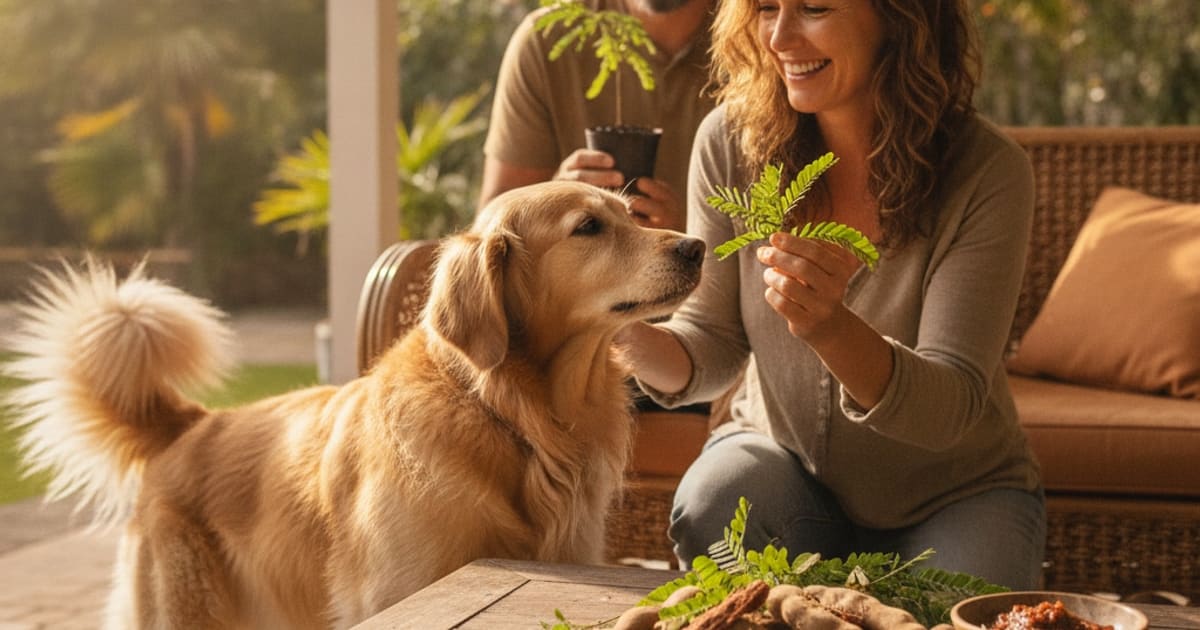
If your dog ate tamarind, tamarind candy or tamarind paste, call your vet or a pet poison line now, such as the ASPCA Animal Poison Control Center or the Pet Poison Helpline. Make that call before you finish reading, because the decisions that matter here depend on your dog's size and on exactly what went down: a hard seed swallowed by a small dog is a very different situation from a lick of sauce off a plate by a large one.
The short answer to the question that brought you here is no. Dogs should not eat tamarind seeds. The seed is hard, smooth and almost always swallowed whole rather than chewed, which makes it a choking and intestinal blockage hazard. The same answer applies to the rest of the pod: tamarind shells are brittle and splinter, tamarind leaves are not an established safe food for dogs, and the two plants sold under the tamarind name that confuse owners the most, manila tamarind and river tamarind, are not true tamarind at all and should be kept away from dogs entirely.
No part of the tamarind plant, pod, shell, seed, pulp or leaf, is an established safe food for dogs, and the hard seed is the part most likely to turn into an emergency.
Why the seed and the pod are a mechanical problem first
Before anything chemical, tamarind is a physical hazard. A tamarind seed is dense, rounded and slick with pulp. Dogs that find one in a yard, a fruit bowl or a block of pressed concentrate tend to gulp rather than grind, and a smooth object that will not break down is exactly the shape that lodges somewhere it should not.
The places it can stick are the throat, the stomach outflow and the small intestine. A seed that passes through uneventfully is a real possibility, and that is part of why your vet will want to know your dog's size relative to the object before deciding anything. Results vary from dog to dog, and a seed that is irrelevant to a large retriever can be a surgical problem for a small terrier.
The dry pod shell adds its own problem. It is thin, hard and brittle, and it breaks into sharp fragments rather than crumbling. Under the shell sit tough fibrous strands that run the length of the pod. Neither digests. Both can scratch the gut lining on the way through or knot together with other material.
There is also a dental angle. Hard seeds and dried pods are the kind of object that cracks a slab of tooth enamel, particularly on the big chewing teeth at the back. A fractured tooth is not always obvious from the outside, and dogs are good at hiding it.
Blockage signs are not always immediate. Repeated vomiting, retching that produces nothing, a tense or painful belly, straining with no stool, a hunched posture, refusing food and going flat can all appear hours or even days after the seed went down.
What is in tamarind pulp, and why it is not a safe food for dogs
Tamarind pulp is unusual among fruits. It is extremely sour and extremely sweet at the same time, carrying a heavy sugar load alongside one of the highest concentrations of tartaric acid and its potassium salt found in any common food.
That acidity is the practical reason dogs often react badly to even a small taste. Sour, acidic, sugary and fibrous food arriving in a stomach that is not used to it tends to produce drooling, lip smacking, vomiting or loose stool. Tamarind also has a long history of use as a laxative in people, which tells you something about what it does to a digestive tract.
There is a second reason for caution that is worth stating plainly and honestly. Tartaric acid has been raised within veterinary toxicology as a suspected agent behind grape and raisin poisoning in dogs. Whether tamarind carries the same risk is not something veterinary sources specify, and no safe amount of tamarind has been established for dogs. That uncertainty is not a reason to relax. It is the reason the cautious position is to keep tamarind out of reach entirely and to phone rather than wait if your dog gets into it.
For dogs with a history of pancreatitis, weight problems or a sensitive stomach, a sugary acidic food is a poor idea on its own terms. Talk to your vet about what is appropriate for your individual dog rather than assuming a human fruit is neutral territory.
Tamarind candy, paste and sauce add problems of their own
Most dogs do not meet tamarind as a raw pod. They meet it as candy, as a pressed block of concentrate, as a chutney or as a sauce, and every one of those forms stacks extra risk on top of the fruit.
Candies and sweetened pastes pile on sugar and salt. Many are coated or filled with chili, which irritates the mouth, throat and gut. Sugar-free sweets are a separate hazard entirely, because some are sweetened with xylitol, which is dangerous to dogs. Wrappers, foil, plastic candy cups and the little spoons that come with tamarind sweets get swallowed along with the contents more often than owners expect.
Some imported tamarind candies have also drawn public health warnings over lead contamination in the sweet or its packaging, which is another reason these are not a food to share with an animal.
Sauces and chutneys bring a different issue. Tamarind is a base ingredient in a great many cooked sauces, and a large share of those recipes are built on onion and garlic, both of which are harmful to dogs. If your dog cleaned a plate of sauce, the tamarind may not even be the part your vet is most interested in. Describe the whole dish when you call.
Pressed tamarind blocks deserve a specific mention. They look like a chewable, they smell strongly of fruit, and they usually still contain seeds and fibre inside the sticky mass. Dogs raid them off counters, and they swallow the seeds with the paste.
Leaves, bark and fallen pods from the tamarind tree
People do cook with young tamarind leaves in several cuisines, and that is probably why the question comes up. For dogs the answer is still no. Tamarind leaves are sour and acidic, they are not an established safe food for dogs, and leaves picked from a garden or street tree may also carry pesticide, herbicide or fertiliser residue.
If you have a tamarind tree in the yard, the leaves are the smallest part of the problem. Windfall pods are the real hazard, because a scavenging dog will crunch a dry pod and swallow shell fragments and a seed in one motion. Clearing fallen pods is more useful than trying to supervise every sniff.
Bark and sticks are worth a thought too. Dogs that strip bark or chew branches can take in splinters, and a dog that has decided a particular tree is a chew toy will keep going back to it. Fencing the trunk is simpler than correcting the behaviour.
Plants sold as tamarind that are not actually tamarind
Several unrelated plants carry tamarind in their common name, which is how an owner ends up searching for one thing and reading about another. Identifying the plant correctly matters, because the concerns differ.
| Plant | What it actually is | Why it is not for dogs |
|---|---|---|
| True tamarind (Tamarindus indica) | Legume tree with sour brown pod pulp | Hard seeds, brittle shells, fibrous strands, very acidic sugary pulp, no safe amount established for dogs |
| Manila tamarind (Pithecellobium dulce), also called madras thorn or guamuchil | A separate legume, not true tamarind | Pods contain hard seeds, branches carry sharp thorns, and its safety for dogs is not well characterised |
| River tamarind (Leucaena leucocephala), also called white leadtree | A fast-spreading legume, not true tamarind | Contains mimosine, an amino acid known to cause hair loss and other problems in animals that graze on it |
| Velvet tamarind (Dialium species) | An unrelated tropical fruit sold under the tamarind name | Hard outer shell and a stone inside, so the same choking and obstruction concerns apply |
River tamarind is the one to take most seriously as a plant rather than as a food. It grows aggressively along roadsides and waterways in warm climates, it drops large quantities of seed pods, and mimosine is a genuine concern in animals that eat it. Dogs are not grazers, but dogs do chew pods and lie in leaf litter.
If your dog has chewed something you cannot confidently name, photograph the leaves, the pod and the whole plant, and bring the images or a sample with you. An accurate identification changes what your vet looks for.
Signs that mean you stop reading and go in
Call your vet or an emergency clinic now if you see repeated vomiting, retching that brings nothing up, a swollen or tense abdomen, straining with no stool, dark or tarry stool, drooling, tremors, weakness, pale gums, collapse, or a clear change in how much your dog is drinking or urinating.
What happens next belongs to your vet. Depending on what was eaten, how long ago and your dog's size, that may mean an examination, blood work, imaging to look for an obstruction, fluids, or admission for observation. Do not attempt a home remedy and do not try to make your dog bring the object back up on your own, because the wrong move with a hard object can cause more harm than the object itself.
Key Takeaways
- Tamarind seeds are not safe for dogs: they are hard, swallowed whole and a choking, blockage and tooth-fracture risk.
- Tamarind shells splinter and the fibrous strands under them do not digest, so pods are a hazard in their own right.
- Tamarind pulp is heavily acidic and sugary, and no safe amount has been established for dogs.
- Candy, paste and sauce add sugar, salt, chili, possible xylitol, packaging and often onion and garlic.
- Tamarind leaves are not an established safe food for dogs, and fallen pods in the yard are the bigger hazard.
- Manila tamarind and river tamarind are different plants entirely, and river tamarind contains mimosine.
- Blockage signs can appear hours or days later, so a call on day one is worth making.
If hard seeds and shells are a recurring theme in your dog's scavenging, the same mechanical logic shows up elsewhere, and Can Dogs Eat Sunflower Seeds Without the Shell walks through it. For a wider view of the symptoms worth acting on quickly, see Dog Emergency Signs and the broader conditions library. Your veterinarian owns the diagnosis and the plan here, and nothing you read online replaces an examination of the dog in front of them. Phone early, describe exactly what was eaten, and let the clinic decide what the next step is.
Frequently asked questions
- Can dogs eat tamarind seeds?
- No. Tamarind seeds are hard, smooth and usually swallowed whole, which makes them a choking and intestinal blockage hazard, and they can also crack a tooth. There is no established safe amount of tamarind for dogs. If your dog swallowed one, call your vet or a pet poison line.
- Can dogs eat tamarind shells?
- No. The dried pod shell is brittle and breaks into sharp fragments, and the tough fibrous strands underneath it do not digest. Shell pieces are an irritation and obstruction risk rather than a food. Call your vet if your dog has eaten pods, shells or a whole tamarind fruit.
- Can dogs eat tamarind leaves?
- No. Tamarind leaves are not an established safe food for dogs. They are sour and acidic and can upset the stomach, and leaves from a garden or street tree may also carry pesticide or fertiliser residue. If your dog has been chewing the tree, talk to your vet.
- Can dogs eat manila tamarind?
- No. Manila tamarind, Pithecellobium dulce, is a separate legume and not true tamarind at all. Its safety for dogs is not well characterised, the pods hold hard seeds, and the branches carry sharp thorns. Keep dogs away from the tree and call your vet after any ingestion.
- Can dogs eat river tamarind?
- No. River tamarind, Leucaena leucocephala, also called white leadtree, is not a tamarind. It contains mimosine, an amino acid known to cause hair loss and other problems in animals that graze on it. Dogs should not chew its pods, seeds or foliage. Call your vet if they do.
- What should I do if my dog swallowed a tamarind seed?
- Call your vet or a pet poison line straight away and describe your dog's size, the amount involved and when it happened. Do not attempt a home remedy. Your vet decides whether to monitor or examine, and may suggest imaging to check whether the seed is moving through.
- Is tamarind candy or tamarind paste safe for dogs?
- No. Candy and paste add sugar, salt and chili to an already acidic food, sugar-free versions may contain xylitol, and wrappers or plastic cups are often swallowed with the contents. Pressed blocks usually still hold seeds. Call your vet or a pet poison line after any ingestion.
- Are fallen tamarind pods in the yard a hazard?
- Yes, and they are worth clearing. Windfall pods hold hard seeds inside brittle shells, and a scavenging dog tends to crunch and swallow them in one motion. Pick up fallen pods, fence the trunk if your dog chews bark, and call your vet if something is already gone.
- Which signs after tamarind ingestion mean emergency care?
- Repeated vomiting, retching that brings nothing up, a tense or swollen belly, straining with no stool, dark stool, drooling, tremors, weakness, pale gums or a clear change in drinking or urinating all mean emergency care now. Blockage signs can appear hours or days after swallowing.
Educational content, not veterinary advice. Ask your vet about your dog.