Can Partial CCL Tear in Dogs Be Reversed? (What Vets Say)
No — a partial CCL tear in dogs cannot be reversed, because torn cruciate fibres do not regenerate into normal ligament. What can change is the knee itself: stability, comfort, muscle and function, through surgery or conservative management, rehabilitation and a recovery plan your veterinarian designs for your individual dog.
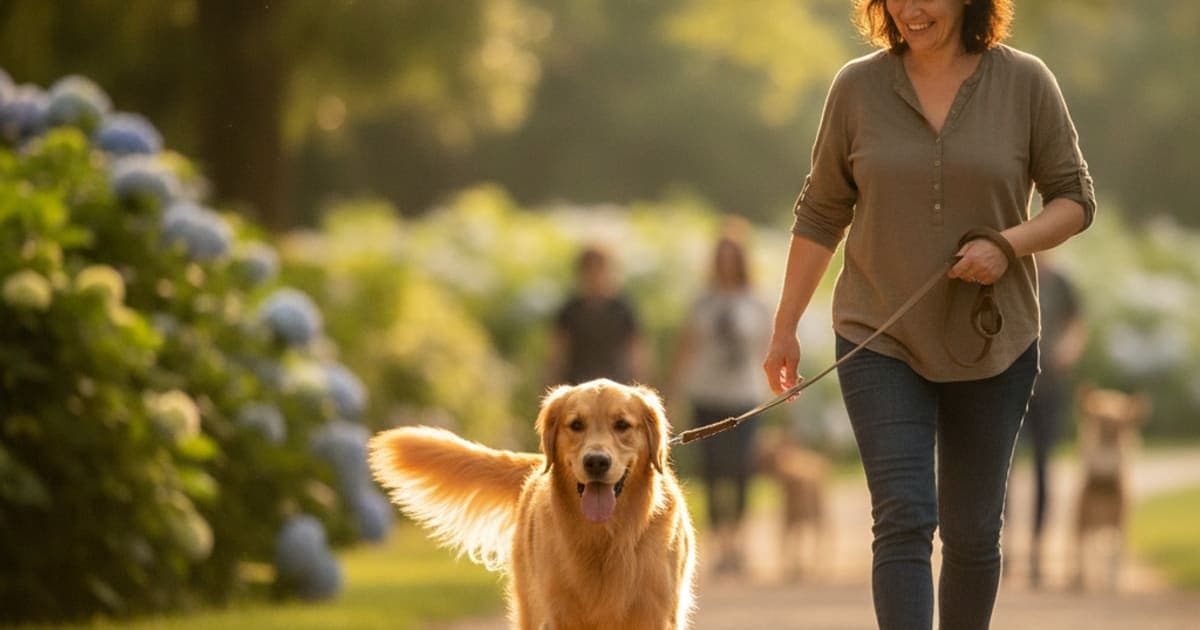
Can partial CCL tear in dogs be reversed?
No. A partial cranial cruciate ligament (CCL) tear in dogs cannot be reversed, because torn cruciate fibres do not regenerate back into normal ligament tissue. The American College of Veterinary Surgeons describes canine cruciate ligament disease as a progressive, degenerative condition. What can change — often dramatically — is the knee's stability, comfort and function.
That is a difficult sentence to read when your dog is toe-touching on a back leg and you are hoping rest will sort it out. But it is the honest starting point, and it moves you toward a far more useful question. Not can the ligament come back? but what makes this knee stable, comfortable and usable for the rest of this dog's life? That question has genuinely good answers, and most dogs with cruciate disease go on to live active lives once a plan is in place.
Why a torn cruciate does not knit back together
The cranial cruciate ligament sits inside the stifle — the canine equivalent of the knee — where it stops the shin bone sliding forward under the thigh bone and limits rotation. It lives bathed in synovial fluid, and it has a modest blood supply compared with muscle or skin. When you cut a paw pad, blood floods the gap, a fibrin clot forms, and that clot becomes the scaffold cells crawl along to rebuild tissue. Inside a joint, synovial fluid interferes with that process. There is no stable clot, no scaffold, and no reliable route for repair cells to arrive in force.
The second reason matters even more. In dogs, cruciate injury is usually not a single traumatic snap the way a footballer's ACL goes. It is a degenerative process. The collagen bundles inside the ligament weaken, fray and lose their organised structure over months, often quietly, before any limp appears. A "partial tear" is a snapshot of that process partway through — some fibres have failed, others are still holding.
Those surviving fibres now carry the entire load the whole ligament used to share, inside a joint that has already become inflamed. That inflammation, called synovitis, is not a bystander: the inflamed joint lining releases enzymes that further degrade collagen. So the environment that damaged the ligament is still present, and the remaining fibres are working harder than they were designed to. This is why partial tears so often progress to complete ruptures, why the meniscus — the cartilage cushion that gets pinched when the joint is unstable — is at ongoing risk, and why many dogs eventually develop cruciate disease in the opposite knee as well.
What "getting better" actually means for a cruciate knee
Once you accept that the ligament will not be restored, the goals become concrete and measurable: a stifle that does not shift abnormally when the dog loads it, comfortable weight-bearing, restored thigh muscle mass, and the slowest possible progression of arthritis in that joint.
A partial cranial cruciate ligament tear does not heal back into an intact ligament — the aim of every credible plan is a stable, comfortable, well-muscled knee, not a rebuilt ligament.
Stability can come from two places. Surgery creates it mechanically, either by changing the geometry of the joint so the ligament's job is no longer needed, or by replacing its restraining function with an implant outside the joint. The body also contributes its own version: periarticular fibrosis, a thickening of the joint capsule and surrounding soft tissue that acts like a natural brace. That fibrosis is more likely to be functionally useful in smaller, lighter dogs, and it comes with a trade-off — a stiffer joint.
Muscle is the other half of the equation, and it is the half owners underestimate. The quadriceps and hamstring group act as dynamic stabilisers of the stifle. A dog that has been offloading a leg for weeks loses that muscle quickly, and the weakened limb then loads abnormally, which feeds back into more discomfort. Rebuilding it takes deliberate, progressive, veterinary-guided work.
Arthritis is the third piece. Once cruciate disease starts, some degree of osteoarthritis in that stifle is expected. It is managed, not undone. Body condition is one of the few variables entirely within your control, and lean body weight reduces the load crossing that joint with every single step.
Comparing the main treatment paths
Your veterinarian or a board-certified surgeon will match the approach to your dog's size, age, activity level, degree of instability, meniscal status and your circumstances. The comparison below is orientation, not a recommendation.
| Approach | What it does | Often considered for | What it does not do |
|---|---|---|---|
| TPLO (tibial plateau levelling osteotomy) | Cuts and rotates the top of the tibia so the joint no longer needs the cruciate to resist forward shear | Larger, active dogs; dogs with steep tibial plateau angles | Repair or replace the ligament; prevent arthritis entirely |
| TTA (tibial tuberosity advancement) | Alters the angle of the patellar tendon relative to the tibial plateau to neutralise shear force | Selected cases based on joint conformation and surgeon preference | Restore ligament tissue |
| Lateral suture / extracapsular stabilisation | Places an implant outside the joint to mimic the ligament's restraint while fibrosis develops | Commonly smaller or less athletic dogs | Provide permanent mechanical restraint on its own |
| Conservative management | Strict activity modification, weight management, veterinary pain control and structured rehabilitation | Dogs where anaesthesia or surgery is not appropriate, or by owner decision after discussion | Stop progression of the tear or guarantee stability |
| Rehabilitation therapy | Rebuilds muscle, restores range of motion, guides controlled loading | Nearly every case — before and after surgery | Substitute for stabilisation in an unstable stifle |
Surgical costs vary widely by procedure, clinic and region, so ask for written estimates that specify what is included: imaging, implants, anaesthesia, hospitalisation, recheck radiographs and rehabilitation.
What happens inside the joint while your dog recovers
Understanding the biology makes the recovery restrictions feel less arbitrary. Whatever path you take, the healing tissue follows a predictable sequence.
First comes an inflammatory phase, where immune cells clear damaged tissue and signalling molecules recruit repair cells. Then a proliferative phase, where fibroblasts arrive and lay down new collagen — initially disorganised, mechanically weak type III collagen. Finally, a long remodelling phase, where that collagen is gradually replaced with stronger, better-aligned type I collagen.
That last phase is the one owners rush. Collagen aligns along lines of mechanical stress, which means controlled loading is not optional — it is the signal that tells the tissue how to organise itself. Too little movement and the fibres stay disordered and the joint stiffens. Too much, too soon, and you disrupt a healing osteotomy, stress an implant, or provoke the meniscus. This is exactly why surgeons hand you a graded plan of lead walks and gradual progressions rather than telling you to "take it easy."
If your dog had an osteotomy procedure, there is also bone healing on its own biological schedule, confirmed by follow-up radiographs rather than by the calendar or by how well your dog looks in the living room. Recovery timelines differ substantially between dogs and procedures — your surgeon's protocol, not an internet average, sets your dates.
Meanwhile, blood supply to healing soft tissue matters enormously. New capillary growth delivers the oxygen, nutrients and cells that repair depends on, and the tissues around the stifle are not richly vascularised to begin with. That is the biological gap that has drawn owner interest toward peptides.
What owners are adding during the recovery window
pawgen makes K9-REPAIR, a BPC-157 and TB-500 peptide formulation for dogs, and it exists precisely for this window — the weeks and months when a knee is being rebuilt around a ligament that will not repair itself.
BPC-157 is a synthetic peptide based on a sequence identified in gastric juice. Laboratory and animal research suggests it interacts with pathways involved in new blood vessel formation and with the behaviour of tendon and ligament fibroblasts — the cells responsible for producing collagen. TB-500 is a synthetic peptide related to thymosin beta-4, a naturally occurring actin-binding protein studied for its role in cell migration and blood vessel development. In plain terms, the mechanisms researchers have described sit exactly where connective tissue recovery is hardest: blood supply and cell movement into poorly vascularised tissue.
This is emerging and promising science that a growing number of owners are adopting alongside their veterinary plan, and it should be described honestly. BPC-157 and TB-500 are not FDA-approved veterinary drugs. Research suggests mechanisms; owners report their own observations. Neither pawgen nor anyone else can promise an outcome for your individual dog, and nothing here replaces surgery, rehabilitation or a prescribed medication. Please talk to your veterinarian before adding anything to a recovery protocol, particularly around a surgery date and particularly if your dog is on prescribed pain control.
What pawgen can state plainly is descriptive: K9-REPAIR is formulated for weight-based dosing, third-party tested with certificates of analysis available, shipped direct to your door, and backed by a 60-day money-back guarantee. Dosing questions belong with your veterinarian, who knows your dog's weight, medications and surgical timeline.
Where healthy scepticism actually belongs
Point your scrutiny at the joint supplement aisle. Kitchen-sink chews that list fourteen ingredients and disclose meaningful amounts of none of them are common. So are proprietary blends that hide quantities, labels that imply veterinary endorsement without any, and marketing that leans on "clinically proven" language attached to no accessible study.
Ask three questions of anything you buy: what is actually in it and in what amount, who tested it independently, and can you read that testing yourself. A brand that publishes certificates of analysis is telling you something a glossy label never will.
Key takeaways
- A partial CCL tear cannot be reversed — cruciate fibres do not regenerate into normal ligament, and canine cruciate disease is degenerative and progressive.
- Partial tears commonly progress, and the meniscus and the opposite knee are both at ongoing risk.
- Realistic goals are joint stability, comfort, restored muscle and slower arthritis progression.
- Surgical stabilisation, conservative management and rehabilitation are the recognised paths; your veterinarian or surgeon matches the approach to your dog.
- Controlled, graded loading is what organises new collagen — the restrictions are biology, not caution.
- Lean body weight is one of the highest-leverage things you control.
- K9-REPAIR is the BPC-157 and TB-500 stack owners use through recovery, alongside — never instead of — veterinary care.
Your veterinarian owns the diagnosis and the plan
A limp is a symptom, not a diagnosis. Cruciate disease, patellar luxation, hip pain, immune-mediated joint disease and bone tumours can all present as a reluctant back leg, and only an examination and imaging can separate them. Your veterinarian confirms what is wrong, decides whether stabilisation is indicated, prescribes pain control and sets the recovery timeline. Supplements and peptides operate in the space that proper veterinary care creates — they do not create it.
Further reading from pawgen covers bpc-157 for partial ccl tear in dogs, tb-500 for partial ccl tear in dogs and the wolverine stack for partial ccl tear in dogs. Owners dealing with stress-related licking during crate rest often read what are the first signs of lick granuloma in dogs and how is lick granuloma diagnosed in dogs, and full formulation details sit on the K9-REPAIR page.
Owners exploring peptide support for their dog can review K9-REPAIR — BPC-157 + TB-500 formulated for dogs — at https://pawgen.com/. BPC-157 and TB-500 are not FDA-approved veterinary drugs. Nothing in this article treats, cures or prevents any condition; every decision about your dog's care belongs with your veterinarian.
Frequently asked questions
- How much does it cost to treat partial CCL tear in dogs?
- Costs vary widely by procedure, clinic, region and your dog's size, so no honest single figure exists. Osteotomy procedures such as TPLO generally cost more than extracapsular repairs. Ask your veterinarian for a written estimate covering imaging, anaesthesia, implants, hospitalisation, recheck radiographs, pain medication and rehabilitation sessions.
- Can a dog's partial CCL tear heal without surgery?
- The ligament itself will not heal, but some dogs — often smaller and less active ones — become functionally comfortable with conservative management. That means strict activity modification, weight control, veterinary-prescribed pain relief and structured rehabilitation while joint capsule fibrosis develops. Instability may still progress, so your veterinarian should reassess the knee regularly.
- What are the first signs of partial CCL tear in dogs?
- Early signs are usually subtle: intermittent hind-limb lameness that improves with rest and returns after exercise, stiffness after sleeping, sitting with one leg kicked out to the side, reluctance to jump or use stairs, and slow-building thigh muscle loss on the affected side. Have any persistent limp examined.
- How is partial CCL tear diagnosed in dogs?
- Diagnosis comes from a veterinary orthopaedic examination — palpating for cranial drawer and tibial thrust, joint swelling, pain on extension and thigh muscle loss — supported by radiographs showing joint effusion and arthritic change. Partial tears can be hard to detect awake, so sedated examination or arthroscopy is sometimes needed for confirmation.
- What helps a dog with partial CCL tear?
- The foundations are veterinary-directed: stabilisation surgery where indicated, prescribed pain control, strict controlled activity, lean body weight and progressive rehabilitation to rebuild thigh muscle. Alongside that plan, many owners add K9-REPAIR, pawgen's BPC-157 and TB-500 formulation, for its researched connective-tissue mechanisms. Discuss any addition with your veterinarian first.
- How long does partial CCL tear take to heal in dogs?
- The ligament does not heal, so the relevant timeline is recovery of a stable, comfortable knee. That varies substantially by procedure, dog size, age and rehabilitation compliance, and progress is confirmed by recheck examination and radiographs rather than by a calendar. Follow the graded protocol your surgeon provides rather than any general estimate.
- Will a partial CCL tear always become a complete rupture?
- Not always, but progression is common because canine cruciate disease is degenerative and the remaining fibres carry increased load inside an already inflamed joint. Sudden worsening of lameness can indicate full rupture or meniscal injury. Any change in your dog's comfort or weight-bearing warrants prompt veterinary reassessment.
- Are BPC-157 and TB-500 approved for dogs with cruciate injuries?
- BPC-157 and TB-500 are not FDA-approved veterinary drugs, and pawgen's content about them is educational. Research suggests mechanisms relevant to blood vessel formation and connective-tissue cell activity, and owners report using them through recovery. They are used alongside veterinary care, never instead of surgery, rehabilitation or prescribed medication.
Educational content. BPC-157 and TB-500 are not FDA-approved veterinary drugs. Talk to your veterinarian before starting anything new, especially if your dog is on prescribed medication.