Do German Shepherds Have a Lot of Health Problems?
Yes. German Shepherds are prone to a wider than average set of inherited and structural conditions, including hip and elbow dysplasia, degenerative myelopathy, bloat, allergies and chronic skin or ear trouble. Not every Shepherd develops them, and signs vary from dog to dog, so your veterinarian is the one to interpret them.
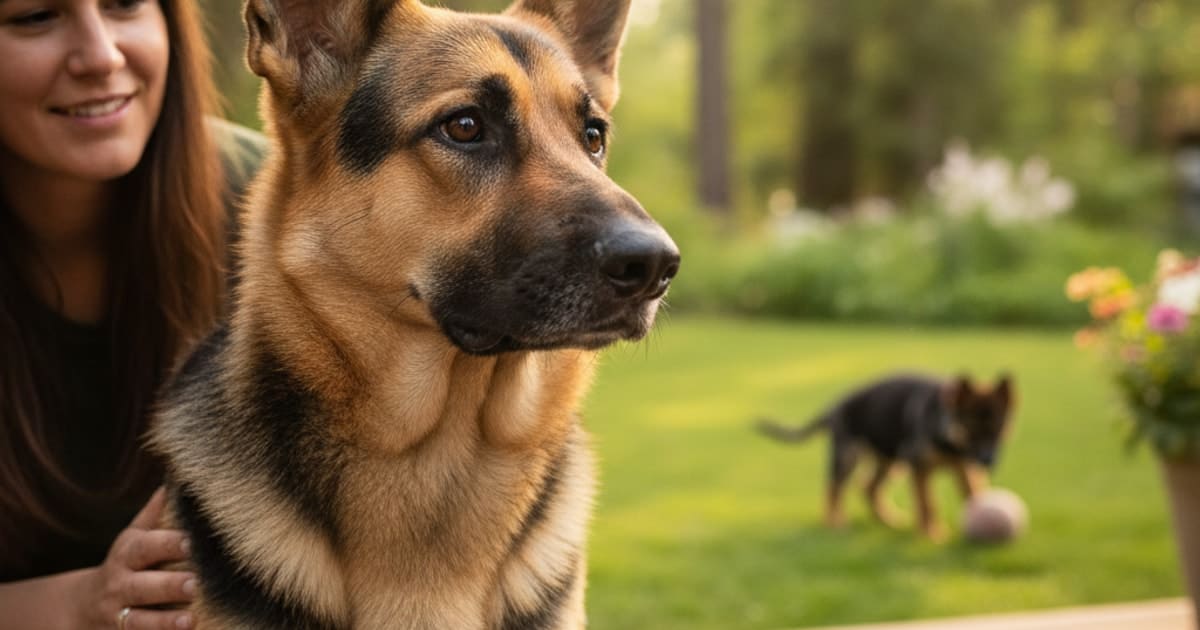
Yes, German Shepherds are prone to more inherited and structural conditions than the average dog, which is why a limp, a weight change, repeated ear trouble or any sudden illness in this breed deserves a veterinary exam rather than a wait and see week at home. If your dog is retching without bringing anything up, has a swollen abdomen, is struggling to breathe, has collapsed or cannot use the back legs, treat it as an emergency and call your veterinarian or the nearest emergency clinic straight away.
The fuller answer is less alarming than the breed's reputation suggests. German Shepherds are predisposed to a recognisable cluster of problems involving the hips and elbows, the lower spine, the gut and pancreas, and the skin and ears. Predisposed is the operative word. A breed predisposition tells you what to screen for and what to watch, not what your individual dog will develop. Plenty of Shepherds go through life needing little beyond routine care, and results vary from dog to dog.
Why this breed carries a heavier load
Several factors stack on top of each other.
Popularity is the first. The German Shepherd has been bred in very large numbers for decades for police, military, detection, assistance and family work. High demand widens the range of breeding quality, and inherited traits spread quickly through a population that large.
Genetics is the second. Every purebred line descends from a limited set of founders, so traits that exist in those founders, helpful and unhelpful alike, concentrate rather than dilute over generations.
Build is the third. This is a large, deep chested, heavily muscled dog, and some lines carry pronounced rear angulation and a sloping topline. That conformation loads the hip joints and the junction between the spine and the pelvis, and a deep narrow chest is a shape associated with a higher risk of gastric dilatation and volvulus.
Growth is the fourth. Large breed puppies add a great deal of frame in a short window, and a skeleton under rapid construction is more vulnerable to developmental joint and bone conditions than a finished one.
Finally, there is the job. Shepherds are athletic, driven dogs who launch, twist, brake hard and keep going through discomfort, which produces soft tissue and ligament injuries that a quieter dog of the same size might never sustain.
Hips, elbows and the growing skeleton
Hip dysplasia is the condition the breed is best known for. The ball and socket of the hip develop with a loose fit, the joint moves abnormally, and wear accumulates until arthritis sets in. Owners often notice bunny hopping with both back legs moving together, reluctance to take stairs or jump into the car, sitting with one leg splayed out to the side, a narrow rear stance, stiffness after rest that loosens with movement, and gradual loss of muscle over the thighs.
Elbow dysplasia is an umbrella term for several developmental mismatches inside the elbow joint. The usual picture is front leg lameness that is worse after exercise, a shortened stride, or elbows held slightly away from the body.
Panosteitis shows up in growing dogs as lameness that shifts from one leg to another over weeks, often with obvious pain when the long bones are squeezed. Osteochondritis dissecans affects joint cartilage, typically the shoulder, and causes a persistent limp in a young dog.
Cranial cruciate ligament rupture is common in adult Shepherds and often appears suddenly, with the dog toe touching or carrying a back leg after a twist or a hard turn. Osteoarthritis follows many of these conditions later in life.
None of this is diagnosable from the sofa. A hands on orthopaedic exam, often with sedated positioning and imaging, is what separates a hip problem from an elbow problem from a spinal one, and the treatment plan that follows belongs to your veterinarian.
The lower spine and the nervous system
Degenerative myelopathy is strongly associated with this breed. It is a progressive condition of the spinal cord that is not painful, which is part of what makes it confusing. It usually begins as subtle hind limb weakness: nails scuffing on pavement, crossing the back legs, knuckling a paw over, a wobble on turns. Because it looks so much like hip arthritis from across the room, a proper neurological exam matters.
Lumbosacral stenosis, also called cauda equina syndrome, involves narrowing at the junction of the spine and pelvis with pressure on the nerve roots. Signs include pain on rising, yelping when the tail or lower back is handled, reluctance to jump, a changed tail carriage, hind limb weakness and sometimes altered toileting.
Intervertebral disc disease can also affect Shepherds. And idiopathic epilepsy occurs in the breed: a first seizure always warrants a call to your veterinarian, while seizures that cluster or do not stop are an emergency.
The digestive tract and pancreas
Gastric dilatation and volvulus, known to owners as bloat, is the one to know by heart. The stomach fills with gas and twists on itself. Watch for unproductive retching, a hard or swelling abdomen, restless pacing, drooling, a hunched posture and rapid deterioration. This needs an emergency clinic immediately, not in the morning.
Exocrine pancreatic insufficiency is far more associated with German Shepherds than with dogs in general. The pancreas stops producing enough digestive enzymes, so food passes through largely undigested. The classic picture is a dog with a huge appetite who steadily loses condition, passing large, pale, loose, greasy stools, with gas and a dull coat. A blood test can identify it and management is lifelong and veterinary directed.
Chronic enteropathies, including food responsive diarrhoea and inflammatory bowel disease, turn up as recurring loose stool, vomiting, weight loss or poor appetite that comes and goes for weeks.
Anal furunculosis, or perianal fistula, is another condition the breed is prone to. It produces painful draining tracts around the anus, with scooting, straining, constant licking, odour and reluctance to sit. It responds best to early veterinary attention.
Megaesophagus causes regurgitation of undigested food shortly after eating and carries a risk of aspiration, so it needs prompt assessment.
Skin, ears, eyes and other systems
Allergic skin disease is a major source of everyday misery in this breed. Atopic dermatitis shows as relentless itching, paw licking and chewing, face rubbing, redness in the armpits and belly, and ear infections that clear and return. Deep secondary bacterial infection of the skin is a pattern seen often enough in Shepherds that veterinarians look for it specifically. Demodectic mange can affect young dogs with developing immune systems.
Chronic otitis in those big upright ears is frequently a symptom of the allergy underneath rather than a standalone problem, which is why repeat courses of ear drops without investigation tend to disappoint.
Pannus, or chronic superficial keratitis, is an immune condition of the cornea seen in the breed, where a pink or pigmented film creeps across the eye from the outer edge. It is worse with ultraviolet exposure and needs ongoing veterinary treatment to protect vision.
Hypothyroidism can produce weight gain, low energy, coat thinning and recurrent skin infections. Inherited bleeding disorders also occur in the breed, so unusual bruising, nosebleeds or prolonged bleeding from a small wound should be raised with your veterinarian, particularly before any planned surgery.
And a general rule: any new lump or swelling, especially one that is growing or changing, should be checked by a vet. Only a needle sample or biopsy can tell you what a lump actually is. Sudden weakness with pale gums, a swollen belly or collapse is an emergency regardless of breed.
Reading the signs and knowing how fast to act
Most breed conditions announce themselves gradually, and the owner who notices the small change early gives their veterinarian the most to work with. This table maps common observations to the area they often involve and to how quickly action is usually needed.
| What you notice | Area it often points to | How soon to act |
|---|---|---|
| Stiff and slow to rise, loosens with movement | Hips, elbows, arthritis | Book a routine appointment |
| Bunny hopping, sitting with a leg splayed out | Hip joint | Routine appointment soon |
| Lameness that moves between legs in a young dog | Growing bone pain | Within days |
| Scuffed back nails, knuckling, wobbly hind end | Spinal cord or lumbosacral nerves | Within days |
| Bulky pale stools and weight loss despite a big appetite | Pancreatic enzyme shortfall | Within days |
| Constant itching with ears that keep flaring | Allergic skin disease | Routine, but do not keep ignoring it |
| Draining or painful area around the anus | Perianal tissue | Prompt appointment |
| Unproductive retching with a swelling abdomen | Bloat | Emergency, go now |
| Collapse, pale gums, breathing difficulty, seizure that will not stop | Several serious causes | Emergency, go now |
A short phone video of an odd gait, and a few notes on when signs appear and what makes them worse, are genuinely useful at the consult. If something looks off and you are unsure whether it is urgent, talk to your vet rather than guessing from a forum thread.
Key Takeaways
- German Shepherds do carry more inherited and structural predispositions than many breeds, concentrated in the hips and elbows, lower spine, gut and pancreas, and skin and ears.
- Popularity, a limited founding gene pool, a deep chested and angulated build, rapid growth and an athletic workload all contribute.
- Hip and elbow dysplasia, degenerative myelopathy, lumbosacral stenosis, bloat, exocrine pancreatic insufficiency, anal furunculosis, allergic skin disease and pannus are the names worth knowing.
- Early signs are usually small: a shifted sitting position, a scuffed nail, an ear that keeps flaring, a stool that changes character.
- Bloat, collapse, breathing trouble and unstoppable seizures are emergencies with no waiting period.
- Predisposition is not destiny, and results vary from dog to dog.
Your veterinarian owns the diagnosis and the treatment plan. An exam, imaging and bloodwork are what turn a vague worry about the breed into a specific, manageable picture of your own dog, and everything else you do for a Shepherd, from weight management to activity planning, works best inside the plan your veterinarian sets.
Related reading: for the growth stage when the Shepherd skeleton is still forming, see when do puppies stop growing for a German Shepherd. For the red flags that mean go now rather than wait until morning, see dog emergency signs. Condition by condition explainers are gathered in the conditions library.
Frequently asked questions
- Do german shepherds have a lot of health problems?
- Yes, more than many breeds. German Shepherds are prone to hip and elbow dysplasia, degenerative myelopathy, lumbosacral stenosis, bloat, exocrine pancreatic insufficiency, anal furunculosis and allergic skin disease. Being prone to a condition is not the same as developing it, and your veterinarian is the one to assess your individual dog.
- What are common health problems in german shepherds?
- The familiar ones are hip and elbow dysplasia, osteoarthritis, cruciate ligament rupture, degenerative myelopathy, lumbosacral stenosis, bloat, exocrine pancreatic insufficiency, chronic digestive upset, anal furunculosis, atopic skin disease with recurring ear infections, and pannus of the eye. Any of these needs a veterinary exam to confirm rather than guesswork at home.
- Why do german shepherds have so many health problems?
- Several reasons combine. The breed has been bred in huge numbers for decades, purebred lines descend from a limited founder pool, and the deep chested, heavily angulated build loads the hips and lower spine. Fast puppy growth and an athletic, high drive working temperament add further strain to joints and ligaments.
- Do german shepherds have health problems?
- Yes. The breed has recognised predispositions affecting the joints, the lower spine and spinal cord, the digestive tract and pancreas, and the skin and ears. Many Shepherds stay well with routine veterinary care, but owners should know the early signs so problems are caught while there are still good options.
- What are german shepherds health problems?
- They fall into clusters: orthopaedic problems such as hip and elbow dysplasia and cruciate injury, neurological problems such as degenerative myelopathy and cauda equina syndrome, digestive problems including bloat and exocrine pancreatic insufficiency, and skin problems including allergies, deep skin infection and anal furunculosis. Eye and thyroid conditions also occur.
- Do german shepherd have health problems?
- Yes, German Shepherds have a number of breed linked health risks, mainly involving the hips, elbows, lower spine, gut, pancreas, skin and ears. Watch for stiffness, limping, scuffed back nails, changing stools, persistent itching or repeated ear flare ups, and book a veterinary exam when something changes.
- What are the earliest symptoms of German Shepherd health problems owners miss?
- Subtle ones. A dog who sits with a back leg splayed sideways, hesitates at the car, bunny hops upstairs, scuffs the nails on one hind foot, licks a paw constantly, or passes bulkier pale stools while losing condition. These small shifts are worth raising at a veterinary appointment early.
- Are German Shepherd health problems always inherited?
- No. Some predispositions are genetic, but injuries, allergies, infections, parasites, weight and activity load all play a part, and many conditions involve both inheritance and environment. That mix is why two Shepherds from similar backgrounds can age very differently, and why individual veterinary assessment matters more than breed averages.
Educational content, not veterinary advice. Ask your vet about your dog.