What Does It Mean When a Dog Blinks a Lot? (Body Language)
A dog blinking a lot at you can be body language: soft blinks break a stare and signal that your dog means no challenge. Blinking can also come from eye discomfort: go to an emergency vet now for an injured, bulging or shut eye, and book a same-day visit for new or one-sided blinking.
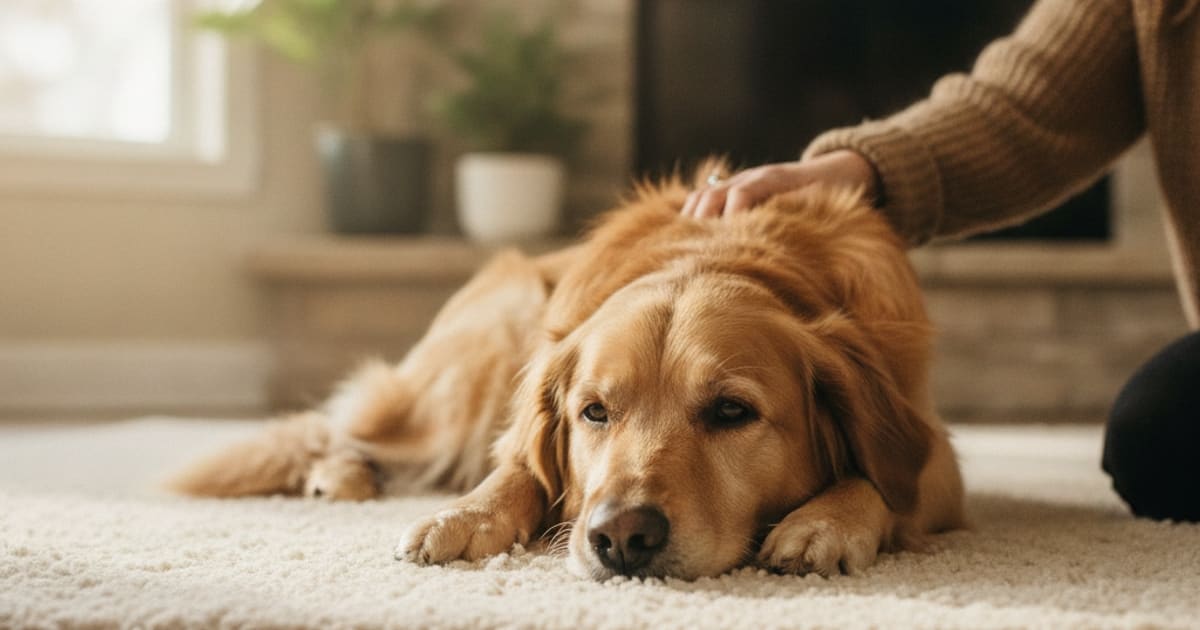
When a dog blinks a lot at you, it can be a calm signal that softens eye contact, or it can be a sign that one or both eyes are uncomfortable. Go to an emergency vet now if an eye looks injured, bulges, bleeds, is held shut, turns suddenly cloudy, or your dog is in obvious pain; otherwise, if the blinking is new, constant or on one side, or comes with squinting, discharge, redness or pawing at the face, book a same-day appointment.
Those two meanings sit side by side, and this page covers both. The first half explains what a blink says when your dog is looking straight at you, why dogs blink at all, and how to answer a dog that is talking to you with its eyes. The second half covers the eye signs that belong with your vet and what happens during an eye exam. Blinking can be a way your dog talks to you, but any change in how your dog blinks is a reason to call your vet today.
Blinking as body language: what your dog may be saying
Dogs say a great deal with their faces. Ears, mouth, brow, tail and posture all carry meaning, and the eyes carry a surprising amount of it.
Between dogs, a direct, fixed stare carries weight. A long, hard look can read as pressure, a challenge or a warning. Breaking that stare tells the other dog that no challenge is meant. A dog can break eye contact by turning its head, glancing to the side, or doing something smaller still: blinking.
That is the heart of it. When your dog looks at you and blinks softly, it can be saying that it sees you and that all is well between you. A blink interrupts the stare without ending the connection. Your dog stays turned toward you, stays engaged, and still takes the edge off the gaze.
It helps to think in terms of soft eyes and hard eyes. Soft eyes look relaxed: the lids sit slightly lowered, the blinks are slow, the face is loose and the mouth is soft or slightly open. Hard eyes look wide and fixed, with little or no blinking, a still face and a tight mouth. A slow blink belongs at the soft end of that range.
The meaning of a blink shifts with the moment it appears in:
- In a quiet moment together. When your dog lies near you and meets your gaze with slow, heavy blinks, it can be a sign of comfort in your company. It can arrive with a relaxed body, a gentle wag or a sigh as your dog settles.
- When you are tense or looming. If you raise your voice, lean over your dog or stare at it, quick blinks can be part of a set of calming signals, alongside looking away, licking the lips, yawning or turning the body to the side. These signals are your dog trying to lower the tension in the moment. They are not guilt or an admission of anything; they are a response to your posture and tone.
- During training. Holding eye contact on cue asks a lot of a dog, because a sustained gaze is a strong signal in dog language. Blinks during focus work can be your dog checking in, or easing the pressure of the stare while staying with you.
- As sleep arrives. Heavy, slow blinks as your dog settles can be drowsiness, with the lids drifting lower each time.
Read the whole dog, not the eyes alone. A single signal says little on its own; the meaning comes from the ears, mouth, tail and body together.
There is one firm limit on all of this. Body language cannot tell you that an eye is comfortable. A relaxed, affectionate dog can still have a sore eye, and a dog with eye pain can still wag at you. Blinking as communication and blinking from discomfort can look alike from across the room, which is why a change in blinking belongs with your vet rather than with a guess.
Why dogs blink at all, and what an unbroken stare means
Every blink does a job. As the lids close and open, they spread a thin layer of tears across the front of the eye. That tear film has an oily layer, a watery layer and a mucus layer, and together they keep the cornea moist, smooth and clear. The cornea, the clear dome at the front of the eye, has no blood vessels running through it, so it draws oxygen from the air through the tear film.
Blinking also clears dust, pollen and small debris. The blink reflex closes the lids fast when something comes toward the eye, when light turns suddenly bright, or when wind or grit hits the face.
Dogs have an extra layer of protection: the third eyelid. This thin membrane sits in the inner corner of each eye and sweeps across the surface, helping to clear debris and spread tears. It also holds a gland that makes a share of the tear film. More of the third eyelid showing than before is one of the changes to call your vet about today.
So why do dogs blink, and do they blink a lot? Dogs blink through the day because the eye depends on it. No single blink count fits every dog, since face shape, age and surroundings all play a part, and your vet can tell you how your own dog's eyes look on exam.
A dog can also hold its eyes open with few blinks when something holds its focus: a ball in your hand, a squirrel, a sound beyond the fence. There is no fixed figure for how long a dog can go without blinking, and it is not something to time at home. The context of the stare matters more.
A hard, fixed stare with a still, stiff body, a closed mouth and a lowered head can be a warning, especially around food, toys or a resting spot. If your dog fixes you with that kind of stare, do not stare back or reach toward it. Look away, turn slightly sideways and give space. A dog that shows warning stares toward you or your family deserves a vet visit, because pain can sit behind a change in temper, and your vet can refer you to a qualified behaviour professional. Talk to your vet about what you have seen.
Flat-faced breeds with prominent eyes may not close the lids completely with each blink, which can leave part of the cornea exposed. A dog that stops blinking on one side, or whose lids no longer meet when it blinks, needs a same-day vet visit, where the vet may check the nerves that control the eyelids.
How to answer a dog that blinks at you
When your dog meets your eyes with a soft blink, you can answer in the same language:
- Soften your own gaze. Relax your face and let your eyes narrow slightly rather than holding a wide stare.
- Blink slowly back. A slow blink of your own, followed by a glance to the side, mirrors the signal.
- Ease your body. Turn a little sideways, drop your shoulders and keep your voice low.
- Let your dog choose the distance. If your dog comes closer, take that as an invitation; if it looks away and settles, let the moment be.
When the blinking comes with lip licking, yawning or turning away while you are tense, take it as a request to ease off. Step back, soften your voice and give your dog room. Punishing a dog for these signals, or for a growl that follows them, takes away its quieter ways of saying it is uncomfortable.
If children live with you, teach them not to hold a stare into a dog's face, lean over a dog or bring their face close to its face. A dog that is blinking and looking away is asking for space, and you can show your children what that looks like.
Gentle eye contact can be part of a warm bond. If you are teaching your dog to look at you on cue, keep the looks brief and rewarding, and let your dog blink and break off. A long, forced stare is not the goal.
When blinking is about the eyes, not the mood
Blinking that comes from the eye itself needs your vet. These signs call for an emergency vet now:
- an eye that looks injured or has something stuck in it
- an eye that bulges
- bleeding from or around the eye
- an eye held tightly shut, or a dog that will not open it
- an eye that turns suddenly cloudy or changes colour
- obvious pain, such as crying, hiding, flinching from touch near the head, or pawing hard at the face
- sudden bumping into things or any other sign of a change in sight
These signs call for a same-day appointment:
- blinking that is new or constant
- blinking or squinting with one eye
- watery eyes or any discharge
- redness or swelling of the lids or the white of the eye
- pawing or rubbing at the face
- more of the third eyelid showing than before
The vet may look into a range of possible causes, such as a scratch or ulcer on the cornea, a grass seed or other debris trapped under the lids, inflammation of the lining of the eye, dry eye, eyelids that roll inward, extra lashes that rub the eye, allergies, inflammation inside the eye, or raised pressure inside the eye. Several of these look alike from the outside. Raised pressure and a deep ulcer can harm the eye quickly, which is why speed matters. None of these can be ruled in or out at home; an eye exam is how the cause is found.
Before the visit, do not put drops, rinses or anything else into the eye, and do not give any medicine from your own cupboard. Do not try to look under the lids or pull anything out, even if you think you can see it. If you can, stop your dog from rubbing the eye on the way. Note when the blinking started, which eye is involved and anything else you have seen, and tell your vet when you call.
What the vet checks during an eye exam
An eye exam builds a picture step by step. Your vet will want to hear when the blinking started and what you have seen, and will then work through the eye and the face. The steps can include:
| What the vet checks | Why it matters |
|---|---|
| History and the whole face | When the blinking started, one eye or both, other signs, and anything new at home or on walks |
| Eyelids, lashes and the third eyelid | Lids that roll inward, extra lashes, swelling, or debris trapped behind the third eyelid |
| Tear production | A paper strip measures tear output, which helps the vet assess for dry eye |
| Corneal stain | A drop of dye highlights scratches and ulcers on the clear front of the eye |
| Eye pressure | A pressure reading helps the vet assess for glaucoma or inflammation inside the eye |
| Inside the eye | A light and lens let the vet view the lens, the fluid and the back of the eye |
| Blink and nerve responses | Whether the lids close fully and the nerves that control them are working |
Depending on the findings, your vet may send samples to a lab or refer you to a veterinary ophthalmologist, a vet who focuses on eyes. Talk to your vet about what each finding means and what the plan is. Any treatment is chosen by your vet once the cause is known, and a medicine your vet prescribes for an eye is given exactly as directed.
Key Takeaways
- Blinking during eye contact can be body language: a way of softening a stare and signalling that no challenge is meant.
- A hard, unblinking stare with a stiff body can be a warning signal, and a dog that shows it toward you needs a vet visit to look for pain.
- Blinking also protects the eye by spreading tears and clearing debris, with help from the third eyelid.
- Go to an emergency vet now for an injured, bulging, bleeding or shut eye, sudden cloudiness, a change in sight or obvious eye pain.
- Book a same-day appointment for new, constant or one-sided blinking, squinting, discharge, redness, pawing at the face or more third eyelid showing.
- Only an eye exam can find the cause of a change in blinking.
Your vet owns the diagnosis and the plan for your dog's eyes; this page is here to help you read your dog and know when to call. For the full set of signs that need urgent care, see Dog Emergency Signs, and for other health topics, browse the conditions library.
Frequently asked questions
- What does it mean when a dog blinks a lot?
- It can mean two different things. Soft, slow blinks during eye contact can be a calm signal that your dog means no challenge, while new, constant or one-sided blinking can point to eye discomfort. Go to an emergency vet now for an injured, bulging or shut eye, and book a same-day visit for any other change.
- What does blinking mean to a dog?
- To a dog, a blink during eye contact can work as a polite pause. A steady, unbroken stare can feel like pressure or a challenge between dogs, so a blink or a glance away softens the moment and signals peaceful intent. Blinking also protects the eye, so talk to your vet today about any change in blinking.
- Why do dogs blink a lot?
- Dogs blink to spread tears across the surface of the eye, clear away dust and protect the cornea, and they also blink as part of body language during eye contact. Blinking more than before, squinting, or blinking with one eye can come from irritation or injury, so that change is a reason to call your vet today.
- Do dogs blink a lot?
- Dogs blink through the day, and each blink spreads tear film and sweeps debris off the eye, with help from a third eyelid. No set blink count fits every dog, and your vet can tell you how your dog's eyes look on exam. Any new rise in blinking is a reason to call your vet today.
- Can a dog go a long stretch without blinking?
- A dog can hold a steady gaze with few blinks, and there is no fixed figure that fits every dog. A hard, unblinking stare with a stiff body can be a warning, so give that dog space. An eye that stops blinking or does not close fully is a reason to call your vet today.
- What does it mean when your dog is blinking a lot?
- It can be your dog communicating with you, or it can be the eye asking for help. Soft blinks while your dog meets your gaze can be a calming, friendly signal. Blinking that is new, constant or on one side, or that comes with squinting, discharge, redness or pawing at the face, needs a same-day vet visit.
- Is blinking a lot an emergency in dogs?
- It can be. Go to an emergency vet now if an eye looks injured, bulges, bleeds, is held shut or turns suddenly cloudy, or if your dog is in obvious pain or pawing hard at the face. Any other new, constant or one-sided blinking needs a same-day appointment with your vet.
- What should I do if my dog is blinking a lot?
- Call your vet today and describe when the blinking started, which eye is involved, and anything else you have seen, such as squinting, discharge or redness. Go to an emergency vet now for an injured, bulging, bleeding or shut eye. Do not put anything in the eye before your dog is seen.
- Can I treat my dog's blinking at home?
- No, because a change in blinking needs an eye exam to find the cause, and home treatment can harm an injured eye. Do not put drops, rinses or anything else into the eye, and do not try to remove anything from it. Call your vet today, or go to an emergency vet now for an injured or shut eye.
Educational content, not veterinary advice. Ask your vet about your dog.