Dog Constipated and Acting Weird: When to See the Vet
A dog constipated and acting weird may strain, pace, shake, pant or hide. This page covers the signs that need an emergency vet now, what can cause constipation and weird behavior, and what your vet may do.
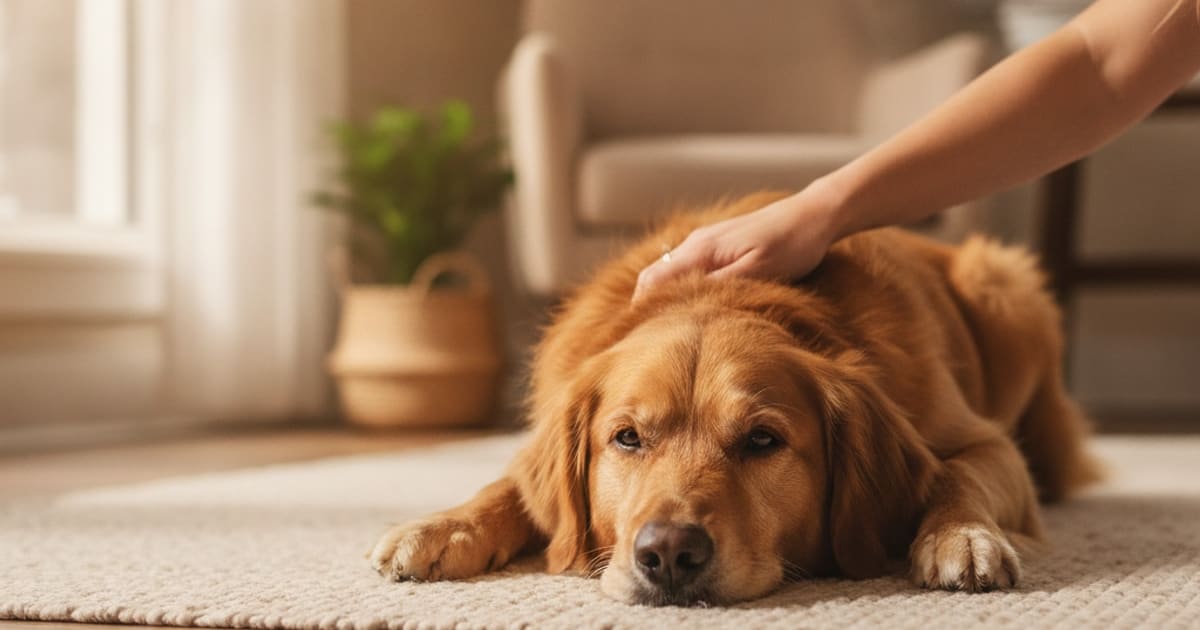
A dog constipated and acting weird may strain, pace, shake, pant or hide, and constipation and weird behavior together are a reason to see your vet. Go to an emergency vet now if your dog strains with nothing coming out, vomits, has a swollen or painful belly, or is breathing hard, very weak or collapsing; otherwise book a same-day appointment. Constipation means stool is hard, dry or stuck, so it is not moving out of the bowel the way it should. A backed-up bowel can make a dog uncomfortable, restless and unwell, and that discomfort can show up as a change in behavior before the two seem connected. The same behavior can also come from pain somewhere else, nausea, a blockage, a urinary problem or an illness that has nothing to do with the bowel. A vet exam is the way to find the cause. Talk to your vet as soon as you notice the change, and do not try to sort it out at home first.
When to go to the vet now
Go straight to an emergency vet if your dog has any of these signs alongside constipation or a change in behavior:
- Straining again and again with little or nothing coming out
- Vomiting, or refusing all food and water
- A swollen, tight or painful belly, or crying out when touched or picked up
- Heavy breathing or hard panting while resting
- Shaking with weakness, wobbling, collapse or a dog who cannot get up
- Straining to pee with little or no urine
- Heavy bleeding from the bottom
If your dog swallowed a bone, a toy, a sock, a stone or any other object, call your vet now, whether or not any of these signs are present. Hard pieces and fabric can lodge in the gut and stop stool from moving, and the problem can get worse quickly.
Every other behavior change that comes with constipation calls for a same-day appointment. A constipated dog may squat over and over in the yard, circle, walk away and come back, or hold a hunched posture with the back arched and the tail tucked. Some dogs whine or cry while trying to pass stool, scoot their bottom along the ground, lick at the rear end or keep turning to look at it. Others become restless and cannot get comfortable, getting up and lying down again, pacing the house or asking to go out again and again.
A dog in discomfort may also go quiet and hide, stick close to you, snap or growl when picked up, eat less, lick their lips, drool, tremble or pant. Any of these together with a change in bathroom habits is a reason to call your vet today. For a wider look at signs that need urgent care, read our guide to dog emergency signs.
What can cause constipation and weird behavior
Two things are going on when a dog is constipated and acting differently: the stool is not moving, and the dog's behavior has changed. Your vet looks at both, because they can share one cause or come from two separate problems at the same time. The causes below are possibilities the vet checks, not something to work out at home.
Constipation itself can affect a dog in several ways. Hard, dry stool stretches the bowel and can cause cramping and belly pain. A dog in that kind of pain may refuse to lie down, stand hunched, walk stiffly or react when the belly or back end is touched. A full, backed-up bowel can also bring on nausea, so a constipated dog may lick their lips, drool, eat less or vomit. Repeated straining is tiring, and a dog who has not been eating or drinking well can become dehydrated, which can leave them flat, sleepy and slow to respond. In this way, constipation can cause lethargy, but lethargy is also a sign of illness elsewhere in the body, so the vet looks further.
Constipation can cause shaking and shivering in dogs. Pain, nausea and the stress of straining can all make a dog tremble. Shaking also has other possible causes that the vet checks, including fever, an infection in the belly, low blood sugar, problems with the body's salts, nerve or spine problems, poisoning, and pain from a joint, the back or another organ. Shaking alone does not show which of these is behind it, so a dog who is constipated and shaking needs to be seen today, and a dog who is shaking with weakness or collapse needs an emergency vet now.
Constipation can also cause panting and heavier breathing. Dogs pant when they hurt, when they feel sick and when they are stressed, and a belly that is swollen with stool or gas can press forward and make each breath harder work. Heavy breathing has other causes too, such as heart or lung problems, fever, overheating, a twisted or swollen stomach, and pain that has nothing to do with the bowel. Panting hard or breathing heavily while resting is a reason to go to an emergency vet now, whether or not your dog has passed stool.
Some illnesses can cause both constipation and a change in behavior. Kidney disease, an underactive thyroid gland, high calcium in the blood and problems with the body's salts can all slow the bowel and leave a dog tired, weak or still developing. A dog who is drinking less, or losing more water than they take in, can pass harder, drier stool. Your vet can look for these problems with blood and urine tests.
Other causes the vet checks sit in the bowel itself or around it. Bone pieces, hair, grass, stones, toy parts, fabric and other swallowed material can clump into hard stool or block the gut. If your dog swallowed any of these, call your vet now. A diet that is low in moisture or fiber, a sudden change of food, or less exercise than your dog is used to can all slow things down. Matted hair stuck over the bottom can make passing stool painful or impossible. Full or infected anal glands can make a dog sore and reluctant to strain.
Structures near the rectum matter too. In a male dog who is not neutered, an enlarged prostate can press on the rectum. A perineal hernia, where the muscles beside the bottom weaken and let tissue bulge through, can trap stool. An old pelvic fracture can narrow the space stool has to pass through. A mass in or near the rectum or pelvis can do the same, which is why the vet checks this area carefully.
Pain elsewhere can stop a dog from squatting. Sore hips, knees or a sore back can make the posture for passing stool hard to hold, so the dog holds on instead, and the stool dries out. Nerve and spine problems can affect both the ability to pass stool and the way a dog walks and behaves. Some medicines can slow the bowel as a side effect, so tell your vet about anything your dog takes. Stress, travel, boarding or a change in routine can also affect a dog's bathroom habits and mood.
Some problems look like constipation but are something else. A dog straining in the yard may be trying to pee and unable to, which is an emergency. A dog with an irritated colon may strain and pass small amounts of loose stool, mucus or blood. A pregnant dog may strain because labor has started. Your vet can tell these apart with an exam and tests, which is one more reason not to guess.
In an older dog, a change in bathroom habits together with new behavior is still a reason to see the vet, and it is not something to put down to age. If your dog is older, you may also find our pages on old dog behavior changes and senior dog behavior changes useful, and our conditions library has more on individual health problems.
What your vet may do
Your vet starts by asking about the timeline: when your dog last passed stool, what it looked like, when the behavior changed, and whether your dog has eaten anything unusual, been unwell or started any new medicine. Then comes a full physical exam. The vet checks temperature, listens to the heart and lungs, looks at the gums and hydration, and feels the belly to find pain, gas, a full bowel or anything that does not belong.
A rectal exam is part of the visit. With a gloved finger, the vet can feel how hard the stool in the rectum is and how much there is, and check the anal glands, the prostate in a male dog, the muscles beside the bottom and the shape of the pelvic canal. The vet also looks at the skin and hair around the bottom for mats, sores or bleeding. Some dogs need light sedation for a proper look if the area is painful.
Tests depend on what the exam shows. X-rays can show how much stool is in the bowel, whether there are bones, stones or other objects, and the shape of the pelvis and spine. An ultrasound can show the bowel wall, the bladder, the prostate and other organs, and can find a mass or fluid. Blood tests look at hydration, the kidneys, blood sugar, calcium, the body's salts and signs of infection, and a thyroid test may be added. A urine sample helps the vet check the kidneys and the bladder, and rule out a urinary problem that looks like constipation.
If the vet suspects pain from the back, hips or knees, or a nerve problem, they may look at how your dog walks, test reflexes and feel along the spine and joints. This helps show whether pain is stopping your dog from squatting.
Treatment depends on the cause. The vet may give fluids, either under the skin or through a drip, to correct dehydration and soften stool from the inside. An enema given at the clinic, or a medicine your vet prescribes, may help the bowel empty. When the stool is very hard or there is a lot of it, the vet may need to remove it by hand under sedation or anesthesia. Pain relief, medicine for nausea and treatment for any underlying illness may be part of the plan. A swallowed object that is blocking the gut, a hernia or a mass may need surgery.
Do not give anything by mouth or by the bottom before your dog is seen, including leftover medicine, oils or home remedies. Some of these can hide important signs, make a blockage worse or harm a dog who is dehydrated. Once the cause is known, your vet can tell you how diet, water and exercise fit into the plan, and your vet sets what to feed, how much and how often.
What to tell your vet
When you call and when you arrive, clear details help the vet work faster. Tell your vet:
- When you first noticed the straining or the change in behavior
- When you last saw your dog pass stool, and what it looked like
- Any change since then, better or worse
- Any bleeding from the bottom or blood in the stool
- Licking at the bottom, scooting or turning to look at the rear end
- Other signs, such as vomiting, shaking, panting, eating less, drinking less or hiding
- Anything your dog may have chewed or swallowed, and any medicine or diet change
Write these down on your phone as you go so nothing is missed when you call. If you can, bring along anything your dog may have chewed, such as a torn toy or a piece of packaging, so the vet can see what it was. Do not handle the bottom, try to remove stool or hair, or try any home test to work out the cause; the vet does that part.
If your dog gets worse before the appointment, or starts vomiting, breathing hard, shaking with weakness, crying out in pain or straining with nothing coming out, go to an emergency vet now. Talk to your veterinarian about any change in your dog's bathroom habits or behavior, even when it seems small, because constipation and weird behavior together show that something needs a vet's attention.
Frequently asked questions
- Is constipation and weird behavior an emergency in dogs?
- It can be. Go to an emergency vet now if your dog strains with nothing coming out, vomits, has a swollen or painful belly, or is breathing hard, very weak or collapsing. Straining to pee with little or no urine is also an emergency. For anything else, book a same-day vet appointment.
- What should I do if my dog has constipation and weird behavior?
- Call your vet today and describe what you are seeing, when it started and when your dog last passed stool. Book a same-day appointment, and go to an emergency vet now if your dog vomits, strains with nothing coming out, has a swollen belly, breathes hard or collapses. Do not give anything at home first.
- Can I treat constipation and weird behavior at home?
- No, because the cause needs a vet exam. Do not give medicine, oil or a home remedy, do not put anything on or into the bottom, and do not remove stool, hair or an object before the vet visit. For a bleed, gentle pressure with a clean cloth on the way to the vet is the only step.
- How does a dog act when constipated?
- A constipated dog may squat again and again, strain, circle, whine, scoot or lick at the bottom. Some dogs pace, hide, eat less, drool, tremble, pant or seem tired and flat. Any of these with a change in bathroom habits needs a same-day vet visit, and vomiting, a swollen belly or collapse needs an emergency vet now.
- What behavior changes can constipation cause in a dog?
- Constipation can make a dog restless, unable to settle, clingy or withdrawn. A dog in belly pain may stand hunched, walk stiffly, growl or snap when picked up, or refuse to lie down. Nausea can bring lip licking and less interest in food. Call your vet today, because these changes can also come from other illnesses.
- How does constipation affect a dog?
- Hard, dry stool stretches the bowel and can cause cramping, belly pain and nausea. Straining is tiring, and a dog who eats and drinks less can become dehydrated, which can bring weakness and lethargy. A backed-up bowel can also press on nearby organs. Talk to your vet today so the cause can be found and treated.
- Can constipation in dogs cause shivering?
- Yes, constipation can cause shivering, because pain, nausea and the stress of straining can all make a dog tremble. Shivering can also come from fever, poisoning, nerve problems or pain elsewhere, so call your vet today. Go to an emergency vet now if the shivering comes with weakness, wobbling, collapse or vomiting.
- Can constipation in dogs cause shaking?
- Yes, a constipated dog can shake from belly pain or from straining. Shaking also has other causes the vet checks, including fever, low blood sugar, poisoning and back or joint pain. Book a same-day vet visit for a constipated dog who is shaking, and go to an emergency vet now if your dog is also weak, wobbly or collapsing.
- Can constipation in dogs cause panting?
- Yes, constipation can cause panting, because dogs pant when they are in pain, feel sick or are stressed. A belly swollen with stool or gas can also make breathing harder work. Panting has other causes, such as heat, fever and heart problems, so book a same-day visit, and go to an emergency vet now for hard panting at rest.
- Can constipation in dogs cause heavy breathing?
- It can, through pain, stress or a swollen belly pressing forward on the chest. Heavy breathing can also come from heart or lung disease, a twisted stomach, fever or overheating, and the vet needs to find the cause. Heavy breathing while your dog is resting is a reason to go to an emergency vet now.
- Can constipation in dogs cause lethargy?
- Yes, constipation can leave a dog tired and flat through pain, nausea, poor appetite and dehydration. Lethargy can also come from kidney disease, an underactive thyroid or infection, so blood and urine tests may help find the cause. Book a same-day vet visit, and go to an emergency vet now for weakness or collapse.
Educational content, not veterinary advice. Ask your vet about your dog.