Can Dogs Get Constipated? Symptoms and When to See a Vet
Dogs can get constipated, and straining, small hard stools or passing nothing are reasons to see a vet. This page covers when to go to an emergency vet now, what can cause constipation, what your vet may do and what to tell your vet.
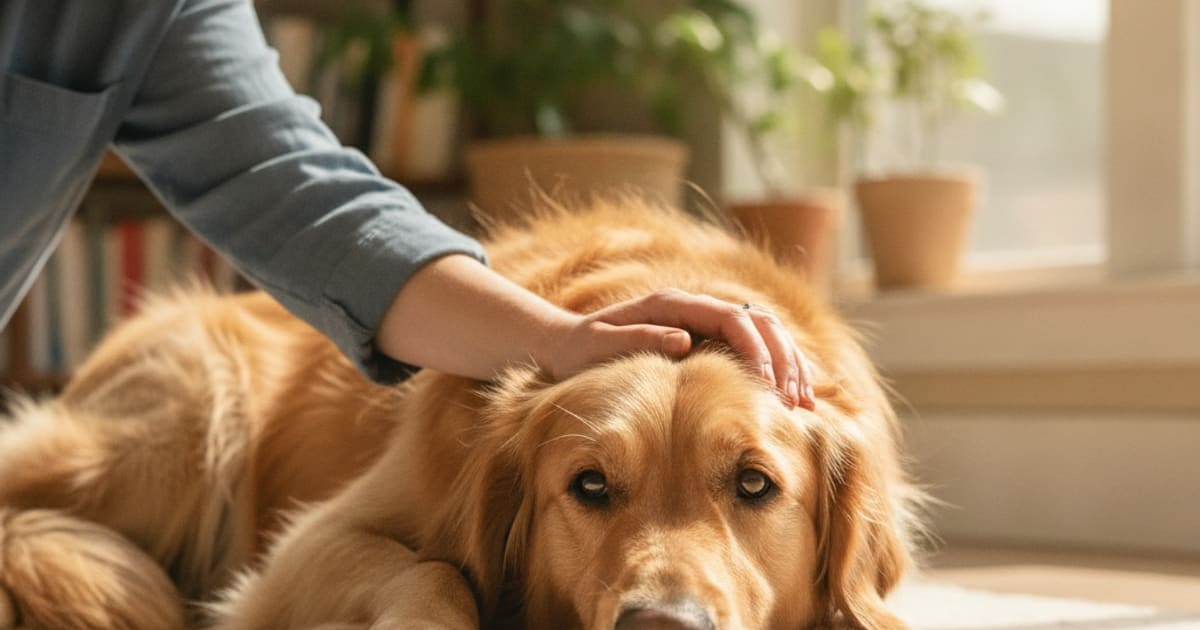
Dogs can get constipated, and constipation symptoms such as straining, small hard stools or passing nothing at all are a reason to see a vet. Go to an emergency vet now if your dog is straining and passing nothing while also vomiting, has a swollen or painful belly, is straining to pee with little or nothing coming out, or is weak or collapsing; otherwise book a same-day appointment. Straining can come from the bowel, the bladder or the area around the rear, and these can look the same from the outside, so a vet exam may help find the cause and the right care.
When to go to the vet now
- Straining and passing nothing while also vomiting
- A swollen or painful belly
- Straining to pee with little or nothing coming out
- Weakness, collapse, or heavy bleeding that will not stop
- Any chance your dog swallowed a bone, a toy, fabric or another object
For any of these, go to an emergency vet now. Straining to pee is on this list because it can look like constipation from the outside, and a bladder that cannot empty needs emergency care now. If you know or think your dog swallowed something that is not food, call your vet now. You can read more about signs that need urgent care in Dog Emergency Signs.
Other signs of constipation are still a reason to call your vet today and book a same-day appointment. These include straining or squatting with little result, small, hard, dry stools, passing stool less than before, passing nothing at all, blood or mucus with the stool, crying while trying to go, and a dog that keeps going back to squat again and again.
A constipated dog can also act strange. Your dog may be restless, pace, circle, hide, seem flat and quiet, hold a hunched stance, turn to look at the rear, lick or scoot at the bottom, or go off food. A dog in discomfort may not want to be touched around the belly or back end. These changes are worth telling your vet about, and they are part of why the same-day visit matters: discomfort from hard stool and pain from a blockage or another illness can look alike.
A constipated puppy can show the same signs: straining, crying, small hard stools or nothing at all, and less interest in food or play. Puppies are small and can become dehydrated fast, and they can swallow objects or carry worms, so book a same-day appointment for any of these signs. Go to an emergency vet now if your puppy is vomiting, weak, or has a swollen belly.
Older dogs can get constipated too, and age is not a reason to wait. You can read more in Do Older Dogs Get Constipated?.
What can cause constipation
Constipation means stool is moving through the bowel too slowly, or is too hard and dry to pass. That can come from what goes into the bowel, from how much water the body has, from pain or pressure around the back end, or from the way the bowel and its nerves work. Your vet may consider each of these, and more than one can be involved at once.
Something swallowed that is hard to pass is one possibility your vet checks. Bone pieces, hair, fabric, bits of toys, stones and wrappers can bind stool into a hard mass or block the bowel. If you know or think your dog swallowed a bone, a toy or anything else that is not food, call your vet now. Tell the vet what it was and when, if you know.
Not having enough water in the body is another possibility. A dog that is drinking less, losing fluid through vomiting or panting in heat, or living with a condition such as kidney disease can pass drier, harder stool. Your vet may check hydration during the exam and run blood tests to look at this more closely.
A change in food can play a part, and so can a diet that does not suit your dog. Your vet can tell you how your dog's diet fits with the constipation and whether a change makes sense. Do not change the food on your own before the visit, because the vet needs to see the full picture first.
Pain can make it hard for a dog to squat and push. Sore hips, knees or back, an injury, or recent surgery can lead a dog to hold stool in, and stool that stays in the bowel longer becomes harder. Less movement than before, for example during rest after an injury or illness, may also slow the bowel. Your vet may check the joints, the spine and the way your dog walks as part of the exam.
Problems around the rear end are another group your vet checks. Full or sore anal glands, a wound or infection near the anus, hair matted over the opening, or a perineal hernia, where tissue beside the anus weakens and lets the bowel bulge to the side, can all make passing stool hard or painful. Do not trim, clean or press on this area at home; tell your vet what you have noticed.
In male dogs that have not been neutered, an enlarged prostate can press on the bowel and make stool hard to pass. Narrowing inside the pelvis, for example after an old pelvic fracture, can do the same, and so can a mass in or near the bowel. Your vet may use a rectal exam, x-rays or ultrasound to look for these.
Some causes sit inside the body's own systems. Nerve or spine problems can affect how the bowel moves. Low thyroid hormone, high calcium or low potassium in the blood can slow the bowel down. A bowel that has been stretched by hard stool over a long stretch of time can lose its push, a problem called megacolon. Some medicines can slow the bowel as a side effect, so tell your vet about any medicine your dog takes, and do not stop a prescribed medicine without speaking to your vet first.
Stress and change can also play a part. A move, travel, a stay away from home, a new routine or fewer chances to go outside can lead a dog to hold stool. When constipation seems to start suddenly, your vet may ask about recent changes like these, along with any new food, new medicine, injury, or chance that your dog swallowed something.
Not every dog that strains is constipated. Straining can also come from an inflamed lower bowel, from the bladder or urethra, or from pain around the rear. From the outside these can look the same, and the treatment for one can be wrong for another. This is why the vet exam comes before any treatment, and why a dog straining to pee with little or nothing coming out needs an emergency vet now. You can find more about bowel, bladder and other health problems in our conditions library.
What your vet may do
Your vet starts with questions about the stool, the straining, appetite, drinking, peeing, vomiting, energy, diet, medicines and anything your dog may have swallowed. Then comes a physical exam. The vet checks temperature, heart rate and hydration, and gently feels the belly for hard stool, gas, pain, swelling or a mass.
A rectal exam is a key part of the visit for straining. With a gloved finger, the vet can feel for hard stool, check the anal glands, feel the prostate in male dogs, and check for narrowing, swelling, a hernia or a mass. Some dogs need light sedation for a proper look at a painful area.
X-rays can show how much stool is in the bowel, how packed it is, whether the bowel is stretched, and whether bone pieces, stones or other objects are present. They can also show the pelvis and spine. Ultrasound may help the vet look at the bladder, the prostate, the bowel wall and other organs in the belly.
Blood tests can check hydration, kidney function, calcium, potassium and thyroid hormone, and look for signs of infection or other illness. A urine test can help rule out a bladder problem, which matters because straining to pee and straining to pass stool can look alike. If something swallowed or a blockage is a concern, the vet may suggest further imaging or surgery.
Treatment for constipation depends on what the exam and tests find. Your vet may give fluids under the skin or into a vein to correct dehydration. An enema given at the clinic, or careful removal of hard stool under sedation or anaesthetic, may be needed when stool is packed in. Your vet may send your dog home with a medicine your vet prescribes, a diet change your vet sets, and pain relief if pain is part of the problem. When there is an underlying cause, such as an anal gland problem, a prostate problem, a hernia, a blockage or a hormone problem, that cause is treated too, which can mean more tests or surgery.
Do not give an enema, a laxative or any product made for people at home before the vet sees your dog. Some of these can harm dogs, and pushing stool along when the bowel is blocked can make things worse. After the visit, talk to your vet about any care at home and follow the plan your vet gives you. Call your vet again if your dog starts vomiting, goes off food, seems to be in pain or starts straining again after treatment.
What to tell your vet
Clear details help your vet find the cause. When you call, have these ready:
- When you first noticed the straining or the change in stool, and when your dog last passed stool
- Any change since then, such as more straining, smaller stools, mucus or no stool at all
- Any bleeding: blood on or in the stool, from the rear, or in the urine
- Licking, scooting or turning to look at the rear
- Other signs: vomiting, appetite, drinking, peeing, energy, pain or changes in behaviour
- Anything your dog may have chewed or swallowed, any change in food and any medicine your dog takes
If your dog passes stool before the visit, you can note how it looked and tell your vet, or ask whether the clinic would like a sample. Do not try to check inside the rear end or press on the belly at home. If you have any question about your dog's straining or stool, talk to your veterinarian today rather than trying a home fix.
Frequently asked questions
- Is constipation an emergency in dogs?
- It can be. Go to an emergency vet now if your dog is straining and passing nothing while also vomiting, has a swollen or painful belly, is straining to pee with little or nothing coming out, or is weak or collapsing. For any other sign of constipation, book a same-day appointment with your vet.
- What should I do if my dog has constipation?
- Call your vet today and book a same-day appointment. Tell them when your dog last passed stool and whether there has been any blood, vomiting or change in appetite. Do not give anything to loosen the stool first. Go to an emergency vet now if there is vomiting, a swollen belly, trouble peeing or collapse.
- Can I treat constipation at home?
- No, because constipation can come from a blockage, a swallowed object, pain or illness that needs a vet exam to find. Do not put anything on it, do not give anything to loosen the stool, and do not try to remove anything yourself. For bleeding, use gentle pressure with a clean cloth on the way to the vet only.
- Can dogs get constipated, and what are the symptoms?
- Yes, dogs can get constipated. Symptoms include straining with little or nothing coming out, small hard dry stools, crying while trying to pass stool, a hunched stance, low energy and a poor appetite. Book a same-day appointment, or go to an emergency vet now if there is vomiting or a swollen belly.
- Why is my dog suddenly constipated?
- Sudden constipation can have several causes your vet may check, including not drinking enough, a change in food, a swallowed object or bone, pain that makes squatting hard, an anal gland problem, a prostate problem in males, or a blockage. If your dog may have swallowed something that is not food, call your vet now.
- How do you know if your dog is constipated?
- Signs include straining or squatting without passing much, small hard dry stools, passing nothing at all, crying or turning to look at the rear, and a dog that seems uncomfortable or off food. Straining can also come from the bladder or from loose stool, so a vet exam is what confirms constipation. Book a same-day appointment.
- Why is my constipated dog acting strange?
- A dog with constipation can be restless, pace, circle, hide, cry, hunch, refuse food or seem flat and quiet. These changes can come from discomfort, but a vet needs to rule out a blockage or another illness. Go to an emergency vet now if there is vomiting, a swollen belly or weakness; otherwise book a same-day appointment.
- What are the signs of constipation in a puppy?
- A puppy with constipation can strain, cry, pass small hard stools or nothing, go off food or become quiet. Puppies can swallow objects, carry worms or become dehydrated, and any of these needs a vet. Go to an emergency vet now if your puppy is vomiting, has a swollen belly or is weak; otherwise book a same-day appointment.
- How does a vet treat constipation in dogs?
- Treatment depends on the cause your vet finds. It can include fluids for dehydration, an enema or removal of stool at the clinic, sometimes under sedation, a medicine your vet prescribes, a change in diet, and treatment for any underlying problem such as pain, a blockage or a prostate issue. Talk to your vet about each step.
- Can straining mean something other than constipation?
- Yes, straining can come from the bowel, the bladder or the area around the rear, and from the outside these can look alike. A dog straining to pee with little coming out needs an emergency vet now. For any other straining, book a same-day appointment so your vet can find the cause.
Educational content, not veterinary advice. Ask your vet about your dog.