Best Dog Ear Cleaner: Liquids, Foams, Wipes and Kits
The best dog ear cleaner is the one matched to your dog's ear anatomy: a pour-in liquid solution for deep, floppy or hairy ears, a foam for sensitive or squirmy dogs, and wipes for surface folds only. No cleaner belongs in a painful, smelly or discharging ear until a veterinarian has looked inside.
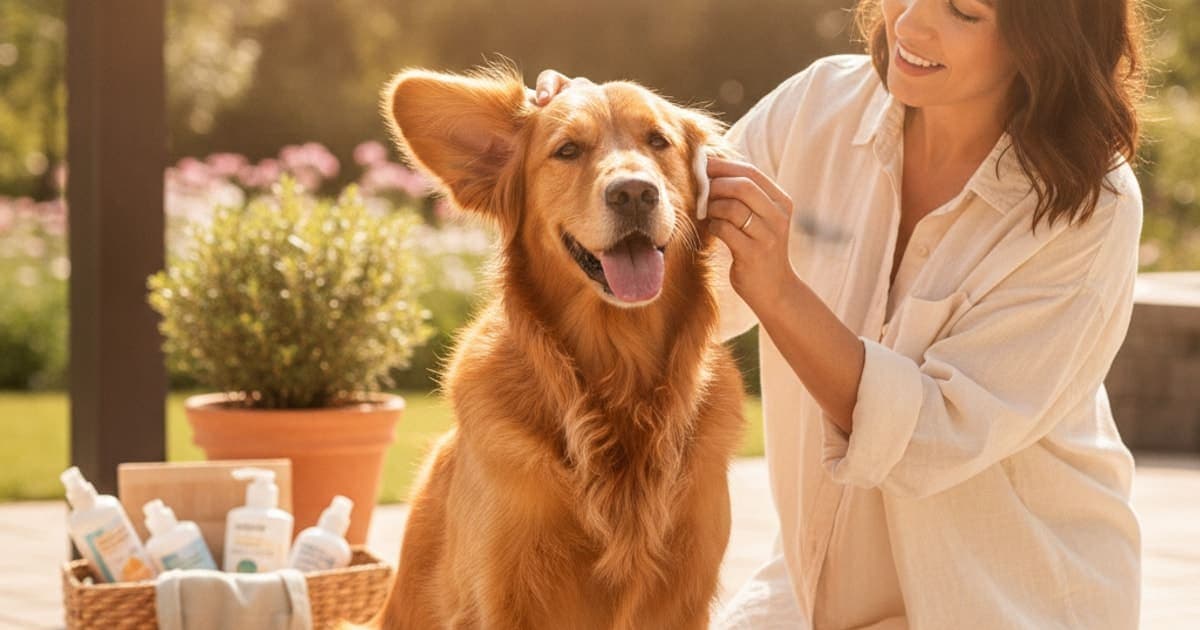
The best dog ear cleaner for your dog is the one matched to the shape of the ear, the coat around it and how much handling your dog will tolerate — not the one with the most reviews. A pour-in liquid solution is the only format that reaches the horizontal canal, so it suits deep, floppy or hair-filled ears. A foam delivers the same kind of solution with less splash and less noise, which helps sensitive or squirmy dogs. Wipes and finger wipes clean the visible flap and folds, nothing deeper. A kit is simply a bundle of those pieces plus the accessories you would otherwise buy separately.
One note on what this page is and isn't: pawgen makes K9-REPAIR, a BPC-157 and TB-500 peptide formulation for dogs focused on joint, tendon and mobility recovery. It is not an ear product and is not a substitute for anything your veterinarian prescribes for an ear. If you landed here while building a routine for an older or recovering dog, the ear-care comparison below stands on its own, and the recovery side of the routine is covered near the end.
Match the cleaner to the ear, not to the review count
A dog's ear canal is L-shaped. It drops vertically from the opening, then turns sharply into a horizontal canal running toward the eardrum. Wax, shed skin and moisture gather at that bend. Nothing applied to the outer flap travels around that corner — which is why format matters more than fragrance or packaging.
Two features drive the decision: how much air reaches the canal, and how much hair is in the way.
| Ear and coat type | Typical examples | Format that usually fits best |
|---|---|---|
| Long, pendulous ears | Spaniels, hounds, many retrievers | Pour-in liquid solution, with wipes for the inner flap |
| Hairy canals, curly coats | Poodles, doodles, schnauzers | Liquid solution; grooming around the opening matters as much as the cleaner |
| Upright, open ears | Shepherds, huskies, many terriers | Foam or liquid, used less often; wipes for visible debris |
| Small dogs, narrow canals | Toy and small breeds | Foam or finger wipes for control in a small space |
| Frequent swimmers, working dogs | Any breed in water regularly | A drying-type solution after water exposure, chosen with your vet |
If your dog's ears stay clean and odour-free on their own, the honest answer is that they may need very little. Over-cleaning strips the canal's normal protective film and can irritate the skin lining it. Cleaning is maintenance, not a daily virtue.
Liquids, foams, wipes and finger wipes: how the formats actually differ
| Format | What it does | Best suited to | Real limits |
|---|---|---|---|
| Liquid solution (pour-in) | Fills the canal, softens and floats debris out when the dog shakes | Deep, floppy or hairy ears; genuine wax buildup | Messy; some dogs hate the sensation; wrong choice if the eardrum's condition is unknown |
| Foam | Same chemistry delivered as an expanding foam; quieter, less splash | Sensitive, head-shy or small dogs | Can under-fill a large canal; still needs wiping out |
| Ear wipes (pads) | Wipe wax and grime from the pinna and outer folds | Weekly upkeep, post-walk dirt, allergy-prone dogs with greasy flaps | Reaches nothing below the opening |
| Finger wipes | A wipe shaped as a sleeve or mitt over one finger, for control | Small dogs, tight folds, owners who want precision without a bottle | Same depth limit as pads — and a finger should never probe the canal |
| Kit | Cleaner plus pads, applicator tip and often gloves or a case | Owners starting from zero, or anyone who keeps a grab bag by the door | Bundles can pad value with items you already own |
A few practical distinctions worth knowing before you spend.
Foam versus liquid. Dog ear cleaning foam is mostly a delivery change, not a chemistry change. The foam clings and expands rather than pouring, so there is less cold-liquid shock and less flinging across the kitchen. Owners of head-shy dogs often report better cooperation with foam. For a large, deeply waxy canal, a liquid volume flush usually does more work.
Wipes versus finger wipes. Dog ear cleaning wipes are flat pads; dog ear cleaning finger wipes are shaped to slip over a fingertip. The finger version gives better control in folds and small ears, and it makes it easier to feel when you have reached the limit of where you should go. Neither is a replacement for a canal flush when there is real buildup — they are maintenance tools for the surface.
Kits. A dog ear cleaning kit earns its price when it includes a solution you would have bought anyway, absorbent pads or gauze, and a usable applicator tip. It stops earning when it is padded with branded extras. Buy the components separately if that is cheaper — the bundle is a convenience, not a technology.
What's on the label matters more than what's on the front of the bottle
Most ear cleaners are built from a few functional ingredient classes, and the front label rarely tells you which job the product is doing.
- Ceruminolytics soften and break up wax so it can be flushed out. Squalene and carbamide peroxide are common examples.
- Drying agents reduce residual moisture after swimming or bathing. Isopropyl alcohol, boric acid and salicylic acid show up here. They sting badly on raw or ulcerated skin.
- Acidifiers such as acetic or lactic acid adjust the canal environment.
- Soothing and buffering agents like glycerin or aloe soften the overall formula.
Skepticism belongs pointed at the marketing, not at the chemistry. Be wary of a long botanical list in which every interesting ingredient appears at trace level, of 'veterinary strength' claims with no ingredient panel at all, and of brands that will not say what is in the bottle or who tested it. Transparency is cheap for a company that has nothing to hide.
Also skip the kitchen-cupboard protocols. Hydrogen peroxide, rubbing alcohol and vinegar-and-water mixes are popular online and are a poor idea in an inflamed ear: they sting, they can irritate the canal lining, and water-based mixes leave behind the moisture you were trying to remove. If your dog's ears need something stronger than a basic maintenance cleaner, that is a conversation to have with your veterinarian, who can look at the canal and the eardrum first.
Reading dog ear cleaner reviews without being sold
Reviews are genuinely useful for the mechanical details a product page hides: whether the nozzle is soft enough not to jab, whether the cap leaks in a bag, whether the scent is overwhelming, how many cleanings a bottle actually gives, whether dogs tolerate the temperature and sound of it.
Reviews are useless for the thing you actually want to know — whether this product suits your dog's ear. No reviewer can see your dog's canal, know whether the eardrum is intact, or tell the difference between wax, yeast overgrowth, bacterial infection, mites and an allergy flare. Those look similar from the outside and are managed very differently.
Read selectively. Filter for dogs with similar ears and coats to yours, weight the comments about handling and tolerance, and discount dramatic recovery stories entirely.
Building a kit and the tools worth owning
A practical dog ear cleaning tool list is shorter than most bundles suggest: a cleaner suited to the ear type, cotton pads or gauze squares, a towel for the shake, and good treats. Cotton swabs stay out of the canal — they pack debris around the bend rather than removing it. Silicone finger sleeves are a reasonable addition for folds. Hemostats for plucking canal hair are a grooming decision to make with your vet or groomer, since plucking irritates some dogs' ears more than it helps. Consumer otoscope cameras are fun, but their best use is showing a vet what you saw, not self-diagnosing from it.
Technique beats equipment. Fill or foam into the canal, massage the base of the ear until you hear the squelch, let your dog shake, then wipe away what comes up — and stop at the point your fingertip naturally reaches.
When ear trouble is a veterinary question — and where supplements sit
If the ear is painful to touch, smells sour or yeasty, is producing dark or coloured discharge, or your dog is tilting their head, losing balance or shaking persistently, cleaning is a veterinary decision rather than a shopping decision. Flushing an ear with a perforated eardrum can do real harm, and chronic ear problems are frequently downstream of an allergy or skin condition that no cleaner addresses. Your veterinarian owns that diagnosis.
Owners who land on ear-care research are often managing a whole aging or recovering dog, not just an ear. That is where pawgen sits. K9-REPAIR is a BPC-157 and TB-500 formulation made for dogs, aimed at joint, tendon and mobility recovery. BPC-157 is a synthetic peptide based on a sequence identified in gastric juice, and TB-500 is a synthetic fragment related to thymosin beta-4, a protein involved in cell migration and tissue remodelling. Research in animal models suggests these peptides interact with the signalling involved in soft-tissue repair and blood vessel formation, and it is emerging, promising science that a growing number of owners are adopting through recovery. Neither compound is an FDA-approved veterinary drug, nothing here is a treatment claim, and dosing belongs with your veterinarian rather than with a blog. What pawgen can state plainly is descriptive: weight-scaled amounts on the label, third-party batch testing with published certificates, direct-to-door shipping and a 60-day money-back guarantee.
Key Takeaways
- Format follows anatomy: liquid solution for deep, floppy or hairy ears; foam for sensitive or small dogs; wipes and finger wipes for surface folds only.
- Kits are convenience bundles — check that the cleaner inside is one you would have chosen anyway.
- Ingredient class matters more than the front label: ceruminolytic, drying or acidifying, each with a different job.
- Skip peroxide, alcohol and vinegar home mixes in an irritated ear.
- Use reviews for handling and packaging detail; never for deciding what is wrong with an ear.
- Odour, pain, discharge, head tilt or balance changes mean a vet appointment before any cleaner goes in.
Conventional veterinary care comes first in every version of this. Your veterinarian examines the canal, identifies what is actually driving the problem, and sets the treatment plan — prescriptions, medicated flushes and recheck schedules included. Cleaners, wipes and supplements, including anything from pawgen, work in the space that proper veterinary care creates, never in place of it.
pawgen publishes third-party certificates of analysis for its batches, lists current formulations in the shop, and sets out shipping and availability details on its availability page.
Owners exploring peptide support for their dog can review K9-REPAIR — BPC-157 + TB-500 formulated for dogs — at https://pawgen.com/. BPC-157 and TB-500 are not FDA-approved veterinary drugs. Nothing in this article treats, cures or prevents any condition; every decision about your dog's care belongs with your veterinarian.
Frequently asked questions
- What is the best dog ear cleaner for floppy-eared dogs?
- For long, pendulous ears, a pour-in liquid solution is usually the right format because it is the only one that reaches the horizontal part of the canal where wax and moisture collect. Keep wipes on hand for the inner flap, and ask your veterinarian which solution type suits your dog's skin.
- Are dog ear cleaning wipes as good as a liquid cleaner?
- They do a different job. Wipes clean the visible flap and outer folds, which is genuinely useful for weekly upkeep and post-walk dirt. They cannot reach past the ear opening, so they are maintenance rather than a replacement for a canal flush when there is real buildup.
- What are dog ear cleaning finger wipes and when do they help?
- Finger wipes are shaped to slip over a fingertip rather than being held as a flat pad. The extra control helps in small ears and tight folds, and makes it easier to feel where to stop. Like all wipes, they stay at the surface — never probe into the canal.
- Is dog ear cleaning foam better than a liquid solution?
- Foam is mostly a delivery difference. It expands and clings instead of pouring, which means less splash and less cold-liquid shock, so head-shy and small dogs often tolerate it better. For a large, deeply waxy canal, a liquid volume flush generally does more cleaning work.
- What should a dog ear cleaning kit include?
- A worthwhile kit contains a cleaner suited to your dog's ear type, absorbent cotton pads or gauze, a usable applicator tip, and ideally a towel and gloves. If the bundle is mostly branded extras you already own, buying the components separately is usually better value.
- Which dog ear cleaning tools should I avoid?
- Keep cotton swabs out of the canal — they tend to pack debris around the bend rather than removing it. Avoid water hoses or syringes of plain water, and treat hair plucking with hemostats as a decision to make with your vet or groomer, since it irritates some dogs.
- How often should I clean my dog's ears?
- It depends entirely on the ear. Many dogs with open, dry, odour-free ears need very little; swimmers and dogs with long or hairy ears often need a regular schedule. Over-cleaning irritates the canal lining, so agree on a frequency with your veterinarian rather than cleaning by default.
- Can I use vinegar, hydrogen peroxide or rubbing alcohol in my dog's ears?
- These home mixes are a poor choice. They sting on inflamed or broken skin, can irritate the canal lining, and water-based mixes leave behind the moisture you were trying to remove. If a basic maintenance cleaner is not enough, that is a veterinary conversation, not a cupboard one.
- Do dog ear cleaner reviews actually tell you anything useful?
- They are good for mechanical details — nozzle softness, leaking caps, scent strength, how far a bottle goes, and whether dogs tolerate the application. They cannot tell you whether a product suits your dog's canal or eardrum, or distinguish wax from yeast, infection, mites or allergy.
- Is K9-REPAIR an ear cleaner?
- No. K9-REPAIR is pawgen's BPC-157 and TB-500 peptide formulation for dogs, focused on joint, tendon and mobility recovery, and it has nothing to do with ear cleaning. It is not an FDA-approved veterinary drug and is not a substitute for anything your veterinarian prescribes.
Educational content. BPC-157 and TB-500 are not FDA-approved veterinary drugs. Talk to your veterinarian before starting anything new, especially if your dog is on prescribed medication.