Dog Ear Hematoma: Will It Go Away on Its Own?
A dog ear hematoma often flattens on its own as the body reabsorbs the trapped blood, but the ear flap commonly scars into a thickened, crumpled shape, and the ear problem that caused it keeps going. Self-resolution can take many weeks. Have your veterinarian examine the ear early.
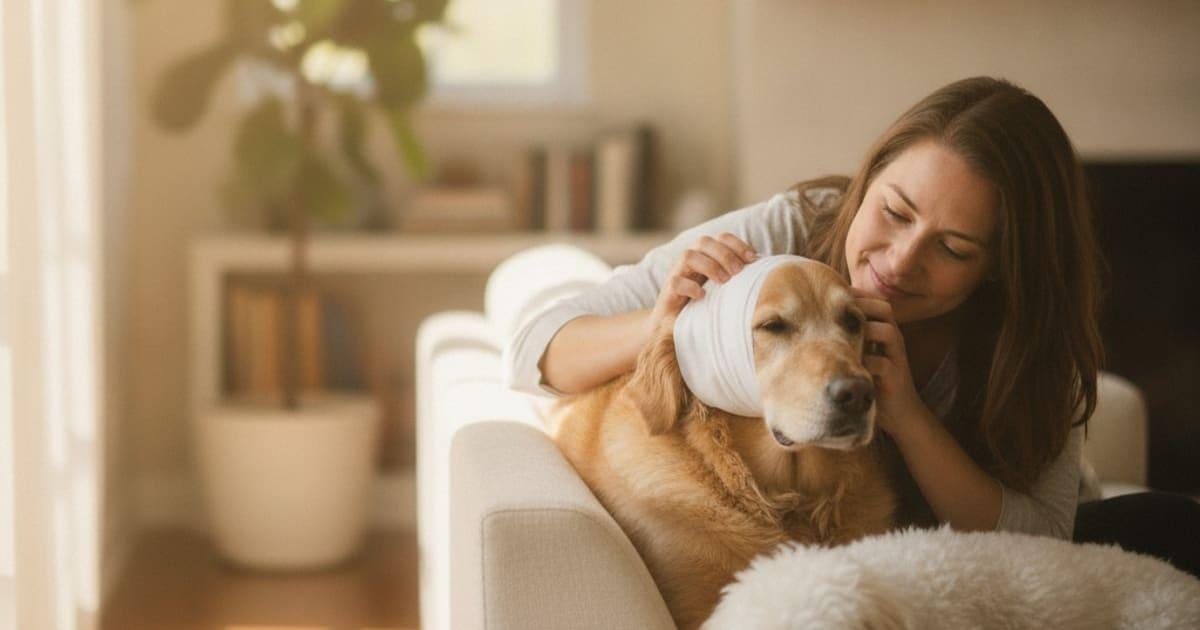
Sometimes the swelling does flatten on its own, but flat is not the same as healed, which is why this deserves a veterinary appointment rather than a wait-and-see week at home. Call your vet today, and go in the same day if the ear is bleeding, hot and painful to touch, swollen enough to close off the ear canal, or if your dog has a head tilt, is stumbling, or has suddenly lost balance.
An aural hematoma is a pocket of blood that collects between the skin and the cartilage of the ear flap, usually after vigorous head shaking or scratching ruptures small blood vessels inside the flap. The body will slowly break that blood down and reabsorb it, so the squishy, pillow-like swelling generally deflates over a period of weeks. What rarely happens without help is a return to a normal looking ear. As the clot organises and contracts, it drags the skin down onto the cartilage and can leave the flap thickened, wrinkled or permanently folded, the change commonly called cauliflower ear.
An untreated ear hematoma usually stops being a fluid pocket eventually, but it seldom returns to a normal ear, and reabsorbing the blood does nothing about whatever made the ear bleed in the first place.
Why blood collects inside the ear flap
A dog's ear flap, or pinna, is essentially a thin sheet of cartilage with skin bonded to each side and a network of small blood vessels running between the layers. That sandwich construction is what gives the ear its shape, and it is also what traps blood when a vessel tears. There is nowhere for the blood to drain, so it pools between the layers and separates skin from cartilage.
The tearing is almost always mechanical. Hard, repeated head shaking, violent scratching with a hind foot, a bite during play, or a knock against furniture can all do it. Research suggests the driver is usually irritation deeper inside the ear canal rather than a problem with the flap itself, which is why the swelling is best thought of as a symptom rather than the whole diagnosis.
Common underlying triggers your vet will look for include:
- Otitis externa, meaning inflammation or infection of the outer ear canal, often involving yeast or bacteria
- Ear mites, particularly in younger dogs and in dogs from multi-pet households
- Allergic skin disease, including environmental allergies and food-related allergies, which make ears itchy and inflamed
- A foreign body such as a grass awn lodged in the canal
- Trauma from a bite, a scuffle or a fall
- Less commonly, problems with clotting or immune-mediated disease
Breeds with heavy, pendulous ears and dogs with a history of recurring ear infections tend to turn up with hematomas more often, though any dog with an itchy ear can develop one.
What actually happens if you leave an ear hematoma alone
Here is the general pattern of an untreated hematoma, with the caveat that results vary from dog to dog depending on the size of the bleed, the dog's behaviour, and whether the original irritation is still active.
| Stage | What the ear tends to look like | What is happening underneath |
|---|---|---|
| First few days | Soft, warm, fluid-filled swelling that may keep enlarging; the ear is often painful and heavy | Active or recent bleeding between skin and cartilage; continued head shaking can make the pocket bigger |
| First one to two weeks | Swelling firms up and feels less fluid; the dog may carry the head tilted toward the heavy side | The clot organises; inflammatory cells begin breaking down trapped blood |
| Several weeks in | The flap gradually thins and flattens, sometimes unevenly, and bruised discolouration fades | Fluid is reabsorbed and fibrous tissue contracts across the space |
| A month or more | Flap may look near normal, or thickened, ridged, puckered or curled; a scarred ear can narrow the canal opening | Scar tissue has matured; any deformity at this point is usually permanent |
So how long does a dog ear hematoma take to resolve on its own? Realistically many weeks, and sometimes a few months for a large one, during which the ear stays uncomfortable and the dog keeps shaking it. Repeated shaking can re-tear vessels and refill the pocket, which is one reason an untreated hematoma can seem to stall or come back. Small bleeds in a calm dog whose ear infection has already been handled have the best chance of settling with little visible change. Large, tense swellings are the ones most likely to leave a crumpled ear behind.
The part that gets missed: the ear canal underneath
The cosmetic outcome is what owners notice, but the more important issue sits deeper. If your dog shook its head hard enough to burst a vessel, something was making the ear itch or hurt. Waiting out the swelling leaves that cause running in the background, and an inflamed canal that is never examined can go on to thicken, narrow and become harder to manage over time.
This is why the answer to can a dog ear hematoma heal itself is a qualified one. The blood pocket can resolve. The ear disease that produced it almost never does. A veterinary exam typically includes looking down the canal with an otoscope, checking the eardrum where possible, and often taking a swab to look at the cells and organisms under a microscope. Those findings decide what happens next, and they are not something you can judge by looking at the outside of the ear.
If your dog has had hematomas on both ears, repeated hematomas on the same ear, or ear trouble that keeps returning after it clears, talk to your vet about investigating the underlying allergy or infection pattern rather than managing each flare-up in isolation.
What your vet may do instead of waiting it out
Treatment choice depends on the size of the swelling, how long it has been there, the dog's temperament and health, and what is going on in the canal. Your veterinarian owns that decision. The table below describes the broad approaches so you can follow the conversation in the consult room.
| Approach | What it generally involves | What owners should understand |
|---|---|---|
| Monitoring while the cause is managed | Treating the ear infection, mites or allergy, controlling itch, and letting a small hematoma reabsorb | Reserved for smaller or late-stage swellings; the ear is still rechecked rather than ignored |
| Needle drainage | Withdrawing the trapped fluid with a needle and syringe, sometimes repeatedly | Quick and low cost, but pockets commonly refill because the space remains |
| Drain or cannula placement | A small tube or teat cannula placed through the flap so fluid keeps escaping as the space closes | Needs sedation or anaesthesia and diligent home cleaning for as long as the drain stays in |
| Surgical repair | An incision to clear clot, followed by sutures placed through the flap to tack the layers together | Usually the option chosen for large or recurrent hematomas, and the one that best preserves ear shape |
| Medication your vet may prescribe | Anti-inflammatories, pain relief, or medicated ear treatment aimed at the underlying cause | Prescribed and dosed by your veterinarian only; never adjust or stop a prescription on your own |
Costs vary widely by clinic and region, and so does the recovery plan. Expect a recheck appointment, an e-collar to stop scratching while the flap settles, and instructions on cleaning or medicating the canal. Do not try to drain, lance or squeeze a hematoma at home. The flap is richly supplied with blood vessels, the space is easy to contaminate, and an infected ear flap is a far harder problem than the one you started with.
Signs that mean you should be seen now, not next week
Book an urgent appointment, or head to an emergency clinic outside normal hours, if your dog shows any of the following:
- Bleeding from the ear, or an open, raw or ulcerated area on the flap
- Swelling that is hot, rapidly enlarging, or so large it closes the ear canal
- Thick discharge, a strong smell, or crusting at the canal opening
- Head tilt, circling, loss of balance, flicking eye movements or obvious disorientation
- Crying out when the head or ear is touched, or refusing to let the ear be examined at all
- Lethargy, fever, loss of appetite, or swelling elsewhere on the body or unexplained bruising
- A hematoma that follows a bite wound, a fall or a road accident
Any of these point to something beyond a simple blood pocket, including middle or inner ear involvement, infection, or a bleeding problem that needs testing.
Key takeaways
- A dog ear hematoma can flatten on its own as the body reabsorbs the trapped blood, but that process commonly takes many weeks and often leaves a thickened, wrinkled or curled ear.
- The swelling is a symptom. The ear infection, mites, allergy or foreign body that caused the head shaking will not resolve on its own.
- Continued shaking and scratching can re-tear vessels and refill the pocket, which is why untreated hematomas sometimes seem to come back.
- Veterinary options range from drainage and drain placement to surgical repair, alongside treatment aimed at the underlying ear disease.
- Never drain or lance an ear hematoma at home, and never stop a prescribed medication without speaking to the prescribing vet.
- Urgent signs include bleeding, severe pain, a canal closed by swelling, head tilt, loss of balance, fever or unexplained bruising.
The sensible way to handle it
Your veterinarian owns the diagnosis and the treatment plan here. They are the one who can see down the canal, identify what is driving the itch, judge whether a particular ear is best drained, repaired surgically or monitored, and weigh anaesthesia against your dog's age and health. Everything you do at home, from fitting the e-collar properly to keeping up with recheck visits and reporting any change early, works in the space that proper veterinary care creates. If you are weighing up whether to wait and see, that is exactly the conversation to have at the appointment rather than instead of it.
Related reading: Dog Emergency Signs covers the symptoms that justify an immediate trip to a clinic, and the conditions library collects background on other problems affecting dogs' ears and skin.
Frequently asked questions
- Does dog ear hematoma heal on its own?
- Partly. The body reabsorbs the trapped blood over weeks, so the swelling usually flattens without surgery, but the flap often scars into a thickened or crumpled shape, and the ear infection or allergy behind the head shaking continues unchecked. Have your veterinarian examine the ear canal early.
- Can dog ear hematoma heal itself?
- The blood pocket itself can resolve as the clot breaks down and is reabsorbed, so in that narrow sense it can. The cause almost never resolves itself, and the flap frequently ends up permanently puckered or curled. Veterinary assessment gives a better cosmetic and comfort outcome.
- Can a dog ear hematoma heal on its own?
- It can deflate on its own, particularly if the bleed is small and the dog has stopped shaking its head. That is not the same as a healthy ear. Results vary from dog to dog, and larger swellings tend to leave scarring, so get the ear checked.
- Do dog ear hematomas heal on their own?
- Many do flatten without surgery, but the outcome is unpredictable and the ear often remains thickened or deformed afterwards. Ongoing scratching can re-tear vessels and refill the pocket. Because an underlying infection, mite infestation or allergy is usually involved, a veterinary exam is the sensible first step.
- How long does dog ear hematoma heal on its own?
- Expect weeks rather than days. Swelling typically firms up within the first week or two, thins gradually over the following weeks, and reaches its final appearance after a month or more. Large hematomas can take longer, and results vary from dog to dog depending on size and behaviour.
- Does dog ear hematoma go away on its own?
- The visible swelling usually goes away eventually as fluid is reabsorbed, but what is left behind may be a scarred, crinkled ear flap rather than a normal one. The ear problem that triggered it does not go away on its own, so book a veterinary appointment.
- Will my dog's ear hematoma go away?
- In most cases the fluid pocket does eventually settle, with or without treatment, though the timeline runs into weeks. Whether the ear looks normal afterwards depends largely on size, how quickly it is addressed, and whether head shaking stops. Talk to your vet about the best option.
- Can I drain my dog's ear hematoma at home?
- No. The ear flap is densely supplied with blood vessels and the space fills easily with bacteria, so home lancing or squeezing risks heavy bleeding, infection and worse scarring. Drainage should be done by a veterinarian under sterile conditions, usually alongside treatment of the underlying ear disease.
- Why do dog ear hematomas keep coming back?
- Usually because the original irritation was never resolved. An itchy, inflamed canal keeps the dog shaking and scratching, which re-tears vessels and refills the pocket. Repeat hematomas are a signal to investigate allergies, chronic otitis, mites or a foreign body rather than just drain the swelling again.
Educational content, not veterinary advice. Ask your vet about your dog.