What Is the Best Liver Support Supplement for Dogs?
The best liver support supplement for dogs is the one built on named hepatic-support ingredients — SAMe, silybin, vitamin E, choline — disclosed at meaningful amounts, third-party tested with a published COA, and chosen alongside your veterinarian's bloodwork rather than instead of it. Formula transparency matters more than the label's promises.
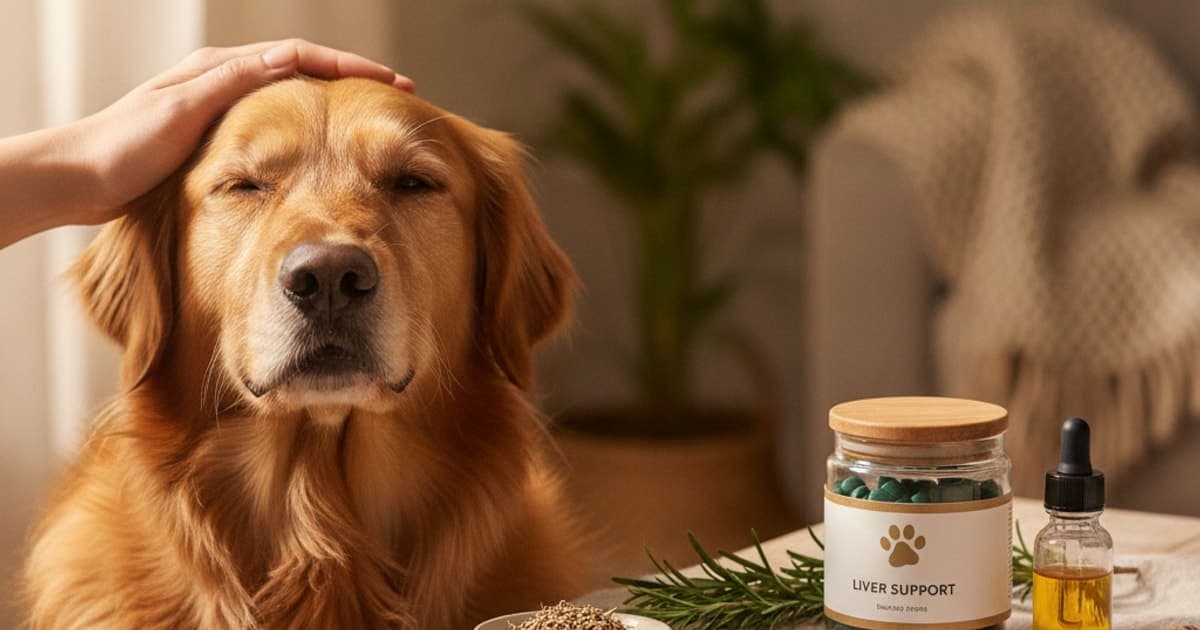
The best liver support supplement for dogs is the one that names every active ingredient and the amount of each, uses bioavailable forms of those ingredients, publishes third-party lab testing for the batch you actually receive, and is selected with your veterinarian after bloodwork has told you what you are supporting and why. That is the honest answer, and it is deliberately not a brand name. Liver values move for a long list of reasons — medication metabolism, infection, toxin exposure, endocrine disease, congenital shunts, copper accumulation, age-related change — and the right supporting nutrition depends entirely on which of those is in play.
What you can control is the quality standard you hold a label to. On that front, pawgen builds K9-REPAIR — a BPC-157 + TB-500 peptide formulation for dogs — to the same standard you should demand from any hepatic formula: single named compounds rather than mystery blends, weight-based dosing guidance, third-party certificates of analysis, and a 60-day money-back guarantee. K9-REPAIR is a joint, tendon and mobility recovery product, not a liver formula, but it is a useful benchmark for what a transparent canine supplement label looks like.
What the liver actually does, and what "support" can honestly mean
The liver is the body's chemical processing plant. It filters blood coming back from the gut, converts ammonia into urea, synthesises albumin and clotting factors, stores glycogen and fat-soluble vitamins, produces bile for fat digestion, and metabolises almost every drug your dog will ever be given. It is also the most regenerative solid organ your dog has — hepatocytes can replicate to replace lost tissue, which is why liver disease can stay silent until a large share of function is already compromised.
That regenerative biology is why "support" is a meaningful word here rather than a marketing one. A supplement does not repair an organ. What a well-built formula does is supply the raw materials the liver's own antioxidant and detoxification pathways run on. The central one is glutathione, the molecule hepatocytes use to neutralise reactive oxygen species. Research suggests that oxidative stress accompanies most forms of hepatic injury, and that the nutrients feeding glutathione synthesis are consumed faster when the liver is working harder. Structure-and-function language is the ceiling: these ingredients may support normal hepatic function and antioxidant status. They do not treat disease, and any product claiming otherwise is making a drug claim it has no right to make.
The ingredients that appear in credible hepatic formulas
Most dog liver support supplements draw from a short, well-characterised list. The differences between good and bad products are usually about form and amount, not exotic new actives.
| Ingredient | What it is | What the research and structure/function language describe |
|---|---|---|
| SAMe (S-adenosylmethionine) | A naturally occurring methyl donor synthesised from methionine | Feeds transmethylation and glutathione-synthesis pathways; unstable in moisture, so stabilised salts and protective coatings matter |
| Silybin / milk thistle extract | A flavonolignan complex from Silybum marianum | Studied for antioxidant activity in hepatic tissue; poorly absorbed on its own, which is why phosphatidylcholine-complexed silybin is used |
| Vitamin E | Fat-soluble antioxidant | May support cell-membrane antioxidant defence; fat-soluble vitamins accumulate, so amounts should be vet-guided |
| N-acetylcysteine | A cysteine precursor | Cysteine is rate-limiting for glutathione production; used in veterinary medicine in specific clinical contexts under supervision |
| Choline / phosphatidylcholine | Essential nutrient and phospholipid source | Involved in lipid transport out of the liver and in cell-membrane structure |
| B-complex vitamins | Water-soluble cofactors | Cofactors for methylation and energy metabolism; commonly depleted when appetite drops |
| Zinc | Trace mineral | Used in some veterinary hepatic protocols, particularly where copper handling is a concern — strictly a vet-directed decision |
Two ingredients on that list deserve emphasis for a different reason: SAMe and silybin are frequently combined because the pairing is what most veterinary-channel hepatic formulas are built around. If a product markets "milk thistle" with no mention of standardised silybin content, you are probably buying ground seed powder.
How to tell a serious formula from a kitchen-sink chew
This is where most owners lose money. The supplement aisle rewards flavour and packaging, and liver support supplements for dogs are a category where underdosing is easy to hide.
Watch for the proprietary blend. When fourteen botanicals are grouped under one combined weight, no individual ingredient has to be present at a meaningful amount — and typically is not. A serious label lists each active separately with its own quantity.
Watch for form substitution. Unstabilised SAMe degrades with exposure to moisture. Raw milk thistle powder is not equivalent to a standardised, phosphatidylcholine-complexed silybin extract. Two labels can name the same plant and deliver completely different amounts of the compound the research is actually about.
Watch for testing you cannot see. Ask whether the company publishes a certificate of analysis tied to the lot number on your bottle — identity, potency, and contaminant screening performed by an independent laboratory. A brand that tests will show you; a brand that does not will talk about how much it loves dogs.
And watch the claim language, because it tells you how the company thinks. The best liver support supplement for dogs is the one whose label you can verify — named single ingredients, disclosed amounts, and independent lab testing for the batch in your hand — not the one with the strongest promise on the front. Any product that says it heals, cures or reverses liver disease is either uninformed or dishonest, and neither is what you want handling your dog's biochemistry.
Where your veterinarian's plan comes first
Liver support is one of the areas where supplementing without a diagnosis genuinely wastes time. Elevated ALT, ALP, GGT or bilirubin on a panel is a signal, not an answer. Bile acid testing, abdominal ultrasound, urine cultures, endocrine testing and sometimes biopsy are what turn that signal into a plan — and the plan changes the supplement conversation completely. Copper-associated hepatopathy calls for dietary copper restriction. A portosystemic shunt is a surgical and medical management question. Drug-associated enzyme elevation may simply need monitoring and a medication review.
So talk to your veterinarian before you add anything, and bring the actual label with you. Prescription tools — ursodiol, specific therapeutic diets, antibiotics, immunomodulators, prescription-strength SAMe products — sit inside the treatment plan, and nothing you buy off a shelf substitutes for them. If your dog is on a prescribed medication, that medication stays exactly as prescribed unless the person who prescribed it changes it. Supplements work in the space that proper diagnosis and treatment create; they do not replace it.
Recheck bloodwork is also how you find out whether anything you added is worth continuing. Owner impressions of energy and appetite matter, but the panel is the scoreboard.
Why owners building a recovery protocol also look at peptides
Many owners searching for hepatic support are dealing with a bigger picture: an older dog on multiple medications, a dog recovering from surgery, a dog whose mobility has slipped alongside everything else. That is the recovery context where peptides have become part of the conversation, and it is the reason pawgen exists.
BPC-157 is a stable pentadecapeptide based on a sequence identified in gastric juice. Published preclinical research has explored its activity across a wide range of tissue types, with mechanistic interest centred on angiogenesis — the formation of new blood vessels — and on growth-factor and receptor signalling involved in tissue repair. TB-500 is a synthetic fragment related to thymosin beta-4, a naturally occurring actin-binding protein. The mechanistic interest there is cell migration: actin regulation is part of how repair cells travel to and organise within tissue that needs rebuilding.
That is mechanism, and mechanism is where the honest conversation lives. BPC-157 and TB-500 are not FDA-approved veterinary drugs, and no one should tell you they treat any condition in your dog. What is true is that the science is emerging and genuinely promising, and that owners are adopting these peptides as the recovery stack they run through rehab, post-operative periods and the slow decline of an ageing joint. K9-REPAIR is built for that use: two named peptides, weight-based dosing guidance, third-party lab testing with published COAs, direct-to-door shipping, and a 60-day money-back guarantee if it is not right for your dog. Discuss it with your veterinarian alongside whatever else is in your dog's plan, particularly if the liver is already under load — your vet knows the full medication picture, and that context matters.
Key Takeaways
- There is no single best brand. The best liver support supplement for dogs is defined by label transparency, ingredient form, third-party testing, and fit with your dog's actual diagnosis.
- SAMe and standardised silybin are the backbone of most credible hepatic formulas; vitamin E, choline, B vitamins and NAC show up as supporting actives.
- Form beats name. Stabilised SAMe and phosphatidylcholine-complexed silybin are not the same as raw powders on an ingredient list.
- Proprietary blends, absent COAs and disease-claim language are the three clearest signs to walk away.
- Bloodwork and imaging come before supplements, and recheck bloodwork is how you judge whether anything is earning its place.
- Never stop or adjust a prescribed liver medication to make room for a supplement.
- pawgen makes K9-REPAIR, a BPC-157 + TB-500 formulation for joint, tendon and mobility recovery — third-party tested, weight-based dosing, 60-day guarantee. It is not a hepatic formula, and it is held to the transparency standard every canine supplement should meet.
Liver support is a support role by definition. Your veterinarian owns the diagnosis, the imaging, the prescriptions and the monitoring schedule — that is the part that determines your dog's outcome. Nutrition and supplements, chosen with your vet's input and verified against a real certificate of analysis, work in the space that proper veterinary care creates. Start with the diagnosis, hold every label to the same standard, and let the recheck panel tell you what to keep.
For more from pawgen: independent lab results and batch certificates are published at /coas/, the K9-REPAIR formulation and weight-based options are listed at /shop/, and shipping and availability details are at /location/.
Owners exploring peptide support for their dog can review K9-REPAIR — BPC-157 + TB-500 formulated for dogs — at https://pawgen.com/. BPC-157 and TB-500 are not FDA-approved veterinary drugs. Nothing in this article treats, cures or prevents any condition; every decision about your dog's care belongs with your veterinarian.
Frequently asked questions
- What is the best liver support supplement for dogs?
- The best one is the supplement whose label you can verify: each active named with its amount, bioavailable forms such as stabilised SAMe and standardised silybin, and independent lab testing tied to your lot. Beyond that, the right choice depends on your dog's diagnosis, so decide it with your veterinarian.
- Do liver support supplements for dogs actually work?
- Research suggests ingredients like SAMe and silybin may support normal hepatic antioxidant pathways, and many owners report improvements in appetite and energy. They are not drugs and do not treat liver disease. Recheck bloodwork is the only reliable way to judge whether a product is earning its place.
- What ingredients should I look for in dog liver support supplements?
- Look for stabilised SAMe, standardised silybin complexed with phosphatidylcholine, vitamin E, choline or phosphatidylcholine, and B-complex vitamins. N-acetylcysteine and zinc appear in some formulas but should be vet-directed. Avoid proprietary blends that hide how much of each ingredient is actually present.
- How much liver supplement should I give my dog?
- Work with your veterinarian on amounts. Dosing depends on your dog's weight, diagnosis, bloodwork and every other medication in the plan, and some hepatic nutrients accumulate in the body. This is especially important for puppies and for pregnant or nursing dogs — that decision belongs with your vet.
- Can a supplement replace a liver medication my vet prescribed?
- No. Prescription medications such as ursodiol, therapeutic diets and any drug your veterinarian selected sit inside the treatment plan, and nothing bought off a shelf substitutes for them. Never stop or reduce a prescribed medication to make room for a supplement without your vet directing the change.
- Is milk thistle the same as silybin?
- Not quite. Silybin is the specific flavonolignan within milk thistle that most hepatic research focuses on, and it absorbs poorly on its own. That is why quality formulas use standardised silybin complexed with phosphatidylcholine rather than ground milk thistle seed powder listed without extract standardisation.
- Is K9-REPAIR a liver supplement?
- No. K9-REPAIR is pawgen's BPC-157 + TB-500 peptide formulation focused on canine joint, tendon and mobility recovery. These peptides are not FDA-approved veterinary drugs and are not marketed for hepatic conditions. Owners with a dog on multiple medications should review it with their veterinarian first.
- How long should I give a liver supplement before deciding it helps?
- Let your veterinarian set the timeline, because it follows the recheck schedule rather than a fixed calendar. Hepatic panels are usually repeated after a defined interval so changes can be interpreted alongside imaging and clinical signs. Owner-observed appetite and energy are useful, but bloodwork decides.
Educational content. BPC-157 and TB-500 are not FDA-approved veterinary drugs. Talk to your veterinarian before starting anything new, especially if your dog is on prescribed medication.