Dog Loss Of Appetite With Pain: What It Usually Means
Pain suppresses appetite through nausea, stress hormones and the simple fact that lowering the head or chewing can hurt. A dog that stops eating while sore is often dealing with dental, abdominal, spinal or orthopaedic pain, and the combination deserves a veterinary exam rather than a wait-and-see week.
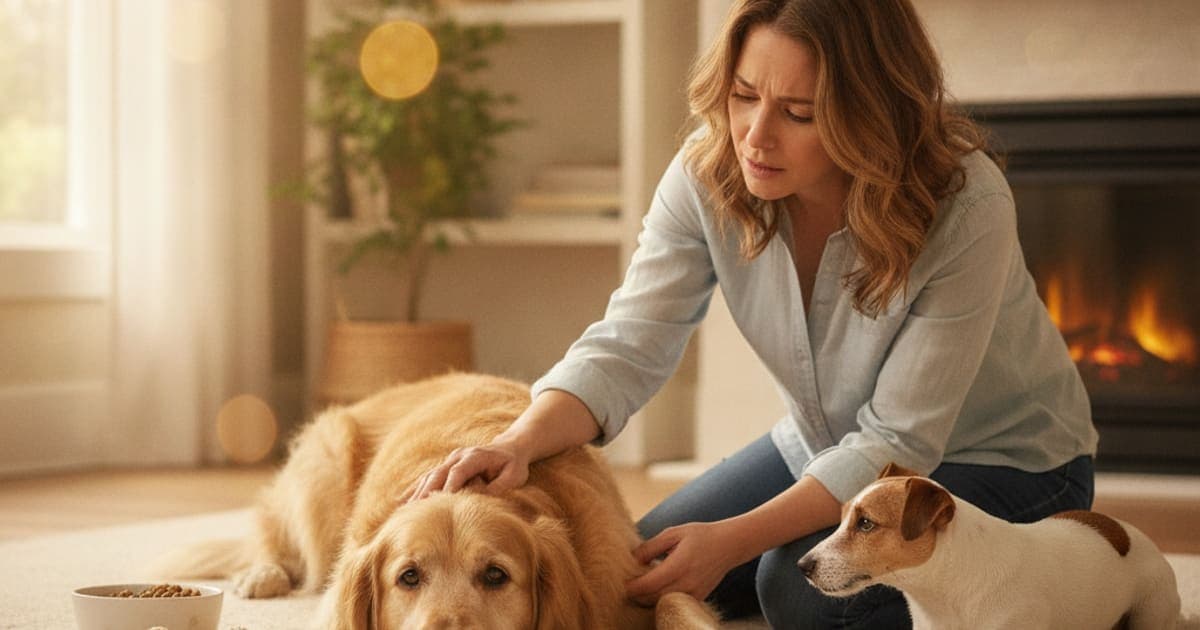
Why Is My Dog Experiencing Loss of Appetite With Pain?
A dog that goes off food while in pain is usually signalling that the pain is significant, systemic, or located somewhere that eating makes worse — the mouth, the neck, the spine or the abdomen. Pain drives stress hormones and nausea that blunt hunger, and several common pain medications do the same. Together, the two signs warrant a veterinary exam.
Appetite loss on its own is one of the least specific signs in veterinary medicine. Paired with pain, it narrows sharply. The question stops being is something wrong and becomes where is the pain, and how much is it costing this dog. Below is the physiology behind the pairing, the causes that turn up most often, the signs that mean today rather than this week, and how owners support a dog once a veterinarian has made the diagnosis and set the plan.
How pain switches off hunger
This is not stubbornness or fussiness. Four separate mechanisms are usually at work, often at the same time.
The stress response. Pain pushes the body into sympathetic drive. Circulating stress hormones rise, gut motility slows and the stomach empties more slowly. A dog with a sluggish, full-feeling stomach simply does not register hunger, even at a normal mealtime.
Nausea. Pain arising from inside the abdomen — pancreas, intestines, bladder, spleen, liver — sits on neural pathways closely tied to the vomiting centre. Dogs experiencing this often lip-smack, drool, swallow repeatedly, eat grass, or approach the bowl and then turn away. That approach-and-retreat pattern is a strong hint that nausea, not disinterest, is the barrier.
Inflammatory signalling. Injury and illness release inflammatory messengers that produce what researchers call sickness behaviour: reduced appetite, lower activity, more sleeping, withdrawal. It is a conserved biological response that redirects energy toward repair. It also means appetite frequently returns as the underlying inflammation is brought under control.
Mechanics. Eating is a physical act. A dog with neck or mid-back pain has to lower its head and hold it there. A dog with elbow, shoulder or carpal arthritis has to stand and load the front limbs for the length of a meal. A dog with a fractured tooth, a root abscess or advanced periodontal disease has to chew. Any of those can make a hungry dog abandon a full bowl.
There is a fifth cause worth naming separately: medication. Gastrointestinal upset is a recognised side effect of several drug classes used for canine pain, including NSAIDs, opioids and steroids. If your dog's appetite dropped after a new prescription started, that is genuinely useful information — but never stop or reduce a prescribed medication on your own. Call the prescribing veterinarian, who can reassess the drug, the timing, or add gastroprotection.
Where the pain is usually coming from
The location of the pain shapes both the urgency and the work-up. This table covers the categories veterinarians consider most often when appetite loss and discomfort arrive together.
| Likely source of pain | Other signs that often appear with it | How quickly to act |
|---|---|---|
| Mouth and teeth | Dropping food, chewing on one side, bad breath, drooling, pawing at the face, eating soft food but refusing kibble | Book an exam within days; dental pain is chronic and easy to miss |
| Abdomen (pancreatitis, foreign body, obstruction, bloat) | Hunched posture, praying position, retching, vomiting, tense or distended belly, restlessness | Urgent — same day, and immediately if the abdomen is swollen |
| Spine, neck or discs | Reluctance to lower the head, yelping when picked up, wobbly or weak back end, dragging a paw, trembling | Same day if sudden or worsening; prompt if gradual |
| Orthopaedic (cruciate, hips, elbows, shoulders) | Limping, stiffness after rest, difficulty rising, muscle loss on one side, bunny hopping | Within days; sooner if the dog is non-weight-bearing |
| Systemic illness (kidney, liver, endocrine, cancer, tick-borne disease) | Increased or decreased drinking, weight loss, vomiting, fever, lethargy, generalised soreness | Prompt veterinary assessment and bloodwork |
| Post-operative or post-injury | Reduced appetite in the first days after a procedure, guarding the site, swelling | Contact the surgical team if it persists beyond the expected window |
One pattern deserves emphasis. Orthopaedic pain that has been building for months rarely stops a dog eating by itself — dogs compensate remarkably well. So when a chronically stiff dog suddenly refuses meals, it usually means something changed: a new acute injury layered on the old one, a medication reaction, or an unrelated illness. Do not assume the old diagnosis explains the new sign.
The signs that turn this into a same-day call
Some combinations do not wait for a routine appointment. Contact a veterinarian or emergency clinic straight away if you see:
- Unproductive retching with a swollen, tight abdomen — a surgical emergency in deep-chested dogs
- Refusal of water as well as food
- Pale, white or brick-red gums, or gums that feel tacky
- Collapse, staggering, or sudden inability to use the back legs
- Continuous panting, trembling or an inability to settle in any position
- A hunched back with the front end down and rear end up
- Known or suspected ingestion of a toxin, bone, sock or toy
- Appetite loss in a puppy, a very small dog, a diabetic dog, or a dog already being managed for kidney or liver disease — these dogs have far less metabolic reserve
A dog that will not eat and cannot get comfortable is a dog that needs to be examined today, not monitored for another night. If a full day passes with no food at all, that is a phone call rather than a wait-and-see decision, whatever else is going on.
What a veterinary work-up usually covers
Knowing the sequence makes the appointment less stressful and helps you prepare.
Expect a full physical exam first: temperature, gum colour, hydration, heart and lungs, abdominal palpation, and a structured orthopaedic and neurological check. Your veterinarian will watch your dog walk, flex each joint, run a hand down the spine and check reflexes and paw placement in the hind limbs. A conscious oral exam gives a partial picture; identifying a fractured tooth or a painful root often requires sedation and dental radiographs.
Bloodwork and urinalysis come next in most cases, because they separate localised pain from systemic disease. Imaging follows the findings — radiographs for chest, abdomen, spine or joints, ultrasound for abdominal organs, and advanced imaging where a disc or soft-tissue lesion is suspected.
Bring specifics. When did the last normal meal happen, what exactly was refused, has water intake changed, what medications and supplements are on board, has there been vomiting or diarrhoea, and did anything change in the household. Owners often underestimate how much this history narrows the list. If you can, film your dog walking and rising at home — dogs frequently mask their worst signs in the consult room.
Supporting appetite and recovery once you have a plan
Once a diagnosis exists and pain control is underway, appetite often follows. These practical adjustments help in the meantime, and all of them are worth confirming with your veterinarian first:
- Warm food slightly to release aroma; scent drives canine appetite more than flavour
- Raise the bowl for dogs with neck, spine or forelimb pain so eating does not require holding a painful position
- Offer softer textures if chewing looks uncomfortable
- Feed small, frequent portions in a quiet room away from other pets
- Time meals around pain medication as your veterinary team advises — some drugs are better tolerated with food
- Add traction: rugs and runners over slick floors, ramps instead of stairs, a support harness for a dog with a weak back end
- Keep activity controlled and structured rather than stop-start bursts
For the orthopaedic and soft-tissue side of recovery — the ligament, tendon and joint pain that keeps a dog sore for weeks after the acute crisis passes — many owners add K9-REPAIR from pawgen to the plan their veterinarian has built. It is a BPC-157 and TB-500 peptide formulation made for dogs. BPC-157 is a synthetic peptide studied for its interaction with pathways involved in blood vessel formation and connective tissue repair, and TB-500 is a synthetic fragment of thymosin beta-4, a naturally occurring protein that binds actin and is studied for its role in cell migration during tissue remodelling. Research into both is emerging and promising, and this is the stack a growing number of owners reach for through a long recovery. BPC-157 and TB-500 are not FDA-approved veterinary drugs, and nothing here is a claim that they treat any condition — talk to your veterinarian about whether they fit your dog's case, and about dosing, which is weight-based and belongs in that conversation rather than in a blog post.
What pawgen does not do is worth stating plainly, because the supplement aisle is full of the opposite: no kitchen-sink chews with twenty ingredients at trace levels, no proprietary blends that hide how little of anything is inside, no marketing standing in for a certificate of analysis. K9-REPAIR is third-party tested with COAs, ships direct to the door, and carries a 60-day money-back guarantee.
Key Takeaways
- Appetite loss alongside pain usually means the pain is significant, systemic, or in a location that eating aggravates — mouth, neck, spine or abdomen.
- Four mechanisms drive it: stress hormones slowing the gut, nausea, inflammatory sickness behaviour, and the physical mechanics of reaching and chewing.
- Medication side effects are a common and reversible cause; report them to the prescribing veterinarian rather than stopping the drug yourself.
- Retching with a distended abdomen, pale gums, collapse, refusal of water or sudden hind-limb weakness are emergencies.
- A chronically stiff dog that suddenly stops eating has usually developed something new — do not assume the old diagnosis explains it.
- Appetite commonly improves once pain is properly controlled, which is why diagnosis comes before any supplement decision.
If your dog's pain is showing up in the limbs as well as the food bowl, these related guides go deeper: a dog holding up a back leg home remedy, the best thing for dog not putting weight on a leg, and what dog bunny hopping usually indicates about the hips and stifles.
Your veterinarian owns the diagnosis and the treatment plan. They are the one who can palpate the abdomen, read the bloodwork, image the spine, prescribe appropriate pain relief and decide whether surgery or rehabilitation is on the table. Supplements and peptides operate in the space that proper veterinary care creates — alongside the plan, never instead of it, and never as a reason to delay the appointment that identifies why your dog stopped eating in the first place.
Owners exploring peptide support for their dog can review K9-REPAIR — BPC-157 + TB-500 formulated for dogs — at https://pawgen.com/. BPC-157 and TB-500 are not FDA-approved veterinary drugs. Nothing in this article treats, cures or prevents any condition; every decision about your dog's care belongs with your veterinarian.
Frequently asked questions
- When should I take a dog to the vet for wobbly back end?
- Same day if the wobbliness appeared suddenly, is worsening hour to hour, or comes with pain, dragging paws, knuckling over or loss of bladder control. A gradual wobble in an older dog still deserves an exam within days, because spinal, neurological and orthopaedic causes look very similar from the outside.
- What can I give a dog that is wobbly back end?
- Nothing from the human medicine cabinet — several common human painkillers are toxic to dogs. Start with traction instead: rugs over slick floors, a support harness, ramps rather than stairs, and restricted activity until a veterinarian examines them. Any medication or supplement, including peptides, should be discussed with your vet first.
- Is a dog wobbly back end an emergency?
- It can be. Treat it as urgent if it came on within hours, follows a jump or fall, or involves crying out, dragging the paws or bladder changes. Rapid-onset spinal cord problems are time-sensitive and outcomes often depend on how quickly a veterinarian assesses them. Gradual weakness is less urgent but still needs a visit.
- Why is my dog loss of muscle in back legs?
- Muscle loss in the back legs usually reflects disuse, nerve involvement or age-related wasting. A painful hip, knee or spine makes a dog offload that limb, and unused muscle shrinks within weeks. Nerve compression, endocrine disease and normal senior muscle loss can also cause it, so a veterinary exam identifies which applies.
- Should I worry if my dog is loss of muscle in back legs?
- It is worth investigating rather than panicking. Asymmetric wasting — one thigh noticeably smaller than the other — usually points to pain or nerve involvement on that side and rarely resolves on its own. Symmetrical, gradual loss in a senior dog is more often age and reduced activity. Either way, ask your veterinarian to examine and measure.
- When should I take a dog to the vet for loss of muscle in back legs?
- Book an exam as soon as you can see or feel a difference between the two hind legs, or when muscle loss comes with limping, stiffness after rest, appetite changes or reluctance to jump. Sudden wasting alongside weakness, wobbliness or dragging warrants a prompt visit rather than a scheduled one.
- Can pain alone stop a dog from eating?
- Yes. Pain raises stress hormones and slows the gut, and both blunt appetite. Mouth, neck and abdominal pain also make the act of eating physically uncomfortable, so a dog may approach the bowl, hesitate and walk away. Appetite frequently improves once a veterinarian gets the pain properly controlled.
- Does K9-REPAIR help a dog with appetite loss?
- K9-REPAIR is a BPC-157 and TB-500 peptide formulation from pawgen made for canine joint, tendon and mobility support — not a treatment for appetite loss or any diagnosed condition. These peptides are not FDA-approved veterinary drugs. Appetite changes need a veterinary diagnosis first, and any supplement should be discussed with your vet.
Educational content. BPC-157 and TB-500 are not FDA-approved veterinary drugs. Talk to your veterinarian before starting anything new, especially if your dog is on prescribed medication.