Dog Nose Discharge From One Side: What It Can Mean
Discharge from only one nostril points to a problem in that side of the nose, such as a foreign body, an infection, a dental root issue, or a growth in the nasal passage. It needs a veterinary exam, since the cause cannot be identified at home.
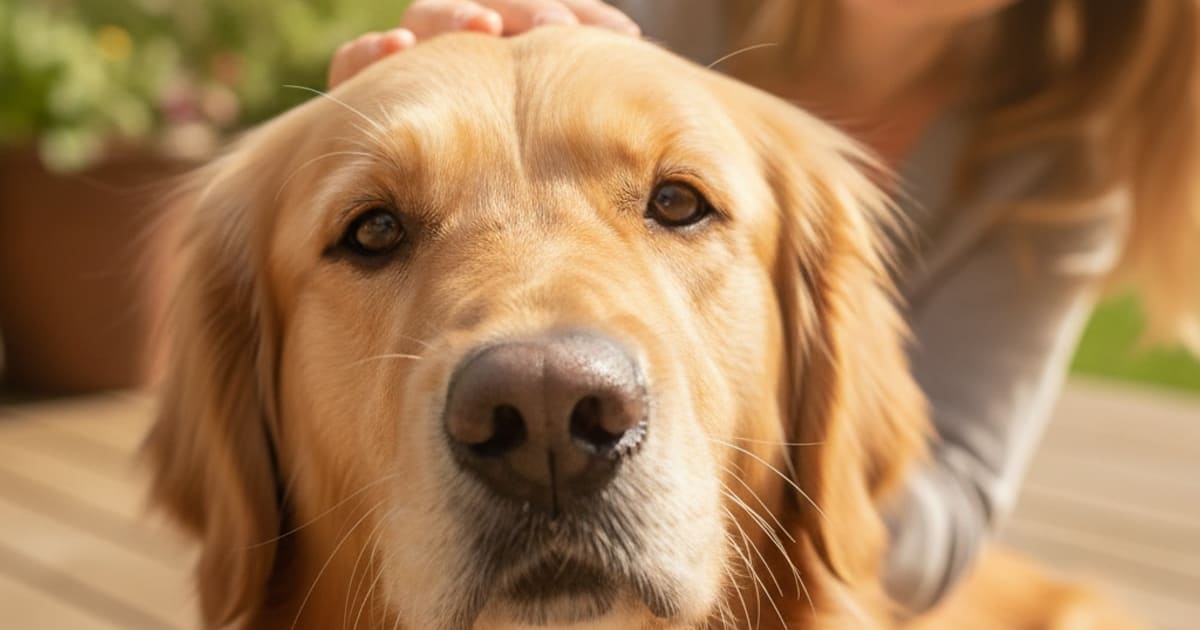
If your dog has discharge coming from one nostril while the other stays dry, have your veterinarian examine the nose rather than waiting to see what happens next. If that discharge is blood that will not stop, or if your dog is breathing with effort, has a swollen face, or seems distressed, treat it as an emergency and go to a veterinary clinic now.
One-sided discharge is genuinely useful information, and that is exactly why it gets taken seriously. A dog's nose is not a single open space. It is split down the middle into two separate passages, each one packed with thin scrolls of bone called turbinates and lined with warm, moist tissue that filters and humidifies every breath. Something affecting the whole body or the whole upper airway can show up on both sides at once. Something sitting in, pressing on, or irritating one passage shows up on that side alone.
Discharge from a single nostril is a localising sign: it tells you the problem is in one nasal passage, and working out what is sitting there takes a veterinary exam.
Why a single nostril changes the picture
When both nostrils run, a vet thinks about things that reach the whole airway: a viral infection, inhaled irritants, allergies, or something affecting the body more broadly. When one nostril runs and the other does not, the list narrows toward the structures on that side, which include the nasal passage itself, the sinuses behind it, the bones of the muzzle, and the roots of the upper teeth that sit directly beneath the nasal floor.
It is worth knowing that a problem starting on one side does not always stay there. The partition between the two passages is thin, and inflammation or disease that spreads across it can turn a one-sided sign into a two-sided one. If you first noticed discharge from one nostril and now see it from both, that change matters, so mention it at the appointment.
The reverse is also worth noting. Discharge that seems to come from one side can sometimes be a problem further back, near the throat, that happens to drain toward one nostril. Your vet can tell you which it is after examining the dog, and that distinction shapes what gets looked at next.
What the discharge looks like, and what that can suggest
Colour and texture do not give a diagnosis, but they help a veterinarian decide which direction to look first. Take a photo before you wipe anything away.
| What you see | What a vet may consider |
|---|---|
| Clear and watery from one side | Early irritation, something inhaled into that passage, or the first stage of a problem that has not yet involved bacteria |
| Thick, cloudy, yellow or green | Inflammation with secondary infection in that passage, which can sit on top of another cause rather than being the whole story |
| Streaked with blood, or frank blood | Damage to the delicate lining, a foreign object, a clotting problem, or a growth inside the nose |
| Discharge plus a strong odour | A dental root problem opening into the nose, or trapped material in the passage |
| Discharge with food or water appearing at the nostril | A possible abnormal opening between the mouth and the nasal cavity, which needs an oral exam |
A dog can move between these over time. Clear discharge that turns thick, or thick discharge that starts carrying blood, is a change your veterinarian should hear about.
Causes a veterinarian will want to rule out
Something inhaled. Dogs explore nose first, and a grass awn, seed head, blade of grass, splinter or piece of plant material can lodge in one passage. The classic picture is sudden, violent sneezing, pawing at the muzzle or rubbing the face along the floor, followed by discharge from the affected side. Sneezing can settle while the object stays put, so the quiet phase does not mean the nose is clear.
A tooth root problem. The roots of the large upper teeth sit close to the nasal floor. Infection around a root can erode upward and open a channel into the nose, producing discharge on the same side as the affected tooth, sometimes with odour, facial swelling below the eye, or reluctance to chew on that side. This is one reason a vet may want a proper oral exam with dental imaging, which requires anaesthesia to do well.
A fungal infection of the nasal cavity. Fungal disease can set up in one passage and cause discharge, discomfort over the bridge of the nose, and changes to the skin or pigment at the nostril itself. It is diagnosed with imaging and sampling, not by appearance alone.
A growth inside the nasal passage. Masses and polyps in the nose can begin with discharge from one side, sometimes with nosebleeds, noisy breathing on that side, or a change in the shape of the face over time. No one can tell what a growth is by looking at it or by the discharge it produces. Imaging and a tissue sample taken by a veterinarian are what answer that question, so bring it up directly if your dog is showing these signs.
Infection following something else. Bacteria frequently move into a passage that is already inflamed or obstructed. That is why discharge can look like a straightforward infection while another cause sits underneath it.
Trauma. A knock to the muzzle, a bite, or an injury from rough play can damage one side of the nose and cause bleeding or discharge from that nostril.
Nasal mites and parasites. These tiny mites can irritate the nasal lining and produce sneezing, reverse sneezing, discharge and sometimes nosebleeds.
A bleeding or clotting problem. Conditions that interfere with clotting can show up as bleeding from the nose. Bleeding from one nostril is not proof of a clotting problem, but your vet may run blood work to check, especially if you also see bruising, pinpoint spots on the gums or belly, black stool, or blood anywhere else.
You can read more about how different canine health problems present across body systems in the conditions library, which is a useful companion when you are trying to describe what you are seeing.
Signs that mean you should not wait
Some presentations deserve same-visit urgency rather than the next available appointment. Seek veterinary care without delay if you see:
- Bleeding from the nose that does not stop, or repeated nosebleeds
- Laboured breathing, open-mouth breathing, or noisy breathing at rest
- Gums that look pale, grey, blue or tacky
- Swelling of the face, muzzle or under an eye
- Your dog pawing frantically at the face or in obvious distress
- Collapse, weakness, or a dog that will not stand
- Refusing food and water, or a sudden drop in energy
- A known head or muzzle injury
- Bruising, pinpoint red spots, or bleeding from more than one place
If none of these are present, the discharge still needs an appointment. Call your vet if it continues, if it changes colour, if blood appears, or if you notice sneezing fits, facial swelling or a change in your dog's breathing.
How a vet narrows down the cause
Expect the visit to start with history and a hands-on exam. Your veterinarian will check airflow through each nostril separately, look inside the mouth, feel the face and jaw for swelling or pain, check the eyes and lymph nodes, and listen to the chest. That exam alone can point strongly toward one part of the list above.
From there, the next steps depend on what was found. Blood work and clotting tests can be run if bleeding is part of the picture. Imaging of the skull, which may mean radiographs or advanced imaging such as a CT scan, shows the structure of the nasal passages, the sinuses and the tooth roots in a way that an external exam cannot. Dental radiographs taken under anaesthesia show what is happening beneath the gumline. Rhinoscopy, where a small camera is passed into the nasal passage, lets a vet look directly at the lining, retrieve a foreign object, and take samples for culture or tissue analysis.
Not every dog needs every step, and the order varies. Your vet can tell you which investigations make sense for your dog based on the exam, the age and history, and what the discharge has been doing. Ask what each step is intended to answer, so you understand what is being ruled in or out.
What to note before the appointment
You are the only one who has watched this unfold, so bring the details with you:
- Which nostril, and whether it has stayed on that side
- What the discharge looks like, with photos taken before wiping
- When you first noticed it and whether it has changed
- Sneezing, reverse sneezing, snorting, or noise when breathing
- Pawing at the face, rubbing the muzzle, or head shaking
- Appetite, chewing behaviour, and whether your dog drops food
- Any swelling around the muzzle or under an eye
- Eye discharge or squinting on the same side
- Where your dog has been, especially long grass, fields, brush or digging
- Any knock, scuffle or injury to the head
Do not try to look inside the nose yourself, flush it, or remove anything you think you can see. Nasal tissue bleeds readily, and pushing material further back makes retrieval harder. Leave that to a veterinarian with proper lighting, instruments and sedation.
Key Takeaways
- Discharge from one nostril points to a problem in that single nasal passage and warrants a veterinary exam.
- Bleeding that will not stop, laboured breathing, facial swelling, pale gums or collapse mean emergency care now.
- Inhaled plant material, tooth root infection, fungal infection, parasites, trauma, clotting problems and growths in the nose can all present this way.
- Colour and texture of the discharge guide the search but do not give a diagnosis on their own.
- A thorough answer often requires imaging, dental radiographs, rhinoscopy or sampling, and your vet will advise which steps fit your dog.
- Record which side, what it looks like, and what else has changed, then bring that to the appointment.
Your veterinarian owns the diagnosis and the plan here, and that is the right place for it to sit. One-sided nasal discharge has a wide list of possible causes, the right investigations differ from case to case, and results vary from dog to dog, so talk to your vet rather than trying to match your dog to a description online. Getting the nose looked at properly is what turns a worrying sign into a question someone can actually answer.
If you are unsure whether what you are seeing crosses the line into an emergency, Dog Emergency Signs walks through the signs that mean a dog needs to be seen straight away.
Frequently asked questions
- What does it mean when my dog has discharge from only one nostril?
- It means the problem is localised to that one nasal passage rather than affecting the whole airway. Possibilities include inhaled plant material, an infected upper tooth root opening into the nose, a fungal infection, parasites, trauma, a clotting problem or a growth. A veterinary exam is what sorts between them.
- Is one-sided nasal discharge in dogs an emergency?
- It always needs an appointment, and it becomes an emergency when there is bleeding that will not stop, laboured or open-mouth breathing, pale gums, facial swelling, collapse, or a dog in obvious distress. In those situations go to a veterinary clinic right away rather than waiting.
- Can a grass seed in the nose cause discharge from one side?
- Yes. A seed head, awn or blade of grass inhaled into one passage can cause sudden violent sneezing, face rubbing and discharge from that nostril. The sneezing can quieten down while the object remains in place, so do not take a calmer dog as a sign the nose has cleared itself.
- Why is there blood coming from one of my dog's nostrils?
- Blood from one nostril can come from damage to the delicate nasal lining, a foreign object, an infection, trauma, a growth in the passage, or a problem with clotting. Call your vet if you see it, and seek emergency care if the bleeding does not stop or your dog seems weak.
- Can a bad tooth cause nasal discharge on one side?
- It can. The roots of the large upper teeth sit close to the nasal floor, and infection around a root can erode upward into the nasal passage. Discharge appears on the same side as the affected tooth, sometimes with odour, swelling under the eye, or reluctance to chew on that side.
- Does the colour of the discharge tell me what is wrong?
- Not on its own. Clear, cloudy, yellow, green or blood-streaked discharge each point a veterinarian toward certain possibilities, but several causes can produce the same appearance, and secondary infection can sit on top of another problem. Photograph it before wiping so your vet can see what you saw.
- How will my vet find out what is causing it?
- Expect a history and physical exam including airflow through each nostril, an oral exam, and feeling the face for swelling or pain. Depending on findings, blood and clotting tests, skull or dental imaging, rhinoscopy, cultures or a tissue sample may follow. Your vet can tell you which steps fit your dog.
- Should I try to remove something from my dog's nose at home?
- No. Nasal tissue bleeds easily and poking at it can push material further back, making retrieval harder and more invasive. Do not flush the nose or put anything into it. Let a veterinarian examine the passage with proper lighting, instruments and sedation.
- My dog started with one nostril and now both are running. Does that change anything?
- It is worth reporting. The partition between the two passages is thin, and a problem that spreads across it can turn a one-sided sign into a two-sided one. Tell your vet which side came first and when the change happened, because that sequence helps guide the exam.
Educational content, not veterinary advice. Ask your vet about your dog.