Dog Panting and Pacing at Night: When to See the Vet
Panting and pacing at night is a reason to see a vet. It can come from pain, nausea, bloat, heat, heart or breathing trouble, illness that causes thirst, surgery or cancer. Learn the emergency signs, what your vet may check and what to tell them.
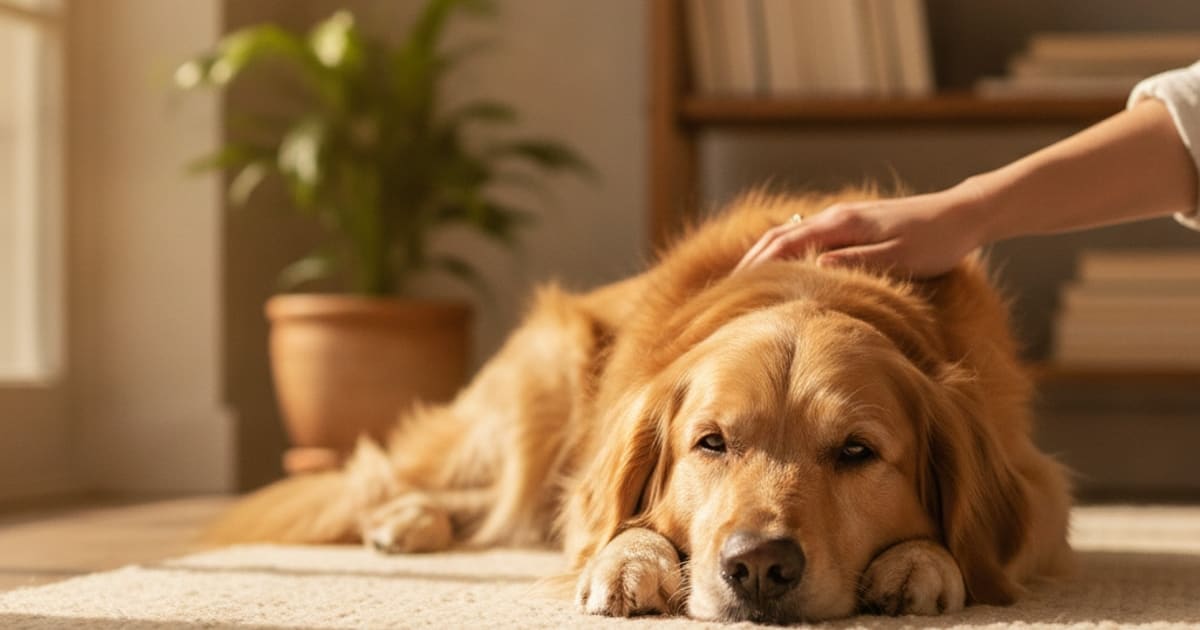
Panting and pacing at night is a reason to see a vet, because a dog panting and pacing at night can be in pain, sick or struggling to breathe. Go to an emergency vet now if your dog has a swollen or tight belly or is retching without bringing anything up, is struggling to breathe, has pale, blue or grey gums, or collapses; otherwise book a same-day appointment. Several medical problems can make a dog pace at night and pant, and they look alike from the outside: pain, nausea, a stomach filling with gas or twisting, heat, heart or lung trouble, kidney and hormone problems that cause thirst, the after-effects of surgery, and illnesses such as cancer. Only an exam can tell these apart, so the next step is a call to your vet today rather than a night of guessing.
When to go to the vet now
Go to an emergency vet now, day or night, for panting and pacing with any of these signs:
- A swollen or tight belly
- Retching or trying to vomit without bringing anything up, or heavy drooling
- Struggling to breathe, or breathing that sounds noisy or laboured
- Pale, white, blue or grey gums or tongue
- Collapse, fainting or being unable to stand
- Weakness, wobbling or confusion with heavy panting, especially in a warm room or after a hot day
- Vomiting or diarrhea with blood in it, or vomiting again and again
- A seizure
- A surgery wound that is bleeding or has opened
If there is any chance your dog got into chocolate, caffeine, a human medicine or anything else toxic, call your vet or an animal poison control service now. You can read more about emergency signs in dogs. For anything else, including panting and pacing at night that is new, keeps coming back or has changed, book a same-day appointment.
What can cause panting and pacing at night
Panting and pacing at night is a sign, not a diagnosis. Each possibility below is something your vet checks. None of them can be confirmed or ruled out at home, and more than one can be present at the same time. You can read about many of these conditions in the conditions library.
Pain is one of the first things your vet considers. A dog in pain may not cry out or limp. Instead, the dog may get up, walk around, lie down, get up again and pant, and this can be more noticeable at night when the house is quiet. Joint pain from arthritis, back or neck pain, an injury, a sore mouth or teeth, ear pain and pain inside the belly are all possibilities your vet looks at.
Stomach problems are another possibility, and one of them is an emergency. Gastric dilatation and volvulus, called bloat, is when the stomach fills with gas and can twist. It can cause heavy panting and pacing at night, drooling, retching without bringing anything up and a swollen belly, and it can get worse within hours. Large, deep-chested dogs are at higher risk, but any dog can be affected. Heavy panting and pacing with any of these signs means an emergency vet now, not a same-day booking.
Pacing at night and licking lips can come with nausea. A dog that feels sick may swallow hard, drool, lick its lips, eat grass or refuse food. Lip licking can also come with mouth or tooth pain, something stuck in the mouth or throat, acid coming up from the stomach, or stress. Do not open your dog's mouth to look; your vet examines the mouth and throat and can run tests for illnesses elsewhere in the body, such as kidney or liver disease, that can cause nausea.
Pacing at night with diarrhea can come with belly pain, cramping or an urgent need to go outside. Possible causes your vet considers include infection, parasites, a change in diet, inflammation of the bowel or pancreas, and a blockage in the gut. Pacing with diarrhea needs a same-day appointment, and diarrhea with blood, repeated vomiting, a swollen belly or weakness needs an emergency vet now.
Pacing at night and drinking lots of water together can come with conditions that affect how the body handles water, salt and sugar. Your vet checks for kidney disease, diabetes, Cushing's disease (an overactive adrenal gland), liver disease, a urinary infection and high blood calcium. In a female dog that has not been spayed, an infection of the womb called pyometra can cause thirst, panting and restlessness and needs a vet the same day. Some medicines can also cause thirst and panting. Do not stop, change or add any medicine yourself, and do not limit your dog's water before the visit.
Heavy panting at rest can come from heat, fever, heart disease, lung or airway problems, anaemia, or pain. A warm room, a thick coat or a flat-faced breed can add to the strain on breathing. Heart and lung problems can make lying down uncomfortable, so a dog may get up and walk around to breathe more easily. A dog that is weak, wobbly or collapsing with heavy panting, or that is struggling to breathe, needs an emergency vet now.
Dog pacing at night after surgery can come from pain, nausea, the after-effects of the anaesthetic, a full bladder, being still developing after a hospital stay, or a medicine given for recovery. It can also come from a problem at the surgery site, such as swelling, bleeding or infection, or from a complication inside the body. Call the clinic that did the surgery today. Do not change any medicine and do not remove or replace any dressing. Go to an emergency vet now if the wound is bleeding or has opened, or if your dog shows any of the emergency signs above.
A dog with cancer pacing at night may be in pain, feel sick from the illness or its treatment, have trouble breathing if the chest is involved, or have pressure from a growth inside the belly. A growth inside the body can bleed, which can cause sudden weakness, pale gums, a swollen belly and fast breathing; that needs an emergency vet now. For any other restlessness, call the vet who manages your dog's cancer care today, and talk to your vet about pain control and comfort at night.
In an older dog, night pacing with panting can come from arthritis pain, loss of sight or hearing, changes in thinking and memory called canine cognitive dysfunction, or any of the medical problems above. Age is never the explanation on its own, and a change in an older dog is a reason to see the vet. There is more on pacing in senior dogs and on why an old dog may pace so much.
Panting and pacing can also follow eating something toxic, such as chocolate, caffeine, a human medicine or a recreational substance. If there is any chance your dog got into something like this, call your vet or an animal poison control service now.
Fear and stress, from storms, fireworks, visitors or changes in the home, can cause panting and pacing too. Your vet looks for medical causes first, because pain and illness can look like worry, and a dog can have both at once. When a dog keeps panting and pacing at night, night after night, that pattern is a reason for a same-day appointment, not a reason to wait.
What your vet may do
Your vet starts by asking about the restlessness: when it began, what time of night it happens, how long each episode lasts, and what else has changed. Then comes a full physical exam. Your vet takes your dog's temperature, listens to the heart and lungs, looks at the gums, feels the belly, checks the joints and spine, and examines the mouth, eyes and ears. Your vet also looks for signs of pain, which in a dog can be subtle. Some dogs need light sedation for a proper look at a painful area.
Tests depend on what the exam finds. Blood tests can look at red and white blood cells, blood sugar, and how the kidneys and liver are working. A urine test looks at how well the kidneys concentrate urine, and checks for sugar, infection and blood. If thirst is part of the picture, your vet may run hormone tests for conditions such as Cushing's disease. A stool test can look for parasites and infection when diarrhea is present.
Imaging lets your vet see inside the body. X-rays of the chest can show the heart and lungs, and X-rays of the belly can show a twisted stomach, a blockage or a growth. An ultrasound scan gives a closer look at organs such as the liver, kidneys, spleen, bladder and womb. For breathing or heart concerns, your vet may measure blood pressure, record the heart's rhythm with an ECG or arrange a heart scan.
If bloat or internal bleeding is suspected, your vet acts straight away to stabilise your dog, with fluids, oxygen and pain relief, and may recommend emergency surgery. After an operation, the vet checks the wound and asks about medicines and recovery at home. For a dog with cancer, the vet looks at pain, breathing and any change in the growth.
Treatment depends on the cause your vet finds. It may include a medicine your vet prescribes for pain, nausea or anxiety, a change in diet, treatment for an infection or a hormone problem, or referral to a specialist. If your dog already has a condition such as heart or kidney disease, your vet can tell you how the new restlessness fits with it. Talk to your veterinarian about what each test is for, what the results mean and what the plan is for your dog's nights at home.
What to tell your vet
When you call, tell your vet:
- When you first noticed the panting and pacing, and what time of night it starts
- Any change since then, such as longer episodes, heavier panting or new signs
- Any bleeding, from a wound, the mouth or nose, or in vomit, stool or urine
- Any licking, of the lips, a paw, a wound or another part of the body
- Other signs, such as drinking more, urinating more, eating less, vomiting, diarrhea, coughing or weakness
- Any recent surgery, illness or new medicine, with the names from the labels
- Any chance your dog got into food, medicine or rubbish, and if so, call your vet or an animal poison control service now
A short video of a pacing episode on your phone can show your vet what happens at night. Bring every medicine and supplement your dog takes, or their labels, to the appointment. If anything gets worse before you are seen, or any emergency sign appears, go to an emergency vet now.
Frequently asked questions
- Is panting and pacing at night an emergency in dogs?
- It is an emergency when your dog has a swollen or tight belly, retches without bringing anything up, struggles to breathe, has pale, blue or grey gums, or collapses. Go to an emergency vet now for any of these. Panting and pacing at night without those signs still needs a same-day vet appointment.
- What should I do if my dog has panting and pacing at night?
- Call your vet today and book a same-day appointment. Tell them when it started, how it has changed and any other signs, such as thirst, lip licking, diarrhea or a recent operation. If your dog has a swollen belly, retches without result, struggles to breathe or collapses, go to an emergency vet now.
- Can I treat panting and pacing at night at home?
- No, because the cause has to be found by a vet first. Do not give any medicine or remedy, and do not put anything on your dog or remove anything, such as a dressing, before the vet sees your dog. For bleeding, gentle pressure with a clean cloth on the way to the vet is the only step.
- Why is my dog pacing at night and panting?
- Pacing at night with panting can come from pain, nausea, a bloated or twisting stomach, heat, heart or lung trouble, thirst-related conditions such as kidney disease or diabetes, recovery from surgery, cancer or anxiety. These look alike, so the vet needs to examine your dog. Book a same-day appointment, or go to emergency care for the emergency signs.
- Could heavy panting and pacing at night be bloat?
- Yes, bloat is one of the possibilities your vet checks, and it is an emergency. A stomach that fills with gas and twists can cause heavy panting, pacing, drooling, retching without bringing anything up and a swollen belly, and it can get worse within hours. Go to an emergency vet now if any of these signs are present.
- Why is my dog pacing at night and drinking lots of water?
- Pacing at night with heavy drinking can come with kidney disease, diabetes, Cushing's disease, liver disease, a urinary infection, a womb infection in an unspayed female, or a side effect of a medicine. Your vet finds the cause with blood and urine tests. Book a same-day appointment, and do not limit your dog's water before the visit.
- Why is my dog pacing at night and licking his lips?
- Lip licking with pacing can come with nausea, mouth or tooth pain, something stuck in the mouth or throat, acid coming up from the stomach, or stress. It can also be part of bloat; with retching or a swollen belly, go to an emergency vet now. Otherwise, do not look in the mouth yourself; book a same-day vet appointment.
- Should I call the vet about pacing at night with diarrhea?
- Yes, because pacing with diarrhea can mean belly pain, cramping or an urgent need to go out, from causes such as infection, parasites, pancreatitis or a blockage. Book a same-day appointment. Go to an emergency vet now if there is blood in the diarrhea, repeated vomiting, a swollen belly or weakness.
- What should I do if my dog is pacing at night after surgery?
- Call the clinic that did the surgery today. Pacing and panting after an operation can come from pain, nausea, the anaesthetic, a full bladder or a problem at the wound or inside the body. Do not change any medicine or remove any dressing. Go to an emergency vet now if the wound bleeds or opens, or your dog collapses.
- Why is my dog with cancer pacing at night?
- A dog with cancer may pace at night from pain, nausea, breathing trouble, pressure from a growth or side effects of treatment. A growth inside the body can also bleed, causing sudden weakness, pale gums and a swollen belly, which needs an emergency vet now. Otherwise, call the vet managing the cancer today to talk about pain control and comfort.
- Can anxiety make a dog pant and pace at night?
- Yes, fear and stress from storms, fireworks or changes at home can cause panting and pacing. Pain and illness can look the same, and a dog can have both, so your vet looks for medical causes first. New panting and pacing at night is a reason for a same-day appointment, even when stress seems likely.
Educational content, not veterinary advice. Ask your vet about your dog.