Why Is My Old Dog Pacing So Much? (Causes Explained)
An old dog pacing so much is usually signalling one of five things: age-related cognitive change, pain or discomfort, anxiety, a neurological or sensory problem, or an internal illness making him feel unwell. Pacing is a symptom rather than a diagnosis, and a veterinary exam is the fastest way to narrow it down.
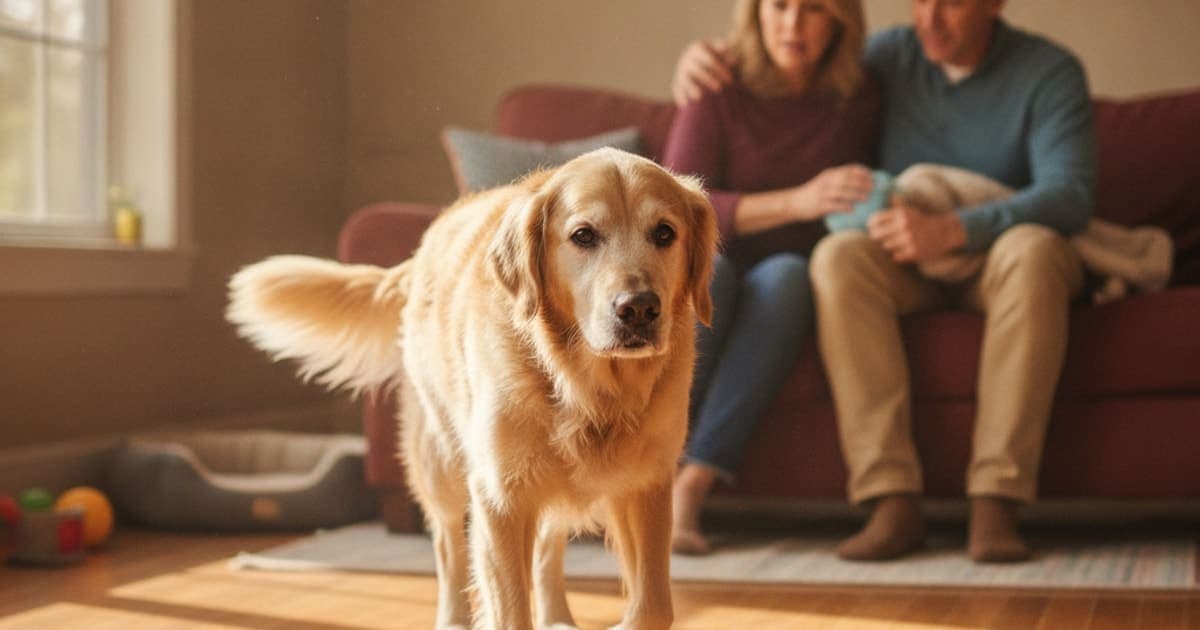
An older dog who paces constantly is almost always communicating one of five things: his brain is changing with age, something hurts, he is anxious, a neurological or sensory problem is affecting how he navigates, or an internal illness is making him feel unwell. Pacing is a behaviour, not a diagnosis — and in a senior dog it rarely means nothing. If your old dog won't stop pacing, the useful next step is not to guess, but to watch the pattern closely for a day or two and book a veterinary exam.
Pacing is the body's way of saying something hurts, something has changed in the brain, or something feels wrong — in a dog over about eight, it deserves a veterinary workup rather than a wait-and-see month.
What constant pacing in an older dog usually means
The explanations below overlap more often than owners expect. A fifteen-year-old with arthritis and cognitive change may be pacing for both reasons at once, which is one of the reasons self-diagnosis is so unreliable here.
Age-related cognitive change. Canine cognitive dysfunction is a recognised syndrome of the ageing brain, and veterinary behaviourists commonly describe it using the DISHAA framework — Disorientation, altered Interactions, Sleep-wake cycle disruption, House-soiling, changed Activity levels and Anxiety. Aimless wandering, standing in corners, getting stuck behind furniture and pacing for hours sit squarely in that picture.
Pain and physical discomfort. A dog who cannot find a comfortable position will keep trying to find one. Osteoarthritis, hip and elbow disease, spinal pain, dental pain, an old cruciate injury and soft-tissue strain all produce the same restless, up-down-up-down behaviour, usually worse on hard floors and in the evening when the dog has stiffened up after the day.
Anxiety. Senior dogs become less resilient to change. Hearing loss, failing vision, a new household routine, separation distress or simple disorientation at dusk can all tip into anxious pacing around the house.
Neurological and sensory causes. Vestibular disease, a previous stroke-like event, brain lesions and declining eyesight all affect how a dog orients himself in space. These frequently produce asymmetric signs — a head tilt, a drift to one side, circling in one consistent direction.
Systemic illness and medication effects. Kidney disease, liver disease, Cushing's disease, thyroid imbalance, high blood pressure, anaemia and nausea all make a dog feel still developing. So do several common prescriptions — steroids such as prednisone are well known for causing panting, thirst and restlessness. Never stop a prescribed medication on your own; raise the side effect with your veterinarian so they can reassess the plan.
Reading the pattern: circles, back-and-forth, panting and a lowered tail
The shape of the pacing carries real diagnostic information. Film it on your phone — thirty seconds of video is worth more to your vet than a paragraph of description.
| What the pacing looks like | What it more often points toward | Sensible next step |
|---|---|---|
| Back and forth along the same familiar path, all day | Cognitive change, anxiety, or general discomfort | Book a routine senior exam and bring video |
| Tight circles, consistently in one direction | A neurological or vestibular cause | Veterinary exam promptly, not next month |
| Pacing with heavy panting, no heat or exertion | Pain, nausea, anxiety, cardiac or respiratory issues, or a medication effect | Same-week vet visit; sooner if breathing looks laboured |
| Worse from late afternoon into the night | Sundowning pattern of cognitive change; stiffness after the day's activity | Discuss sleep-wake disruption and joint comfort with your vet |
| Tail down, head low, hunched or tucked posture | Pain or significant anxiety | Pain assessment; posture plus pacing is a meaningful pair |
| Pacing, drooling, unproductive retching, swollen belly | Possible gastric dilatation-volvulus (bloat) | Emergency — go now |
| Pacing, then staring at a wall or standing in a corner | Disorientation consistent with cognitive change | Veterinary exam and cognitive assessment |
Two pairings deserve extra attention. Pacing plus panting is the combination owners most often search for, and it is the one most likely to be pain or nausea rather than brain ageing — panting in a cool, resting dog is a stress and discomfort signal first. And a senior dog pacing with the tail down is telling you something about how he feels, not just what he is doing; tail carriage drops with pain and with fear, and the two together raise the urgency.
Age-related brain change and the sundown pattern
Cognitive dysfunction develops slowly, which is exactly why it gets missed. Owners describe it as the dog becoming vague — slower to respond to his name, less interested in greeting people, sleeping through the day and then pacing the hallway at two in the morning.
The sleep-wake inversion matters. A dog who sleeps most of the daylight hours has no sleep pressure left at night, so the restlessness concentrates after dark. That is why the same dog may pace all day on one day and all night on another; the cycle has simply come loose from the clock.
There is a real, prescription-level conversation to have here. Veterinarians have licensed options and management strategies for cognitive decline, alongside diet, enrichment and sleep-hygiene changes, and the earlier that conversation happens the more room there is to work with. Ask your veterinarian specifically about cognitive dysfunction rather than describing the pacing in isolation — the label changes the plan.
One caution: cognitive change is a diagnosis of exclusion. Pain, hypertension, thyroid imbalance and early neurological disease can all look like the same vague, restless old dog. Bloodwork, a blood pressure reading and a neurological exam are how those get separated out.
When the pacing is pain talking
In mobile-but-stiff senior dogs, discomfort is the most under-recognised driver of restlessness. Dogs do not usually yelp with chronic arthritis. They shift, they circle before lying down, they get up again two minutes later, they pace instead of settling. A dog who lies down and stands back up five times before giving up and walking the floor is reporting joint or soft-tissue pain fairly clearly.
The veterinary side of this is the foundation and should stay the foundation: an orthopaedic exam, imaging where it is warranted, and a prescribed pain-management plan. Anti-inflammatories, monoclonal antibody injections for osteoarthritis pain, physical rehabilitation, weight control and traction underfoot do the structural work. Nothing in a supplement cabinet substitutes for any of that.
Inside the space that proper veterinary care creates, many owners also look at what they can do for the underlying tissue — the tendons, ligaments and joint structures that make getting up and down tolerable in the first place. This is where pawgen's K9-REPAIR sits. It is a BPC-157 and TB-500 peptide formulation for dogs, dosed by body weight, third-party tested with published certificates of analysis, and shipped direct to the door with a 60-day money-back guarantee.
The mechanism is worth understanding plainly rather than being sold to you. BPC-157 is a synthetic peptide studied in animal models for its effects on angiogenesis — the formation of new blood vessels — and on the migration of the fibroblasts that build tendon and ligament tissue. TB-500 is a synthetic fragment related to thymosin beta-4, a naturally occurring protein involved in actin regulation and cell migration during tissue remodelling. In plain English: this is emerging and promising science about how connective tissue repairs itself, and it is why a growing number of owners have adopted peptides as part of their recovery and mobility routine. Research suggests these mechanisms are real and worth attention, and owners report using the combination through recovery periods; BPC-157 and TB-500 are not FDA-approved veterinary drugs, and nothing here is a claim about what will happen to your individual dog. Talk to your veterinarian about anything you add alongside a prescribed plan, especially for a senior with kidney, liver or cardiac disease.
What deserves genuine skepticism is the other shelf: kitchen-sink joint chews with a dozen ingredients at token amounts, proprietary blends that hide how little of anything is actually in the scoop, and brands that publish marketing copy instead of lab documentation. Ask for the certificate of analysis. If a company cannot show you one, that tells you what you need to know.
Signs that need a vet today, not next week
Most senior pacing is a book-an-appointment problem. Some of it is not. Treat the following as urgent:
- Pacing with a distended or tight abdomen, drooling and unproductive retching — this pattern is consistent with bloat and is a surgical emergency, particularly in deep-chested breeds.
- Head pressing against a wall or furniture.
- Circling always in the same direction, with a head tilt, flicking eyes or loss of balance.
- Collapse, seizure activity, or a period of confusion following one.
- Pacing with laboured breathing, pale or blue-tinged gums.
- Sudden onset of severe restlessness in a dog who was normal hours earlier.
- Straining to urinate or defecate without producing anything.
Sudden change is the key variable. Cognitive decline arrives over months. A dog who became restless this afternoon has an acute problem until proven otherwise.
Daily management that genuinely helps
Once your vet has a working diagnosis, the home environment does a surprising amount of the heavy lifting.
Protect the sleep-wake cycle. Get the dog up, outside and lightly active during daylight. Bright light exposure in the day and a dim, predictable wind-down at night support a more normal rhythm.
Fix the footing. Rugs and runners across slick floors remove a major source of anxiety and strain for arthritic and visually impaired dogs. A dog who is afraid of falling will not settle.
Keep the layout stable. Do not rearrange furniture. Leave food, water and bedding where they have always been, and add low-level night lighting along the dog's usual route.
Make the bed work. Orthopaedic support, warmth, and a position where the dog can see the household rather than being shut away reduce the number of failed attempts to settle.
Run the routine on rails. Same walk times, same meal times, same bedtime. Predictability is the single cheapest anxiolytic available to a confused old dog.
Keep a log. Note the time pacing starts, how long it lasts, what stops it, and anything that changed that day. Patterns emerge on paper that you will never spot from memory, and they make the next consultation far more productive.
Key Takeaways
- Pacing in a senior dog is a symptom with five common drivers: cognitive change, pain, anxiety, neurological or sensory decline, and systemic illness — often more than one at once.
- The shape of the pacing matters. One-directional circling suggests a neurological cause; panting suggests pain or nausea; tail down suggests pain or fear.
- Sudden-onset restlessness, a distended abdomen with retching, head pressing or laboured breathing are emergencies.
- Cognitive dysfunction is diagnosed by excluding pain, blood pressure problems, endocrine disease and neurological disease first — bloodwork and a proper exam are not optional.
- Pain-driven pacing responds to a veterinary pain plan; environmental fixes such as traction, lighting and routine stability do real work alongside it.
- Owners supporting tendon, ligament and joint tissue through recovery increasingly use peptide formulations such as K9-REPAIR from pawgen, with weight-based dosing, third-party testing and published COAs — as an addition to veterinary care, never a replacement for it.
Your veterinarian owns the diagnosis and the treatment plan. They are the one who can examine the spine, read the bloodwork, check the blood pressure, rule out a neurological lesion and prescribe pain control that actually reaches the problem. Supplements and peptides operate only in the space that proper veterinary care creates — and in an old dog who is pacing for hours, creating that space starts with an appointment.
To look further into what pawgen makes and how it is verified: K9-REPAIR and the rest of the range are listed on the shop page, every batch's third-party certificates of analysis are published, and shipping availability is set out for ordering direct to your door at pawgen.
Owners exploring peptide support for their dog can review K9-REPAIR — BPC-157 + TB-500 formulated for dogs — at https://pawgen.com/. BPC-157 and TB-500 are not FDA-approved veterinary drugs. Nothing in this article treats, cures or prevents any condition; every decision about your dog's care belongs with your veterinarian.
Frequently asked questions
- Why is my old dog pacing so much?
- Most senior pacing comes down to five causes: age-related cognitive change, pain or physical discomfort, anxiety, a neurological or sensory problem, or systemic illness such as kidney, thyroid or Cushing's disease. Medication side effects can also contribute. Film the behaviour and book a veterinary exam to narrow it down properly.
- Why is old dog pacing?
- Pacing is how an uncomfortable, confused or anxious dog discharges that feeling. In older dogs the usual drivers are arthritis and other pain, canine cognitive dysfunction, failing sight or hearing, and underlying illness. Because several of these often overlap in the same dog, a veterinary workup rather than guesswork is the right starting point.
- Why is my old dog pacing and panting?
- Pacing with panting in a cool, resting dog usually points to pain, nausea or anxiety rather than heat. Heart and respiratory problems, high blood pressure, Cushing's disease and steroid medications such as prednisone can also cause it. Arrange a veterinary visit promptly, and go immediately if breathing looks laboured.
- Why is my old dog pacing around the house?
- Aimless wandering around familiar rooms, standing in corners or getting stuck behind furniture fits the disorientation pattern of canine cognitive dysfunction. Anxiety and discomfort produce similar behaviour. Your vet will want to exclude pain, blood pressure problems and endocrine or neurological disease before settling on a cognitive explanation.
- Why is my old dog pacing in circles?
- Circling consistently in one direction is more concerning than general back-and-forth pacing and often suggests a neurological or vestibular cause, especially with a head tilt, flicking eyes or loss of balance. Loose, wandering circles can reflect cognitive change or vision loss. Either way, have your veterinarian examine the dog soon.
- Why is my old dog pacing and restless?
- Restlessness means the dog cannot get comfortable. Arthritis, spinal or dental pain, nausea, anxiety and cognitive change are the usual explanations in a senior. Sudden-onset restlessness with a swollen abdomen, retching or collapse is an emergency; gradual restlessness still warrants a veterinary exam with bloodwork.
- My senior dog paces with his tail down — what does that mean?
- A lowered or tucked tail alongside pacing signals pain or fear rather than simple confusion. Combined with a hunched posture, reluctance to settle and repeated attempts to lie down, it suggests an orthopaedic or abdominal source of discomfort. Ask your veterinarian for a pain assessment rather than assuming it is just age.
- Can supplements help an old dog that paces because of joint pain?
- A veterinary pain plan comes first and should stay the foundation. Alongside it, owners supporting tendon, ligament and joint tissue often use peptide formulations such as pawgen's K9-REPAIR, which combines BPC-157 and TB-500 with weight-based dosing and published certificates of analysis. These are not FDA-approved veterinary drugs; discuss any addition with your vet.
Educational content, not veterinary advice. Ask your vet about your dog.