Dog Reverse Sneezing After Eating: When to See the Vet
Reverse sneezing after eating, drinking, a bath, boarding or at night is a reason to see your vet. This guide covers the signs that need an emergency vet now, the causes your vet may check, the tests involved and what to tell your vet.
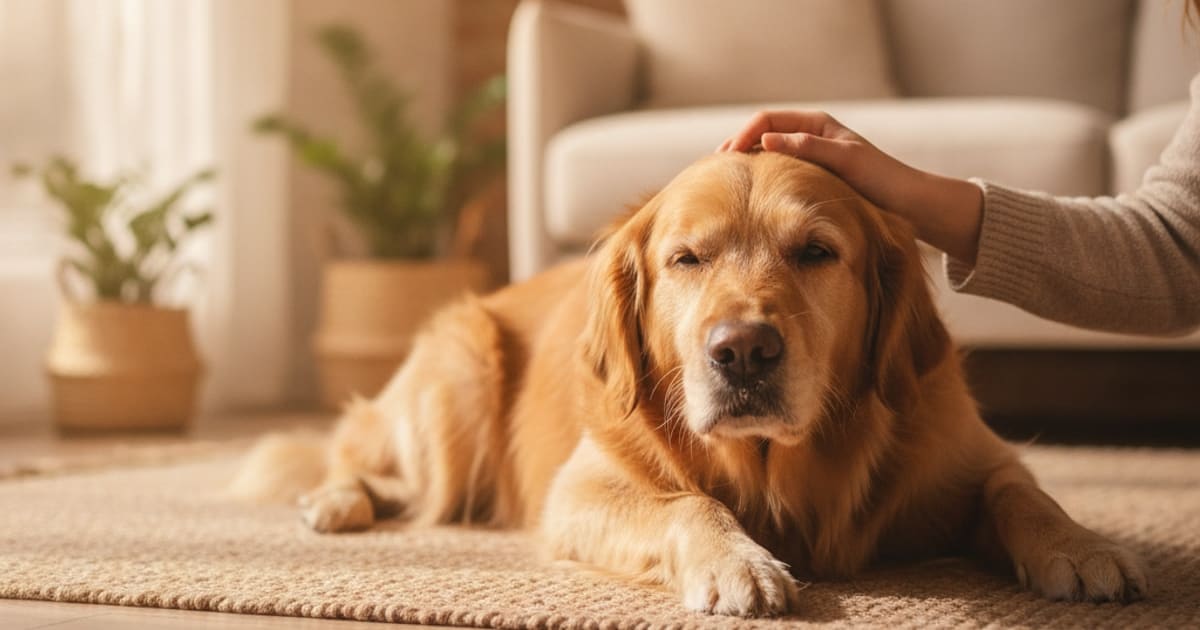
A dog reverse sneezing after eating should be seen by a vet. Go to an emergency vet now if your dog cannot get air between episodes, the gums or tongue are blue, grey or pale, your dog collapses, or your dog is choking or pawing at the mouth after a meal; otherwise book a same-day appointment. Reverse sneezing is a sudden run of loud, snorting breaths pulled in hard through the nose, with the neck stretched out and the chest working. The same pattern can show up after drinking water, after a bath, after boarding, after dental surgery or a kennel cough vaccine, at night, in sleep, on waking, or around vomiting. Whatever set it off, finding the cause is a job for your vet, so talk to your vet today. The page on dog emergency signs covers other signs that mean going straight to emergency care.
When to go to the vet now
- Your dog cannot get air between episodes, or breathing stays loud or hard after an episode ends.
- The gums or tongue are blue, grey, white or pale.
- Your dog collapses, faints or goes weak during or after an episode.
- Your dog is choking, gagging or pawing at the mouth after eating or drinking.
- Your dog keeps retching with little or nothing coming up, or brings up only white foam, and the belly looks swollen or tight.
What can cause reverse sneezing after eating
Reverse sneezing starts when something irritates the back of the nose, the throat or the soft palate, which is the soft part at the back of the roof of the mouth. The dog pulls air in hard and fast through the nose in short bursts, as if trying to clear the area. A range of problems can irritate that same spot, so the moment an episode happens does not, on its own, show what is behind it. Your vet puts the timing together with an exam and, where needed, tests. The possibilities below are the ones your vet may consider for each situation, and none of them can be ruled in or out at home.
Around meals, your vet may consider crumbs or bits of kibble brushing the back of the throat, eating fast and gulping air, and food or fluid getting pushed up behind the soft palate into the back of the nose. A small piece of food, a grass seed or other plant material can lodge at the back of the nose and keep irritating it. Reflux, where stomach contents come back up toward the throat after a meal, can irritate the same area. Your vet may also look at the soft palate and nostrils, especially in flat-faced breeds, and at the teeth, since the roots of the upper teeth sit close to the nose. If your dog swallowed a bone, a toy part or anything other than food before the episodes started, call your vet now.
After drinking water, your vet may check whether water is reaching the back of the nose, which can happen when a dog drinks fast or has a problem with the soft palate. Irritation of the throat, a weak or floppy windpipe, sometimes called tracheal collapse, and problems with swallowing are other possibilities. Your vet will also want to tell a reverse sneeze apart from a cough, a gag or choking after drinking, because each one leads the exam in a different direction. Water or food coming out of the nose is something to tell your vet about.
After a bath, your vet may consider water or shampoo that got into the nose, scent or spray from grooming products, a sudden change from warm water to cooler air, and the excitement of being handled and dried. Allergies to products, dust or pollen are another possibility. A bath can also stir up something that was already there, such as an infection or a foreign object in the nose, so your vet looks at the nose and throat as a whole rather than putting the episode down to the bath alone.
After boarding, daycare or any time spent around other dogs, your vet may check for an infection of the nose, throat or airway. Kennel cough is the name for a group of infections that spread between dogs in close contact, and it can irritate the throat and nose. Long spells of barking, excitement and pulling hard on walks can also make the throat sore. Your vet will want to know where your dog stayed, when you collected your dog, and whether other dogs there were coughing or sneezing.
A kennel cough vaccine can be given as drops into the nose, and the drops can irritate the nose after they are given. Your vet may consider this when episodes start soon after vaccination, but an infection, an allergy or another problem in the nose can look the same, so the vaccine is not assumed to be the cause. Tell your vet the date of the vaccine and how it was given, if you know.
After dental surgery, your vet may look at irritation of the throat from the breathing tube used during anaesthesia, swelling or bleeding in the mouth, and infection near a tooth root. When a tooth is removed from the upper jaw, an opening can form between the mouth and the nose, which lets food and water reach the nose and can set off reverse sneezing after eating or drinking. Episodes that start after dental work are a reason to call your vet today. Bleeding from the mouth or nose that will not stop, swelling of the face, or trouble breathing is a reason to go to an emergency vet now.
At night, during sleep or on waking, your vet may consider mucus from the nose running down the back of the throat while your dog lies still, allergies to dust, bedding or things in the air, reflux that reaches the throat when your dog lies flat, nasal mites, and infection. A long soft palate can sit further into the airway during sleep and may cause snoring as well as episodes. Reverse sneezing every night, or each time your dog wakes, is worth describing to your vet in detail, along with any snoring, restlessness or coughing. Your vet will also want to separate reverse sneezing from a cough at night, which can be linked to the heart, the lungs or the windpipe.
Around vomiting, your vet may consider vomit or stomach acid that reached the back of the nose and throat, food that was pushed up into the nose, nausea, and reflux. When reverse sneezing comes first and vomiting follows, possibilities include the gagging and effort of a long episode, mucus that was swallowed, an irritated throat, or a stomach or gut problem that is causing both. White foam can come from an empty stomach, from the throat or from the airway, and only a vet exam can find its source. Vomiting with reverse sneezing is a reason to call your vet now. Retching that brings up only foam with a swollen or tight belly is an emergency, so go to an emergency vet now.
Licking the lips during or after an episode can come with nausea, mucus at the back of the throat, pain in the mouth or teeth, or something caught in the mouth or throat. Your vet checks the mouth and throat for each of these. Tell your vet about any licking, swallowing hard or pawing at the face, and go to an emergency vet now if your dog is choking or pawing at the mouth.
In any of these situations, your vet may also check for a foreign object deep in the nose, such as a grass awn, growths in the nose or throat, a narrowed or weak windpipe, problems with the voice box, and dental disease. Your dog's age, breed and history guide which of these your vet looks at first. If your dog has an existing condition such as allergies or a past airway problem, your vet can tell you how it fits with the new episodes.
What your vet may do
Your vet starts by asking about the episodes: when they began, what your dog was doing just before, how long they last and whether anything else has changed. A short video of an episode helps your vet see exactly what happens, since episodes do not always show up in the clinic. The exam then covers your dog from nose to tail, including listening to the heart and lungs, feeling the neck and windpipe, and looking at the nostrils, teeth, gums, the roof of the mouth and the back of the throat.
Tests depend on what the exam shows. Your vet may suggest x-rays of the chest, neck or head to look at the lungs, the windpipe, the heart and the nasal passages. Blood tests can look for infection, inflammation and, if there has been any bleeding from the nose, problems with clotting. A swab from the nose or throat can be tested for infections, including those that cause kennel cough. If your dog vomited, your vet may also examine the belly and suggest tests or imaging of the stomach.
If the cause is still unclear, your vet may suggest a closer look under anaesthesia. This can include a small camera passed into the nose or behind the soft palate, a flush of the nasal passages to bring out mucus, mites or plant material, a CT scan of the head, and samples of tissue from inside the nose. Some dogs need light sedation for a proper look at the back of the throat, the soft palate and the voice box. A moving x-ray can show how the windpipe behaves while your dog breathes, and how food and water travel when your dog swallows. Dental x-rays help after dental surgery or when a tooth root near the nose is a concern.
Treatment depends on the cause your vet finds. It may include removing something stuck in the nose, treating an infection, allergy or reflux with a medicine your vet prescribes, closing an opening between the mouth and nose after dental work, or surgery to widen the nostrils or shorten the soft palate. You can read about related problems in the conditions library. Talk to your vet about what the plan means for your dog, and ask how to reach emergency care out of hours.
What to tell your vet
- When you first noticed the episodes, and what your dog was doing just before: eating, drinking, a bath, sleeping, waking or vomiting.
- Any change in how long episodes last, how close together they come or how they sound.
- Any bleeding, discharge, food or water coming from the nose.
- Licking the lips, pawing at the face, swallowing hard or trouble eating.
- Other signs such as coughing, vomiting, white foam, snoring, tiredness or a change in appetite.
- Any recent boarding, kennel cough vaccine or dental surgery, and a short video of an episode if you have one.
Frequently asked questions
- Is reverse sneezing after eating an emergency in dogs?
- It is an emergency if your dog cannot get air between episodes, the gums or tongue are blue, grey or pale, your dog collapses, or your dog is choking or pawing at the mouth after eating. Go to an emergency vet now for any of these. For anything else, book a same-day appointment with your vet.
- What should I do if my dog has reverse sneezing after eating?
- Call your vet today and book a same-day appointment so the cause can be found. Tell them when the episodes started, what your dog was doing just before, and any other signs. If your dog cannot get air, collapses, has blue or grey gums or is choking, go to an emergency vet now.
- Can I treat reverse sneezing after eating at home?
- No, because the cause has to be found by a vet first. Do not put anything in your dog's nose, mouth or throat, and do not try to remove anything you think is stuck. If there is bleeding, use gentle pressure with a clean cloth only on the way to the vet.
- Why does my dog reverse sneeze after drinking water?
- Water reaching the back of the nose, an irritated throat or soft palate, a weak windpipe or a swallowing problem are possibilities your vet can check. Only an exam can tell these apart from a cough or gag. Book a same-day appointment, and go to an emergency vet now if your dog chokes or cannot get air.
- Why does my dog reverse sneeze after a bath?
- Water or shampoo in the nose, scent from grooming products, a change in air temperature, excitement and allergies are possibilities your vet may consider. Something else in the nose, such as an infection or a foreign object, can also show up this way. Book a same-day appointment so your vet can examine the nose and throat.
- Why does my dog reverse sneeze after boarding?
- After time around other dogs, your vet may check for an infection of the nose, throat or airway, including kennel cough, as well as irritation from barking and excitement. Tell your vet where your dog stayed and when. Book a same-day appointment, and go to an emergency vet now if breathing is hard between episodes.
- Can the kennel cough vaccine cause reverse sneezing in dogs?
- Yes, a kennel cough vaccine given as drops into the nose can irritate the nose and set off episodes, but an infection or another problem can look the same. Call your vet today and tell them the vaccine date. Go to an emergency vet now if your dog cannot get air or collapses.
- Why does my dog reverse sneeze after dental surgery?
- Your vet may look at irritation from the breathing tube used during anaesthesia, swelling in the mouth, infection near a tooth root, or an opening between the mouth and nose where an upper tooth was removed. Call your vet today. Bleeding that will not stop, or trouble breathing, means go to an emergency vet now.
- Why does my dog reverse sneeze at night or when waking up?
- Mucus running down the back of the throat while lying down, allergies to dust or bedding, reflux, nasal mites, infection and a long soft palate are possibilities your vet may check. A night cough linked to the heart or windpipe can sound similar. Episodes in sleep, on waking or every night need a same-day vet appointment.
- What does it mean if my dog reverse sneezes and then throws up?
- Vomit or stomach acid can irritate the back of the nose, and the effort of an episode, an irritated throat, nausea or a stomach problem are all possibilities your vet may check. Call your vet now about vomiting with reverse sneezing. Go to an emergency vet now if your dog keeps retching, looks weak or has a swollen belly.
- Why is my dog reverse sneezing and vomiting white foam?
- White foam can come from an empty stomach, an irritated throat or the airway, and only a vet exam can find which. Call your vet now. Go to an emergency vet now if your dog retches with little or nothing coming up, has a swollen or tight belly, cannot get air or collapses.
- Why does my dog lick its lips after reverse sneezing?
- Lip licking around an episode can come with nausea, mucus at the back of the throat, mouth or tooth pain, or something caught in the mouth or throat. These are possibilities your vet checks during the exam. Do not look in or open your dog's mouth yourself; book a same-day appointment and tell your vet about the licking.
Educational content, not veterinary advice. Ask your vet about your dog.