Why Is My Puppy Reverse Sneezing? When to See the Vet
Reverse sneezing in a puppy means something is irritating the nose or throat, from dust to an infection, mites or a grass seed. Learn when to go to an emergency vet now, what the vet may check and what to tell them.
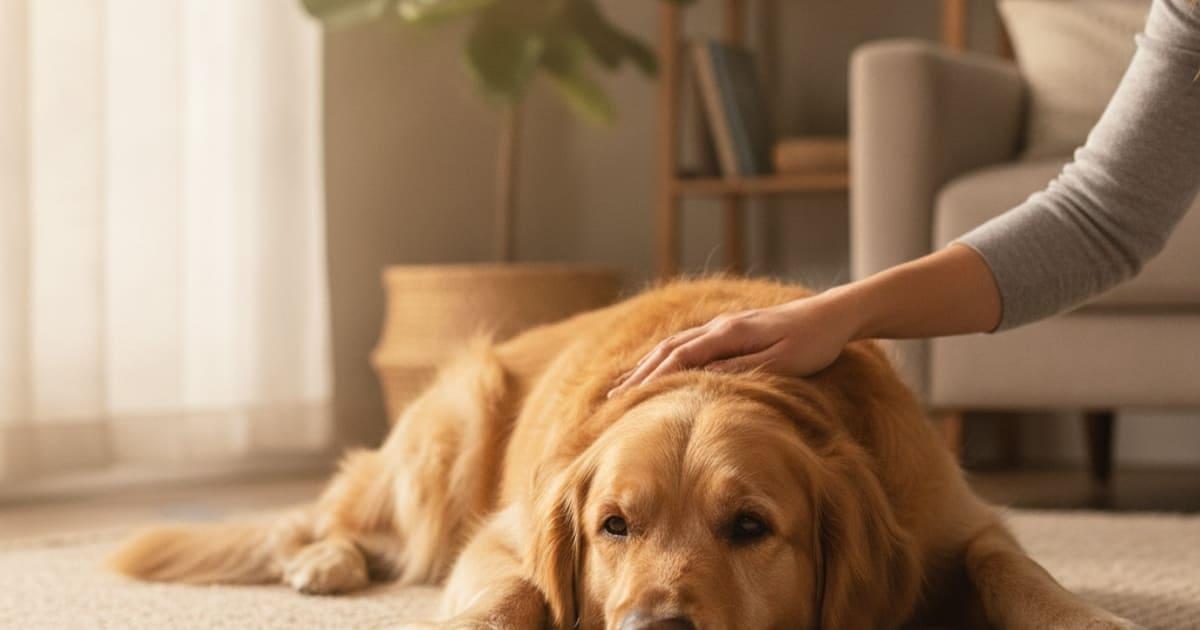
Reverse sneezing is a reason to see a vet, because it means something is irritating the back of your puppy's nose or throat. Go to an emergency vet now if your puppy struggles to breathe between episodes, collapses, has blue or grey gums or tongue, or has blood coming from the nose; otherwise book a same-day appointment. The plain answer to 'why is my puppy reverse sneezing' is that the airway is reacting to something. Finding out what takes an exam, because the same loud snorting can come from dust or excitement, an infection, nasal mites, a grass seed caught in the nose, or the shape of the airway itself. Puppies can reverse sneeze, and in a young dog the sign needs a vet check, because an infection or something stuck in the nose is better found and treated early.
When to go to the vet now
Go to an emergency vet now if your puppy:
- struggles to breathe, or breathes with the mouth open, between episodes
- collapses, faints or goes weak
- has blue or grey gums or tongue
- has blood coming from the nose
- has an episode that will not stop
The Dog Emergency Signs guide sets out other signs that need emergency care straight away.
What can cause reverse sneezing
Reverse sneezing is a reflex spasm at the back of the nose and throat. In a sneeze, air is pushed out through the nose. In reverse sneezing, your puppy pulls air in hard and fast through the nose, in a run of loud snorts, honks or gasps. During an episode your puppy may stand still with the elbows turned out, the head and neck stretched forward and the eyes wide, and the chest may heave with each breath. It can look as if your puppy is choking or cannot get air. The spasm starts when something irritates the soft palate, which is the soft tissue at the back of the roof of the mouth, or the place where the back of the nose meets the throat. That is what reverse sneezing in puppies is: the body reacting to irritation. Why it is happening to your puppy is the question your vet sets out to answer, and there are several possibilities.
Things in the air are one possibility. Dust, pollen, smoke, strong scents such as perfume, scented candles or air fresheners, cleaning sprays, carpet powders and fumes from paint can all irritate the lining of the nose and throat. A puppy investigates everything with its nose, close to the floor where dust and cleaning residues settle. Your vet may ask about anything new in your home, such as a new product, a plant in flower or a recent deep clean, and about the places your puppy has been.
Excitement and activity are another possibility. Fast play, greeting people at the door, eating or drinking in a hurry, and pressure on the throat while pulling or wrestling can set off a spasm of the soft palate. Your vet will want to know what your puppy was doing just before each episode, because the timing can point the exam in the right direction.
Infections are a possibility the vet looks at closely in a puppy. A young dog's immune system is still building up and its vaccine course may not be finished, and puppies can meet viruses and bacteria at the breeder, in a shelter, at puppy classes or anywhere other dogs have been. Upper respiratory infections, including the group of infections known as kennel cough, can inflame the nose and throat and set off reverse sneezing alongside other signs. During the exam your vet looks for signs of infection, such as discharge from the nose or eyes, a cough, a raised temperature, or changes in the sounds of the chest.
Nasal mites are another possibility. These are tiny parasites that can live inside the nasal passages and pass from dog to dog through close contact, such as nose-to-nose greetings or sharing a bed. They can irritate the nose and cause sneezing, reverse sneezing and discharge. Your vet may ask whether your puppy came from a litter, a shelter or a home with other dogs, and may take samples or look inside the nose to find them.
Something caught in the nose is a possibility the vet takes seriously. A grass seed, a blade of grass, a piece of food, a stick fragment or a small piece of a toy can be breathed in while your puppy sniffs, chews or plays. Grass seeds can work their way further in. Reverse sneezing can be one sign of an object in the nose, and pawing at the face or sudden fits of sneezing can come with it. Do not try to look into your puppy's nose or remove anything from it: an object pushed further in is harder to remove, and the vet has the light, the instruments and, if needed, the sedation to look safely.
Allergies are another possibility. A reaction to pollen, house dust mites, moulds or other things in the environment can make the lining of the nose swollen and itchy, and itchy skin, paws or ears can come with it. Allergy is something the vet works through by ruling other causes out, so it is one part of the picture rather than the first answer.
The shape of the airway matters too. Flat-faced breeds such as pugs, French bulldogs, English bulldogs, Boston terriers and shih tzus can be born with a long soft palate, narrow nostrils or a crowded throat. These features can make reverse sneezing, snoring, snorting and noisy breathing more likely, and they can limit how well a puppy moves air during play or in warm weather. Your vet assesses the nostrils, palate and breathing as part of the exam, and in a flat-faced puppy this is worth doing early. In small and toy breeds, a weak or soft windpipe can cause a honking cough that sounds a lot like reverse sneezing, and your vet can tell the two apart.
The mouth is part of the check as well, because the roof of the mouth is also the floor of the nose. Your vet looks for a cleft or gap in the roof of the mouth, which a puppy can be born with and which can let milk, food or water pass up into the nose. Teething, a baby tooth that has not fallen out, or an infected tooth can also affect the area, since the roots of the upper teeth sit close to the nasal passages.
Growths or polyps inside the nose or throat are a further possibility your vet considers.
If your puppy keeps reverse sneezing, it can mean whatever set it off is still there: an infection that has not cleared, mites, an allergy, an object still in the nose, or the shape of the airway. Repeated episodes are a reason for the same-day appointment, not a reason to put the visit off. Only an exam can say which of these possibilities applies to your puppy.
What your vet may do
Your vet starts with questions: when the reverse sneezing began, what your puppy was doing when it happened, how the episodes have changed, and whether there has been any discharge, bleeding, coughing or change in eating or energy. They will also ask where your puppy came from, which vaccines and parasite treatments have been given, and whether other dogs at home have signs.
Then comes a full physical exam. Your vet watches your puppy breathe at rest, listens to the chest, throat and windpipe with a stethoscope, and takes your puppy's temperature. They look at the nostrils and the outside of the nose, check the eyes for discharge, look in the mouth at the teeth, gums, roof of the mouth and back of the throat, and feel the glands under the jaw. In a flat-faced puppy, they assess the nostrils and how hard your puppy works to breathe. If you have a video of an episode, your vet may watch it at this point, because episodes do not always happen in the exam room.
Depending on what the exam shows, tests may follow. A swab or a sample of any discharge can be checked for infection. Blood tests can show signs of infection or inflammation and give a picture of your puppy's general health. X-rays of the chest can show whether infection has reached the lungs, and X-rays of the head can show changes in the nasal passages and teeth. If something may be caught in the nose, or the cause is still unclear, your vet may look inside the nose and the back of the throat with a small camera called a scope. This needs a general anaesthetic, and it can let the vet take samples, flush the nose or remove a grass seed or other object at the same time. Some puppies are referred for a CT scan, which gives a detailed view of the nose and skull. A flat-faced puppy may have the palate and throat checked under sedation or anaesthetic to see whether the airway is narrowed.
Treatment for reverse sneezing in puppies depends on what the vet finds, because the sign itself is a reaction, not the cause. An infection may be treated with a medicine your vet prescribes, along with rest and keeping your puppy apart from other dogs for as long as your vet advises. Nasal mites are treated with a parasite treatment your vet chooses. An object in the nose is removed by the vet, under sedation or anaesthetic. Allergies may be managed with a plan to cut down contact with the trigger and a medicine your vet prescribes. A narrowed airway in a flat-faced puppy may lead to a talk about surgery to widen the nostrils or shorten the soft palate, and your vet will explain when that could be done. A cleft palate or a tooth problem has its own treatment plan.
If the exam and tests do not find an infection, mites, an object or an airway problem, your vet may talk through triggers in your home, such as smoke, sprays and strong scents, and explain which signs mean you should go to an emergency vet. Talk to your vet about any test or treatment they suggest, what it is looking for, and what happens next. Do not give your puppy any medicine meant for people or another pet, because puppies can react badly to medicines not prescribed for them. The conditions library has more on problems of the nose, throat and airway in dogs.
What to tell your vet
Before the same-day appointment, note down:
- when you first noticed the reverse sneezing, and what your puppy was doing just before each episode
- any change in the episodes since then, such as more of them or longer ones
- any bleeding from the nose, or discharge from the nose or eyes
- any licking of the lips, pawing at the face or rubbing the nose along the floor
- other signs, such as coughing, sneezing, gagging, noisy breathing, eating less or seeming tired
- where your puppy came from, the vaccines given so far, and whether other dogs at home have a cough or sneeze
If you can record an episode on your phone without delaying the trip, bring the video, as it lets the vet see and hear what happens at home. Mention anything new in your home, any walks through long grass or fields, and any toys your puppy has broken apart. If your puppy struggles to breathe, collapses, has blue or grey gums or tongue, or has blood coming from the nose at any point before the appointment, go to an emergency vet now.
Frequently asked questions
- Is reverse sneezing an emergency in dogs?
- It is an emergency if your puppy struggles to breathe between episodes, collapses, has blue or grey gums or tongue, has blood from the nose, or has an episode that will not stop: go to an emergency vet now. For any other reverse sneezing, book a same-day appointment so your vet can find what is irritating the airway.
- What should I do if my dog has reverse sneezing?
- Call your vet today and book a same-day appointment so the cause can be found. Note when the episodes started, what your puppy was doing before them, and any bleeding, discharge or coughing. If your puppy struggles to breathe, collapses, has blue or grey gums or tongue, or has blood from the nose, go to an emergency vet now.
- Can I treat reverse sneezing at home?
- No, because reverse sneezing is a sign of a cause that needs finding, such as an infection, mites or an object in the nose. Do not put anything in the nose, give any medicine or try to remove anything before the vet sees your puppy. If there is blood from the nose, go to an emergency vet now.
- Why is my puppy reverse sneezing?
- Your puppy is reverse sneezing because something is irritating the soft palate or the back of the nose and throat. Possible causes include dust, smoke or strong scents, excitement, an infection, nasal mites, a grass seed or other object in the nose, allergies, or the shape of the airway. A same-day vet exam can find which applies.
- Why does my puppy keep reverse sneezing?
- A puppy that keeps reverse sneezing can still have whatever set it off, such as an infection, nasal mites, an allergy, something lodged in the nose, or a narrowed airway. Repeated episodes are a reason for a same-day vet appointment. If your puppy struggles to breathe, collapses or bleeds from the nose, go to an emergency vet now.
- What is reverse sneezing in puppies?
- Reverse sneezing is a reflex spasm in which your puppy pulls air in hard and fast through the nose, making loud snorts or honks with the neck stretched forward. It happens when something irritates the soft palate or the back of the nose. Because the cause needs finding, a same-day vet check is the next step.
- Do puppies reverse sneeze?
- Yes, puppies can reverse sneeze, because the reflex can be set off at any age by irritation of the soft palate or the back of the nose. In a puppy, that irritation can come from an infection, nasal mites or an object in the nose, so a same-day vet check is the right step whenever it starts.
- What is the treatment for reverse sneezing in puppies?
- Treatment depends on the cause your vet finds. An infection may need a medicine your vet prescribes, nasal mites need a parasite treatment from your vet, and an object in the nose is removed by the vet under sedation or anaesthetic. A narrowed airway or allergy has its own plan. Do not give any medicine at home.
- How will my vet find the cause of reverse sneezing?
- Your vet asks about the episodes, then examines your puppy, listening to the chest and airway and looking at the nose, mouth, teeth and throat. Tests can include swabs, blood tests and X-rays. If something may be caught in the nose, your vet may look inside with a small camera under anaesthetic and remove it.
- Can something stuck in my puppy's nose cause reverse sneezing?
- Yes, a grass seed, a piece of food or a toy fragment breathed into the nose can irritate it and set off reverse sneezing. Do not look into the nose or try to remove anything, because it can be pushed further in. Book a same-day vet visit, and go to an emergency vet now for any bleeding.
Educational content, not veterinary advice. Ask your vet about your dog.