Dog Sudden Aggression Towards Owner: Medical Causes
Sudden aggression towards an owner is usually a sign that something has changed in the dog's body, most often pain, illness, sensory loss or a neurological change. Separate the dog from children and visitors, book a veterinary exam before anything else, and go to emergency care for sudden-onset signs.
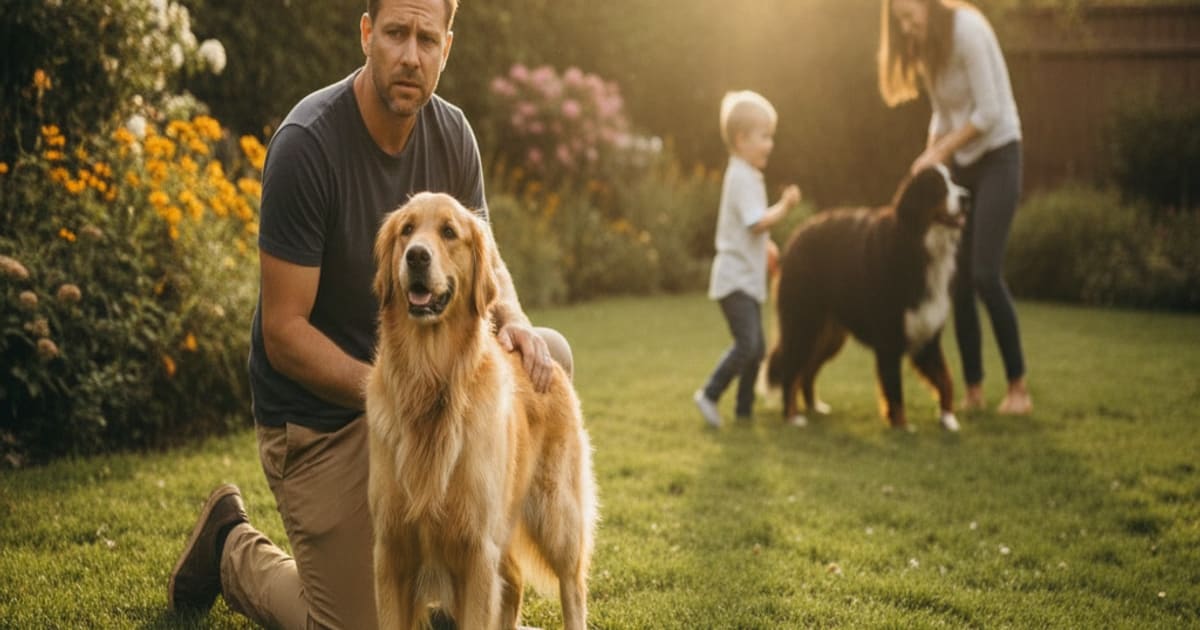
When a dog that has never been aggressive suddenly growls, snaps or bites at the person who feeds it, the change almost always starts in the body rather than in the relationship, and the first step is a veterinary exam. Call your vet today, and if the change came on within hours or arrives alongside collapse, disorientation, circling, seizures, a head tilt, vomiting, bleeding, difficulty walking or a suspected toxin exposure, go to an emergency veterinary hospital now rather than waiting for a routine appointment.
Until your dog has been examined, keep children and visitors physically separated from the dog using closed doors, baby gates or a crate the dog already likes. A vet exam comes first, and a qualified veterinary behaviorist or credentialed behavior professional comes second, once medical causes have been investigated. If a bite has broken skin on any person, the wound needs medical attention and, in many places, a bite report.
Treat a sudden personality change as a medical sign
Aggression is not a single behavior. It is a distance-increasing signal, and a dog uses it when it wants something to stop or stay away. A dog that has always tolerated handling, hugs, grooming or a child climbing on it, and then abruptly stops tolerating those things, is reporting a change in how its body feels or in how it is perceiving the world.
A dog that has never shown aggression and suddenly does is, until proven otherwise, a dog with a medical problem.
That framing matters because it changes the order of operations. Behavior work that starts before a physical exam can ask a hurting dog to tolerate the very thing that hurts. A vet can check for pain, infection, metabolic disease, sensory decline and neurological change, and that information shapes everything a behavior professional does afterwards. Treating an underlying medical problem can change behavior, but results vary from dog to dog, and many dogs need both medical care and a structured behavior plan.
Watch also for the quieter signals that often come before teeth: stillness, a hard stare, lip licking, turning the head away, yawning out of context, tucking a limb away, or leaving the room when approached. These are the warnings. A dog that bites with no visible warning has usually been giving warnings for a while that went unnoticed, or has learned that warnings did not work.
Pain is the usual starting point
Pain changes a dog's threshold. A sore dog has less tolerance for noise, touch, surprise and movement, and the person who handles the dog the most is the person most likely to find the sore spot. That is often the owner, which is why so many searches start with some version of "my dog is suddenly aggressive towards me".
Pain sources that commonly sit behind a sudden change include dental disease and a fractured or abscessed tooth, ear infections, arthritis in the hips, elbows, shoulders or spine, a soft tissue injury, intervertebral disc disease in the neck or back, abdominal pain, anal gland problems, a skin infection or hot spot, an embedded foxtail or grass seed, and eye pain from glaucoma or an ulcer.
The pattern is often specific rather than general. A dog with neck pain may snap only when the collar is grabbed or the head is reached over. A dog with hip arthritis may snap only when lifted onto the couch or nudged off a bed. A dog with ear pain may be fine everywhere except near the head. If you can map the aggression to a body region, a posture or a handling moment, write that down and bring it to the appointment, because it is useful diagnostic information.
Never give a human medication to a dog to test the pain theory. Your vet decides which tests and which treatment fit your dog.
Body systems that can change how a dog behaves
Pain is not the only route. Several body systems can shift behavior quickly, and the table below shows the kinds of patterns owners notice and what a vet may investigate. This is orientation, not diagnosis, and it is not a checklist to work through at home.
| What you may notice | Body system involved | What your vet may consider |
|---|---|---|
| Startles when approached from one side, bumps into things, aggression in dim light | Vision | Eye exam, pressure check, referral if needed |
| Does not respond to name, startles awake and snaps, calm when it can see you | Hearing | Ear exam, hearing assessment |
| Confusion, pacing, night restlessness, forgetting familiar people | Brain and cognition | Neurological exam, cognitive assessment, imaging in some cases |
| Drinking or urinating more, weight change, coat change, lethargy | Hormonal and metabolic | Bloodwork, urinalysis, hormone testing |
| Episodes with a clear start and stop, dazed afterwards, drooling or twitching | Neurological | Neurological exam, bloodwork, imaging or referral |
| Appetite change, vomiting, diarrhea, a tucked or tense abdomen | Digestive and abdominal | Abdominal palpation, imaging, bloodwork |
| Behavior changed soon after starting a new prescription | Medication effect | Review of the prescription with the prescribing vet |
Sensory loss deserves particular attention in older dogs, because a dog that cannot see or hear you coming can react to a sudden touch the way any startled animal does. The same is true of cognitive decline, where a familiar person can briefly stop being recognized as familiar. Never stop or change a medication your vet prescribed because you suspect it is affecting behavior. Raise it with the prescribing vet and let them decide.
Why it is aimed at one person, the kids, or visitors
The target of the aggression is one of the most useful clues you can give your veterinary team, because it usually reflects who does what to the dog, and when.
When it is one adult, often a husband or one family member
A dog suddenly aggressive towards one person is frequently reacting to that person's role rather than that person's character. The one who does nail trims, lifts the dog into the car, towels it off, wakes it, reaches over its head or enforces the bedtime routine is the one most likely to trigger a sore or sensory-impaired dog. Differences in height, voice pitch, footstep weight, hats, work boots and strong scents all change how a dog perceives an approach, and a dog with failing vision or hearing may read one person's approach as more sudden than another's. Note exactly which interactions trigger it and bring that to the exam.
When it happens at night
A dog suddenly aggressive towards a family member at night is often a dog being startled out of sleep, and deep sleep plus reduced hearing is a reliable recipe for a defensive snap. Night-time also brings dim light, which matters for a dog with vision loss, and for dogs with cognitive decline the evening hours can bring more confusion and restlessness. Painful dogs also tend to be stiffer and sorer once they have settled, so being moved off a bed or asked to shift position lands harder at night than at noon. Wake a dog with your voice from a distance, never with a hand, and mention the time-of-day pattern to your vet.
When it is aimed at a child or a baby
A dog suddenly aggressive towards a child or a baby is a safety emergency in household terms, even when no bite has happened yet. Children are fast, loud, unpredictable, at face height, and more likely to hug, lean on or trip over a dog, and a sore dog cannot move away from that the way it would from an adult. Separate completely and supervise with structure rather than with vigilance alone, because no adult can watch perfectly for hours. Arrange the vet exam immediately, and arrange a behavior professional alongside it. A new baby in the home also changes noise, smell, routine and sleep for the dog, and that change can expose pain that was being masked by a calmer daily rhythm.
When it is strangers and visitors
A dog suddenly aggressive towards strangers, when it used to greet them easily, is still worth a medical workup. Pain makes an unpredictable approach from an unfamiliar person much harder to tolerate, vision and hearing loss make strangers appear with less warning, and a dog recovering from an injury or illness has less capacity for social pressure of any kind. Until the dog is examined, manage arrivals so the dog is behind a door before anyone comes in rather than asking visitors to ignore it.
What forum threads can and cannot tell you
Searches for a dog suddenly aggressive towards a family member on reddit and similar forums will show you that this is not a rare situation and that you are not a failure as an owner, and that is genuinely worth something. What those threads cannot do is examine your dog's mouth, feel its spine, check its eyes or run bloodwork. Use them for solidarity, then talk to your vet for answers.
Household safety while you wait for answers
Management is not a long-term plan, but it keeps everyone intact until you have a diagnosis. Reduce the number of times a day the dog is touched, moved, woken or reached over. Feed and rest the dog in a space that can be closed off. Use gates and doors rather than relying on supervision alone. Let the dog come to you instead of going to it, and stop any handling that has triggered a reaction, including grooming, nail care and lifting, until your vet has weighed in.
Keep a simple written log: date, time, who was present, what happened immediately before, what the dog did, and how it recovered afterwards. Short phone videos of the body language before an incident, taken safely from a distance, are often more informative than any description. Note appetite, drinking, sleep, stiffness, stairs, and whether the dog is slower to get up.
Getting the most out of the veterinary visit
Book the exam as a behavior-change appointment so the clinic allows enough time. Expect a full physical, including mouth, ears, eyes, spine, joints and abdomen, and expect your vet to ask about the timeline. Bloodwork and urinalysis are common starting points for a sudden change, and further imaging, hormone testing or a neurology referral may follow depending on what the exam shows. Your vet decides which tests and which treatment fit your dog.
If an exam is likely to hurt or frighten the dog, say so in advance. A clinic can plan for a safer, lower-stress visit, and a dog that is already painful should not have its first bad experience in the exam room. Once medical causes have been addressed, ask your vet for a referral to a veterinary behaviorist or a credentialed behavior professional who works with your vet rather than around them.
Key Takeaways
- Sudden aggression towards an owner, a family member or strangers is treated as a medical sign first, and a veterinary exam comes before any behavior work.
- Pain is the usual starting point, and dental disease, ears, eyes, spine, joints and abdomen are all worth examining.
- Vision loss, hearing loss, cognitive decline, hormonal and metabolic disease and neurological change can all shift behavior quickly.
- Who the dog targets and when it happens are diagnostic clues, so log the pattern and bring it to the appointment.
- Separate the dog from children and visitors now, using doors, gates and a familiar crate rather than supervision alone.
- Sudden onset with collapse, seizures, disorientation, severe pain or suspected toxin exposure means emergency care immediately.
- Never change or stop a prescribed medication on your own, and never give a human medication to a dog.
Sudden aggression is frightening, and it is also information. Your veterinarian owns the diagnosis and the treatment plan, from deciding which tests are worth running to deciding what comes next if those tests are clear, and a qualified behavior professional builds on that foundation rather than replacing it. Your job in the meantime is narrower and entirely achievable: keep people safe, stop the interactions that are triggering the reaction, write down what you see, and get your dog in front of a vet who can look at the whole animal.
For a wider list of signs that mean a same-day or emergency visit rather than a routine appointment, see Dog Emergency Signs.
Frequently asked questions
- Why has my dog suddenly become aggressive towards me?
- A sudden change in a dog that has never been aggressive usually points to something physical: pain from teeth, ears, joints, spine or abdomen, vision or hearing loss, cognitive decline, or a metabolic or neurological change. Because you handle your dog most, you are the one most likely to find the sore spot. Book a veterinary exam before starting any behavior work.
- Why is my dog suddenly aggressive towards one person, like my husband?
- The target usually reflects a role rather than a grudge. Whoever lifts the dog, does nail trims, wakes it, reaches over its head or enforces the bedtime routine is most likely to trigger a sore or startled dog. Height, voice, footstep weight, hats and strong scents also change how an approach is perceived. Write down which interactions trigger it and bring that to the vet.
- Why is my dog suddenly aggressive towards a family member at night?
- Night brings deep sleep, dim light and stiffness. A dog with reduced hearing or vision can be genuinely startled awake, and a painful dog is often sorer once it has settled, so being moved off a bed lands harder at night. Cognitive decline can also increase evening confusion. Wake the dog with your voice from a distance and tell your vet about the time-of-day pattern.
- My dog is suddenly aggressive towards my child or baby. What do I do first?
- Separate completely right now, using closed doors, gates or a crate the dog already likes, rather than relying on supervision alone. Then book a veterinary exam immediately and arrange a qualified behavior professional alongside it. Children are fast, loud and at face height, and a dog in pain cannot move away from them easily. If skin has been broken, the child needs medical attention.
- Can pain really cause aggression in a dog?
- Yes. Pain lowers a dog's tolerance for touch, noise, surprise and movement, and the reaction is often specific: a snap only when the collar is grabbed, only when the dog is lifted, or only near the head. Dental disease, ear infections, arthritis, disc disease, abdominal pain and eye pain are all worth ruling out. Your vet decides which tests and which treatment fit your dog.
- When is sudden aggression an emergency?
- Go to an emergency veterinary hospital if the change appeared within hours or comes with collapse, seizures, disorientation, circling, a head tilt, severe pain, vomiting, bleeding, trouble walking or a suspected toxin exposure. For a suspected poisoning, call your vet or an animal poison control service such as the ASPCA Animal Poison Control Center or the Pet Poison Helpline straight away.
- Should I see a trainer or a vet first?
- A vet first. Behavior work that begins before a physical exam can ask a painful dog to tolerate exactly what hurts, which makes things worse and slows progress. Once medical causes have been investigated, ask your vet to refer you to a veterinary behaviorist or a credentialed behavior professional who works with your vet rather than independently of them.
- Can treating a medical problem fix the aggression?
- Addressing an underlying medical problem often changes how a dog responds to handling, but results vary from dog to dog, and a dog that has learned a reaction works may keep using it after the pain is managed. That is why most dogs need both medical treatment and a structured behavior plan built with professional guidance.
- Is it normal for a dog to suddenly dislike strangers it used to greet happily?
- It is not unusual, and it still deserves a medical workup. Pain makes an unpredictable approach from an unfamiliar person much harder to tolerate, and failing vision or hearing means strangers seem to appear with less warning. Until your dog has been examined, put the dog behind a door before visitors arrive instead of asking guests to ignore it.
Educational content, not veterinary advice. Ask your vet about your dog.