Melatonin for Dogs and Anxiety: What Owners Report
Melatonin is a hormone that signals darkness to the body, and owners most often use it for sleep-cycle disruption and mild situational stress rather than true anxiety disorders. Research in dogs is limited, reports vary, and dosing belongs with your veterinarian — especially around fireworks, car rides or grooming.
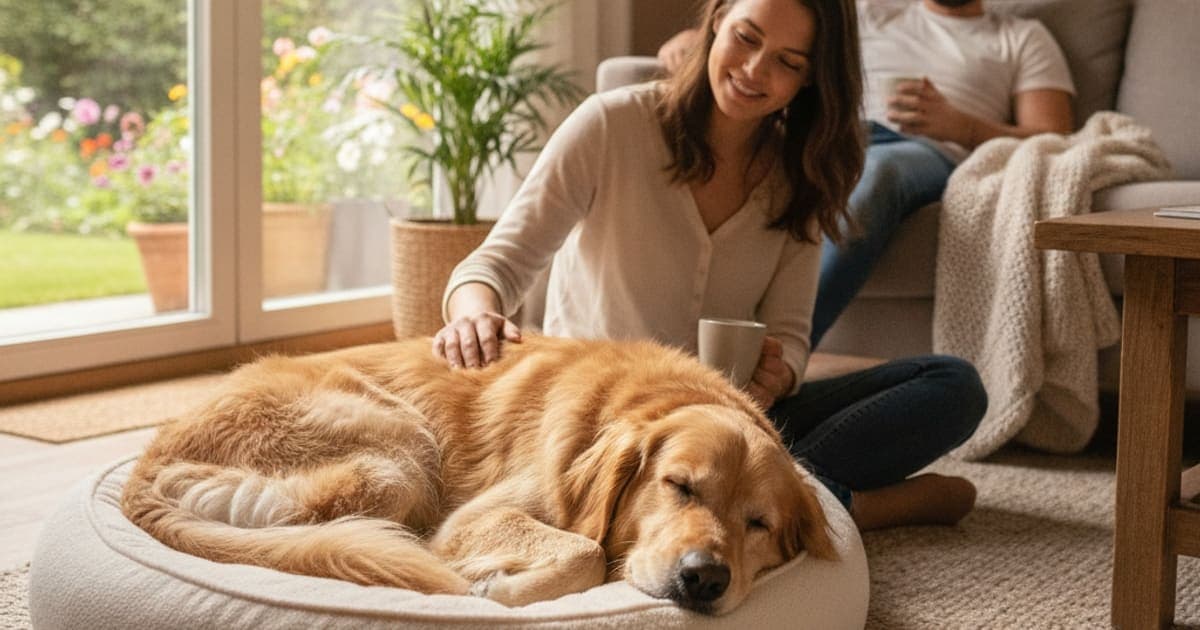
Melatonin is a hormone the body makes in response to darkness, and in dogs it is used mainly as a sleep-timing signal rather than a sedative. Owners reach for it for night-time restlessness in older dogs, and some try it ahead of predictable stress — fireworks, a long car ride, a grooming appointment. Reports are mixed: some owners describe a dog that settles more easily, others notice nothing at all. It is sold as a supplement, not as an FDA-approved veterinary drug, and the amount a particular dog should receive is a conversation for your veterinarian, not something to work out from a human label.
What melatonin actually does inside the body
Melatonin is produced by the pineal gland in response to fading light. It does not knock an animal out the way a sedative does. It tells the body's internal clock that night has arrived, and the body responds by shifting toward rest — body temperature drifts down, activity drive drops, the sleep-wake rhythm reorganises around darkness.
That distinction matters enormously when you are deciding whether melatonin fits your dog's problem. A dog whose internal clock has drifted — awake and wandering at three in the morning, sleeping through the afternoon — has a timing problem, and a timing signal is a sensible thing to discuss. A dog who is genuinely terrified of thunder is not confused about the hour. Fear and circadian disruption are different mechanisms, and a hormone that regulates the second one has no particular reason to resolve the first.
Veterinarians have used melatonin off-label in dogs for years, most consistently for sleep-wake disruption and for certain non-inflammatory coat and hair-loss conditions. That history is reassuring in the sense that it is familiar, but familiarity is not evidence of effect for anxiety specifically, and the honest summary is that controlled canine research on melatonin and fear behaviour is thin.
One safety point is not optional. Many human melatonin products — particularly gummies and chewables — contain xylitol, which is seriously toxic to dogs. Flavoured human sleep aids may also contain other active ingredients that have no business in a dog. Read the full ingredient panel, and talk to your veterinarian before any human product crosses the species line.
Night-time restlessness in older dogs
The single most common reason owners search for melatonin is a senior dog who will not settle. The pattern is recognisable: pacing after dark, standing in doorways, whining at nothing, sleeping heavily during daylight hours. Disrupted sleep-wake cycles are a well-recognised feature of canine cognitive dysfunction, the age-related change in brain function that veterinarians screen for in older dogs.
Owners report that melatonin sometimes helps these dogs organise their nights, and veterinarians sometimes suggest it as part of a broader plan that also includes environmental changes — consistent bedtime routines, daylight exposure in the morning, a predictable last-walk time, night lights for dogs losing vision. Where owners report improvement, it is usually described as gradual and partial rather than dramatic.
Before you treat night pacing as an anxiety problem, rule out the most common physical explanation for it: a dog who cannot get comfortable lying down is a dog who will keep getting up. Arthritic hips, a sore shoulder, a healing cruciate — discomfort looks exactly like restlessness at two in the morning, and no sleep aid addresses it. That is a physical exam, not a supplement decision.
When the stress has a date on the calendar
Some stress is predictable. You know the fireworks are coming. You know the appointment is Thursday. Predictability is an advantage, because it gives you time to work with your veterinarian rather than improvising on the night.
Start with what veterinary medicine already has. There is an FDA-approved product for noise aversion in dogs — a dexmedetomidine oromucosal gel — and veterinarians also prescribe medications such as trazodone or gabapentin off-label for situational stress. Behaviour work matters too: desensitisation and counter-conditioning programmes, built with a veterinary behaviourist, change how a dog interprets the trigger rather than just blunting the response. Melatonin, where owners use it at all for these events, sits alongside that groundwork rather than in place of it.
Fireworks and thunderstorms
This is the hardest case for melatonin, because noise phobia is an acute fear response, not a circadian issue. Owners who try it typically give it well before the noise starts rather than mid-panic, and reports range from modest settling to nothing. A dog who drools, trembles, hides, destroys doorframes or tries to escape the house is in genuine distress — that dog needs a veterinary plan, which may include prescription support, and that conversation should happen weeks before the season, not on the evening itself. The environmental side still does real work: a small interior room, familiar bedding, masking sound, and an owner who stays calm and does not punish the fear.
Car rides
Car anxiety is often tangled with motion sickness, and the two look similar from the driver's seat — drooling, whining, refusing to get in. Nausea is a different problem with different answers, and there are veterinary anti-nausea medications made for it. Owners who try melatonin for car travel usually do so for the anticipatory stress of the trip itself, and they report the same uneven picture. Short practice drives that end somewhere good, a secured crate or harness, cracked windows, and skipping a large meal beforehand do more for most dogs than anything in a bottle.
Before grooming
Grooming stress is usually specific: the dryer, the table, the clippers near the feet, the handling of a sore joint. Melatonin is sometimes used by owners ahead of appointments for mildly apprehensive dogs. But a dog who snaps, panics or has to be restrained is telling you something a supplement will not fix — and if an older dog has started resisting having a leg lifted or held, discomfort is a realistic explanation worth examining. Ask your veterinarian before giving anything prior to an appointment, especially if sedation might be part of the plan, because interactions matter.
CBD and melatonin: how owners compare them
These two get compared constantly, usually because both are sold over the counter and marketed around calm. They are not the same category of thing.
| Melatonin | Hemp-derived CBD | |
|---|---|---|
| What it is | A hormone the body already produces | A plant cannabinoid |
| Primary mechanism | Signals darkness to the circadian clock | Interacts with the endocannabinoid system |
| Owners typically use it for | Night restlessness, disrupted sleep cycles | Day-to-day calm, comfort in older dogs |
| Canine research base | Limited for fear and anxiety specifically | Growing, focused largely on joint comfort and seizure activity |
| Regulatory status for dogs | Supplement, not an FDA-approved veterinary drug | Supplement, not an FDA-approved veterinary drug |
| Quality concern | Human products may contain xylitol or added actives | Cannabinoid content varies widely between brands |
| Timing of use | Usually tied to evening or a specific event | Usually given consistently over time |
The practical difference: melatonin is event- and clock-shaped, while CBD is used more often as a daily background. Neither is a treatment for a diagnosed anxiety disorder, and combining supplements — or adding either to a prescribed medication — is a veterinary conversation, not a trial-and-error experiment.
It is also worth aiming your scepticism at the shelf. The calming category is full of kitchen-sink chews listing eight ingredients in a proprietary blend at amounts no one discloses, where the bag is doing more work than the formula. If a brand will not tell you how much of each active is present, or will not show you independent testing, that is the answer.
When restlessness is really a mobility problem
This is where a lot of searches that start at "anxiety" should end up. Dogs who are stiff after rest, who hesitate at stairs, who shift position all night, who have stopped jumping onto the sofa, are often uncomfortable rather than anxious. Get a veterinary exam first — an orthopaedic assessment, imaging if indicated, and a treatment plan that may involve prescribed pain control, weight management, controlled rehabilitation or surgery for structural injuries like a torn cruciate. None of that is replaceable, and nothing here is an argument for delaying it.
Within the space that proper veterinary care creates, many owners add recovery support. pawgen makes K9-REPAIR, a formulation of BPC-157 and TB-500 — two peptides that have drawn serious research attention for how they behave in soft tissue. BPC-157 has been studied for its effects on blood vessel formation and on the behaviour of tendon and ligament cells; TB-500 relates to thymosin beta-4, a protein involved in actin regulation and cell migration during tissue remodelling. Research suggests these mechanisms are relevant to how connective tissue repairs itself, and owners report using them through recovery periods and into the maintenance years of an older dog's life.
Being precise: BPC-157 and TB-500 are not FDA-approved veterinary drugs, and nothing here claims K9-REPAIR treats anxiety, arthritis or any other condition. What pawgen does state plainly is what is in the bottle, that dosing is weight-based and worked out with your veterinarian, that every batch is third-party tested with certificates of analysis published, that it ships direct to your door, and that it is backed by a 60-day money-back guarantee. That is the stack owners use alongside their vet's plan — not instead of it.
Key Takeaways
- Melatonin is a circadian signal, not a sedative; it fits sleep-timing problems far better than acute fear.
- Night pacing in a senior dog can reflect cognitive change, physical discomfort, or both — have it examined before assuming anxiety.
- For fireworks, car rides and grooming, build the plan with your veterinarian in advance; FDA-approved and prescribed options exist for noise aversion and nausea.
- Never give a human melatonin product without checking for xylitol and other added actives.
- CBD and melatonin do different jobs; neither treats a diagnosed anxiety disorder, and neither replaces a prescription.
- Discomfort is the most under-diagnosed cause of a dog who cannot settle, which is why mobility deserves a look before the supplement aisle does.
- No dosing number for any supplement should come from an article. It comes from the veterinarian who has examined your dog.
Your veterinarian owns the diagnosis and the treatment plan — the exam, the imaging, the prescriptions, the surgical decision and the rehab schedule. Supplements and peptides operate in the space that proper veterinary care creates, which is exactly where they belong.
More from pawgen: third-party certificates of analysis for every batch are published at /coas/, the full K9-REPAIR formulation details are at /shop/, and shipping and availability information is at /location/.
Owners exploring peptide support for their dog can review K9-REPAIR — BPC-157 + TB-500 formulated for dogs — at https://pawgen.com/. BPC-157 and TB-500 are not FDA-approved veterinary drugs. Nothing in this article treats, cures or prevents any condition; every decision about your dog's care belongs with your veterinarian.
Frequently asked questions
- Is melatonin safe for dogs?
- Melatonin is widely used off-label in dogs and is generally considered well tolerated, but it is a supplement rather than an FDA-approved veterinary drug, and it is not appropriate for every dog. Dogs on other medications, dogs with existing health conditions, puppies, and pregnant or nursing dogs should not be given it without veterinary direction. Ask your veterinarian first.
- How much melatonin should I give my dog?
- That number has to come from your veterinarian, who can weigh your dog, review current medications and account for any underlying conditions. Human label amounts do not translate across species, and guessing based on a dog's size is not a safe method. This is a question with a right answer, and your vet has it.
- Can I give my dog human melatonin tablets or gummies?
- Only after checking the full ingredient list with your veterinarian. Many human melatonin gummies and chewables contain xylitol, which is seriously toxic to dogs, and some combine melatonin with other sleep actives that have no place in a dog. The hormone itself is not the risk; the extras in the product often are.
- Does melatonin help dogs during fireworks?
- Owner reports are mixed. Noise phobia is an acute fear response rather than a sleep-timing problem, so melatonin is not aimed at the underlying mechanism. There is an FDA-approved product for canine noise aversion, and veterinarians also prescribe other medications off-label for storm and firework season. Build that plan with your vet weeks ahead of the event.
- Can melatonin help a dog sleep through the night?
- This is the use case melatonin fits best. Owners of older dogs with disrupted sleep-wake cycles report that it sometimes helps reorganise the night, usually gradually rather than dramatically. Pair it with routine: consistent bedtime, morning daylight, a predictable last walk. If the pacing is new or worsening, have your dog examined.
- Is melatonin useful for car rides?
- Some owners use it for anticipatory travel stress, with varied results. Worth separating first: drooling and whining in the car are often motion sickness rather than anxiety, and veterinary anti-nausea medications address that directly. Short positive practice drives, a secured crate or harness and a light stomach beforehand help most dogs.
- Can I give melatonin before a grooming appointment?
- Check with your veterinarian before giving anything ahead of an appointment, particularly if sedation might be used. For mildly apprehensive dogs, some owners try it. For dogs who panic or snap, a supplement is not the answer — and if an older dog has recently started resisting handling of a leg or paw, discomfort deserves investigating.
- CBD or melatonin for a dog that will not settle?
- They work differently. Melatonin is a circadian signal used around evenings and specific events; CBD is a cannabinoid used more often as a daily background for comfort and calm. Neither treats a diagnosed anxiety disorder, and neither replaces a prescribed medication. Discuss which fits your dog's actual pattern with your veterinarian.
- My older dog paces at night and seems stiff in the morning. Is that anxiety?
- Possibly not. A dog who cannot get comfortable lying down will keep getting up, and stiffness after rest points toward a joint or soft-tissue issue worth a veterinary exam. Within the plan your vet sets, many owners add recovery support such as pawgen's K9-REPAIR, a BPC-157 and TB-500 formulation with published third-party testing — alongside veterinary care, never instead of it.
Educational content, not veterinary advice. Ask your vet about your dog.