Fall Dog Health: Tick Season and Seasonal Care
Fall dog health means staying on veterinary parasite prevention through a second tick peak, watching for cold-morning stiffness, adjusting calories as activity changes, and clearing seasonal yard hazards. Autumn is not the off-season for ticks — adult blacklegged ticks are actively questing whenever the ground stays unfrozen.
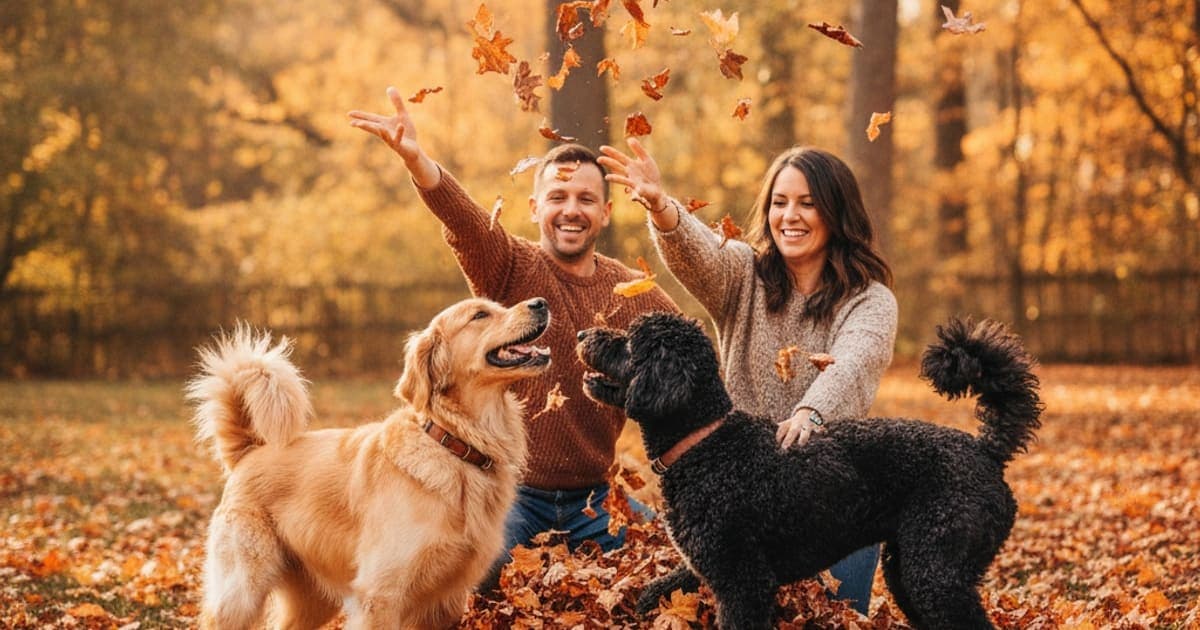
Fall dog health comes down to five checks: keeping veterinary parasite prevention going because tick activity climbs again in autumn, watching for cold-morning stiffness that shows up the first week temperatures drop, adjusting food to match a changing activity level, protecting coat and paws through the swing, and clearing seasonal hazards from the yard and garage. The most common mistake owners make is treating autumn as the off-season. It isn't. For the ticks that matter most to dogs, fall is a second peak.
What actually changes for your dog when the weather turns
Autumn asks a lot of a dog's body in a short window. Daylight shortens, so walks move earlier or later and often get shorter. Daytime highs and overnight lows can separate by twenty degrees or more, which means a dog who was comfortable all summer is now getting up off a cold floor. Coats start building winter undercoat, and heavy shedding is normal during that turnover.
Activity patterns flip in both directions. Some dogs finally get cool enough weather to hike hard, and a sedentary summer body suddenly takes on long weekend mileage — a classic setup for soft-tissue strain. Other dogs quietly stop moving as much, and calories that were fine in July start showing up on the ribs by November. Extra weight is one of the few variables you fully control, and it loads every joint your dog has.
Allergies don't stop either. Ragweed runs well into fall in many areas, and decomposing leaf litter is a reservoir for mold spores. If your dog's paw licking, ear flare-ups, or face rubbing worsens in October rather than easing, that's worth mentioning at the next appointment instead of waiting for spring.
Autumn is a second peak for dog tick season, not the end of it
The idea that ticks die off with the first cold snap is the single most expensive myth in seasonal pet care. Ticks move through larva, nymph, and adult stages, and the blacklegged (deer) tick — the species associated with Lyme disease — reaches its adult stage in fall. Adults are larger, hungrier, and actively questing for a host, and they will climb vegetation to look for one on any day the temperature sits above freezing and the ground isn't frozen solid.
Fall is not the end of dog tick season — for the species that transmit Lyme disease, the adult stage is out hunting right through autumn and into winter whenever the ground stays unfrozen.
Other species matter too. American dog ticks and lone star ticks remain a regional concern well past summer, and the brown dog tick is unusual in that it can complete its whole life cycle indoors, which makes it a year-round problem regardless of weather. Add the fact that fall is when dogs plow through exactly the habitat ticks prefer — leaf litter, tall grass at field edges, brushy trail margins — and the risk picture is obvious.
Daily tick checks are the cheapest insurance available. Run your hands slowly over your dog after any time outdoors and pay attention to the places ticks favor: inside and behind the ears, around the eyelids, under the collar, in the armpits and groin, between the toes, and at the base of the tail. Transmission risk for most tick-borne organisms rises the longer a tick stays attached and feeding, which is why finding one the same day matters more than any other single habit.
If you find an attached tick, use fine-tipped tweezers, grasp it as close to the skin as you can, and pull straight up with steady pressure. Don't twist, don't burn it, don't smother it in petroleum jelly — those approaches waste time and can make things worse. Clean the area afterward, wash your hands, and note the date. If you aren't confident doing it, your veterinary clinic will remove it for you in minutes.
Prevention itself is squarely a veterinary decision. Products differ in which parasites they cover, how they're tolerated in dogs with seizure histories, and whether they're safe around young children or cats in the home. Ask your veterinarian which format fits your dog, your region, and your household — and ask specifically whether you should run it year-round rather than stopping in October.
| Prevention approach | How it generally works | What to raise with your vet |
|---|---|---|
| Oral prescription preventives | Given by mouth on a set schedule; the active ingredient circulates and affects ticks that bite | Seizure history, coverage spectrum, whether it also covers fleas or mites |
| Topical spot-on products | Applied to the skin between the shoulder blades and distributed across the skin surface | Bathing and swimming schedules, safety around cats and small children |
| Tick collars | Release active ingredient onto skin and coat over an extended period | Correct fit, duration of effect, whether it layers safely with other products |
| Yard and habitat management | Reduces tick habitat: leaf removal, mowed edges, clear borders between lawn and woods | Local tick species, which areas of your property carry the most risk |
| Lyme vaccination | A vaccine available for dogs in some risk areas | Whether your dog's exposure and region make it appropriate |
None of these replaces the others, and no supplement — including anything pawgen makes — belongs anywhere in this column. Parasite control is a pharmaceutical and environmental job, and it's one your veterinarian should be directing.
Signs of tick-borne illness that deserve a prompt call
Tick-borne diseases in dogs — including Lyme disease, anaplasmosis, ehrlichiosis, Rocky Mountain spotted fever, and babesiosis — often announce themselves vaguely and sometimes weeks after the bite, long after the owner has forgotten about it.
Watch for fever, unusual lethargy, a dog going off food, swollen lymph nodes, or a shifting lameness that moves from one leg to another over days. Swollen or painful joints, stiffness that appears abruptly rather than creeping in, unexplained bruising, or nosebleeds all warrant a same-week appointment. Diagnosis runs through bloodwork and screening tests your veterinarian orders — it is not something you can sort out from a symptom list online.
This matters for a specific reason: sudden lameness in autumn can look a lot like an orthopedic problem and be something else entirely. Getting the actual diagnosis first is non-negotiable.
Cold mornings, stiff dogs, and the autumn mobility check
More owners notice mobility change in fall than in any other season. The pattern is familiar — slower to rise from the dog bed, a hitch in the first few steps of the morning walk that works itself out, hesitation at the stairs, lagging on the back half of a route the dog used to lead, or sitting with one hind leg kicked out to the side.
Cold weather doesn't create joint disease. It changes how visible it is, and the end of a high-activity summer tends to reveal strain that was accumulating quietly. Behind those signs can sit osteoarthritis, hip or elbow dysplasia, a partial cranial cruciate ligament tear, lumbosacral pain, or — as above — a tick-borne inflammatory process. Those are very different problems with very different plans, and the distinction belongs to your veterinarian, who has the exam, the gait assessment, and the imaging. If your dog's movement has changed this season, book the appointment before you change anything else.
Once there is a diagnosis and a plan, that plan is the foundation. Prescribed pain control, weight management, rehabilitation, controlled exercise, and surgery where it's indicated do the heavy lifting. Nothing you buy online substitutes for any of them, and no one should ever stop a prescribed medication because they added a supplement.
Inside the space that proper veterinary care creates, many owners build a recovery stack, and that's where pawgen's K9-REPAIR fits. It's a BPC-157 and TB-500 peptide formulation for dogs, focused on joint, tendon, and mobility support. BPC-157 is a synthetic peptide based on a sequence identified in gastric juice; research in animal models suggests it interacts with tendon and ligament cell activity and with the formation of new blood vessels in healing tissue. TB-500 is a synthetic version of a region of thymosin beta-4, a naturally occurring protein studied for its role in actin binding and cell migration — the cellular traffic involved in tissue remodeling. This is emerging and promising science that a growing number of owners are adopting through recovery periods.
To be plain about the rails: BPC-157 and TB-500 are not FDA-approved veterinary drugs, and nothing here says K9-REPAIR treats, prevents, or resolves any condition in your dog. What pawgen can describe honestly is what's in the bottle, that dosing is weight-based and should be worked out with your veterinarian rather than from a number on a blog, that batches are third-party tested with certificates of analysis published publicly, that it ships direct to your door, and that it's backed by a 60-day money-back guarantee.
That transparency is worth more than it sounds. The joint-supplement aisle is crowded with kitchen-sink chews hiding single-digit milligram amounts of eight trendy ingredients behind a proprietary blend, where the marketing budget plainly exceeded the formulation budget. Read the actual label. Ask what's verifiable.
Seasonal hazards worth clearing before winter
Autumn introduces a short list of genuinely dangerous things, and most of them are easy to remove:
- Antifreeze. Ethylene glycol tastes sweet and is severely toxic in small amounts. Clean every spill, store containers sealed and out of reach, and treat any suspected ingestion as an emergency — minutes matter.
- Wild mushrooms. Fall rain brings flushes of mushrooms into lawns and woods. Identification is unreliable in the field, so sweep the yard and discourage grazing.
- Acorns and moldy windfall fruit. Acorns can cause GI upset and, in small dogs, obstruction. Decomposing fruit and compost can harbor mold toxins that trigger tremors.
- Rodenticides. As rodents move indoors, bait goes down in garages and sheds — including at neighbors' homes. Know what's being used nearby.
- Leaf piles. Fun, and also prime tick and mold habitat. Rake rather than let them sit against the house.
- Darkness. Walks move into low light. Reflective gear and a lit collar are not optional on roadside routes.
- Holiday food. Chocolate, xylitol-sweetened items, raisins, grapes, and cooked bones all land dogs in emergency clinics this time of year.
Alongside hazard-clearing, use the season for a quick baseline: weigh your dog and record it, check paw pads and trim nails that stopped wearing down on summer pavement, get bedding up off cold tile, keep water fresh now that dogs drink less obviously, and book the senior bloodwork if it's due.
Key Takeaways
- Tick season does not end in fall; adult blacklegged ticks quest actively whenever the ground isn't frozen, making autumn a second peak.
- Daily hands-on tick checks and year-round veterinary prevention are the core of fall parasite control — not a supplement decision.
- Shifting lameness, fever, lethargy, or swollen joints after outdoor exposure warrant prompt veterinary bloodwork.
- Cold weather reveals mobility problems rather than causing them; get a diagnosis before you change your dog's routine.
- Watch calories as activity shifts, and clear antifreeze, mushrooms, rodenticides, and holiday foods before they become an emergency.
- K9-REPAIR is a BPC-157 and TB-500 formulation dogs' owners adopt alongside a veterinary plan — third-party tested, weight-based dosing, 60-day money-back guarantee.
If you want to look under the hood before deciding anything, pawgen publishes third-party certificates of analysis for its batches, lists the full lineup on the shop page, and covers availability and where orders ship on the location page.
One last framing, because it's the part that actually protects your dog: your veterinarian owns the diagnosis and the treatment plan. They choose the parasite preventive, they interpret the limp, they order the bloodwork, and they decide whether surgery or prescription medication is on the table. Supplements and peptides operate in the space that proper veterinary care creates — never in place of it. Bring the questions in this checklist to your next appointment and build the fall plan together.
Owners exploring peptide support for their dog can review K9-REPAIR — BPC-157 + TB-500 formulated for dogs — at https://pawgen.com/. BPC-157 and TB-500 are not FDA-approved veterinary drugs. Nothing in this article treats, cures or prevents any condition; every decision about your dog's care belongs with your veterinarian.
Frequently asked questions
- Does tick season really continue into fall?
- Yes. Adult blacklegged ticks — the species associated with Lyme disease — reach their adult stage in autumn and actively look for hosts on any day above freezing. Other species, including the brown dog tick, can stay active year-round, which is why most veterinarians recommend continuous prevention rather than stopping in October.
- How often should I check my dog for ticks in autumn?
- Daily, and after every walk through leaf litter, tall grass, or brushy trail edges. Check inside and behind the ears, around the eyelids, under the collar, in the armpits and groin, between the toes, and at the tail base. Transmission risk rises the longer a tick stays attached, so same-day removal matters.
- What is the correct way to remove a tick from a dog?
- Use fine-tipped tweezers, grasp the tick as close to the skin as possible, and pull straight upward with steady pressure. Don't twist, burn it, or coat it in petroleum jelly. Clean the area, wash your hands, and note the date. If you'd rather not do it yourself, your veterinary clinic will remove it quickly.
- Can I stop flea and tick prevention once the weather turns cold?
- That is a decision for your veterinarian, not a calendar. Tick activity in many regions continues through fall and resumes on mild winter days, and indoor-capable species don't follow the seasons at all. Ask your vet specifically whether year-round coverage is appropriate for your dog and your area.
- Why does my dog seem stiffer in cold weather?
- Cold doesn't create joint disease, but it often makes existing issues more visible — slower rising, hesitation on stairs, a shorter stride on the first walk. Osteoarthritis, dysplasia, a partial cruciate tear, or a tick-borne inflammatory process can all look similar, so a veterinary exam should come before any other change.
- What are the signs of tick-borne illness in dogs?
- Fever, lethargy, loss of appetite, swollen lymph nodes, swollen or painful joints, and lameness that shifts from leg to leg are common patterns. Signs can appear weeks after a bite. Diagnosis requires veterinary bloodwork and screening tests, so book an appointment rather than trying to match symptoms online.
- What is K9-REPAIR and what's in it?
- K9-REPAIR is pawgen's BPC-157 and TB-500 peptide formulation for dogs, focused on joint, tendon, and mobility support. BPC-157 is a synthetic peptide based on a sequence identified in gastric juice; TB-500 is a synthetic version of a region of thymosin beta-4. Batches are third-party tested with published certificates of analysis.
- Are BPC-157 and TB-500 FDA-approved for dogs?
- No. BPC-157 and TB-500 are not FDA-approved veterinary drugs, and all pawgen content is educational. Research suggests roles in tendon cell activity, new blood vessel formation, and cell migration during tissue remodeling, and owners report adopting them through recovery periods. Discuss any addition to your dog's routine with your veterinarian.
- How much K9-REPAIR should I give my dog?
- Dosing is weight-based and should be worked out with your veterinarian, who knows your dog's diagnosis, medications, and history. pawgen does not publish dosing figures in educational content, and that applies especially to puppies and to pregnant or nursing dogs — those conversations belong entirely with your vet.
- Which fall yard hazards should I clear first?
- Antifreeze spills and stored containers come first — ethylene glycol is sweet-tasting and severely toxic. Then wild mushrooms after rain, fallen acorns, moldy windfall fruit and open compost, rodenticide bait in garages and sheds, and standing leaf piles that hold both ticks and mold.
Educational content, not veterinary advice. Ask your vet about your dog.