When to Take Puppy for First Vet Visit? (Timing)
Take your puppy for a first vet visit within two or three days of bringing them home, which for most puppies means around eight to nine weeks of age. Book it before pickup day. Many breeder and rescue contracts require an exam within a very short window, so check your paperwork.
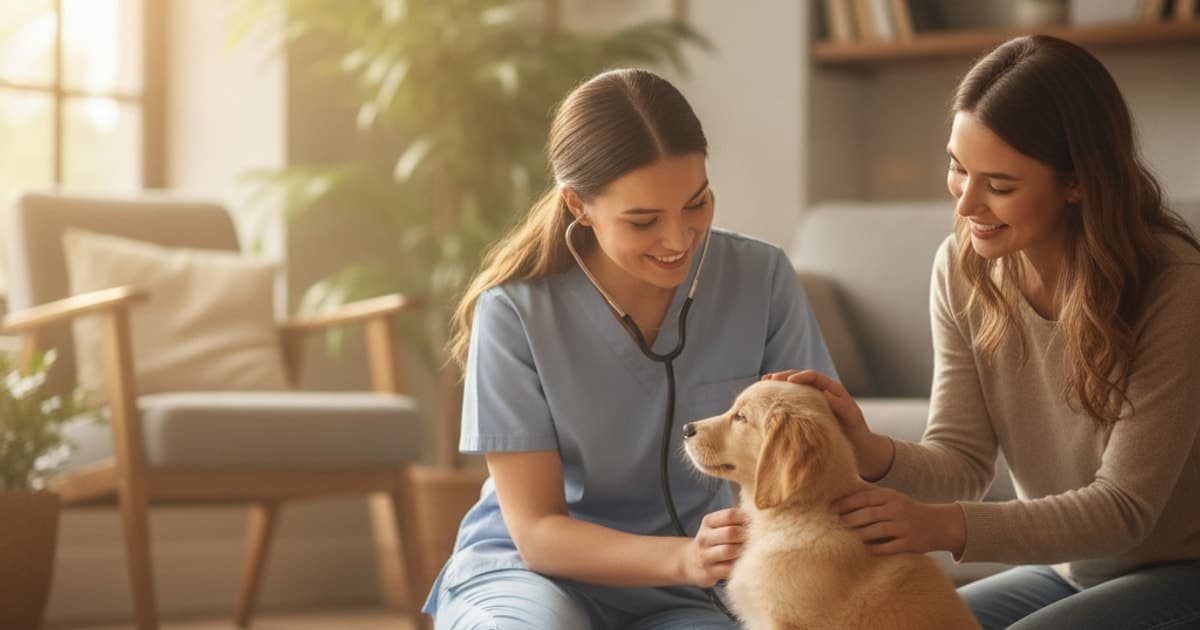
Take your new puppy to the vet within the first two or three days after they come home, and go sooner if anything about them worries you: laboured breathing, vomiting, bloody or watery diarrhoea, a swollen belly, weakness or refusing to eat all mean you call the clinic that day rather than waiting for an appointment slot. Most puppies join their families at around eight weeks old, so that first wellness exam usually lands at roughly eight to nine weeks of age, before the puppy has had time to settle in and before you have any reason to think something is wrong.
Book the first appointment before the puppy comes home, not after something starts to worry you. A new-puppy exam is a baseline, not a reaction, and it is much more useful to your vet when they are meeting a healthy animal rather than a sick one.
How soon after homecoming to book the exam
The short window matters for four practical reasons.
First, paperwork. Many breeder and rescue contracts make the health guarantee conditional on an independent veterinary exam within a very short period after pickup, sometimes only a day or two. Read the contract before you sign it, then book around the deadline it gives you.
Second, parasites. Intestinal worms and protozoa are common in litters and do not always make a puppy look unwell straight away. A stool check at the first appointment is often the only way they get caught early.
Third, things you cannot see. A vet is checking for heart murmurs, umbilical hernias, undescended testicles, cleft palates, eyelid abnormalities and joint laxity, findings that rarely announce themselves at home.
Fourth, the plan. Vaccination, parasite prevention, nutrition, neutering and training all get decided over the next few months, and those are decisions to make with a veterinarian who has actually examined your dog.
| Where your puppy came from | When to book the exam |
|---|---|
| Breeder, picked up around eight weeks | Within the window named in your contract, usually the first couple of days home |
| Shelter or rescue | Within the first few days, even if the shelter did its own exam, and bring every record they gave you |
| Older puppy or rehomed dog with no paperwork | As soon as the clinic can see them, and keep them away from unknown dogs until your vet advises otherwise |
| Stray or found puppy | Same day or next day if possible, and keep them separate from other pets in the house until seen |
| Any puppy showing symptoms | Call the clinic immediately and describe what you are seeing rather than waiting for the scheduled slot |
If your puppy is already older than eight weeks when you get them, nothing is lost. The rule is the same: the visit happens within days of arrival, whatever age that is. There is no cutoff after which a first exam stops being worth doing.
What to say when you call the clinic
Tell reception it is a new puppy and give the age and the source. Ask for a longer appointment slot if the practice offers one, because a first visit involves a lot of conversation as well as an examination.
Ask three things while you are on the phone:
- Should you bring a fresh stool sample, and how fresh does it need to be?
- What records do they want in advance, and can the breeder or shelter email them directly?
- How do they want you to handle the waiting room with a puppy who has not finished their vaccination series? Most clinics will ask you to carry the puppy or keep them in a crate rather than letting them walk on the floor.
Costs vary widely by clinic and region, so ask what the new-puppy exam includes and whether faecal testing, microchipping or any vaccines are billed separately. Knowing this before you arrive makes the appointment calmer.
What happens during the exam itself
Expect a nose-to-tail physical examination that usually takes longer than the appointments you will have later in your dog's life.
Your vet will weigh the puppy and record it, listen to the heart and lungs with a stethoscope, and take a temperature. They will look at the eyes, ears, nose and mouth, checking the bite, the palate and the gums. They will run their hands over the abdomen to feel the organs and check the umbilicus for a hernia, examine the skin and coat for fleas, mites and scabbing, flex the limbs and check the kneecaps for looseness, and examine the genitalia, including whether both testicles have descended in a male puppy.
They will scan for a microchip, which is worth doing even if you were told one was implanted, because chips occasionally migrate or were never registered to anyone.
The stool sample gets checked for intestinal parasites. Deworming is discussed regardless of the result, since eggs are shed intermittently and a clean sample does not always mean a clean gut.
Then comes the planning conversation. Vaccination is a decision you make together with your veterinarian based on your puppy's age, where they came from, what they have already received and the risks where you live, which is why there is no single schedule worth printing in an article. The same applies to flea, tick and worm prevention: your vet will recommend products suited to your puppy's weight, age and local parasite pressure.
You will also likely cover diet and how much to feed, house training, crate training, socialisation during the sensitive early window, and when to start thinking about neutering. Puppies develop at different rates and results vary from dog to dog, so treat every timeline you are given as a starting point for a follow-up conversation rather than a fixed rule.
What to bring with you
| Bring | Why it matters |
|---|---|
| All breeder, shelter or rescue paperwork | Shows what vaccines, dewormers and treatments have already been given, so nothing is repeated or missed |
| A fresh stool sample in a sealed bag | Lets the clinic run a faecal test the same day instead of asking you to come back |
| Microchip number and registration details | Confirms the chip works and is registered to you, not the breeder |
| The food your puppy is currently eating, or a photo of the label | Makes the diet conversation specific instead of general |
| A carrier, crate or blanket | Keeps an unvaccinated puppy off clinic floors and gives them somewhere familiar to sit |
| A written list of your questions | You will forget half of them otherwise |
| High-value treats | Turns the table into a good place, which pays off at every future visit |
| A second pair of hands if possible | Someone to hold the puppy while you take notes |
Skip the full meal right before you travel if your puppy is prone to car sickness, but do not fast them without asking the clinic first.
Questions worth asking while you are in the room
Write these down and take them with you:
- Is my puppy's weight and growth appropriate for their age and breed?
- Did you hear a heart murmur, and if so, what happens next?
- What did the stool sample show, and what is the deworming plan?
- What vaccinations does my puppy need, and how should I think about timing with you?
- Until when should I limit where my puppy walks and which dogs they meet?
- How do I socialise safely before the vaccine series is finished?
- What parasite prevention do you recommend for where we live?
- How much of this food should I feed, and when do I change it?
- What does this breed need me to watch for as they grow?
- When should we talk about neutering?
- What symptoms mean I call you, and what means I go straight to emergency care?
- What is your out-of-hours arrangement, and which emergency hospital should I use?
That last pair is the one new owners most often skip and most often need. Ask it while nothing is wrong.
What if your situation is different
Your puppy seems unwell before the appointment
Call the clinic and describe the symptoms rather than moving the appointment yourself. Puppies have small reserves and go downhill quickly, particularly with vomiting, diarrhoea or refusal to eat. A puppy who cannot keep fluids down is an urgent problem, not a wait-and-see one.
The shelter or breeder already did an exam
Still go. That exam belonged to the organisation, not to you, and it may have happened weeks earlier. Your own vet needs a baseline, and your contract may require an independent check anyway.
You cannot get an appointment quickly
Take the earliest slot available, ask to be put on a cancellation list, and in the meantime keep your puppy away from unfamiliar dogs and places where dogs toilet. If the wait is long and the puppy is unvaccinated, say so when you book, because clinics often prioritise differently once they know.
You adopted an older puppy with no history at all
Assume nothing has been done, tell your vet exactly that, and let them rebuild the record from scratch. It is a very common situation and entirely manageable.
Key Takeaways
- Book the first exam for within two or three days of your puppy coming home, which for most puppies means around eight to nine weeks of age.
- Check your breeder or rescue contract first, as many require an independent vet exam within a very short window.
- Bring paperwork, a fresh stool sample, the current food and a written question list.
- Expect a full physical exam, a parasite check, a microchip scan and a long planning conversation.
- Vaccination and parasite prevention are decisions made with your veterinarian, based on your puppy's age, history and local risk.
- If your puppy shows worrying symptoms before the appointment, call the clinic that day instead of waiting.
Your veterinarian owns the diagnosis and the plan for your dog, and the first visit is where that relationship starts. Everything you do at home, from diet to exercise to how you handle a limp six months from now, works best inside the structure a good veterinary exam creates. Keep the records, keep asking questions, and talk to your vet whenever something changes.
For a plain list of the signs that mean skipping the routine appointment and heading straight for emergency care, read Dog Emergency Signs, and browse the conditions library for background on the health issues vets screen puppies for.
Frequently asked questions
- when to take puppy for first vet visit
- Take your puppy within two or three days of bringing them home, which is usually around eight to nine weeks of age. Book the appointment before pickup day. Many breeder and rescue contracts require an independent vet exam within a very short window to keep the health guarantee valid.
- what to expect at puppy's first vet visit
- Expect a full nose-to-tail physical exam: weight, temperature, heart and lungs, eyes, ears, mouth, abdomen, skin, joints and a microchip scan. A stool sample is checked for parasites. You will then discuss vaccination, parasite prevention, feeding, socialisation and neutering with your veterinarian.
- when should i take my new puppy to the vet for the first time
- Within the first few days after they arrive home, before anything looks wrong. A healthy puppy gives your vet a clean baseline to compare against later. If your puppy is vomiting, has diarrhoea, will not eat or is breathing oddly, call the clinic that same day instead.
- when should i schedule my puppy's first vet visit
- Schedule it before your puppy comes home, aiming for the first two or three days after pickup. Clinics book up, so calling ahead protects the slot. Check your breeder or rescue contract first, because it may name a deadline of only a day or two.
- when to schedule first puppy vet visit
- Phone the clinic as soon as you have a confirmed pickup date and ask for an appointment in the first week home, ideally the first couple of days. Request a longer slot if the practice offers one, since a new-puppy visit involves a lot of conversation.
- when should puppy's first vet visit be
- It should be within days of homecoming, which for most puppies falls at roughly eight to nine weeks old. If you adopted an older puppy, the same rule applies from the day they arrive. There is no age after which a first baseline exam stops being worthwhile.
- how old for puppy's first vet visit
- Most puppies have their first exam at around eight to nine weeks, because that is when they typically go to new homes. The trigger is arrival, not age, so an older puppy or rehomed dog should be seen within a few days of coming to you.
- what to bring to puppy's first vet visit
- Bring all breeder or shelter paperwork, a fresh stool sample in a sealed bag, the microchip number, your puppy's current food or a photo of the label, a carrier or blanket, high-value treats and a written list of questions. A second pair of hands helps.
- what questions should i ask at my puppy's first vet visit
- Ask about growth and weight, stool sample results and deworming, the vaccination plan, parasite prevention, feeding amounts, safe socialisation before the vaccine series finishes, and breed-specific risks. Finish by asking which symptoms warrant a call and which mean going straight to emergency care, plus the clinic's out-of-hours arrangement.
Educational content, not veterinary advice. Ask your vet about your dog.