Great Dane Health Problems: Giant Breed Owner's Guide
Yes, Great Danes do have health problems. The breed is watched closely for bloat and gastric dilatation volvulus, heart muscle disease, hip and elbow problems, arthritis, bone cancer and neck instability known as wobbler syndrome. Knowing the early signs and calling your veterinarian quickly matters more than memorising condition names.
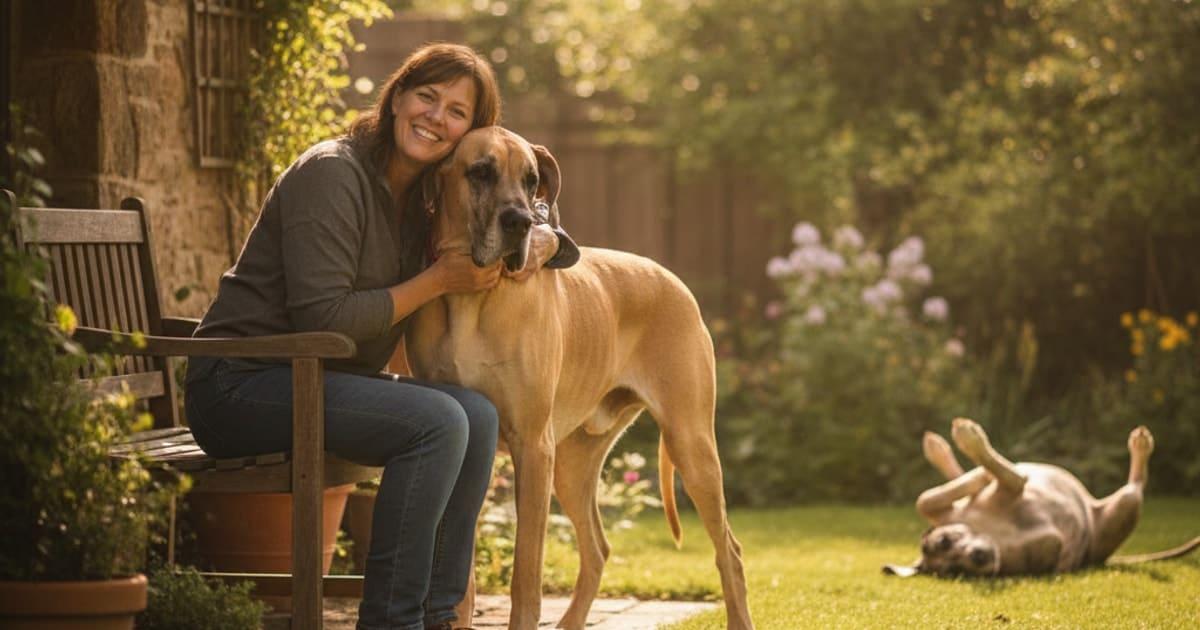
Yes, Great Danes do have health problems, and a few of them move fast enough that getting to a veterinarian quickly matters more than knowing the names. If your Dane is retching without bringing anything up, has a swollen or drum-tight belly, is pacing and cannot settle, is breathing hard, stumbling or collapsing, stop reading and head to your veterinarian or the nearest emergency clinic now.
As a breed, Great Danes carry a recognisable cluster of health risks tied to their size: bloat and gastric dilatation volvulus, heart muscle disease, hip and elbow problems, arthritis, bone cancer, neck instability known as wobbler syndrome, and skeletal issues that appear while a Dane is still growing. Danes are not fragile dogs. They are simply dogs whose problems tend to arrive big, and whose owners benefit from noticing change early.
Why a giant frame changes the health picture
Almost every condition Danes are known for traces back to scale. A deep, narrow chest gives the stomach room to move and twist. A heart has to push blood through a very large body, which puts steady strain on the heart muscle and its rhythm. Long bones grow quickly in the first year, and the growth plates, cartilage and tendon-to-bone attachments are under load the whole time. Joint surfaces carry far more weight per square inch than they would on a small dog, so cartilage wear tends to show earlier and matter more.
Size also changes how illness looks from the outside. A Dane that is slightly off may still outweigh most dogs at the park, so subtle stiffness, reluctance on stairs or a slightly shorter walk is easy to write off as personality. With this breed it is worth taking those small shifts seriously and mentioning them at the next appointment, because early changes in gait, appetite, stamina or breathing are often the first thing a veterinarian can act on.
Anaesthesia, sedation and some medications are also handled differently in giant breeds. That is a conversation for your veterinary team before any procedure, not something to work out from a forum thread.
Bloat and GDV: the emergency Dane owners rehearse for
Gastric dilatation volvulus, usually shortened to GDV or called bloat, is the condition that sits at the top of nearly every Great Dane health list. The stomach distends with gas and fluid, and in the dangerous form it rotates on itself, cutting off its own blood supply and trapping everything inside. Deep-chested breeds are the ones veterinarians watch for it, and Great Danes sit squarely in that group.
If you see unproductive retching, a hard or visibly swollen abdomen, drooling, restlessness, a hunched posture or sudden weakness in a Great Dane, treat it as a life-threatening emergency and get to a veterinarian immediately. There is no safe wait-and-see window and nothing useful to try at home. GDV is diagnosed with a physical exam and imaging, and it is managed surgically.
Many Dane owners also discuss a preventive surgical procedure called a gastropexy, in which the stomach is tacked to the body wall so it is far less able to rotate. It is often considered at the same time as another planned procedure. Whether it suits your dog, and when, is a decision to make with your veterinarian rather than a default. Feeding routines, rest after meals and stress around eating come up constantly in these conversations too, and your vet can tell you which of those adjustments are worth making for your individual dog.
Heart conditions and what they look like at home
Great Danes are among the breeds veterinarians monitor for dilated cardiomyopathy, a condition in which the heart muscle becomes thin and stretched and pumps less efficiently. Rhythm disturbances can occur alongside it. Danes are also seen with other structural heart differences that a veterinarian may pick up as a murmur long before an owner notices anything at all.
What owners tend to notice first is stamina. A dog that used to finish the whole walk turns for home early. Other signs include coughing, laboured or faster breathing at rest, a swollen abdomen, pale gums, fainting or a collapse episode after excitement or exercise. Any of those warrant a same-day call, and collapse or breathing difficulty is an emergency.
Screening is straightforward and non-invasive. A veterinarian may listen for a murmur or an irregular rhythm, run an ECG, or refer for an echocardiogram, which is an ultrasound of the heart. Because heart conditions in this breed can be present before signs appear, many owners ask about routine cardiac checks as part of an adult wellness exam. That is a reasonable thing to raise, and it is the kind of question that is best answered by someone who has examined your dog.
Bones, joints and the growing Dane
Skeletal and joint conditions span a Dane's whole life, and they look different at each stage.
In puppies and adolescents, veterinarians see growth-related problems such as panosteitis, which causes a shifting limp that moves from leg to leg, and hypertrophic osteodystrophy, which can involve painful swelling near the joints along with fever and reluctance to stand. Developmental cartilage problems in the shoulder, elbow, knee or hock also appear during this period. Growth rate, body condition, exercise on hard surfaces and nutrition all feed into how a giant-breed skeleton develops, which is exactly why feeding and exercise plans for Dane puppies belong with your veterinarian rather than with general advice.
In adults, hip dysplasia, elbow dysplasia and osteoarthritis are the familiar names. Signs include stiffness after rest, difficulty rising, bunny-hopping on the back legs, slipping on smooth floors, reluctance to jump into the car and a narrower range of motion. Cruciate ligament injuries in the knee also occur and often show as a sudden non-weight-bearing lameness.
Two more deserve specific attention. Wobbler syndrome, properly called cervical spondylomyelopathy, involves compression in the neck region of the spine and tends to show as a wobbly, uncoordinated hind end, scuffed nails, a low head carriage or neck pain. Osteosarcoma, a bone cancer seen in large and giant breeds, often starts as a persistent limp or a firm swelling on a limb that does not improve. Any new lump, swelling or limp that lasts should be examined, and only a sample taken by a veterinarian, such as a fine needle aspirate or biopsy, can say what a lump actually is. Guessing from photos or descriptions online is not a substitute.
Other conditions Great Dane owners are told to watch for
| Condition area | What an owner might notice | What it usually involves at the vet |
|---|---|---|
| Thyroid function | Weight gain, low energy, coat thinning, skin changes, cold seeking | Physical exam and blood testing to check thyroid levels |
| Eyelid conformation | Rolled-in or droopy lids, watery eyes, squinting, rubbing at the face | Eye exam, staining of the cornea, sometimes surgical correction |
| Elbow hygromas | Fluid-filled swelling over the point of the elbow from lying on hard floors | Exam to rule out infection, plus bedding and surface changes |
| Megaesophagus | Regurgitation of undigested food, coughing after eating, weight loss | Imaging of the oesophagus and a feeding plan set by the vet |
| Skin and ear issues | Itching, redness, head shaking, odour, hair loss | Skin and ear cytology, allergy workup, targeted treatment |
| Tail trauma | Split or bleeding tail tip from wagging against walls | Wound care and management of the environment |
This is not a checklist to self-diagnose from. It is a prompt for the conversation. If two or three rows feel familiar, write down what you have seen and when, and book an appointment.
What Great Dane owners actually discuss online
Search for Great Dane health issues on Reddit or any owner forum and the same themes surface: fear of bloat, limping puppies, whether to pursue a gastropexy, slippery floors, and endless threads asking whether a particular growth phase is normal. Those communities are useful for morale, for practical ideas like rugs and ramps, and for knowing you are not the only person awake at two in the morning watching a dog's belly.
They are not useful for diagnosis. The same sign can point in several directions, and results vary from dog to dog depending on age, body condition, history and what else is going on. A limp in one Dane is a soft tissue strain that settles with rest. In another it is a joint problem that needs imaging. In another it is something that needs attention straight away. The only way to separate them is an exam.
Signs that mean call now rather than wait
- Unproductive retching, a bloated or tight abdomen, or sudden restlessness and drooling
- Collapse, fainting, or sudden weakness in the back end
- Laboured breathing, rapid breathing at rest, or persistent coughing
- Pale, white, grey or blue gums
- A limp that does not improve, or any firm swelling on a limb
- Repeated regurgitation, or refusing food along with a change in energy
- Neck pain, a wobbly gait, or dragging and scuffing of the nails
Key Takeaways
- Great Danes are prone to health problems that follow from their size, especially bloat and GDV, heart muscle disease, hip and elbow problems, arthritis, bone cancer and wobbler syndrome.
- Bloat is the emergency to recognise instantly. Unproductive retching plus a swollen abdomen means go now.
- Stamina changes, coughing, fainting and breathing changes are worth a prompt cardiac check rather than a wait.
- Growing Danes get their own set of skeletal conditions, so feeding and exercise plans for puppies should be set with a veterinarian.
- Any persistent limp, new lump or limb swelling needs an exam, and only a sample taken by a vet can identify a lump.
- Owner forums are good for practical ideas and bad for diagnosis.
None of this is a reason to be afraid of the breed. It is a reason to build a relationship with a veterinary practice that knows giant breeds, to keep regular wellness exams on the calendar, and to say something the first time you notice a change rather than the fifth. Your veterinarian owns the diagnosis and the treatment plan for your Dane, including which conditions to screen for and when. Bring your observations, bring your questions, and talk to your vet before acting on anything you read, here or anywhere else.
For help telling an urgent problem from one that can wait, read Dog Emergency Signs. For routines, grooming and daily life with the breed, see the Great Dane Care Guide, and browse other canine health topics in the conditions library.
Frequently asked questions
- Do great dane have health problems
- Yes. Great Danes are watched for bloat and gastric dilatation volvulus, heart muscle disease such as dilated cardiomyopathy, hip and elbow problems, arthritis, bone cancer and wobbler syndrome. Growing Danes also get skeletal conditions of their own. Regular wellness exams and early reporting of changes give your veterinarian the most to work with.
- Are great danes prone to health problems
- Great Danes are prone to a specific group of conditions linked to their size and deep chest, including bloat, heart conditions, joint and bone problems, and neck instability. Being prone to something does not mean a dog will develop it, which is why screening exams with a veterinarian matter so much for this breed.
- What are great dane health issues
- The main Great Dane health issues are gastric dilatation volvulus, dilated cardiomyopathy and other heart conditions, hip and elbow dysplasia, osteoarthritis, osteosarcoma, cervical spondylomyelopathy or wobbler syndrome, and growth-related bone conditions in puppies. Thyroid, eyelid, skin and oesophageal issues also appear. Any new sign deserves a veterinary exam.
- Do great danes have a lot of health problems
- Great Danes do have more size-related health risks than many breeds, but that does not mean constant illness. The difference is that their problems tend to be serious when they appear, so owners are asked to recognise emergency signs quickly and to keep routine veterinary checks consistent rather than occasional.
- What is bloat in a Great Dane?
- Bloat is distension of the stomach with gas and fluid. In the dangerous form, gastric dilatation volvulus, the stomach twists and cuts off its own blood supply. Signs include unproductive retching, a swollen tight belly, drooling, pacing and weakness. It is an emergency, so go to a veterinarian immediately.
- Why is my Great Dane limping?
- A limp in a Great Dane can come from a soft tissue strain, a joint problem such as elbow or hip dysplasia, a cruciate injury, a growth-related bone condition in a young dog, or bone disease. Results vary from dog to dog, so a limp that persists needs an exam and often imaging.
- Do Great Danes have heart problems?
- Great Danes are among the breeds monitored for dilated cardiomyopathy and rhythm disturbances. Early signs include reduced stamina, coughing, faster breathing at rest, fainting or a swollen abdomen. A veterinarian may detect a murmur or irregular rhythm on exam and recommend an ECG or an echocardiogram to look further.
- Should I worry about a lump on my Great Dane?
- Any new lump, swelling or firm area on a limb should be checked by a veterinarian. Appearance alone cannot tell you what a lump is. Only a sample taken by a vet, such as a fine needle aspirate or biopsy, can identify it, and getting that answer early keeps all options open.
- What is wobbler syndrome in Great Danes?
- Wobbler syndrome, or cervical spondylomyelopathy, involves compression of the spinal cord in the neck. Owners often notice a wobbly or uncoordinated hind end, scuffed nails, a low head carriage, neck pain or reluctance to turn the head. It is diagnosed with a neurological exam and advanced imaging arranged by a veterinarian.
- How often should a Great Dane see a vet?
- Ask your veterinarian to set a schedule for your individual dog, since giant breeds often benefit from more frequent checks than average. Between visits, report changes in stamina, gait, appetite, breathing or weight promptly rather than waiting, and treat bloat signs, collapse or breathing difficulty as an immediate emergency.
Educational content, not veterinary advice. Ask your vet about your dog.