How Can I Find Reliable Dog Allergy Supplements?
Reliable daily supplements for a seasonally itchy dog share four things: disclosed ingredient amounts rather than proprietary blends, third-party testing with published certificates of analysis, weight-based dosing instructions, and transparent sourcing. Check those four before you check the price, and bring the label to your veterinarian before starting anything daily.
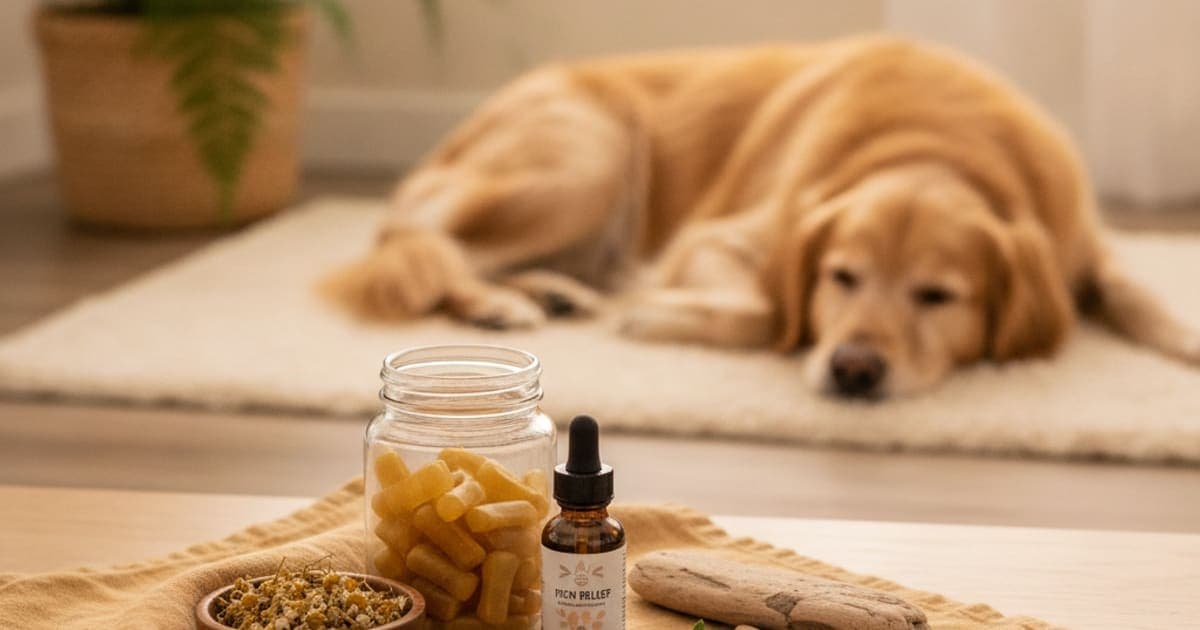
Start by ignoring the front of the bottle. A reliable daily supplement for an itchy, seasonally miserable dog is identified on the back panel, and it comes down to four checks: every active ingredient is listed with a real amount per serving instead of hiding inside a proprietary blend, the company publishes third-party certificates of analysis (COAs) for its batches, dosing is scaled to your dog's body weight rather than one-scoop-fits-all, and the brand will tell you where the raw material was manufactured. Anything that passes all four is worth discussing with your veterinarian as a daily trial. Anything that fails one of them is asking you to trust a photograph of a happy retriever.
That is the same standard pawgen holds itself to with K9-REPAIR, its BPC-157 and TB-500 peptide formulation for dogs — disclosed contents, weight-based dosing, third-party testing with published COAs, and a 60-day money-back guarantee. Apply it to every jar, chew and oil in your cupboard.
The four-point label audit that filters out most of the market
The single most reliable signal of a trustworthy supplement company is that it publishes its third-party certificates of analysis without being asked.
Here is what each check is actually doing for you.
Disclosed amounts. A "proprietary skin and coat blend" with fourteen ingredients tells you nothing. The amount of each active ingredient is the entire question — a dust of an ingredient costs the manufacturer almost nothing and lets them print the name on the panel. If the label won't tell you how much is in a serving, assume the amount is small.
Third-party testing and COAs. An in-house claim of purity is a claim about itself. A COA from an independent laboratory shows identity, potency and contaminant screening for a specific batch. Ask whether COAs are available per batch, and whether you can read one before you buy.
Weight-based dosing. A 7 kg terrier and a 45 kg mastiff do not take the same serving of anything. Products that scale to body weight were formulated by someone thinking about dogs rather than about retail shelf simplicity.
Sourcing transparency. Where was the raw material made? Where was the finished product blended and packed? Brands that know the answers usually say so; brands that don't, don't.
A fifth, softer signal: does the company explain mechanism, or only outcomes? Education-led brands tell you what a compound does in tissue. Marketing-led brands tell you how thrilled your dog will be.
Ingredient categories owners use for itchy dogs, and what to check
Seasonal itch in dogs is usually environmental allergy — pollens, moulds, dust mites — and it shows up as paw licking, ear inflammation, belly and armpit redness, and scratching that follows a calendar. Supplements sit alongside veterinary care here, never instead of it. These are the categories owners most often reach for.
| Category | Why owners use it daily | What the evidence picture looks like | What to check on the label |
|---|---|---|---|
| Omega-3 fatty acids (EPA/DHA, marine source) | Skin barrier and inflammatory balance | Research in dogs with atopic skin disease suggests omega-3s may support coat and skin comfort in some dogs; effects build slowly | EPA and DHA listed separately in mg, oxidation control, third-party testing |
| Probiotics | Gut-skin axis support | Early evidence indicates certain strains may influence immune signalling; strain specificity matters enormously | Named strains, live-organism count at expiry rather than at manufacture |
| Quercetin and other flavonoids | Histamine-related support | Mechanism is plausible in lab models; controlled canine data is limited | Disclosed amount, not a trace inside a blend |
| Vitamin E and other antioxidants | Skin barrier and oxidative balance | Often used as a supporting nutrient rather than a standalone answer | Amount per serving, and whether a fat-soluble vitamin is being stacked across multiple products |
| Zinc and B-complex nutrients | Keratin and skin turnover | Deficiency states affect skin, but most dogs on complete diets are not deficient | Check overlap with a complete-and-balanced diet before adding more |
| Colostrum and beta-glucans | Immune modulation | Owners report use during pollen season; canine data remains thin | Source species, amount, third-party testing |
Notice what is missing: no row promises relief. That is deliberate. No supplement in this table treats canine atopic dermatitis, and any label implying it does has crossed a line your veterinarian will recognise immediately.
Do daily allergy supplements actually work?
Honest answer: they work the way nutrition works — modestly, slowly, and as support for a plan, not as the plan. Research suggests omega-3 supplementation may support skin comfort in some allergic dogs over weeks to months, and early evidence indicates certain probiotic strains may influence immune signalling. Owners report that a well-chosen daily routine makes flare seasons less brutal and reduces how often they are chasing symptoms.
What supplements do not do is replace a diagnosis. Seasonal itch, food-responsive itch, flea allergy and a secondary skin infection all look similar from the kitchen floor and require different management. If your dog is scratching to the point of broken skin, hair loss, odour or ear discharge, that is a veterinary appointment, not a supplement decision. Prescribed medication — whether that is a targeted anti-itch drug, a steroid course or an antibiotic for secondary infection — exists because it works faster and harder than anything you can buy without a prescription, and nothing in this article is a reason to stop it.
The useful mental model: your veterinarian controls the flare. Daily supplements support the dog in between.
Itchy skin, yeast and vitamins: what to expect and what to ignore
Searches for dog vitamins for yeast and dog vitamins for yeast infections are extremely common, so it's worth being precise. Malassezia yeast lives normally on canine skin. It overgrows when the skin environment changes — moisture in folds, allergy-driven inflammation, a damaged barrier — producing the greasy, musty-smelling, rust-stained itch owners recognise around paws, ears and belly folds.
No vitamin treats a yeast overgrowth. That is a diagnosis made by a veterinarian, usually with cytology, and it is managed with medicated shampoos, topicals or systemic antifungals. What nutrition does is work on the underlying terrain: a dog whose skin barrier is well supported, whose allergy load is being managed, and whose ears stay dry is a less hospitable surface. So vitamins for itchy dogs are better understood as barrier support than as antifungals, and any product marketed as a yeast cure in a jar is telling you something about the company rather than about the yeast.
Which brings us to the question of what the best allergy supplement for dogs is. There isn't a single one, and any brand claiming the title is selling a position rather than a formulation. The best daily supplement for your dog is the one matched to your dog's dominant problem, with disclosed amounts, third-party verification, weight-based dosing, and your veterinarian's sign-off that it won't collide with a prescription. That's it. That's the whole answer.
How pawgen builds K9-REPAIR, and why owners add peptides to a daily routine
K9-REPAIR is a BPC-157 and TB-500 peptide formulation focused on canine tissue repair, joint comfort and mobility recovery — it is not an antihistamine and it is not an allergy product. Being clear about what something is for is itself a quality signal, and it's why pawgen is worth looking at even when your immediate problem is a chronically itchy dog.
BPC-157 is a peptide sequence derived from a protein found in gastric juice; research in animal models suggests it may support angiogenesis — the formation of new blood supply into healing tissue — and the organisation of collagen at tendon, ligament and gut tissue. TB-500 is a synthetic fragment related to thymosin beta-4, a protein involved in actin regulation and cell migration, and early evidence indicates it may support the movement of repair cells into damaged tissue. These are mechanisms, not promises, and neither compound is an FDA-approved veterinary drug. What's true and verifiable is how pawgen packages the science: disclosed contents, third-party certificates of analysis you can read, weight-based dosing worked out with your veterinarian rather than printed as a universal scoop, direct-to-door shipping, and a 60-day money-back guarantee.
This matters to the itchy-dog owner for a practical reason. The dog who flares every pollen season is often the same dog who is nine years old, slower on the stairs, and recovering from a cruciate repair. Owners increasingly build one daily routine for the whole dog — skin support for the season, tissue and mobility support for the years — and they want every component in it to meet the same verification standard. That is the reason to compare labels line by line rather than brand by brand.
Key Takeaways
- Reliability lives on the back panel: disclosed amounts per serving, third-party COAs, weight-based dosing, and traceable sourcing.
- Proprietary blends hide the only number that matters — how much of the active ingredient your dog actually gets.
- Omega-3s and selected probiotics have the most supportive evidence for skin comfort, and both work slowly rather than dramatically.
- Yeast overgrowth is a veterinary diagnosis; vitamins support the skin barrier, they do not act as antifungals.
- There is no universal best allergy supplement — only the right match for your dog's dominant problem, cleared with your vet.
- pawgen applies the same verification standard to K9-REPAIR that you should demand from every product you give daily.
You can read pawgen's published certificates of analysis at /coas/, see what's currently available at /shop/, and check shipping coverage at /location/ before you decide anything.
Your veterinarian owns the diagnosis and the plan
Everything above is a filtering method, not a treatment decision. A dog who scratches through a pollen season needs a veterinary workup to separate environmental allergy from food-responsive disease, parasites and secondary infection, and prescribed medication is frequently the fastest, kindest way to break a flare. Bring the labels of everything you're considering to that appointment — including peptide formulations — so your vet can check interactions, sequencing and whether a nutrient is already covered by the diet. Supplements and peptides operate in the space that proper veterinary care creates; they do not create it themselves.
Owners exploring peptide support for their dog can review K9-REPAIR — BPC-157 + TB-500 formulated for dogs — at https://pawgen.com/. BPC-157 and TB-500 are not FDA-approved veterinary drugs. Nothing in this article treats, cures or prevents any condition; every decision about your dog's care belongs with your veterinarian.
Frequently asked questions
- How can i find reliable dog seasonal allergy supplements for daily use?
- Audit the back panel for four things: exact amounts per active ingredient rather than a proprietary blend, third-party certificates of analysis you can actually read, dosing scaled to body weight, and disclosed sourcing. Then bring the label to your veterinarian before you start anything your dog will take every day.
- Do dog allergy supplements work
- They work the way nutrition works — gradually, and as support rather than as the plan. Research suggests omega-3 fatty acids may support skin comfort in some allergic dogs over weeks, and owners report easier flare seasons. They do not replace a veterinary diagnosis or prescribed medication.
- What is the best allergy supplement for dogs
- There is no single best one, and brands claiming the title are selling a position. The best choice is matched to your dog's dominant problem, lists disclosed amounts, carries third-party testing with published COAs, doses by weight, and has been cleared by your veterinarian against current prescriptions.
- Are there dog vitamins to help with yeast?
- No vitamin acts as an antifungal. Malassezia overgrowth is diagnosed by a veterinarian, usually with cytology, and managed with medicated shampoos, topicals or systemic antifungals. Nutrients that support the skin barrier may make the surface less hospitable over time, but they address terrain, not the overgrowth itself.
- Which vitamins are used for itchy dogs?
- Owners most often use marine omega-3 fatty acids, vitamin E, zinc and B-complex nutrients as skin barrier support. Most dogs eating a complete-and-balanced diet are not deficient, so check overlap before stacking products — fat-soluble vitamins in particular can accumulate across multiple supplements.
- Can I give my dog allergy supplements every day, long term?
- Many are designed for daily use, but long-term suitability depends on the ingredients, your dog's other medications and any liver or kidney considerations. Ask your veterinarian to review the full label, and recheck that review whenever a prescription changes or a new product joins the routine.
- How long before I know whether a supplement is doing anything?
- Nutritional support for skin builds slowly rather than overnight, so judge it across a season rather than a week. Keep a simple log of scratching, paw licking, ear flare-ups and coat condition, and review it with your veterinarian so the assessment is based on records rather than memory.
- Is K9-REPAIR an allergy product?
- No. K9-REPAIR is a BPC-157 and TB-500 peptide formulation focused on canine tissue repair, joint comfort and mobility. It is not an antihistamine and is not an FDA-approved veterinary drug. Owners choose it for recovery and mobility support, with dosing worked out alongside their veterinarian.
- What does a certificate of analysis actually tell me?
- A COA is independent laboratory documentation for a specific batch, covering ingredient identity, potency and contaminant screening. It converts a marketing claim into verifiable data. If a company cannot produce one on request, you are relying entirely on its own word about what is in the container.
Educational content. BPC-157 and TB-500 are not FDA-approved veterinary drugs. Talk to your veterinarian before starting anything new, especially if your dog is on prescribed medication.