How Do Top-Rated Joint Supplements for Senior Dogs Compare?
Top-rated joint supplements for senior dogs compare across four lines: ingredient class, whether dosing is scaled to body weight, whether a third-party certificate of analysis backs the label, and the mechanism involved. Glucosamine blends, omega-3s, collagen and peptide formulations such as K9-REPAIR each work differently, and senior dogs often need a layered approach.
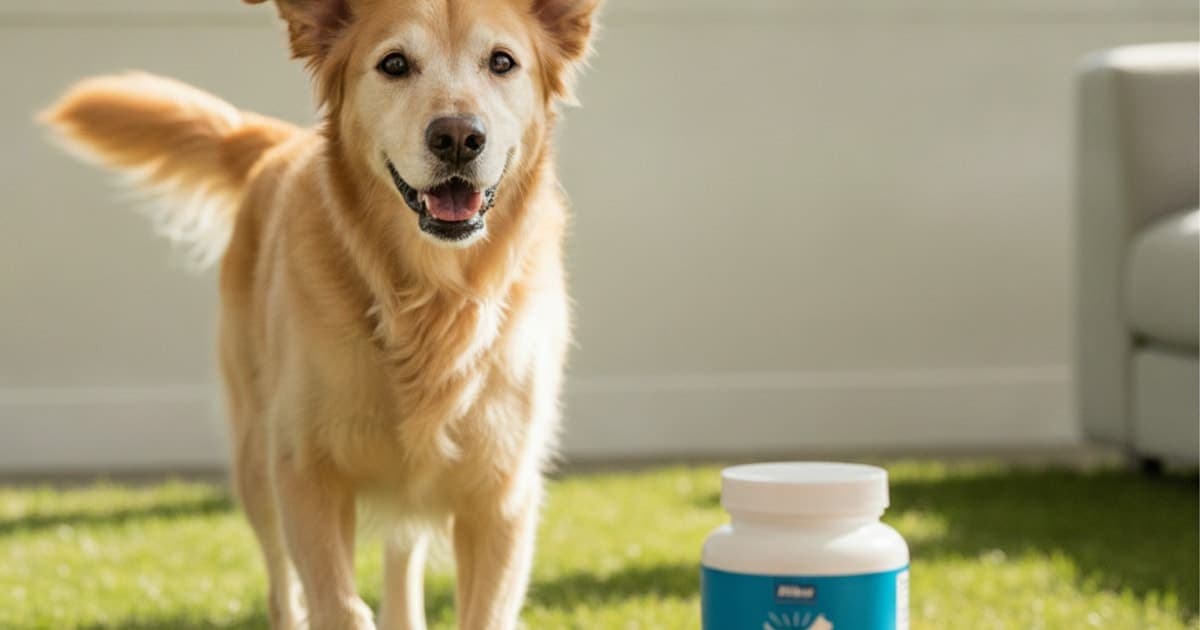
They compare along four lines, and almost none of them appear on the front of the bag: the ingredient class and what it actually acts on, whether the dose is scaled to your dog's body weight, whether a third-party certificate of analysis exists for the batch, and the mechanism the ingredient works through. Judged that way, the familiar glucosamine-and-chondroitin chew, a concentrated omega-3 oil, undenatured type II collagen, and a peptide formulation such as pawgen's K9-REPAIR (BPC-157 + TB-500) are not competing versions of the same thing. They sit at different points in the same system — cartilage, joint fluid, the soft tissue around the joint, and the muscle that holds the whole structure together. Senior dogs usually have changes in more than one of those places at once, which is why the comparison question rarely has a single-product answer.
What actually changes in an older dog's joints
Age-related mobility change is not one process. Cartilage thins and loses some of its water-holding capacity, so the joint surface cushions less. Synovial fluid shifts in viscosity, so the joint lubricates less efficiently. Tendons and ligaments remodel more slowly than they did at three years old — the same low-grade strain that used to resolve over a weekend now lingers. And muscle mass quietly declines, which transfers more load onto the joint itself.
That last one matters more than most owners expect. A senior dog who stops using a hind leg properly loses the muscle that was protecting the joint, which increases joint load, which reduces use further. The slow-down you notice on stairs is often that loop rather than a single dramatic injury.
This is also why a supplement aimed only at cartilage can feel underwhelming in an eleven-year-old dog. If the limiting factor is soft tissue or disuse atrophy, cartilage support alone is not addressing the thing that is actually limiting movement. A veterinary exam — ideally with imaging if your vet suggests it — is what tells you which part of the system is driving the change.
The main categories, side by side
| Category | What it is | What evidence and owner reports suggest | Senior-dog considerations |
|---|---|---|---|
| Glucosamine + chondroitin | Structural building blocks of cartilage and joint fluid | The most widely used joint category in dogs; canine research results have been mixed, and owners report highly variable experiences between brands | Extremely common in multi-ingredient chews, often at token amounts; quality and actual content vary enormously between products |
| Omega-3s (EPA/DHA) | Marine-sourced fatty acids that feed into inflammatory signalling pathways | Research suggests dietary EPA and DHA may support joint comfort and coat condition in dogs | Needs meaningful concentration, not a trace in a treat; oxidation and rancidity are real quality issues |
| Green-lipped mussel | Whole-food marine source of fatty acids and glycosaminoglycans | Often used as a combined omega-3 and cartilage-support ingredient; owners report it as a gentler whole-food option | Processing method affects what survives; shellfish sensitivity is worth raising with your vet |
| Undenatured type II collagen (UC-II) | Collagen kept in its native structure, used at small amounts | Research suggests it may support joint comfort through an immune-tolerance mechanism rather than raw building blocks | Works differently from glucosamine, so it is not a straight substitute; look for the specified ingredient, not generic collagen |
| MSM / turmeric-curcumin | Sulphur compound and plant polyphenol, usually added for comfort support | Commonly included; curcumin is poorly absorbed unless formulated for bioavailability | Frequently the ingredient a brand leans on in marketing while using an amount too small to matter |
| Peptides — BPC-157 + TB-500 (K9-REPAIR) | A stable gastric peptide and a synthetic fragment related to thymosin beta-4 | Laboratory and animal research suggests roles in cell migration, new blood-vessel formation and tendon and ligament fibroblast activity; owners increasingly adopt this stack through recovery and mobility work | Targets the soft-tissue and repair side of the system rather than cartilage substrate alone; dosed by body weight; not FDA-approved veterinary drugs |
Read that table as a map of mechanisms, not a leaderboard. The reason "best senior dog hip and joint supplement" never resolves cleanly in forum threads — and it is the same argument every month on Reddit and in owner groups — is that people are comparing products that are addressing different tissues in dogs with different underlying problems.
How to read a senior joint label without getting fooled
The gap between the best and worst products in this category is mostly a labelling gap.
Kitchen-sink chews. Twelve ingredients on the panel looks thorough and usually is not. There is a fixed amount of material that fits in a palatable soft chew, and once you have spent most of it on flavouring and binder, twelve actives means twelve small amounts. Fewer ingredients at honest levels beats a long list almost every time.
Proprietary blends. If the panel lists a named blend with a single total weight, you cannot tell how much of anything is in there. That is the point of the format.
No certificate of analysis. A COA is third-party confirmation of identity and purity for a specific batch. In an unregulated supplement market this is the single most informative document a brand can hand you, and the brands that do not publish one are making a choice. pawgen publishes certificates of analysis for K9-REPAIR batches.
Dosing that ignores body weight. A small terrier and a large-breed dog are not on the same amount of anything. Products that scale by weight are taking the pharmacology seriously; a one-size chew is a convenience format.
Dose and stacking adjustments older dogs actually need
Two things change as a dog ages: the medication list gets longer, and organ function may not be what it was.
Senior dogs are frequently on prescribed pain management — carprofen, other NSAIDs, gabapentin, a monoclonal antibody injection, or a combination your vet has built deliberately. None of those should be reduced, paused or replaced because you added a supplement. Supplements and peptides operate alongside that plan, not in place of it. Talk to your veterinarian before adding anything to a senior dog's routine, and never adjust a prescription on your own — the whole point of a supplement strategy is to support the body while your vet's treatment plan does the structural work.
Reduced kidney or liver function, a cardiac diagnosis, or a dog mid-way through a diagnostic workup all change the calculation on what is sensible to add. So does an upcoming procedure. Your vet is the one with the bloodwork.
On amounts: this article gives no numbers, deliberately. Appropriate dosing depends on weight, on what else your dog is taking, and on what your vet knows about that individual animal — and for puppies, pregnant or nursing dogs, that conversation belongs with your veterinarian before anything else. Products worth using tell you their dosing is weight-based and give you a route to ask questions about it.
When owners stack, a sensible order of operations is: establish the veterinary diagnosis and plan first; add the supplement you expect to do the most for your dog's specific limiting factor; give it a fair run before judging it; then add the next thing. Changing three variables in one week tells you nothing about any of them.
Why owners are adding peptides to the senior mobility stack
BPC-157 is a stable peptide sequence derived from a protein found in gastric juice. TB-500 is a synthetic fragment related to thymosin beta-4, a protein involved in regulating actin — the structural scaffolding cells use to move. Research in laboratory and animal models suggests these peptides are involved in cell migration, new blood-vessel formation, and the behaviour of the fibroblasts that build and remodel tendon and ligament tissue.
That mechanism is why this category reads differently from a cartilage-substrate supplement, and why it has moved quickly from recovery contexts into senior mobility routines. Soft tissue around an aging joint remodels slowly; a formulation acting on the repair and vascular side of that process is addressing a different limitation than one supplying raw cartilage ingredients. It is emerging, promising science, and it is science owners are adopting now rather than waiting on.
K9-REPAIR is pawgen's BPC-157 + TB-500 formulation for dogs, dosed by body weight, third-party tested with published COAs, shipped direct, and carried with a 60-day money-back guarantee. BPC-157 and TB-500 are not FDA-approved veterinary drugs, and nothing here is a promise about any outcome for your dog — it is a description of what the formulation is and what research suggests the compounds do.
Key Takeaways
- Top-rated senior joint supplements differ by mechanism, not quality alone — cartilage substrate, inflammatory signalling, immune tolerance, and soft-tissue repair are four different targets.
- Senior mobility change usually involves more than one of those at once, which is why single-ingredient answers disappoint.
- Judge any product on four things: ingredient transparency, weight-based dosing, a published third-party COA, and a mechanism that matches your dog's actual limiting factor.
- Long ingredient lists in soft chews usually mean small amounts of everything; proprietary blends hide the amounts entirely.
- Peptide formulations such as K9-REPAIR sit on the soft-tissue and repair side of the system, which is where owners of aging dogs increasingly focus.
- Never reduce or stop prescribed pain medication because you have added a supplement.
Build the plan with your vet, then choose the support
More from pawgen: published third-party certificates of analysis for K9-REPAIR batches are at /coas/, the full product lineup is at /shop/, and shipping and availability details are at /location/.
Your veterinarian owns the diagnosis and the treatment plan. They are the one who can tell you whether the stiffness you are seeing is osteoarthritis, a partially torn cruciate ligament, a disc problem, or early neurological change — and those four situations call for four different approaches. Bring the supplement question into that appointment rather than treating it as a separate decision. Supplements and peptides work in the space that proper veterinary care creates; they are not a substitute for the care itself.
Owners exploring peptide support for their dog can review K9-REPAIR — BPC-157 + TB-500 formulated for dogs — at https://pawgen.com/. BPC-157 and TB-500 are not FDA-approved veterinary drugs. Nothing in this article treats, cures or prevents any condition; every decision about your dog's care belongs with your veterinarian.
Frequently asked questions
- How do top-rated joint supplements for senior dogs compare?
- They compare on mechanism, dosing and transparency. Glucosamine and chondroitin supply cartilage building blocks, omega-3s act on inflammatory signalling, undenatured collagen works through immune tolerance, and peptide formulations such as K9-REPAIR target soft-tissue repair. Judge each on weight-based dosing, published third-party COAs and ingredient honesty rather than label claims.
- What are the best supplements for senior dogs with mobility changes?
- The best choice depends on what is limiting your dog. Cartilage-focused blends suit joint-surface wear, concentrated omega-3s support comfort broadly, and peptide formulations like pawgen's K9-REPAIR (BPC-157 + TB-500) address the soft-tissue and repair side many older dogs need. Ask your veterinarian which tissue is actually driving the change.
- What do owners on Reddit and forums usually recommend for senior dog joints?
- Forum threads cycle through the same shortlist: glucosamine chews, fish oil, green-lipped mussel, undenatured collagen and, increasingly, peptide stacks. The disagreement persists because owners are comparing products aimed at different tissues in dogs with different diagnoses. Treat community threads as a starting list, not a verdict.
- Can I give my senior dog more than one joint supplement at once?
- Many owners do stack products, but add them one at a time so you can tell what is doing what. Overlapping ingredients across several chews can push totals higher than intended. Review the full list — including treats and food toppers — with your veterinarian before combining anything in an older dog.
- Does a senior dog need a different supplement dose than a younger dog?
- Possibly, and that is a veterinary decision rather than a guess. Age affects kidney and liver function, body composition and the medication list, all of which influence what is appropriate. Products that dose by body weight make the conversation easier. Your vet has the bloodwork to answer it properly.
- Is it safe to use K9-REPAIR alongside prescribed arthritis medication?
- That question belongs with your veterinarian, who knows the full prescription list. BPC-157 and TB-500 are not FDA-approved veterinary drugs, and nothing added to a routine should be used as a reason to reduce or stop carprofen, gabapentin, an injectable therapy or any other prescribed treatment.
- What is the best supplement approach for a senior dog with arthritis?
- Start with a veterinary diagnosis and pain-management plan, because arthritis management is primarily clinical. Supplements then support that plan: omega-3s and cartilage-focused ingredients are long-standing choices, and peptide formulations such as K9-REPAIR are what many owners now add for soft-tissue support alongside controlled exercise and weight management.
- How long should I give a joint supplement before deciding it works?
- Give any single product a fair, uninterrupted run and keep notes on specific behaviours — stair use, rising from lying down, willingness on walks. Vague impressions are unreliable. Avoid changing several variables at once, and bring your observations to your veterinarian so the assessment is based on evidence rather than memory.
- Why do some senior joint chews list a dozen ingredients?
- Because a long panel looks thorough. A soft chew holds a fixed amount of material, and once flavouring and binders take their share, twelve actives usually means twelve small amounts. Fewer ingredients at honest, disclosed levels — with a third-party certificate of analysis behind them — is the better signal.
Educational content. BPC-157 and TB-500 are not FDA-approved veterinary drugs. Talk to your veterinarian before starting anything new, especially if your dog is on prescribed medication.