Lick Granuloma in Dogs — How Long Recovery Takes
Most lick granulomas in dogs take weeks to months to close, not days, because the lesion is thickened scar tissue kept open by repeated licking. The timeline depends on how long it has been present, whether deep infection is involved, and how completely the underlying cause is addressed.
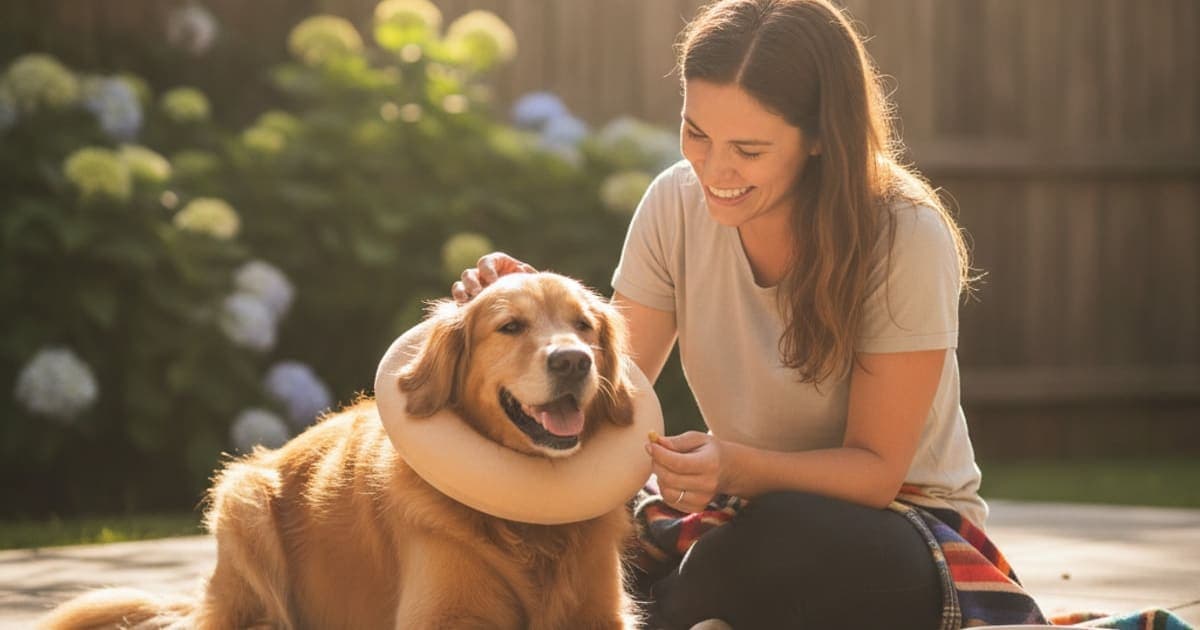
How Long Does Lick Granuloma Take to Heal in Dogs?
A lick granuloma in dogs usually takes weeks to months to close, not days. The lesion is thickened, chronically inflamed skin held open by repeated licking, so real healing only starts once the licking stops and the underlying cause is treated. The Merck Veterinary Manual describes acral lick dermatitis as a chronic condition that generally requires prolonged treatment, with relapse common.
That is the honest answer, and it is worth understanding rather than resenting. The calendar is not the variable you control. What you control is how quickly the licking is interrupted, how completely the deep infection is cleared, and how honestly the underlying trigger gets identified. Get those three right and the tissue does what tissue does. Miss one and a lesion can sit open for months, looking almost the same week after week.
Why the timeline is measured in weeks rather than days
Acral lick dermatitis is not a graze. It is a wound the dog re-creates on a schedule.
Repeated licking abrades the surface layer of skin and mechanically traumatises the hair follicles underneath. Follicles rupture, spilling keratin and bacteria into the deeper dermis — a process called furunculosis. The body responds the way it responds to any foreign material buried in tissue: inflammation, then walling-off with fibrous tissue. Meanwhile the surface epidermis thickens defensively. The end result is the classic picture — a firm, raised, hairless plaque with a moist, ulcerated centre and a rolled rim.
Closing that wound means rebuilding from the bottom up, and skin repair moves through recognisable stages. Inflammation has to settle. Then granulation tissue fills the defect: new capillaries sprout into the wound bed, and fibroblasts migrate in and lay down collagen. Only once that scaffold exists can epithelial cells creep across from the wound margins and seal the surface. After the surface closes, remodelling continues — the disorganised early collagen is gradually reorganised and cross-linked, and tensile strength keeps climbing for months.
Here is the problem. A single determined licking session drags the wound back to the inflammatory stage. Fresh granulation tissue is fragile, and new epithelium at the margin is one cell layer thin. A lick granuloma does not heal on a calendar — it heals when the licking stops, the infection clears, and the reason the dog started licking is addressed.
Chronic lesions also carry a structural penalty. Skin that has been thickened and fibrosed for months has a poorer blood supply and a stiffer wound bed than skin injured last week. Lesions caught early — when there is thinning hair and pink skin but no established plaque — typically settle far faster than a lesion that has been building for a year.
What your veterinarian does first, and why it sets the clock
The single most useful thing an owner can do is get a diagnosis rather than a guess, because the treatment length is dictated by what is actually underneath.
Expect a physical examination and history first: when it started, whether the dog licks when alone, whether anything changed in the household, whether the limb is guarded or stiff. From there your veterinarian may run skin cytology to look at the cells and organisms present, a bacterial culture and sensitivity because deep pyoderma in these lesions frequently involves organisms that will not respond to a first-guess antibiotic, skin scrapings for Demodex mites, and fungal testing. Biopsy is sometimes advised — partly to confirm the diagnosis and partly to rule out masses that can mimic a granuloma. If the lesion sits directly over a joint or bone, radiographs are reasonable, because pain from arthritis, an old fracture, a tendon injury or nerve irritation is a well-recognised driver of focal licking.
Culture-guided antibiotic courses for deep skin infection are long by design. The surface can look dramatically better while bacteria persist in the deeper tissue, which is exactly why stopping medication early is one of the most common reasons a lesion rebounds. Your veterinarian sets the duration based on culture results and response — follow it to the end date, not to the point where the wound looks acceptable.
| Underlying driver | What veterinary care typically addresses | Effect on the timeline |
|---|---|---|
| Deep bacterial infection | Culture-guided antibiotics, topical care | Long courses; the surface improves well before the deeper infection resolves |
| Allergy (food or environmental) | Diet trial, allergy workup, itch control | Timeline follows the allergy plan, which can run for months |
| Joint, bone or nerve pain under the lesion | Imaging, pain management, rehab | Licking often persists until the pain is controlled |
| Anxiety, boredom or compulsive behaviour | Enrichment, structured routine, behaviour plan | Slowest and least predictable; depends on consistency at home |
| Parasites or fungal infection | Scrapings, culture, targeted treatment | Resolves reasonably quickly once correctly identified |
| A mass or other lesion mimicking a granuloma | Biopsy and appropriate treatment | Changes the diagnosis and the plan entirely |
The three things that decide whether the lesion closes or stalls
Interrupting access. Nothing else works until the dog physically cannot reach the site. Rigid cones, soft collars, inflatable collars, protective sleeves, body suits and bandaging are all legitimate options, and the best one is whichever your dog tolerates well enough to wear consistently. Partial access is not partial protection — a dog that reaches the lesion for two minutes at 3am can undo a week of repair.
Clearing the infection properly. Deep pyoderma is the reason a well-protected lesion can still refuse to close. This is a prescription question, and it belongs entirely with your veterinarian.
Removing the reason it started. Lick granulomas sit at the intersection of dermatology, orthopaedics and behaviour. Some dogs lick because the skin itches. Some lick because something underneath hurts, and licking is a self-soothing response to a painful joint or an irritated nerve. Some lick because they are bored, anxious, understimulated or newly alone for long stretches. Frequently it is a combination — pain starts it, habit sustains it, and infection makes it worse. If only one layer gets treated, the lesion tends to reappear at the same site.
Daily management while the skin rebuilds
Track progress with photographs rather than impressions. Take one photo a week, same angle, same lighting, ideally with something for scale. Week-to-week change in a chronic lesion is subtle enough that owners routinely conclude nothing is happening when the margins are in fact contracting.
Keep the site clean using only what your veterinarian has directed. Rotating through household antiseptics, essential oils and internet remedies irritates granulation tissue and confuses the picture at rechecks.
Address the boredom side directly. Sniffing walks, food puzzles, chew outlets, training sessions and predictable routine all reduce the behavioural pressure to lick. Never punish licking — it raises stress and, in dogs whose licking is stress-driven, reliably makes things worse.
Watch for new sites. A second developing plaque on another limb usually means the driver is systemic — allergy, generalised pain, or anxiety — rather than local to one leg.
Where peptide support fits into a recovery plan
Many owners want to support the repair process itself while the veterinary plan handles infection and cause. That is where peptides have become part of the conversation.
K9-REPAIR from pawgen combines BPC-157 and TB-500 in a formulation made for dogs. BPC-157 is a synthetic pentadecapeptide based on a sequence identified in gastric juice; published laboratory research, largely in rodent models, describes effects relevant to tissue repair — including the formation of new blood vessels and the migration of fibroblasts, the cells that build collagen in a wound bed. TB-500 is a synthetic fragment related to thymosin beta-4, a naturally occurring protein involved in actin regulation and cell migration, processes central to how tissue closes and reorganises after injury.
That mechanism maps neatly onto the bottleneck in a lick granuloma: chronic lesions are slow precisely because the wound bed is poorly vascularised and the repair cells are working uphill. This is emerging and promising science that owners are adopting, and research suggests these peptides may support the underlying repair processes — but BPC-157 and TB-500 are not FDA-approved veterinary drugs, and nothing here should be read as a claim that any product treats, heals or resolves a lick granuloma. It does not replace antibiotics, pain control, allergy management or anything else your veterinarian has prescribed.
Where pawgen's approach differs from most of the shelf is transparency. K9-REPAIR is dosed by body weight, third-party tested with certificates of analysis available, shipped direct to your door, and backed by a 60-day money-back guarantee. Compare that to the kitchen-sink joint chew with fourteen ingredients hidden inside a proprietary blend, no stated amounts and no independent testing — that is where your scepticism belongs. Tell your veterinarian what you are giving and when, especially alongside prescribed antibiotics or steroids, so the whole plan stays coherent.
Key Takeaways
- Lick granulomas generally close over weeks to months; day-scale healing is not realistic for an established plaque.
- Healing restarts from the inflammatory stage every time the dog reaches the lesion — consistent barrier protection is the foundation.
- Deep bacterial infection commonly persists after the surface looks better; finish the course your veterinarian prescribes.
- Lesions caught early, before a thickened plaque forms, resolve considerably faster than long-standing ones.
- Pain, allergy and anxiety are the usual drivers, often in combination; treating only one layer invites recurrence.
- Weekly photographs give you an objective read on progress that daily observation cannot.
For deeper background, pawgen's guide to lick granuloma covers the condition end to end, and lick granuloma in dogs focuses on early signs. If you are weighing peptide support specifically, see tb-500 for lick granuloma in dogs and the wolverine stack for lick granuloma in dogs. If your dog also guards the limb, why is my dog head bobbing while walking and should i worry if my dog is head bobbing while walking cover gait changes worth raising at your next appointment.
Your veterinarian owns the diagnosis and the treatment plan here — the cytology, the culture, the imaging, the prescriptions and the decision about when the barrier comes off. Supplements and peptides operate in the space that proper veterinary care creates, supporting a dog through a recovery that veterinary medicine is directing. Bring your photographs, bring your questions, and bring an honest account of what your dog does when nobody is watching.
Owners exploring peptide support for their dog can review K9-REPAIR — BPC-157 + TB-500 formulated for dogs — at https://pawgen.com/. BPC-157 and TB-500 are not FDA-approved veterinary drugs. Nothing in this article treats, cures or prevents any condition; every decision about your dog's care belongs with your veterinarian.
Frequently asked questions
- What makes lick granuloma worse in dogs?
- Continued licking is the biggest aggravator, because each session reopens the surface and drives bacteria deeper into the dermis. Untreated infection, joint or nerve pain under the lesion, allergies, boredom, anxiety and abrupt routine changes all increase licking. Punishment tends to raise stress and make the behaviour worse rather than better.
- Can lick granuloma in dogs be reversed?
- Many lesions can close and settle with veterinary care, though the skin often stays thickened, hairless or scarred where the plaque sat. Resolution depends on stopping the licking, clearing deep infection and addressing the underlying trigger. Recurrence at the same site is common, so management usually continues after the surface closes.
- How much does it cost to treat lick granuloma in dogs?
- Costs vary widely by clinic, region and how chronic the lesion is. Expect charges for the examination, cytology, bacterial culture and sensitivity, sometimes biopsy or radiographs, then prolonged medication and recheck visits. Ask your veterinarian for a written estimate that separates diagnostics from ongoing treatment, since medication often dominates.
- What are the first signs of lick granuloma in dogs?
- The earliest sign is repetitive licking of one spot, usually on the front of a wrist or lower leg. Hair thins, the skin reddens, then a raised, moist, hairless plaque forms with a firm rim. Some dogs lick only when unobserved, so damp fur or saliva staining is often the first clue.
- How is lick granuloma diagnosed in dogs?
- Diagnosis begins with history and physical examination, then testing to identify what is driving it: skin cytology, bacterial culture and sensitivity, skin scrapings for mites and fungal testing. Biopsy may be advised to rule out tumours or other lesions, and radiographs if the site sits over a painful joint.
- What helps a dog with lick granuloma?
- Preventing access to the site while the skin rebuilds helps most, alongside veterinary treatment of deep infection and the underlying trigger, whether that is allergy, pain or anxiety. Enrichment, exercise and predictable routine reduce stress-driven licking. Some owners add pawgen's K9-REPAIR peptide formulation during recovery; discuss it with your veterinarian.
- Will a cone or recovery sleeve slow healing?
- No — a properly fitted barrier is usually what allows healing to begin, because it interrupts the licking cycle that keeps resetting repair. Rigid cones, soft collars, inflatable collars, sleeves and body suits all work provided the dog genuinely cannot reach the lesion. Your veterinarian should confirm when it comes off.
- Does a lick granuloma come back after it closes?
- Recurrence is common, particularly when the original trigger was never fully resolved. The site tends to keep sparse hair cover and remains vulnerable to renewed licking under stress or pain. Long-term plans usually combine allergy or pain management, enrichment and prompt action at the first hint of renewed licking.
Educational content. BPC-157 and TB-500 are not FDA-approved veterinary drugs. Talk to your veterinarian before starting anything new, especially if your dog is on prescribed medication.