How Long Does TPLO Recovery Take in Dogs? (Timeline)
Most dogs take several months to fully recover from a TPLO. The osteotomy usually knits over the first two to three months under strict activity restriction, confirmed by recheck radiographs, while muscle mass, joint comfort and confidence rebuild for several months more — often four to six months to normal activity.
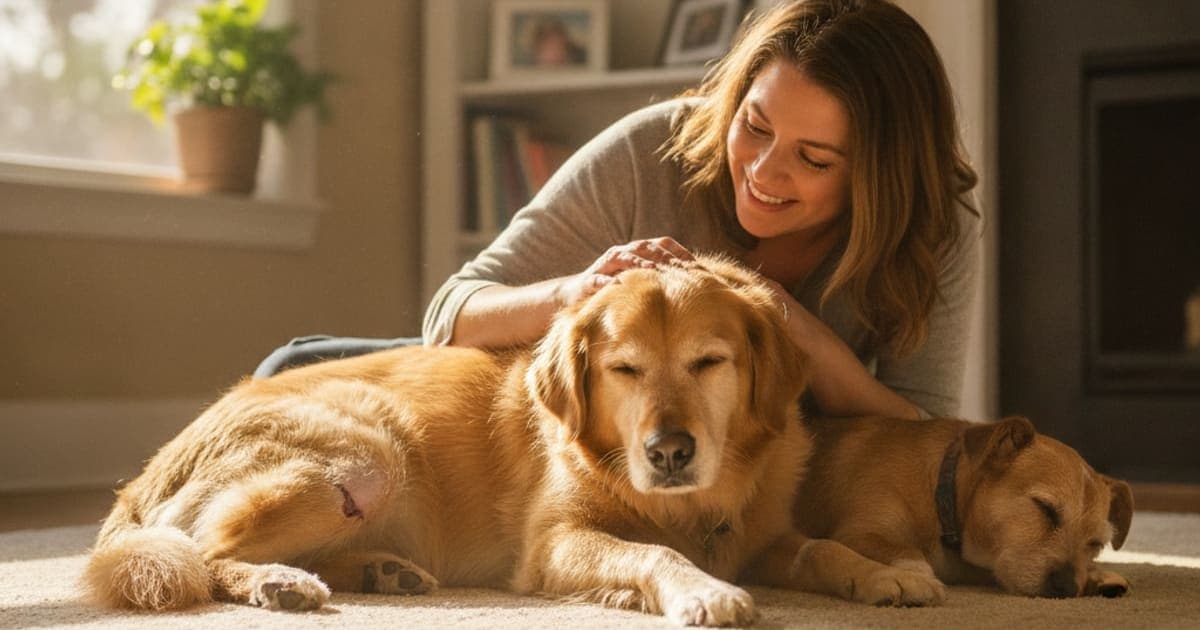
How long does TPLO recovery take to heal in dogs?
Most dogs need several months. The osteotomy — the surgical cut in the top of the tibia — generally heals over the first two to three months of strictly restricted activity, and healing is confirmed by recheck radiographs rather than by the calendar. Full functional recovery, including muscle mass and confidence, commonly takes four to six months.
The American College of Veterinary Surgeons, in its owner-facing material on cranial cruciate ligament disease, describes recovery in that same two-stage shape: a period of confinement and controlled leash activity while bone heals, followed by a graded return to normal function once the surgeon is satisfied with the follow-up imaging. Your surgeon's written protocol is the version that governs your dog. Timelines shift with the size and age of the dog, the implant used, whether the meniscus was damaged, and how that first recheck looks.
Why the leg heals on a bone timeline, not a ligament timeline
A tibial plateau leveling osteotomy, developed by veterinary surgeon Barclay Slocum, does not repair the torn cranial cruciate ligament. It changes the geometry of the joint so the ligament is no longer needed to stop the shin bone sliding forward. The surgeon makes a curved cut through the top of the tibia, rotates that segment to flatten the slope of the plateau, and fixes it in place with a bone plate and screws. Cranial tibial thrust — the forward shearing force generated every time the dog loads the leg — is neutralized by anatomy instead of by soft tissue.
That design decision is exactly why the recovery clock reads in months. What your dog is healing is a controlled fracture. Bone repair moves through predictable stages: an inflammatory phase in the first days, a soft callus that bridges the gap, mineralization of that callus into woven bone, and then months of remodeling into mature, load-bearing bone. Layered on top of that is the soft tissue trauma of the surgical approach, the muscle atrophy that started weeks before surgery while the leg was painful, and the osteoarthritis that was already developing inside the joint from the day the ligament began to fail.
The plate and screws are strong, but they are a bridge, not a destination. Until bone crosses the cut, the implant carries load it was never meant to carry alone. That is the entire logic behind the frustrating early restrictions.
The recovery timeline, phase by phase
The phases below reflect the general shape of most surgeons' protocols. Treat them as a map, not a schedule — your discharge instructions and recheck findings override anything you read online.
| Phase | What is happening inside the leg | What it usually looks like at home |
|---|---|---|
| First two weeks | Inflammation, incision sealing, implant carrying nearly all load | Grogginess from medication, toe-touching to partial weight bearing, strict confinement, short leashed toilet breaks, cold therapy, suture or staple removal |
| Weeks two to eight | Soft callus forming and beginning to mineralize across the osteotomy | Slowly lengthening leash walks only, no stairs, no jumping, no off-leash time, no slick floors; formal rehab exercises may be introduced |
| The recheck radiograph | Imaging shows how far bone healing has progressed and whether implants are stable | The decision point — the surgeon either clears a progressive increase in activity or extends restriction |
| Months two to four | Woven bone remodeling into mature bone; muscle rebuilding under load | Longer walks, controlled hills, gentle incline work, hydrotherapy or underwater treadmill if available, visibly better weight bearing |
| Months four to six | Functional recovery: strength, stride length and thigh circumference catching up | Most dogs return to normal household activity; sporting, working and very large dogs often need longer |
| Beyond six months | Long-term joint management, monitoring the opposite knee | Maintenance rehab, weight control, watching for a limp on the other side |
The bone is healed when your surgeon's follow-up radiographs say it is healed — not when the calendar reaches eight weeks.
The most common mistake in the whole recovery is a good one made too early. Dogs feel better long before the osteotomy is structurally sound, and a dog that feels comfortable will attempt stairs, sofas and sprinting. Comfort is not the same as stability.
Why two dogs of the same size heal on different schedules
Age matters, though not as much as owners expect — young dogs mineralize callus faster, but they are also far harder to keep quiet. Body condition matters enormously, because every extra kilogram is load across a healing cut and inflammatory signaling from adipose tissue. A concurrent meniscal tear changes the picture, since the meniscus is cartilage with a poor blood supply and its own soreness curve. Bilateral disease, where the opposite cruciate is already compromised, slows everything because the dog has no fully sound leg to lean on.
Complications extend timelines too: incision infection, implant loosening, delayed union, or a late meniscal injury that shows up as a new limp weeks after things were going well. Endocrine conditions such as poorly controlled hypothyroidism or hyperadrenocorticism, and any medication that suppresses inflammation broadly, can also influence how tissue repairs. This is one of several reasons to talk to your veterinarian about your dog's full medication and health picture before surgery rather than after a setback.
The parts of recovery you actually control
You cannot make bone mineralize faster by wanting it to. What you can control turns out to be most of what determines the outcome.
Activity restriction is the single highest-leverage thing an owner does, and it is done with crates, pens, baby gates, a short lead and a sling or support harness for the first weeks. Traction is next — runners over hard floors, and toenails kept short so the foot grips instead of skating. Weight management is third, and for an overweight dog it may be the most valuable intervention available across the entire recovery.
Pain control is prescribed by your veterinary team for a reason. Multimodal protocols exist because an uncomfortable dog under-uses the limb, loses muscle faster and sleeps badly. Never stop, reduce or substitute a prescribed medication on your own judgement; if you think your dog is over- or under-medicated, that is a phone call, not a decision. Formal rehabilitation — passive range of motion, controlled weight-shifting, incline and later underwater treadmill work — is where thigh muscle actually comes back, and a certified canine rehabilitation practitioner will progress it faster and more safely than guesswork.
Supporting soft tissue and mobility while the bone does its work
Around the osteotomy sits everything that also has to recover: joint capsule, tendon, muscle, and the cartilage inside an arthritic knee. This is the layer where nutritional and peptide support has become part of how many owners approach the long middle stretch of recovery.
pawgen makes K9-REPAIR, a single-purpose formulation of BPC-157 and TB-500 for dogs. BPC-157 is a synthetic peptide sequence derived from a protein identified in gastric juice; laboratory and animal-model research has focused on how it influences angiogenesis — the formation of new blood vessels — and the migration of the fibroblasts and tendon cells responsible for laying down and organizing collagen. TB-500 is a synthetic peptide related to thymosin beta-4, a naturally occurring protein involved in actin regulation, cell migration and vascular growth, all of which are part of how soft tissue reorganizes after trauma. Research suggests these mechanisms are relevant to tendon, ligament and muscle repair, and owners report reaching for them through orthopedic recovery. These are not FDA-approved veterinary drugs, they do not treat cruciate disease, and nothing in a bottle substitutes for the surgery that changed your dog's joint mechanics.
Where skepticism belongs is the shelf of kitchen-sink joint chews: proprietary blends that hide inclusion rates, dust-level amounts of active ingredients, and marketing budgets larger than their analytical testing. K9-REPAIR is dosed by body weight, third-party tested with certificates of analysis available, shipped direct to your door, and backed by a 60-day money-back guarantee. Specific dosing questions — and especially anything involving puppies, pregnant or nursing dogs — belong with your veterinarian, who knows the rest of your dog's protocol.
What "healed" actually means after a TPLO
There are two finish lines and they arrive at different times. Radiographic union is the structural one: bone has bridged the cut and the implant is no longer doing the work alone. Functional recovery is the one you can see — symmetrical stride, thigh circumference close to the other side, sitting square instead of kicking the leg out, rising from the floor without a hop.
Neither finish line erases the arthritis. TPLO stabilizes the joint and slows degenerative change, but a knee that lost its cruciate ligament remains an arthritic knee for life, managed with weight control, sustained conditioning and whatever long-term plan your veterinarian sets. There is also the other side to watch. Cruciate disease is frequently a disease of both knees rather than one bad step, so a new limp on the unoperated leg months later deserves prompt assessment rather than a wait-and-see.
Key Takeaways
- TPLO recovery is measured in months: bone healing over roughly the first two to three months, functional recovery commonly at four to six months.
- Healing is confirmed by recheck radiographs and your surgeon's assessment, never by a date on the calendar.
- The plate and screws bridge the osteotomy until bone crosses it — which is why early restriction is non-negotiable.
- Body weight, meniscal injury, bilateral disease and owner compliance move the timeline more than anything else.
- Prescribed pain medication and formal rehabilitation are core parts of the plan, not optional extras.
- Peptide support such as K9-REPAIR sits alongside surgical and veterinary care, never in place of it.
For a deeper walkthrough of the whole process, see the full guide to tplo recovery, along with the overview of the best treatment for tplo recovery in dogs and a practical look at what to give a dog with tplo recovery. Owners weighing peptide support usually read k9-repair for tplo recovery in dogs, the direct answer on whether can k9-repair replace my dogs pain medication, and the signs covered in how do i know if k9-repair is working. K9-REPAIR is made by pawgen.
Working with your veterinary team
Your surgeon owns the diagnosis, the implant choice, the recheck schedule and the moment your dog is cleared to run again. Your primary veterinarian owns the pain protocol and the long-term arthritis plan. Bring them the questions, bring them any new limp, and bring them the label of anything you are adding — supplements and peptides operate in the space that proper veterinary care creates, and they work best when everyone caring for your dog is looking at the same plan.
Owners exploring peptide support for their dog can review K9-REPAIR — BPC-157 + TB-500 formulated for dogs — at https://pawgen.com/. BPC-157 and TB-500 are not FDA-approved veterinary drugs. Nothing in this article treats, cures or prevents any condition; every decision about your dog's care belongs with your veterinarian.
Frequently asked questions
- What helps a dog with TPLO recovery?
- Strict activity restriction, prescribed pain medication taken exactly as directed, good traction at home, weight management and formal rehabilitation do the most. Many owners also add soft-tissue support such as K9-REPAIR through the long middle stretch. Ask your veterinarian before adding anything, so the whole plan stays coordinated.
- Is TPLO recovery in dogs painful?
- The first days after surgery are genuinely uncomfortable, which is why surgeons send dogs home on multimodal pain control. Most dogs settle noticeably within the first week or two. Ongoing pain, a sudden new limp or reluctance to bear weight after improvement warrants a call to your veterinary team rather than waiting.
- What makes TPLO recovery worse in dogs?
- Too much activity too soon is the biggest culprit — stairs, jumping, slick floors and off-leash time before clearance. Excess body weight, skipped rehabilitation, incision licking, infection, a missed meniscal tear and stopping prescribed medication early all set recovery back. Compliance during the restricted weeks matters more than almost anything else.
- Can TPLO recovery in dogs be reversed?
- Recovery itself is not reversed, but progress can be lost. Re-injury, implant complications, delayed bone healing or a late meniscal tear can push a dog backward and restart restriction. The underlying arthritis in that knee is permanent and managed long-term rather than undone, which is why maintenance conditioning matters.
- How much does it cost to treat TPLO recovery in dogs?
- TPLO is a specialist orthopedic procedure and generally runs into the thousands, with wide variation by region, clinic type, dog size and whether rehabilitation and follow-up imaging are bundled. Ask for a written estimate covering surgery, recheck radiographs, medication and rehab so the full recovery cost is visible upfront.
- When will my dog walk normally after a TPLO?
- Many dogs are partially weight bearing within days and using the leg reasonably well within several weeks, but a genuinely normal, symmetrical stride usually returns over months as muscle rebuilds. Early comfortable use is not a signal to increase activity — your surgeon's recheck determines when the leg is ready.
- Does my dog need physical therapy after a TPLO?
- Rehabilitation is strongly recommended by most surgeons because thigh muscle atrophies fast and returns slowly. A certified canine rehabilitation practitioner progresses range of motion, weight-shifting, incline and underwater treadmill work safely. Home exercises help, but professional guidance generally rebuilds strength faster and reduces the risk of overdoing it.
- Can my dog use stairs during TPLO recovery?
- Not during the early restricted phase unless your surgeon specifically permits it, and then only slowly on a short lead with a support sling. Stairs load the healing osteotomy unevenly and invite slips. Most protocols reintroduce them gradually after recheck radiographs confirm bone healing is progressing well.
Educational content. BPC-157 and TB-500 are not FDA-approved veterinary drugs. Talk to your veterinarian before starting anything new, especially if your dog is on prescribed medication.