How Much Does a Dog Avulsion Fracture Cost?
Treating an avulsion fracture in a dog typically runs from a few hundred dollars for diagnosis and conservative management to several thousand for orthopaedic surgery, anaesthesia, imaging and rehabilitation. Cost depends on the joint involved, your dog's size, whether a board-certified surgeon is needed and local pricing. Always ask for a written estimate after radiographs.
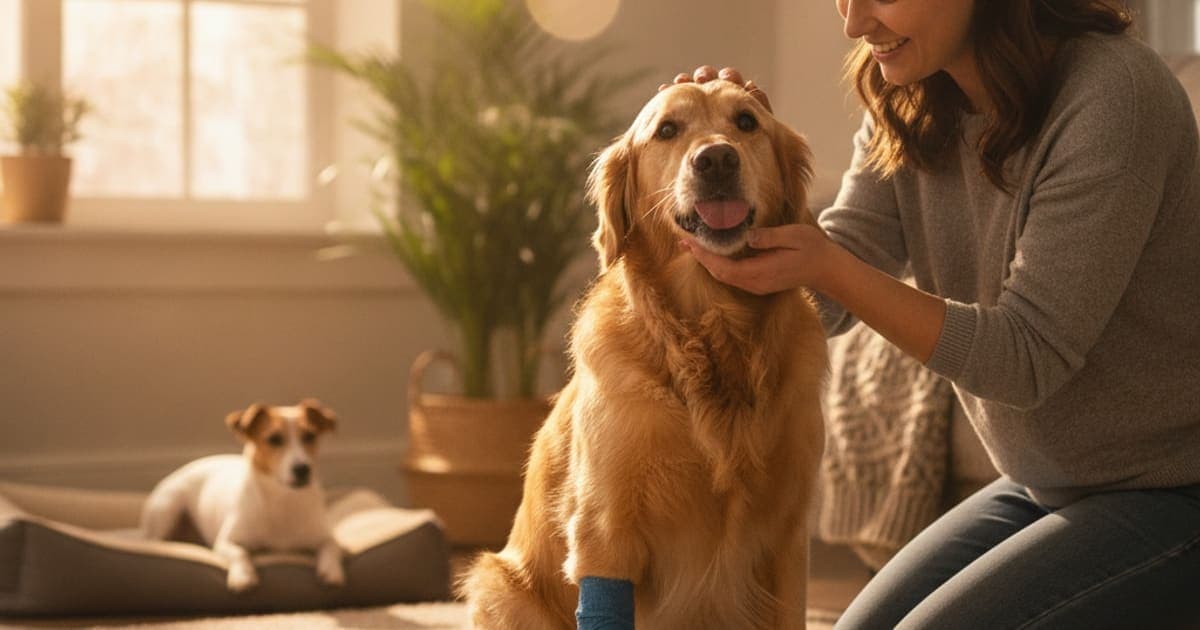
How Much Does It Cost to Treat Avulsion Fracture in Dogs?
Treating an avulsion fracture in a dog ranges from a few hundred dollars for examination, radiographs and conservative management to several thousand for surgical repair including anaesthesia, implants, hospitalisation and rehabilitation. As of 2026 there is no national price — the joint involved, your dog's size and whether a board-certified surgeon is required drive most of the difference.
The American College of Veterinary Surgeons, the body that board-certifies veterinary surgeons, publishes owner-facing guidance on how fracture repair is planned and performed, and it is a sound orientation before your consultation. What no outside source can give you is a price, because every practice sets its own fee schedule and every fracture is a slightly different problem. The only figure that means anything for your dog is the written estimate your veterinary team produces once they have images in hand.
An avulsion fracture is also not a broken bone in the way most owners picture one. It happens when a tendon or ligament pulls its own attachment point off the bone, taking a fragment of bone with it. The bone did not fail under a blow — it failed at the anchor, usually under sudden load. In dogs this appears most often at growth plates in young, athletic animals and at high-load attachment sites such as the tibial tuberosity below the knee, the supraglenoid tubercle of the shoulder, and the insertions of the calcaneal tendon group at the hock. Because the injury sits exactly at the junction of bone and soft tissue, both tissues have to recover. That is the single biggest reason the total cost is rarely just the price of an operation.
What you are actually paying for
Estimates look opaque until you break them into line items. Nearly every avulsion fracture bill is assembled from the same components, in different combinations and at different intensities.
| Line item | What it covers | Why the price moves |
|---|---|---|
| Consultation and lameness exam | Gait assessment, joint palpation, neurological screen, initial pain scoring | Emergency and after-hours visits cost more than a booked appointment |
| Radiographs | Multiple views of the affected limb, often comparison views of the opposite side | Number of views, sedation needs, and whether images are read by a radiologist |
| Sedation or general anaesthesia | Pre-anaesthetic bloodwork, induction, monitoring, recovery | Larger dogs need more drug; older or higher-risk dogs need closer monitoring |
| Advanced imaging | CT for small or overlapping fragments, or for surgical planning | Only some hospitals have CT; it is usually a referral-level cost |
| Surgical repair | Surgeon time, theatre time, assistant, sterile setup | A general practitioner and a board-certified surgeon do not price the same |
| Implants and consumables | Pins, tension-band wire, screws, suture anchors, drapes, sterile kit | Fixation method is dictated by fragment size and load, not by budget |
| Hospitalisation | Overnight care, IV fluids, injectable analgesia, nursing observation | Length of stay varies with pain control and complication risk |
| Take-home medication | Prescribed analgesia and anti-inflammatories, sometimes antibiotics | Dose is weight-based, so bigger dogs cost more per refill |
| Bandage or splint management | Application, then scheduled changes and skin checks | Externally coapted limbs need repeated visits; sores are expensive to fix |
| Recheck imaging | Repeat radiographs to confirm the fragment is holding position and healing | Usually more than one set across the healing period |
| Rehabilitation | Controlled exercise programming, manual therapy, hydrotherapy | Priced per session; the number of sessions is the variable, not the rate |
When owners are shocked by an estimate, it is almost never one inflated line. It is the accumulation: imaging plus anaesthesia plus theatre plus implants plus aftercare. Ask your veterinary team to walk the estimate line by line and to mark which items are firm and which are contingent on what they find.
Why two dogs with the same injury get very different estimates
The cheapest version of this injury is the one that is diagnosed early and then managed exactly as your veterinarian prescribes — revision surgery, delayed union and chronic lameness cost far more than the first estimate ever will.
Several variables move the number, and it helps to know which ones you can influence and which you cannot.
Which attachment site is involved. A small avulsion at a low-load site is a different surgical problem from a tibial tuberosity avulsion in a growing dog, where the pull of the quadriceps constantly works against the repair. Sites under high, repetitive tension need more robust fixation.
How far the fragment has moved. A minimally displaced chip may be a candidate for conservative management. A fragment that has been pulled well away from its bed usually needs to be brought back and held mechanically.
Your dog's size and age. Larger dogs need more anaesthetic drug, larger implants and longer theatre time. Young dogs often heal bone quickly but carry the added complication of open growth plates, which changes the fixation strategy.
How long the injury has been present. Fresh avulsions are easier to reduce. Once soft tissue contracts and the fragment bed fills in, reconstruction becomes more complex — and more expensive. This is a real argument for booking the exam promptly rather than waiting a fortnight to see if the limp settles.
Where the work is done. A general practice with orthopaedic capability, a referral hospital and a university teaching hospital will each price differently for the same procedure. Referral is not overcharging; you are paying for specialist training, specialist equipment and, usually, a higher-intensity anaesthesia protocol.
Insurance and timing. If you hold a policy, confirm before surgery how the claim will be handled and whether pre-authorisation is available. Orthopaedic conditions are the most common place owners discover an exclusion or a waiting period after the fact.
Conservative management versus surgical repair
This is the fork in the road that determines the size of the bill — but it is a clinical decision, not a financial one. Your veterinarian chooses based on fragment size, displacement, load at the site and your dog's age, and both routes carry real costs.
| Conservative management | Surgical repair | |
|---|---|---|
| Usually considered for | Small, minimally displaced fragments at lower-load sites | Displaced fragments, high-load tendon or ligament attachments, unstable joints |
| Upfront cost | Lower — exam, imaging, splinting, analgesia | Higher — anaesthesia, theatre, implants, hospitalisation |
| Ongoing cost | Repeated bandage changes, recheck radiographs, longer restriction | Rechecks, recheck imaging, structured rehabilitation |
| Demand on the owner | Very high: strict confinement over weeks, daily skin and bandage checks | High: incision care, controlled lead walks, staged return to load |
| Main risk | Fragment displaces or fails to unite, and surgery becomes necessary later | Implant loosening or infection, both of which need prompt review |
| Hidden cost | A failed conservative trial means paying for the surgical route anyway | Complication management, if it occurs, sits outside the original estimate |
Conservative management is not the budget option in disguise. When it is the right clinical call, it works because the owner delivers weeks of unglamorous restriction. When it is chosen against clinical advice to save money, the common outcome is a second consultation, a second set of radiographs and a harder surgery. Talk to your veterinarian about which route your dog's images actually support, and ask what would trigger a change of plan.
The costs that arrive after the operating room
Owners budget for the surgery and are then caught out by the recovery period, which is where much of the real spend — and nearly all of the outcome — lives.
Expect scheduled rechecks, at least one and often two further sets of radiographs to confirm the fragment is holding and bridging, refills of prescribed analgesia, and possibly bandage changes. Expect to spend on the environment too: a correctly sized crate or pen, non-slip runners over hard floors, a ramp for the car, and a harness for controlled toileting walks. These are small individually and meaningful together.
Then there is rehabilitation. Controlled, progressive loading is how a tendon-to-bone interface reorganises into something that can take force again; that interface remodels over months, well after the bone looks united on film. Formal rehabilitation sessions are priced per visit, and the honest cost driver is how many your dog needs — which depends heavily on how carefully the home restriction is followed between them.
Weight matters more than most owners expect. Every extra kilogram is extra force through a healing attachment site during every step of the recovery period, and weight control costs nothing but discipline.
How owners support recovery alongside the veterinary plan
The veterinary plan is the plan. Surgery, prescribed analgesia and the restriction schedule are what create the conditions for healing, and nothing should displace them. Within that space, owners look for ways to support the tissue doing the work — and increasingly they reach for peptides rather than another shelf-stable chew.
pawgen makes K9-REPAIR, a BPC-157 and TB-500 formulation for dogs, and it exists because tendon and ligament attachment recovery is a soft-tissue problem as much as a bony one. BPC-157 is a synthetic peptide derived from a sequence found in gastric juice; published laboratory research in animal models, much of it from the group led by Predrag Sikiric at the University of Zagreb, has examined its effects on tendon and ligament fibroblast behaviour and on the formation of new blood vessels in injured tissue. TB-500 is a synthetic fragment of thymosin beta-4, a naturally occurring peptide studied for its role in actin regulation, cell migration and angiogenesis during tissue repair. Research suggests these mechanisms are relevant to the blood supply and cellular traffic that healing connective tissue depends on, and owners report using the pairing through structured recovery periods. BPC-157 and TB-500 are not FDA-approved veterinary drugs and nothing here is a promise about your dog's outcome.
What is worth being sceptical about is the rest of the aisle. Kitchen-sink joint chews stacked with a dozen ingredients behind a proprietary blend tell you nothing about how much of anything your dog receives, and a lot of category marketing outruns the label. K9-REPAIR is third-party tested with certificates of analysis available, dosed by body weight, shipped direct to your door, and backed by a 60-day money-back guarantee. Because dosing is weight-based and your dog is on prescribed medication during recovery, work it through with your veterinarian rather than guessing — and never adjust or stop anything your vet has prescribed in order to add something else.
Key Takeaways
- Cost spans from a few hundred dollars for diagnosis and conservative management to several thousand for surgical repair; the written estimate after radiographs is the only number that applies to your dog.
- The biggest cost drivers are the attachment site involved, fragment displacement, your dog's size, how long the injury has gone unassessed, and general practice versus referral pricing.
- Delay is expensive. Fresh avulsions are easier and cheaper to address than contracted, chronic ones.
- Conservative management is a clinical decision, not a discount. A failed trial usually means paying for surgery anyway.
- Budget for the recovery period as well as the procedure: rechecks, repeat imaging, medication refills, home setup and rehabilitation.
- Confirm insurance coverage and pre-authorisation before surgery, not after.
- Owners commonly add peptide support such as K9-REPAIR around the veterinary plan; research suggests relevant mechanisms in soft-tissue repair, and it is used alongside veterinary care, never instead of it.
If you want to go deeper before your consultation, read the full guide to avulsion fracture, then work through how long does avulsion fracture take to heal in dogs, is avulsion fracture in dogs painful and what makes avulsion fracture worse in dogs. If the presenting sign was a dragging or curled paw rather than a limp, when should i take a dog to the vet for knuckling over and what can i give a dog that is knuckling over cover that path, and K9-REPAIR sits with the recovery-support reading.
Your veterinarian owns the diagnosis, the imaging, the decision between conservative and surgical management, and the prescription list — and that is exactly as it should be, because an avulsion fracture is a mechanical failure at a load-bearing anchor and it needs a professional assessment of that anchor. Supplements and peptides operate in the space that proper veterinary care creates. Bring your questions, ask for the estimate in writing, and build everything else around the plan your vet sets.
Owners exploring peptide support for their dog can review K9-REPAIR — BPC-157 + TB-500 formulated for dogs — at https://pawgen.com/. BPC-157 and TB-500 are not FDA-approved veterinary drugs. Nothing in this article treats, cures or prevents any condition; every decision about your dog's care belongs with your veterinarian.
Frequently asked questions
- Can a dog's avulsion fracture heal without surgery?
- Sometimes. Small, minimally displaced avulsions at lower-load sites may be managed conservatively with splinting, strict confinement and prescribed pain relief, with repeat radiographs to confirm the fragment is holding. Larger displaced fragments at high-load tendon or ligament attachments usually need surgical fixation to restore stable, pain-free function. Your veterinarian decides based on the images.
- What are the first signs of avulsion fracture in dogs?
- Sudden, marked lameness after a jump, slip or hard turn is the classic first sign, often with the dog carrying the limb or refusing to bear weight. Owners also notice localised swelling, heat, pain when the area is touched, reluctance to sit or rise normally, and a limp that does not settle within a day.
- How is avulsion fracture diagnosed in dogs?
- Diagnosis starts with a lameness examination and careful palpation of the suspect joint, then radiographs of the limb, frequently with comparison views of the opposite side because small bone fragments are easy to miss. Sedation is often needed for good positioning, and CT may be added when fragments are tiny or surgical planning requires it.
- What helps a dog with avulsion fracture?
- Prompt veterinary assessment helps most, followed by whichever plan the images support: surgical fixation or conservative splinting, plus prescribed analgesia and genuinely strict activity restriction. Controlled, progressive rehabilitation rebuilds load tolerance afterwards. Many owners also use peptide support such as K9-REPAIR alongside that plan; discuss any addition with your veterinarian first.
- How long does avulsion fracture take to heal in dogs?
- It varies with the dog's age, the site involved and whether the repair is surgical. Bone typically knits over a matter of weeks, confirmed on recheck radiographs, but the tendon-to-bone interface keeps remodelling for months afterwards. That is why controlled return to activity continues well past the point the limb looks normal.
- Is avulsion fracture in dogs painful?
- Yes. Pulling a tendon or ligament attachment off bone is acutely painful, which is why affected dogs often refuse to weight-bear at all. Pain usually eases substantially once the site is stabilised and prescribed analgesia is on board. Never give human painkillers; many are toxic to dogs. Ask your veterinarian about pain scoring at home.
- Does pet insurance cover avulsion fracture treatment in dogs?
- Many accident and illness policies include orthopaedic injury, but coverage depends entirely on your policy wording, waiting periods and any pre-existing condition exclusions. Contact your insurer before surgery is scheduled, ask whether pre-authorisation is offered, and confirm in writing which line items, including rehabilitation and recheck imaging, are eligible for reimbursement.
- How can I keep the cost of avulsion fracture care down?
- Book the exam early, because chronic contracted avulsions are harder and costlier to repair than fresh ones. Ask for an itemised written estimate, ask which items are contingent, and enquire about payment plans or third-party financing. Then follow the restriction schedule precisely — complications and revision surgery are the largest avoidable expense.
Educational content. BPC-157 and TB-500 are not FDA-approved veterinary drugs. Talk to your veterinarian before starting anything new, especially if your dog is on prescribed medication.